
You’ll smoke your whole chicken in 3.5 to 4.5 hours at 225°F for ideal results. Maintain consistent temperature between 250°F and 275°F, adjusting timing based on your bird’s weight and smoker type. Use a digital meat thermometer to confirm dark meat reaches 175-185°F and white meat hits 155-160°F. Allow 20-30 minutes resting time after removal. The specific techniques for achieving a perfectly crispy exterior while preserving moisture require careful attention to positioning and fat application throughout your smoking process.
Understanding the Optimal Smoking Temperature Range
You’ll want to maintain your smoker between 250°F and 275°F for ideal whole chicken results, though the lower range of 225°F to 250°F offers distinct advantages if you’re prioritizing moisture retention and smoke penetration. At 275°F, you’ll guarantee even cooking throughout your bird. However, the slower 225°F-250°F pace maximizes smoke infusion while preserving juiciness—a texture distinctly superior to roasting.
Your temperature management strategies should account for smoker type and monitoring heat fluctuations. Electric smokers perform consistently at 275°F, while charcoal units require active vent adjustment. Pellet smokers offer direct temperature setting for precision. Expect initial temperature dips when smoking multiple birds; aim for 250°F-275°F to compensate. For optimal results, keep the smoker vents open to allow proper smoke circulation throughout the cooking process. This range balances cooking speed with flavor development and moisture retention, delivering the best results regardless of equipment. Even a minute of temperature variation can alter the texture and juiciness of your chicken, making precision monitoring essential to achieving culinary excellence. After smoking, always let the chicken rest for 10-15 minutes to allow juices to redistribute throughout the meat for maximum moisture. Using a digital thermometer to check the thickest part of the thigh ensures your chicken reaches the safe internal temperature of 165°F. Rather than relying solely on time calculations, use a thermometer to verify doneness and ensure consistent smoker temperature throughout the cooking process. Start checking the internal temperature around the 2.5 to 3-hour mark to avoid overcooking your bird. Some pitmasters recommend air-drying the chicken uncovered in the fridge overnight before smoking to achieve crispier skin and better smoke adhesion.
Calculating Cooking Time Based on Bird Size
Because smoking time depends primarily on weight rather than cooking method, you’ll need to calculate duration based on your chicken’s size before placing it in the smoker. Standard whole chickens weighing 3.5 to 4 pounds typically require 3.5 to 4.5 hours at 225°F. Larger roasting chickens between 6 to 8 pounds need 22 to 25 minutes per pound at 300°F, translating to approximately 2.2 to 3.3 hours. However, adjusting cooking time becomes essential when accounting for temperature fluctuations and smoker inconsistencies. Rather than relying solely on elapsed time, prioritize monitoring internal temperature using a digital meat thermometer. One of the easiest ways to ensure consistent results is to smoke at multiple temperature stages, starting at a lower heat and finishing at a higher temperature for optimal juiciness. For a butterflied chicken, the low-and-slow method can take 4 to 6 hours for traditional smoking, though starting at 225°F for 30 minutes to an hour before increasing the heat can reduce total time to 1.5 hours. A fresh chicken around 3 1/2 pounds is recommended for best smoking results. After removing the chicken from the smoker, allow it to rest loosely covered for 15-20 minutes to redistribute juices throughout the meat. Target 160 to 165°F in the breast’s thickest portion and 170 to 175°F in the thigh for accurate doneness assessment. Using a probe thermometer helps you track internal temperature accurately throughout the smoking process without opening the smoker repeatedly.
Determining Internal Temperature Targets for Safety
Achieving food safety with smoked chicken requires understanding both the USDA’s blanket 165°F (74°C) threshold and the nuanced temperature requirements that vary across different meat types. You’ll want to use a digital meat thermometer for accurate temperature measurements in the thickest portion of your bird, avoiding bone contact.
The time temperature relationship is vital: you can achieve instant bacterial elimination at 165°F, or maintain lower temperatures for extended periods. Dark meat requires 175-185°F for optimal texture, while white meat reaches peak juiciness at 155-160°F. Cooking dark meat to these higher temperatures allows the connective tissues to break down, resulting in exceptionally tender meat. When you brine your chicken, the proteins denature more effectively, allowing white meat to remain forgiving even at higher temperatures. For boneless cuts like chicken breasts, aim for an internal temperature of 165°F to 170°F to ensure both safety and optimal juiciness. Check multiple points throughout your chicken, particularly the thigh area, to confirm you’ve achieved proper doneness. Using a leave-in probe thermometer like the Smoke X2 allows you to monitor internal temperature continuously throughout the cooking process. Allowing the meat to rest after smoking enables carryover cooking to reach the ideal temperature without drying out the breast. Maintaining consistent smoker temperature throughout the cooking process helps ensure even doneness and prevents hot spots that could lead to overcooked exterior meat. Letting the chicken rest a few minutes before serving helps seal in juices for maximum tenderness and flavor. This precise approach guarantees both safety and superior results.
Preparing Your Chicken for the Smoker
Now that you’ve established your target temperatures, proper preparation becomes the next critical step in achieving consistent results. Start by removing giblets and internal packaging from the cavity, then pat your chicken dry with paper towels to eliminate surface moisture that inhibits seasoning adhesion and smoke penetration.
If you’re thawing frozen chicken, complete this process well in advance. Allow your refrigerated prepared chicken to reach room temperature for 20-30 minutes, guaranteeing even heat distribution during smoking. While it warms, spray or drizzle oil across all surfaces, including the cavity, then apply your chosen seasoning evenly. For best results, use hardwood smoke to enhance flavor without overpowering the delicate poultry. Make sure to rub the seasoning under the wings and everywhere on the chicken for consistent flavor throughout. Whether smoking individual pieces or a whole bird, wings typically benefit from an internal temperature of 165-175°F to ensure they’re fully cooked and safe to eat.
Truss the legs together with kitchen twine and tuck wing tips behind the back to prevent burning and confirm uniform cooking. Consider pairing your chicken with fruit woods like apple or cherry for sweet, complementary notes that enhance poultry’s delicate flavor. For a more robust smoke profile, you can blend woods by combining a fruitwood with pecan or oak to balance sweetness and traditional smoke character. Avoid using resinous woods like pine or cedar, which can impart unpleasant flavors to your poultry. If you’re using a gas grill, a pellet smoker tube can provide hours of consistent smoke to infuse your chicken with rich, smoky flavor. These preparation steps certify ideal results.

Made In the USA: Celebrate homegrown quality with these premium wood chips made in Arkansas and Missouri


Made In the USA: Celebrate homegrown quality with these premium wood chips made in Arkansas and Missouri
Positioning Your Chicken on the Grill Grates
Proper positioning of your chicken on the smoker grates profoundly impacts the final result, requiring strategic placement that maximizes smoke circulation and heat distribution. You’ll place your bird skin-side up directly on clean, oiled grates to enable complete smoke penetration from all angles.
Position thighs and legs toward hotter zones since they require higher internal temperatures (170-175°F) than breast meat (160-165°F). This grate orientation prevents breast overcooking while guaranteeing thighs reach proper doneness. Direct grate contact creates superior heat conduction compared to elevated racks, allowing fat rendering that develops ideal flavor. For best results, preheat your smoker to 275 degrees F before placing your chicken on the grates.
When smoking multiple chickens, you’ll space them adequately to prevent airflow obstruction. Stagger leg orientation to maximize grate utilization. For even more consistent results, consider spatchcocking your chicken to ensure uniform heat exposure and faster, more even cooking throughout your smoking duration. Before your first use, ensure you’ve cleaned and applied a thin layer of oil to your grates to create a protective, non-stick surface. If you’re working with a compact gas grill setup, porcelain-enameled cast-iron grates provide excellent heat retention and durability for achieving professional smoking results. Regular re-seasoning every few months helps maintain the protective layer on your grates, especially after deep cleaning sessions. This strategic heat distribution pattern ensures consistent, even cooking throughout your smoking duration. Use a reliable meat thermometer to verify your chicken has reached the proper internal temperature rather than relying solely on cooking time. Remember to keep the smoker door closed during the cooking process to maintain stable temperatures and prevent heat loss.

🔥【 Perfect Compatibility】 Designed for Weber Spirit 200 Series grills with front-mounted control knobs, including Spirit E/S-210, E/S-220 (2013-2017). ▶▶Also fits GS4 Spirit II 200 Series grills, including Spirit II E/S-210, E/S-220 (2017 and newer). 🔥 Note: Not compatible with Weber Spirit 3-burner models

✅ Special Notes for this item: Cast iron grids are fragile and may be broken during transportation. If you meet this situation, please feel free to email us and ask for solution.

✅Replacement for Charbroil Models 463370518 461442114 463240015 463420507 463420508 463420509 463420510 463420511 463432215 463433016 463434313 463436213 463436214 463436215 463436413 463436514 463436813 463439915 463440109 463440109B 463441312 463441412 463441512 463441513 463441514 463460708 463460710 463461613 463461614 466420909 466420911 466433016 469432215 C-45G3CB 466433016. Char Broil Part Numbers: 80008076, 80018559, G432-0002-W1.
Enhancing Skin Texture and Moisture During Cooking
Smoking a whole chicken demands managing multiple variables simultaneously—temperature precision, timing, wood selection, and resting technique all work together to deliver succulent meat wrapped in crispy, flavorful skin. You’ll enhance both texture and moisture by employing a two-stage cooking method: start at 225-250°F for one hour to build smoke penetration depth, then increase heat to 350-375°F to crisp the skin without drying interior meat. Position your drip tray placement directly below the chicken to catch rendering fat while maintaining humidity. Wood choice—apple, pecan, or cherry—influences moisture perception through subtle flavor delivery. Monitor internal temperatures at the thigh (170-175°F) and breast (157°F) using a digital probe, accounting for 5-10°F carryover cooking after removal. The dry brine technique achieves remarkably crisp skin even at low smoking temperatures by drawing out surface moisture before cooking begins. Brining the chicken in a solution of salt, sugar, and lemon slices for at least 4 hours beforehand will keep the chicken meat moist and enhance the final flavor profile. Maintain temperature and smoke consistency by avoiding frequent smoker openings, which disrupt the cooking environment and extend total cook time. Adding a water pan to your electric smoker helps regulate temperature stability while introducing moisture that prevents the chicken from drying out during the low-and-slow smoking phase. After smoking, allow the chicken to rest for 5 to 10 minutes to help redistribute the juices for optimal texture and flavor. Consider using a heat-resistant grill mat beneath your smoker to protect your deck surface from grease drips and potential heat damage while making post-cook cleanup significantly easier. Check doneness with an instant-read thermometer in multiple locations to ensure the lowest temperature reading confirms the chicken has reached safe internal temperature throughout.

【Fast & Accurate】Our meat thermometer digital delivers accurate readings within ±1°F in just 1–2 seconds, with a wide temperature range of -58°F to 572°F (-50°C to 300°C). No more waiting over the heat - know your food's exact temperature instantly.

Instant Read Meat Thermometer | Our instant read thermometer features a temperature probe and advanced, highly accurate technology with a 1-2 second response time. Our instant read food thermometer comes pre-calibrated with instructions and a meat temperature chart, plus a recalibration feature if needed.

【8X Faster + 4X More Precise】: Upgraded with an industrial-leading professional thermocouple sensor, Themomonster meat thermometer digital with NIST certified ±0.5℉ precision provides you the accurate temperature of your food in just 0.5 Seconds.
Applying Oil and Butter for Optimal Crispiness
After your chicken’s skin has absorbed smoke and developed foundational moisture during the low-temperature phase, you’ll apply oil or melted butter to maximize crispiness during the final cook stages. Pat your bird dry first to eliminate excess surface moisture, ensuring ideal fat adhesion. Layering cooking fats involves brushing melted butter under and over the skin, then applying vegetable oil for even coverage. Alternatively, utilize spray on application with cooking spray for liberal, pooling-free distribution across the entire exterior. This dual-fat approach combines butter’s heat-conducting properties with oil’s superior coverage capabilities. Apply these fats when your smoker reaches 300-325°F, enabling rapid fat rendering that produces the crispy, golden skin you’re targeting. For enhanced results, consider using mild wood smoke like apple or cherry during this final phase to complement the butter and oil application without overpowering the delicate flavors you’ve developed. Modern pellet smokers with WiFi-enabled controllers allow you to precisely manage temperature transitions during this critical crisping phase. High-quality models maintain temperature stability within +/-15°F, ensuring consistent heat for optimal skin rendering without hot spots. Injecting the chicken ensures moisture retention throughout the higher-temperature smoking process, preventing the breast meat from drying out while the skin crisps. The thin protective layer prevents rubbery texture while promoting even browning throughout your three to four-hour smoking cycle. If you’re using an electric grill with smoker capability, preheating the unit and utilizing any dedicated smoke functions will help achieve comparable smoke flavor during the crisping phase. Regular maintenance of your smoker’s grease trap prevents flare-ups that can char your chicken’s skin during the high-heat crisping stage. The compressed wood pellets provide consistent smoke throughout the cooking process, delivering enhanced flavor without requiring constant monitoring or manual fuel adjustments.

One 8 ounce can of Butter Flavor Nonstick Cooking Spray

Butter flavored Cooking Spray

AIR PRESSURE ONLY: Pompeian cooking sprays contain no propellants or additives, providing you the best-tasting, highest-quality oil to help you Eat and Live Well.
Using BBQ Sauce in the Final Stages
The final thirty minutes of your smoking cycle represent the ideal window for introducing BBQ sauce, transforming your bird’s exterior from smoke-kissed to caramelized perfection. Timing sauce application correctly prevents burning while allowing proper caramelization. Begin saucing once your chicken reaches 150-155°F internal leg temperature, then continue smoking until 165°F. For sauce application techniques, use a brush for even coverage, applying multiple thin coats rather than one heavy layer. After unwrapping foil, drizzle sauce and smoke for 15 additional minutes. This late-stage approach enhances flavor after smoke penetration occurs, maintaining juiciness near doneness. To prevent your glaze from scorching, consider enhancing your BBQ sauce with equal parts apple juice, apple cider, and water from your spritzer mixture for a balanced caramelization. For best results, apply the glazed coating during the final 15-20 minute smoking period to achieve optimal caramelization without burning. Monitoring with a reliable thermometer ensures you maintain proper temperatures throughout the saucing process. Rest your chicken 20-30 minutes post-saucing, allowing the glaze-like finish to set completely. Using a disposable pan beneath your chicken can significantly ease cleanup while catching drippings for future use. The low-and-slow method not only works for chicken quarters but also applies to whole chicken smoking, as it allows fat and connective tissues to break down gradually for maximum moisture retention. Similar to smoking at 225°F to 250°F for other proteins, this temperature range ensures your chicken develops deep smoky flavor while maintaining moisture. If you plan to store leftovers, refrigerate your smoked chicken promptly at temperatures around 0–3°C to prevent bacterial growth and maintain freshness.
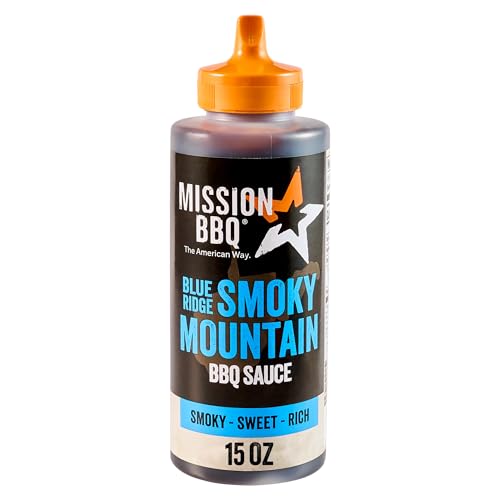
BBQ FLAVOR: Add the rich combination of sweet and smoky Blue Ridge BBQ flavor to your favorite proteins.
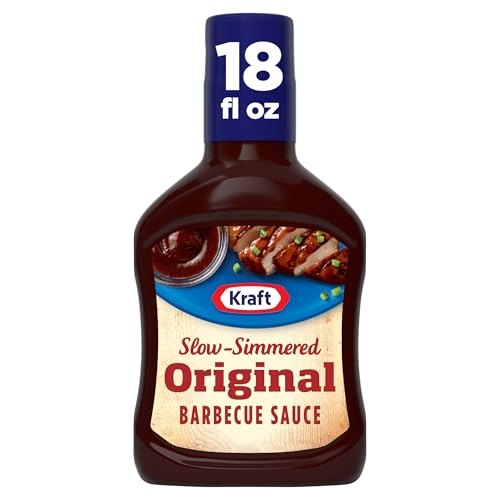
One 18 oz bottle of Kraft Original Slow-Simmered Barbecue Sauce & Dip

Resting Your Smoked Chicken Properly
Why does resting matter after you’ve spent hours perfecting your smoked chicken? Proper timing of rest period directly determines meat quality and safety. You’ll remove your chicken at 165°F internal temperature, then let it rest for 10-15 minutes minimum, extending to 20-25 minutes for ideal results. Cover it with aluminum foil to prevent moisture loss during this critical phase.
The benefits of proper resting are substantial. Carryover cooking naturally raises temperature while juices redistribute evenly throughout the meat, preventing dryness when you carve. Your breast maintains succulence, and dark meat becomes noticeably more tender. Without adequate resting, you’ll lose those hard-won juices immediately upon slicing. Allow the chicken to rest undisturbed for the full duration to achieve optimal juiciness and texture. This resting process allows the juices to reabsorb back into the meat fibers. This undisturbed hold transforms your smoked chicken from good to exceptional, delivering the moisture retention and tenderness your effort deserves. If you need to reheat your smoked chicken later, use methods that retain moisture such as an air fryer or oven with added liquid and proper covering. For best reheating results, place your smoked chicken in a covered roasting pan with a little broth and heat at a low temperature around 300°F to preserve juiciness. If you’re planning to enjoy your smoked chicken later, store any leftovers in airtight containers or freezer bags to maintain quality and prevent freezer burn. Always let your chicken cool completely before wrapping and freezing to prevent condensation and temperature fluctuations in your freezer. When refrigerating smoked chicken, consume it within three to four days to ensure food safety and optimal quality.
Achieving the Perfect Crispy Exterior Finish
While resting guarantees your meat’s internal perfection, you’ll want to shift your focus outward to achieve that coveted crispy exterior that makes smoked chicken truly exceptional. Implement strategic moisture control techniques by avoiding foil coverage post-smoke, which traps steam and compromises texture. Position your chicken on the top rack with legs toward the heat source, optimizing air flow management around the bird. Execute a high-heat finishing blast at 400-450°F after reaching 130°F internal temperature. Brush oil across the skin immediately before this final stage to enhance browning. This aggressive heat renders subcutaneous fat thoroughly, delivering that golden-brown, bite-through exterior you’re pursuing while maintaining tender meat beneath. The dry brining process starts this crispy skin journey by removing surface moisture from the chicken before seasoning, which allows the skin to brown more effectively during the high-heat finish. For best results, use hickory wood chips during the initial smoking phase to infuse subtle smoke flavor that complements the final crispy texture. Consider switching to wood chunks instead of chips for longer smoking sessions, as they burn more slowly and provide consistent smoke throughout the cook. If you need a temperature boost during the finishing phase, 100% charcoal pellets like Royal Oak deliver superior heat output while maintaining clean-burning properties. For gas grill users seeking authentic smoke flavor, a 12-inch smoking tube filled with pellets provides approximately 4-6 hours of consistent smoke without requiring refills during the cook. Proper temperature control through frequent monitoring ensures you avoid flare-ups that can char the skin before achieving that perfect golden-brown finish. Before smoking, ensure your grill grates are clean using a stainless steel grill brush and warm soapy water to prevent old residue from affecting your chicken’s flavor.