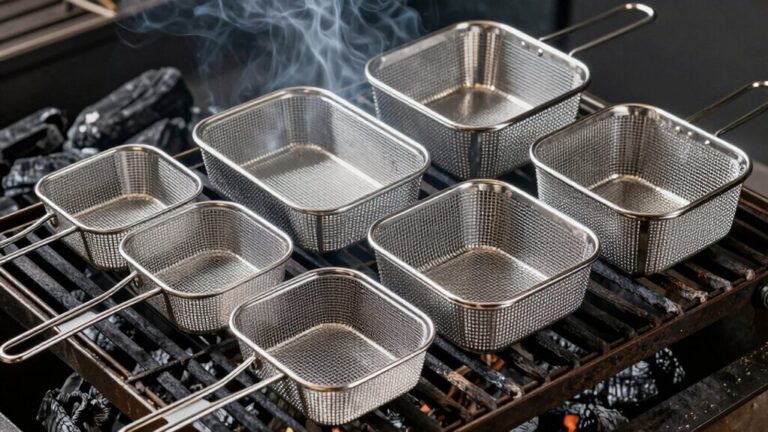

You’ll achieve perfect grilled chicken by spatchcocking it first, then marinating it overnight in lemon, garlic, and herbs. Set up your grill for indirect heat at 350°F, positioning a drip pan beneath the chicken. Grill skin-side down initially, then flip to finish cooking. Monitor internal temperatures—165°F for white meat, 180°F for dark meat—using a wireless thermometer. Rest your bird for 15-20 minutes before carving. The technique’s finer details will transform your grilling game entirely.
Spatchcocking Your Chicken
Before you fire up the grill, you’ll need to prepare your chicken through spatchcocking—a technique that flattens the bird for even, efficient cooking.
Start by patting your chicken dry with paper towels. Using sharp kitchen shears, cut along both sides of the spine, positioning your knife placement as close to the bone as possible for ideal meat preservation. Remove the backbone entirely—you can save it for homemade stock.
Flip the chicken breast-side up. Apply firm downward pressure to the center of the breastbone until you hear it crack. If needed, use a rolling pin to assist. This larger surface area ensures the white and dark meat cook at similar rates. The spatchcocked chicken will also develop crispy, flavorful skin during grilling. Before grilling, make sure your grill grates are clean by using a grill brush to remove any debris or buildup from previous use. For best results, preheat the grill to medium-high heat to achieve a proper sear on your chicken. Let the chicken rest a few minutes after grilling to seal in juices and ensure optimal tenderness. Use a meat thermometer inserted in the thickest part of the chicken to ensure proper doneness when grilling. Insert two diagonal skewers through the breast and thigh to maintain the flat position. Resting the chicken after grilling allows juices to redistribute, ensuring moist and tender meat.
Your chicken now lies completely flat, ready for perfectly even grilling.

Professional-Grade Durability & Corrosion Resistance: Forged with rust-proof molybdenum-vanadium steel and precision-tempered 3.5mm blades, these poultry shears cut through poultry bones effortlessly. The corrosion-resistant coating prevents stains, while industrial-grade aluminum handles withstand 10x more pressure than regular scissors.

Professional-Grade Durability & Corrosion Resistance: Forged with rust-proof molybdenum-vanadium steel and precision-tempered 3.5mm blades, these poultry shears cut through poultry bones effortlessly. The corrosion-resistant coating prevents stains, while industrial-grade aluminum handles withstand 10x more pressure than regular scissors.

More Robust and Durable: SimCoker poultry shears are made of durable, tougher, more corrosion-resistant stainless steel that is thicker and lasts longer than regular kitchen scissors. Combined with a thicker spring and sharper blade design, the shear is easy to use
Preparing the Marinade and Seasoning
Now that you’ve spatchcocked your chicken, it’s time to build a marinade that’ll infuse deep flavor throughout the bird. Combine one-third cup extra virgin olive oil with juice and zest from two lemons, then whisk in six to twelve minced garlic cloves. Add one tablespoon each of dried oregano, rosemary, and thyme, along with paprika, cumin, coriander, and black pepper for depth.
Rub salt directly onto the chicken before applying your flavorful marinade application. Work the mixture underneath the skin and across all surfaces, ensuring complete coverage inside the cavity. For effective marinating techniques, use a Ziploc bag and gently shake to distribute marinade evenly. This quick and easy marinade can be prepared in just five minutes, making it perfect for busy weeknight grilling. The aromatic zest and juice from the lemon will provide a bright, tangy flavor that cuts through the richness of the chicken while adding a zingy note to elevate the freshness of the dish.
Refrigerate for at least three to four hours, though overnight marinating yields superior tenderness and flavor saturation. Before grilling, remove the chicken and let it rest at room temperature for thirty minutes. Monitoring internal chicken temperature throughout the grilling process ensures your bird reaches safe doneness while maintaining juicy, tender meat.

Premium Quality: Chef-crafted from carefully selected ingredients, our Lemon Pepper Garlic Sauce & Marinade boasts a pure taste with soy sauce, and flavors, experience the richness of authentic flavors in every bite.

Lemon and Garlic Butter marinade combines tangy lemon, butter, and garlic flavors.

Premium Quality: Chef-crafted from carefully selected ingredients, our Lemon Pepper Garlic Sauce & Marinade boasts a pure taste with soy sauce, and flavors, experience the richness of authentic flavors in every bite.
Setting Up Your Grill
Once your marinated chicken’s rested and ready, you’ll need to set up your grill for two-zone cooking to guarantee even, gentle heat. Clean your grates thoroughly with a grill brush, then oil them after heating to prevent sticking. For gas grills, ignite outer burners to medium while leaving the center off. On charcoal grills, push lit coals to one side, leaving the opposite completely free. Position your drip pan placement directly under the grate above non-lit burners to catch rendered juices and fat. Preheat your indirect zone to 350-400°F. For charcoal, achieve this temperature through damper adjustment, closing dampers halfway for consistent heat regulation. Consider using a wireless meat thermometer with app connectivity for remote temperature monitoring throughout the cooking process. Place your instant-read thermometer nearby for monitoring doneness. For the fastest and most accurate temperature checks, an instant-read model like the ThermoWorks Thermapen ONE provides consistent reliability during your cook with ±0.5°F accuracy for precision grilling results. For longer cooks where you’re away from the grill, radio-frequency thermometers offer superior range compared to Bluetooth models, allowing you to monitor your chicken from inside your home without connectivity drops. Aim for a grill temperature of 350°F to ensure the chicken cooks through evenly without burning the skin. The chicken is done when the internal temperature reaches 165°F for white meat and about 180°F for dark meat. Having a reliable instant-read meat thermometer at hand is essential for accurately checking when your chicken reaches the proper internal temperature.
Getting the Grill Ready
Your grill’s preparation is critical to success, so don’t skip these essential steps. Begin by preheating your grill to 400 degrees Fahrenheit, establishing a stable cooking environment before placing your chicken.
Next, implement the indirect heating technique by lighting only half your burners. For gas grills, turn two left burners to medium while keeping two right burners off. Position your drip pan over the unlit burners beneath the grate to catch juices and prevent flare-ups. Consider installing a heat tent over your burners to further protect against flare-ups and ensure even heat distribution throughout the cooking process. Heat shields like porcelain-coated steel or stainless steel options are particularly effective at vaporizing drippings and reducing flare-ups during cooking.
Clean your grates thoroughly with a grill brush to remove any debris. Lightly oil the grates using an oiled paper towel held with tongs, applying eight passes over your grilling area. Allow the oil to harden for approximately one minute before applying additional coats. This preparation guarantees even heat distribution and prevents sticking during cooking. Using a fire-resistant grill pad underneath your grill protects your patio or deck from grease drips and heat damage during the entire cooking session. A non-slip textured mat will keep your grill stable and secure on your deck surface. Selecting a propane regulator matched to your grill’s BTU output ensures consistent heat and safe operation throughout your cooking session. The burner directly below the chicken should remain off to ensure the chicken roasts evenly without burning. Place foil in center to trap heat and create optimal cooking conditions for your spatchcocked chicken.
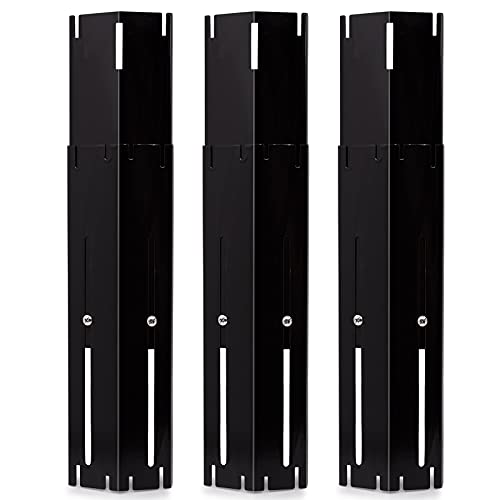
【DIMENSIONS】Contains THREE grill deflector plates, which has a 2-piece telescoping design. Each grill adjustable heat plate measures 3.75-inches wide and has an adjustable length of 11.75 to 21-inches.

Adjustable grill heat plates extend from 11.75” up to 21” long, 3.75” wide, fits most outdoor gas grills such as charbroil, nexgrill and etc. If installed reversely, the length will be extended from 11.75” to 18.37” only. Please measure the width of the mounting slot on your grill to confirm compatibility before ordering

Adjustable grill heat plates extend from 11.75” up to 21” long, 3.75” wide, fits most outdoor gas grills such as charbroil, nexgrill and etc. If installed reversely, the length will be extended from 11.75” to 18.37” only. Please measure the width of the mounting slot on your grill to confirm compatibility before ordering
Grilling Your Spatchcocked Chicken
With your grill properly prepared and heated, you’re ready to begin the spatchcocking process. Start by patting your chicken dry with paper towels to guarantee proper skin preparation. Using sharp kitchen shears, cut out the spine directly left and right. Lay the chicken bone side down and flatten by pressing the breast section firmly. Slice through the sternum and cartilage for uniform thickness across the entire bird.
Once flattened, spread the bird completely flat to certify even cooking throughout. This consistent thickness prevents some sections from overcooking while others remain undercooked. The spatchcock method also provides more surface area for browning the skin to a golden crispy finish. The increased surface area exposure enhances muscle growth and protein absorption during the cooking process. Just as with grilling vegetables, maintaining even thickness] throughout the bird ensures consistent cooking and better texture. Like corn on the grill, careful attention to turning every few minutes prevents burning while allowing a tender result. For best results, preheat your grill to medium-high heat between 350°F and 450°F before placing your spatchcocked chicken on the grates. You can save the removed backbone to make chicken stock later. Using a meat thermometer to check that the internal temperature reaches 165°F ensures safe consumption and perfectly cooked chicken. Your spatchcocked chicken is now properly prepared for the grill, ready to achieve that perfect balance of crispy skin and juicy meat.
Monitoring Internal Temperature
Proper temperature monitoring is what separates a perfectly cooked chicken from one that’s either undercooked or dry. You’ll begin checking internal temperatures around the 45-minute mark, then establish a temperature monitoring schedule of every 15 minutes thereafter.
Use thermometer insertion points strategically by probing the thickest part of the thigh without touching bone, the thickest breast section, and the drumstick. This thorough assessment accounts for uneven cooking across your bird. Using both a ThermaQ and instant-read thermometer allows you to monitor the cooker’s temperature while also verifying the meat’s internal temperature. For the most accurate readings, choose an instant-read thermometer with a digital display rather than analog models, which can be less precise.
Target 157°F in breast meat for ideal juiciness and 170-175°F in thigh and leg meat to break down connective tissue. Remember that carryover cooking will increase final temperature by 5-10°F after removal from heat. Rely on an instant-read thermometer to measure internal temperature accurately—not visual cues or timing estimates—to determine true doneness.

Fast & Accurate: Get precise readings in just 1 second with ±0.9°F accuracy. NSF Certified for trusted food safety, this digital food thermometer features a 4.3 inches food-grade stainless steel meat probe, perfect for grilling, frying, baking, making candy and more

【Fast & Accurate】Our meat thermometer digital delivers accurate readings within ±1°F in just 1–2 seconds, with a wide temperature range of -58°F to 572°F (-50°C to 300°C). No more waiting over the heat - know your food's exact temperature instantly.

【8X Faster + 4X More Precise】: Upgraded with an industrial-leading professional thermocouple sensor, Themomonster meat thermometer digital with NIST certified ±0.5℉ precision provides you the accurate temperature of your food in just 0.5 Seconds.
Resting and Carving Your Chicken
The transformation from grilled bird to serving platter begins the moment you remove the chicken from heat. You’ll want to rest your chicken for 15-20 minutes on a foil-tented platter, allowing juices to redistribute throughout the meat and stabilize internal temperatures.
Once rested, position your bird breast-side up on a sturdy cutting board with legs toward you. Remove any thermometer or trussing twine before beginning your efficient carving technique. A damp kitchen towel beneath your cutting board will prevent slipping during the carving process. For best results, ensure your grill grates were properly cleaned with stainless steel grill brushes before cooking to prevent any residue from affecting your meal’s quality. Bristle-free coiled designs balance power, safety, and durability while preventing stray bristles from contaminating your food. The firefighter-grade sponge head eliminates the risk of metal bristles breaking off during the cleaning process. Consider using a heat-resistant BBQ glove on your non-carving hand for enhanced grip and protection during this step. Separate the legs first by cutting through the skin and popping the thigh joint free. Next, remove wings by cutting through their joints. Using a carving fork or kitchen towel will help you grip and stabilize the chicken while making precise cuts.
Finally, slice the breasts against the grain into ½-inch pieces, keeping skin intact throughout. Your methodical carving presentation creates an organized, professional appearance when arranging pieces on the serving plate.
Storage and Alternative Cooking Methods
After you’ve carved and plated your grilled chicken, proper storage extends your meal’s value and guarantees food safety for days to come. Your fridge storage duration depends on preparation: cooked chicken remains safe for 3-4 days in airtight containers on the middle shelf. For extended preservation, freezer storage duration offers substantial advantages—cooked chicken lasts 2-6 months when properly sealed and dated.
Cool chicken completely before containerizing to prevent condensation. Remove excess air from freezer bags to minimize freezer burn. Label each bag with the date and portion size to track storage duration accurately. To maintain optimal safety and quality, freeze cooked chicken on the day of cooking to preserve both texture and flavor. Consider portioning chicken into meal-sized servings for convenience and minimal waste when thawing later. Proper storage involving refrigeration at consistent temperatures and avoiding exposure to heat or sunlight is critical for maintaining chicken quality and safety. When thawing, plan ahead: refrigerator thawing requires approximately 5 hours per pound on your bottom shelf. Avoid refreezing thawed chicken, as this can negatively impact the texture and moisture content of your meat. Before consuming any leftovers, reheat to 165°F to ensure food safety and eliminate any potential pathogens. To preserve juiciness and texture when reheating, consider using an air fryer with a light spray of cooking oil for optimal results.
If you prefer alternative cooking methods, you can boil, bake, or pan-sear your grilled chicken leftovers for variety. These techniques revitalize your stored protein while maintaining nutritional value and flavor integrity. Freezing grilled chicken imparts a smoky flavor that carries over when frozen, preserving the distinctive taste of your original preparation method.