You’ll master grilled eggplant by prioritizing moisture removal and heat control. Select firm, medium eggplants, peel them, and slice lengthwise to ¼-inch thickness. Salt generously for 30-60 minutes, then pat completely dry. Brush with seasoned olive oil, then grill at 400°F for 4-5 minutes per side until charred and tender. Avoid moving slices excessively to prevent sticking. Finish with fresh herbs for brightness. These fundamentals transform your results consistently every time you fire up the grill.
Preparation and Slicing
Since you’ll want evenly cooked eggplant that holds together on the grill, start by selecting a firm, glossy eggplant—any variety works, though medium-sized ones yield ideal ¼-inch rounds. Remove both ends, then peel the skin with a vegetable peeler, gripping the leafy end last for stability.
Slice lengthwise or crosswise to your preference—lengthwise planks prevent slipping through grates, while crosswise circles provide more surface area. Focus on thickness optimization: ¼-inch slices guarantee tenderness without excess char, while ½-inch rounds hold together better for flipping. Maintain uniform thickness throughout to prevent uneven grilling.
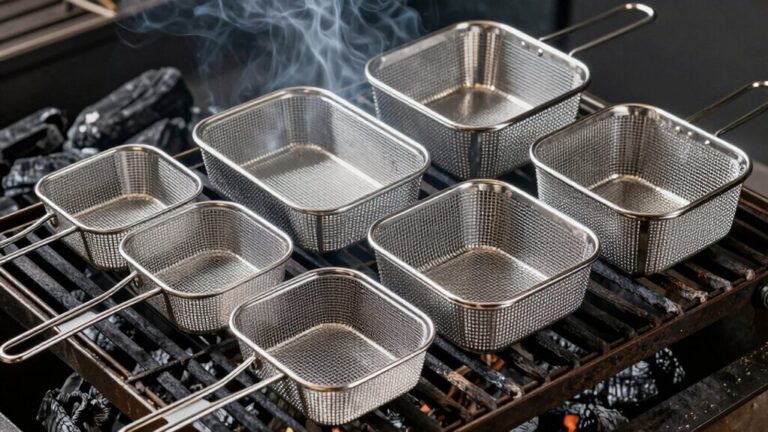
Arrange your slices single-layer on towels immediately after cutting. Layer them between weighted towels to remove excess moisture, which helps tenderize the eggplant and extract water before cooking. Salt helps draw out moisture and bitterness from the eggplant during this resting period. For smaller pieces or diced eggplant, consider using a perforated grill basket to prevent vegetables from falling through the grates while still achieving char marks. If you’re grilling indoors or want more controlled heat, a cast iron griddle provides excellent heat retention and even distribution for perfectly seared eggplant slices. For delicate slices that might stick or fall apart, place them on a non-stick grill mat that can handle high temperatures while preventing flare-ups and simplifying cleanup. A versatile two-piece design basket can accommodate varying amounts of eggplant while allowing for easy flipping and monitoring during the grilling process. Before grilling, drizzle your eggplant slices with olive oil and season with salt and pepper, adding optional flavorings like garlic or lemon zest to enhance the natural flavors. This systematic approach ensures optimal slice alignment and consistent results on the grill.
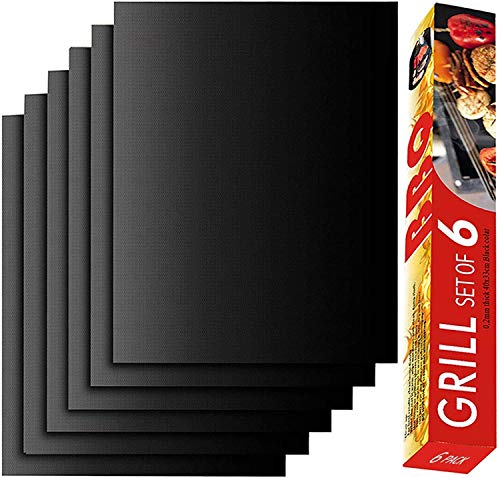
1.NO BETTER CHOICE - Thicker does not mean better. Our grill mat is thin enough to leave grill marks and flavor intact,and thick enough to provide ultimate heat resistance and durability.6 pack of grill mats can meet the needs of the dinner from time to time; when they are spare, you can cut them to any size or shape to fit any need. Also doubles as a bake mat

Enhanced Ventilation with Grid Design: Our mesh grill mat features a unique grid design that effectively enhances ventilation, ensuring even heating of the food and avoiding issues such as localized overheating or uneven cooking.

Keep Food Safe & Mess-Free: Prevents fish, shrimp, vegetables, wings, and other small items from falling through grill grates
Moisture Management Techniques
To prevent your eggplant from becoming mushy or falling apart on the grill, you’ll need to systematically remove excess moisture before cooking. Start by salting your sliced eggplant generously on all surfaces, then let it sit for 30 minutes to one hour. Layer paper towels between slices to absorb released water—replace saturated towels periodically for ideal moisture measurement. Stack weights like plates on top to accelerate extraction. This technique concentrates natural flavors while eliminating bitter compounds. After salting, rinse thoroughly and pat completely dry. Your moisture management approach directly impacts texture and cooking time. Thicker slicing methods require longer processing, while seedy varieties benefit from extended sitting. Salting removes bitterness that might otherwise affect the final dish’s taste profile. The resulting eggplant slices will also provide excellent digestive support due to their high fiber content. For similar vegetables like zucchini, cutting into planks or spears helps ensure even grilling and prevents pieces from falling through grill grates. Once your eggplant is properly prepared, you can apply the same principle of placing slices perpendicular to the grill grates to prevent them from slipping through. Proceed to oiling immediately after drying to prevent re-absorption. Before grilling, brush the dried eggplant slices with olive oil and season with salt and pepper for simple yet flavorful results. After cooking, maintain your grill using baking soda and vinegar to create an effective natural cleaning paste that removes residue without harsh chemicals. For stubborn grease and caked-on residue, pumice-based grill bricks offer an efficient alternative that requires only water and light pressure to restore your grill’s surface.
Oil and Seasoning Application
Proper oiling and seasoning transforms your moisture-managed eggplant into a flavorful centerpiece that’ll resist sticking and develop a beautiful char. Choose extra virgin olive oil for superior taste, or substitute vegetable oil in herb mixtures. Coarse salt enhances adhesion and flavor penetration.
Combine your oil types with complementary seasoning blends. Whisk together garlic, oregano, salt, and pepper, or blend onion powder, marjoram, thyme, and red pepper for depth. Stir in minced garlic and Aleppo pepper for complexity. Remember that the oil soaks into the eggplant fast, so avoid going back over the slices with additional oil after your initial application.
Apply your seasoning blends systematically: brush one side before grilling, flip and coat the other side. For intensive flavor, toss slices with half your garlic herb oil mixture, then marinate ten minutes. This methodical approach ensures even coverage and guarantees flavor distribution across every slice. Fresh herbs like basil or parsley added after grilling will provide brightness and final flourish.


【 The Highest Quality Cold-Pressed Moroccan Olive Oil】 The Atlas Mountains of Morocco help grow the most perfect olives in the world, thanks to the rare climate and the geographical advantage of the high-reaching area. We, at Atlas Olive Oils, pride ourselves on producing the highest quality cold-pressed Moroccan olive oil, which is sustainably sourced and ethically produced.

SMOOTH EXTRA VIRGIN OLIVE OIL BULK SIZE: Expertly crafted by The Olive Oil People using first cold pressed olives, Smooth EVOO with naturally occurring polyphenols
Heat Settings and Grill Preparation
Your seasoned eggplant slices are ready for heat, and now you’ll dial in the right temperature to achieve perfect charring without burning. Set your grill to medium-high heat, targeting 400°F for ideal results. Allow 5-10 minutes for preheat timing to reach target temperature, using a grill thermometer for precision verification.
While preheating, prepare your grates through a grate oiling technique: brush them with 1-2 tablespoons of oil using tongs and a paper towel. This prevents adhesion and promotes clean grill marks. High heat naturally cleans debris during preheating. Consider placing a grill mat for decks underneath your grill to catch any oil drips or vegetable pieces that fall through the grates, protecting your outdoor surface from stains and grease buildup. For added surface protection, look for fire-resistant mats that are non-absorbent to grease and oils, which can handle the heat from gas, charcoal, or pellet grills while being easy to clean with soap and water. Choose a mat with a raised lip to catch spills and dimensions that extend beyond your grill on all sides for maximum deck protection.
Gas grills maintain steady 400°F, while charcoal grills target the 400-450°F hot zone. Indoor grill pans heat to 375-400°F equivalently. This temperature balances tenderness with visible charring, ensuring your eggplant slices cook evenly without mushiness or burning. Ensure the eggplant slices are cut to the same thickness for uniform cooking throughout the grilling process. For best results, grill each slice for about 3-4 minutes on each side to achieve optimal tenderness with nice grill marks. When not in use, protect your flat top grill with a cover made from heavy-duty polyester or ripstop material to ensure long-lasting durability and weather resistance. If you grill frequently in all weather conditions, consider upgrading to a covered grill station with a roof to shield your equipment from rain and extend its lifespan.

Fire Retardant & Widely Applied - Our heavy-duty fiberglass blanket is fire retardant, effectively preventing accidents, injuries, and property damage caused by sparks, flares, and splatter. It serves not only as a reliable welding blanket for draping over equipment or floors but also as an emergency survival fire blanket or a vertical shield. Plus, it’s an excellent protective mat for outdoor camping and barbecues.

【Fireproof & Heat Resistant】Our heat resistant mats for countertop is made of fiberglass, heat resistant silicone resin coated on both sides, which can provide heat resistance up to 550℃/1022℉.

【Fireproof & Heat Resistant】Our grill mat for outdoor grill is made of fiberglass, which can provide heat resistance up to 550℃/1022℉. Our heat resistant mats have finely stitched edges. It won't stick, tear, curl or crack from heat. Protect your countertop.
Cooking Time and Doneness Indicators
Once you’ve placed your eggplant slices on the grill, you’ll cook them for 2 to 3 minutes per side on medium-high heat, adjusting to 3 to 4 minutes for thicker cuts. Make slice thickness adjustments your priority for even doneness throughout each piece.
You’ll know your eggplant’s done when it’s completely tender and a fork pierces effortlessly through the flesh. Look for prominent grill marks on both sides and a crispy exterior contrasting with a soft, creamy interior. Apply texture evaluation techniques by pressing firmly—the slice should yield slightly without resistance. Allow your grilled eggplants to cool to room temperature before serving to fully develop their flavor profile. The exterior should develop charring, signaling proper caramelization, which occurs when eggplant reaches the ideal doneness level. Avoid overcooking, which creates a spongy, undesirable texture. For enhanced taste and tenderness, consider marinating your eggplant slices in a flavorful mixture before placing them on the grill. This systematic approach guarantees you’ll achieve perfectly grilled eggplant every time.
Finishing and Serving Techniques
How you finish and serve your grilled eggplant slices determines whether they’ll shine as a standalone dish or elevate your entire meal. Your finishing touches transform properly grilled eggplant into restaurant-quality results.
Transfer slices immediately to a serving dish to halt carryover cooking. Drizzle extra virgin olive oil over the warm eggplant, then apply fresh herbs—parsley, mint, or oregano—for aromatic complexity. Squeeze lemon juice across the surface to brighten flavors with acidity.
Your serving recommendations depend on your intended application. For antipasti platters, arrange slices at room temperature alongside complementary ingredients. For immediate consumption, serve hot or warm to maximize tenderness and flavor. Layer cooled slices into sandwiches with mozzarella and basil pesto, or chop and integrate into salads. Coat with oil during extended holding periods to prevent drying. Before grilling your eggplant, ensure your grill grates are properly maintained by applying high-temperature cooking oils like vegetable or canola oil right before cooking for optimal results. Consider seasoning your cast-iron grill grates with refined avocado oil or peanut oil, as their elevated smoke points create a durable, non-stick surface that prevents delicate eggplant from sticking. After each grilling session, perform routine light cleaning by brushing off debris while the grates are still warm to maintain performance and prevent flavor transfer. For safety, always inspect your grates after brushing to ensure no stray bristles remain that could contaminate your food. If your grill’s exterior shows signs of rust or wear, apply Rust-Oleum High Heat spray paint to metal surfaces not in direct flame contact to restore durability and prevent further corrosion. Leftover grilled eggplant can be stored in an airtight container in the refrigerator for up to three days, making it convenient for meal prep throughout the week.
Tips for Consistent Results
What separates mediocre grilled eggplant from exceptional results? Mastering your uniform slicing technique. Cut all slices to identical ½-inch thickness so they cook evenly without some burning while others remain undercooked. This consistency eliminates guesswork and guarantees predictable results every time.
Your flavor enhancement tactics matter equally. After salting and purging moisture, marinate your slices in olive oil infused with garlic, balsamic vinegar, and fresh herbs. Shake off excess before grilling to prevent flare-ups. This strategic approach maximizes taste absorption while maintaining proper texture. A parsley, mint and zaatar sauce provides an excellent alternative topping that complements the smoky char of grilled eggplant. The balsamic vinegar gives the eggplant a meatiness and sweetness that elevates the overall savory flavor profile.
Monitor grill temperature carefully—maintain medium-high heat around 375°F for optimal caramelization. Time each side precisely: 2-3 minutes for golden char without excessive softening. Clean your grates thoroughly beforehand, and brush exposed sides with oil before flipping. Lightly oil the grill grates or spray the eggplant slices with oil to prevent sticking and ensure easy release. For even more control over moisture retention, consider cooking your eggplant in foil packets with seasonings for approximately 20 minutes. Turn the slices occasionally to promote even cooking and prevent any hot spots from creating uneven char patterns. Allow the grilled slices to rest before serving to let the flavors settle and juices redistribute for optimal taste and texture. These systematic habits transform your grilling consistency dramatically. Season generously with salt, pepper, and optional herbs before placing on the grill for maximum flavor development.