
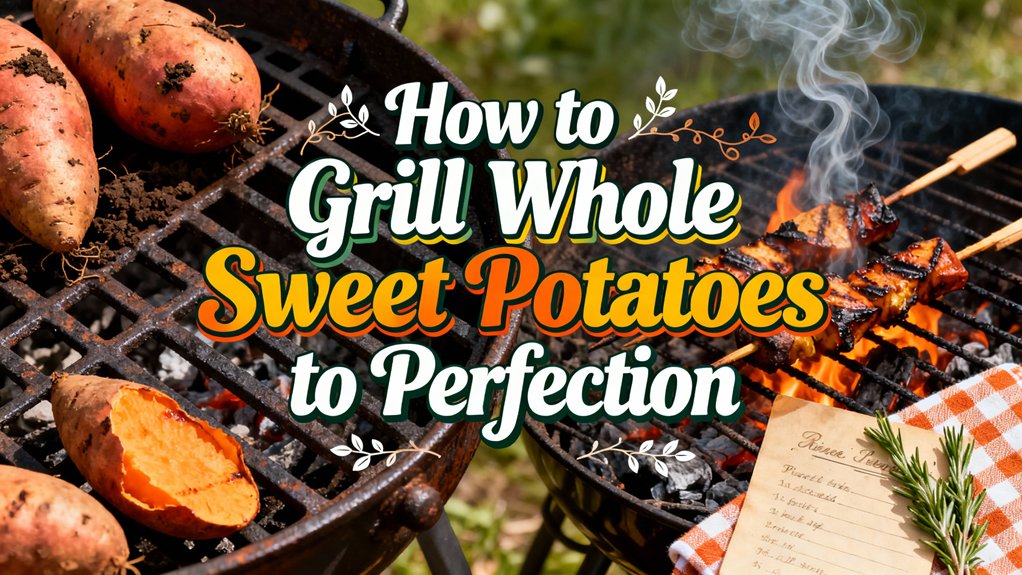
You’ll transform whole sweet potatoes into fork-tender masterpieces by prepping them thoroughly—rinsing, drying, and poking fork holes to prevent splitting. Wrap them in double-layered foil with olive oil and seasonings, then grill over indirect heat at 375-400°F for 40-60 minutes, rotating every 15-20 minutes. Use a meat thermometer to confirm doneness, then rest them briefly before unwrapping. Top your perfectly caramelized potatoes with chimichurri, herb butter, or guacamole bacon for restaurant-quality results that’ll impress any crowd.
Preparation and Cleaning
Why should you start with a thorough cleaning? You’ll remove surface dirt and debris that could compromise your final result. Rinse your sweet potatoes under cold water, inspecting carefully for bad spots you can cut away during washing.
After rinsing, trim the ends off each potato and pat them completely dry with paper towels. Ensuring complete dryness is critical—it promotes even seasoning application and prevents steaming on the grill. For added crispiness, lightly spray the skin with olive oil, which enhances skin texture considerations and helps seasonings adhere properly. If you’re using Japanese Murasaki sweet potatoes, note that they have purple-red skin and white flesh that will cook beautifully on the grill.
Next, poke 3-4 holes throughout each potato using a fork, puncturing evenly around the surface. This step prevents splitting during cooking while allowing steam to vent properly. Keep the skin intact to preserve nutrients and achieve that desirable texture when grilled. Like grilling eggplant, proper heat control and moisture management are essential for achieving optimal results. Using a meat thermometer ensures your sweet potatoes cook to the ideal internal temperature for perfect doneness. Tightly sealing foil packets around other vegetables like asparagus demonstrates how sealed foil packets can steam ingredients while allowing slight charring for superior results. No need to peel potatoes since the skin will crisp up beautifully on the indirect heat of the grill. A non-slip grill mat will protect your deck surface from heat, grease, and spills during the grilling process. The smoky flavor and tender centers that result from grilling whole sweet potatoes make this cooking method superior to other preparation techniques.
Foil Wrapping Techniques
Once your sweet potatoes are cleaned, dried, and seasoned, you’ll protect them with a proper foil wrapping technique that guarantees even heat distribution and moisture retention. For foil size selection, use 18-20 inch pieces arranged crosswise and lengthwise to create overlapping coverage. Your foil layering techniques should consist of double or triple aluminum layers, providing essential insulation and backup sealing if tears develop.
Apply 2 tablespoons of olive oil to the foil surfaces before placing potatoes to prevent sticking and promote crispy skin development. Distribute seasonings and herb sprigs directly on the oiled foil as a flavorful base layer. Consider crushing your rosemary in a coffee grinder to create a finer texture that distributes more evenly throughout the potatoes. Crimp all edges tightly together, folding foil toward the center to create fully sealed packets that contain moisture and heat effectively throughout cooking. For optimal results, grill your wrapped sweet potatoes at 350°F to ensure the potato interior becomes tender while the foil protects it from direct flame exposure. Using lump charcoal for your grill will provide the high, consistent heat needed to cook your wrapped potatoes evenly and efficiently. To maximize charcoal performance, ensure proper airflow by fully opening your grill vents before cooking begins. An adjustable grate allows you to fine-tune the distance between your heat source and wrapped potatoes for more precise temperature control throughout the cooking process. For enhanced flavor beyond basic seasonings, consider incorporating Smokin’ Pecan pellets which deliver a rich, sweet smoke profile that complements root vegetables beautifully. Himalayan salt blocks can also be used as an alternative cooking surface, as they perform reliably at high-temperature performance up to 500-600°F when heated gradually, offering a mineral-infused cooking method for your vegetables.
Grill Temperature and Heat Settings
Getting your grill to the right temperature is essential for achieving perfectly cooked sweet potatoes with crispy exteriors and tender interiors. You’ll want to preheat your grill to 375-400°F using a two-zone setup. This indirect heat zone placement prevents burning while promoting even cooking. Set up your indirect heat zones by turning off burners directly under where you’ll place the potatoes on gas grills, or positioning charcoal to one side on charcoal grills. Use a reliable leave-in thermometer to monitor precision throughout the 40-60 minute cooking time. Maintaining consistent low fire around 400°F beneath the grate guarantees fork-tender results without mushiness. Like steaks cooked at high temperatures, using a meat thermometer provides the most reliable indicator of doneness rather than relying solely on cooking time. The medium heat range between 300 and 400 degrees Fahrenheit is versatile enough to cook most vegetables without burning them, making it ideal for root vegetables like sweet potatoes. Consider resting your vegetables after cooking to allow the heat to distribute evenly throughout, similar to how resting improves the final texture of grilled meats. The caramelization of natural sugars begins at 320°F, which enhances the sweetness and creates complex flavors in your grilled sweet potatoes. The radiant heat from your charcoal or gas burners works alongside conduction from the hot grate to develop those desirable caramelized exteriors. Close your lid and partially close vents to control heat distribution across grill zones effectively. Keeping the lid closed maintains consistent heat, which is particularly important during the 50 to 65 minutes typically needed for larger sweet potatoes to become fork tender.

Large Display: Features a 2 3/8 inches large face for clear visibility; Stem length of 2 7/8 inches enhances accessibility; Enables easy classification of food temperatures in various cooking environments

The 2 3/8" large face of the temperature gauge makes it easy to read and classify the temperature of your food. The Stem is 2 7/8"
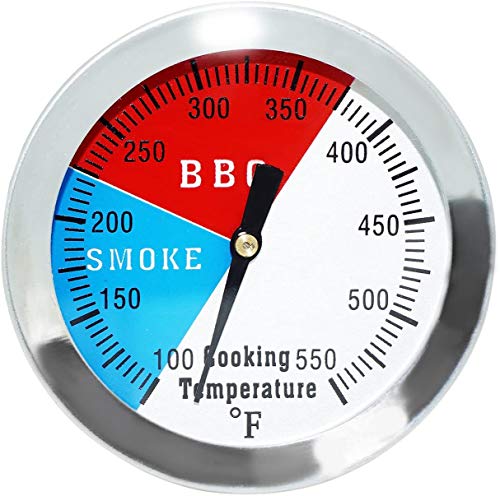
2" BBQ grill smoker pit thermometer stainless steel thermostat pit temp gauge
Cooking Time and Rotation
Now that you’ve established your grill’s ideal temperature and heat zones, you’ll need to monitor your sweet potatoes closely throughout the cooking process. Cooking time varies considerably based on appropriate potato size selection, ranging from 20-40 minutes for smaller orange varieties to 45-90 minutes for larger Japanese types. Medium potatoes typically require 35-40 minutes on medium heat with consistent temperature observation to prevent burning.
Rotate your potatoes every 10-15 minutes, adjusting frequency based on size. This regular flipping guarantees even heat exposure and prevents uneven charring. Keep your grill lid closed throughout cooking to maintain steady temperatures. Like corn on the cob, using medium heat zones helps achieve optimal cooking results. Consider marinating your potatoes in a flavorful mixture before grilling to enhance taste and tenderness. For easier cleanup and to retain moisture during cooking, you can also prepare your sweet potatoes in foil packets alongside other vegetables. As with grilled corn, turning regularly every few minutes during cooking allows for desirable char marks while preventing burning. Larger potatoes may extend beyond the standard timeframe, so check for fork tenderness to determine when they’re done. The charred skin and smoky flavor develops through proper rotation and temperature control. Don’t rely solely on time—visual cues and texture confirm proper doneness.
Doneness Testing Methods
Determining when your grilled sweet potatoes have reached perfect tenderness requires multiple testing approaches rather than relying on time alone. For precise temperature readings, insert an instant-read thermometer like the Thermoworks Thermapen One until you reach 210°F, which signals optimal internal texture assessment. You’ll also test doneness by inserting a knife or fork with minimal resistance through the skin and flesh. After removing potatoes from the grill, perform a gentle squeeze test using oven mitts—the potato should yield like soft clay, confirming very tender results. Watch for crispy skin while the interior softens throughout. Avoid over-testing, which compromises skin crispiness. Remember that smaller pieces cook faster than larger whole potatoes, so adjust your testing timeline accordingly. The most reliable way to know when potatoes are done is to check the internal temperature, which should read about 210F. For the most accurate readings during long cooks, consider using wireless thermometer models that provide real-time monitoring without repeatedly opening the grill. Wireless thermometers offer app-enabled dual-probe setups with extended range capabilities for seamless temperature tracking throughout your grilling session. Models using radio frequency technology deliver superior long-range reliability compared to standard Bluetooth connections, ensuring consistent temperature data even from a distance. Like the reverse sear method used for steaks, monitoring your sweet potatoes with a reliable meat thermometer throughout the cooking process ensures you achieve the perfect doneness without guesswork. For extended grilling sessions where you need hands-off precision, dual-sensor wireless probes eliminate the need for frequent grill opening while maintaining consistent temperature data. These combined methods guarantee you’ve achieved perfectly grilled sweet potatoes with ideal texture and doneness every time.
Serving and Topping Options
Once you’ve pulled your grilled sweet potatoes from the heat, you’ll discover that their natural sweetness and smoky char create an ideal canvas for countless topping combinations. You can customize portions based on your needs—serve them as standalone sides, appetizers, or components within larger plates.
For seasonal flavor combinations, consider chimichurri sauce during warmer months for herbaceous brightness, or herb butter in cooler seasons for rich, aromatic depth. Pico de gallo delivers fresh acidity, while basil pesto offers Mediterranean flair. You’ll find lighter options in garlic-tinged herby yogurt dressing or heartier choices with guacamole bacon toppings. For a simple alternative, store-bought salsa provides convenient flavor without the extra prep work.
Your serving format remains flexible. You can present whole potatoes as casual weeknight dinners, slice them for entertaining appetizers, or pair them alongside grilled proteins like chicken or fish for cohesive, restaurant-quality presentations. To ensure optimal non-stick performance during grilling, consider using avocado oil spray which offers superior heat tolerance and neutral flavor that won’t overpower your sweet potatoes. After cooking, keep your grill in top condition by using natural abrasives like baking soda to maintain its functionality for future meals. Leftover potatoes can be reheated in the oven at 350°F to re-crisp the edges and enjoy them again the next day.

Chosen Foods Avocado Oil is 100% Pure, naturally refined, with a neutral taste and a high smoke point.

From America's #1 Avocado Oil Brand — A oil sprayer for cooking with the same purity standard you already trust, now in a fast, clean, propellant-free cooking spray format. Pair with Chosen Foods Avocado Oil pourable bottles, Avocado Mayo, Salad Dressings, and Dipping Sauces for a complete clean-label kitchen built on real ingredients and real avocados. From a Certified B Corporation on a mission to do good in the world by being good for the world.

For Food and Beyond: Handcrafted from premium avocados, this emerald green oil is wonderful in salad dressings, on fresh cut fruit or grilled fish. It's also great for skin and hair!
Tips for Best Results
To maximize your grilling success, you’ll want to master the foundational preparation techniques that set the stage for perfectly cooked sweet potatoes. Start by thoroughly washing and drying your potatoes—moisture prevents seasoning adhesion and compromises visual presentation. Poke 3-4 steam vents before wrapping to guarantee even cooking and optimal texture optimization.
Use parchment-lined aluminum foil to wrap each potato individually, sealing in moisture while preventing direct aluminum contact. Spray the foil interior lightly with olive oil for a crispy exterior. For enhanced flavor, consider coating your potatoes with a butter or margarine mixture blended with garlic, salt, and pepper before wrapping. When selecting your cooking oil, opt for high-smoke-point oils like refined avocado or peanut oil to ensure the exterior develops optimal color and texture. Maintain your grill at 350-400°F using indirect heat, rotating potatoes halfway through the 40-60 minute cooking window. Test doneness by inserting a knife with minimal resistance. Like carrots grilled with grill marks, whole potatoes require significantly longer cooking times than pre-cooked wedges, so consider pre-cooking your potatoes if you’re short on time. Watching for visual cues like grill marks and charring helps determine when your potatoes have reached optimal flavor development. For added convenience, you can prep dishes in advance for camping or cottage trips, allowing you to focus on enjoying your cookout rather than last-minute preparations. These deliberate steps eliminate guesswork and deliver consistently superior results.