You’ll master BBQ by maintaining temperatures between 200-275°F through precise vent control and tight door seals that prevent airflow disruptions. Start with both vents open, then gradually close the intake vent to achieve your target range. Use water pans to deflect direct heat and guarantee even cooking. Keep your ash catcher clean for consistent airflow, and light charcoal in a chimney for reliable starting temperatures. Understanding your specific smoker type—whether pellet, offset, or Kamado—transforms your technique considerably.
Understanding Smoker Types and Their Unique Features
Choosing the right smoker depends on understanding how each design delivers smoke and heat to your meat. Vertical smokers maximize your cooking capacity with multiple racks while maintaining a compact footprint—ideal for backyards and competitions. Offset smokers generate large smoke volumes through their classic barrel design, producing the slow smoke movement that maximizes meat’s smoke absorption properties. Kamado smokers leverage ceramic construction for superior heat retention, offering versatility across smoking, grilling, and baking up to 500°F. Pellet smokers provide set-and-forget convenience with digital controllers, while their fuel saving innovations make them economical choices. Modern pellet models with WiFi connectivity enable remote monitoring and control via smartphone apps, offering precise temperature management and hands-off operation. Electric and gas models deliver consistent heating with integrated pellet systems, eliminating outdated techniques. Pellet grills also reduce flare-up risks thanks to their indirect heating method, making them safer options for outdoor cooking enthusiasts. Built-in smokers can be seamlessly integrated into outdoor kitchens for a custom cooking solution. The Weber Smokey Mountain Cooker excels at competition-level smoking ability with excellent temperature control and large cooking capacity. Offset designs come in different configurations, with reverse-flow models offering more uniform temperature distribution compared to traditional free-flow setups. For beginners seeking budget-friendly pellet options, the Pit Boss 440 SERIES offers digital temperature control and a rust-resistant finish with easy assembly for frequent use. Advanced pellet smokers like the Z Grills ZPG 550B2 feature stainless steel construction and maintain temperature stability within 5°F for consistent cooking results. Each design balances convenience, capacity, and flavor—your choice depends on your space, lifestyle, and BBQ ambitions.

Six height-adjustable cooking grates with a total of 1176 Square inches of cooking space

Perfect for Outdoor Camping: Tailored for outdoor camping enthusiasts, this smoker grill enhances the wilderness cooking experience with its versatile functionalities

Package includes 1pcs black grill gasket, perfect for sealing air leaks on your grill.
Choosing the Right Smoker for Your Needs
Narrowing down your smoker choice requires balancing four critical factors: budget, group size, fuel type, and versatility. Start by evaluating your cooking needs—small groups benefit from compact models like the Ninja Woodfire Pro, while larger gatherings demand offset or expansive pellet smokers. Consider fuel efficiency alongside your outdoor footprint; pellet models offer “set and forget” convenience, whereas offset smokers demand consistent maintenance. Electric options eliminate fuel management entirely. Evaluate versatility carefully: pellet grills operate across 160-500°F, handling smoking, grilling, and baking, while Kamado grills excel as dual-function smokers and grills. Charcoal smokers require more hands-on attention but add distinctive smoke flavor that enhances the final product. Match your budget—pellet smokers range to $500+, Kamados reach $1,000, and gravity-fed charcoal grills provide cost-effective alternatives. Prioritize which factors matter most for your specific situation. Remember that smokers maintain low temperatures between 200-275°F to ensure the slow cooking process makes food tender while infusing it with rich, smoky flavor.

Pit Boss Mahogany Series 440 Wood Pellet Grill and Smoker

Precision Cooking with Z-Ultra PID 3.0 – The upgraded PID 3.0 system automatically manages pellet feed and airflow to maintain stable temperatures between 180°F and 450°F, giving you consistent results every cook

Mastering Temperature Control Techniques
Once you’ve selected the right smoker for your setup, you’ll find that temperature control separates mediocre BBQ from exceptional results. Start with both vents fully open, then gradually close your intake vent to achieve your target 220-250°F range. Make small adjustments one vent at a time, waiting between changes for accurate readings.
Implement water pan evaporation techniques by placing a filled pan below your cooking grates—it deflects direct heat and maintains even temperatures, reducing constant vent adjustments. For fuel replenishment strategies, add charcoal for rapid temperature increases or wood chunks for subtle adjustments. Monitor smoke color and coal burn rate to confirm your intake damper settings are correct. Before starting your cook, ensure your firebox is clean and free of ash to prevent interference with airflow and temperature stability. Tight seals around the door and other openings are essential to prevent uncontrolled airflow that would undermine your vent adjustments. Between smoking sessions, scrub the grates with a stiff brush to remove built-up residue that can affect flavor and heat distribution. For stubborn buildup, specialized metal scrapers can effectively remove grime without the bristle contamination risks associated with traditional brushes. Many pitmasters maintain clean ash catchers to ensure consistent airflow throughout the cooking process. When you’re done cooking, close all vents completely to cut off oxygen supply and safely extinguish the coals. Consider using a charcoal chimney to light briquettes evenly and quickly, which provides a more consistent starting temperature for your smoking session. This methodical approach guarantees consistent, professional-quality results throughout your cook.

Compatibility: 9007170040 Water Bowl Replacement Part is compatible with Masterbuilt 30" Digital Electric Smoker models 20071117, 20071217, 20071218, 20071317, 20071417, 20071517, 20074517, MB20070619, MB20071117, MB20071418, MB20071518, MB20072218, MB20072318, MB20072418, MB20072518, MB20073119, MB20073619, MB20073919, MB20075519, MB20075617, MB20077018, MB20077818, MB21071218, MB21072218, MB21072319, MB25071217, MB25073519, MB26071317, MB26073519, MB28071517.

Small Water Bowl Replace number: 9007170040

Compatibility with a wide range of Masterbuilt models, including 20050211, 20050311, 20050611, 20051311, 20060112, 20050412, 20051413, 20050813, 20050612, and 20051313.
Selecting the Perfect Smoker Size for Your Group
Your cooking needs and available space will determine which smoker size delivers the best value and performance. You’ll find small smokers (14″–22″) perfect for couples, weighing under 60 lb with 256 square inches of cooking area. Medium units (48″–60″) suit small groups, offering 363 square inches for briskets and pork shoulders. Large smokers (84″–108″) accommodate crowds with over 1,000 square inches, ideal for competitions and commercial use.
When planning seasonal scheduling, match your smoker’s capacity to expected guest counts. Consider suitable fuel loads and grate configuration—multiple levels allow simultaneous diverse cooks. Offset smokers require mastery of fire management to maintain consistent temperatures throughout your cook. Measure your space carefully, accounting for width, depth, and height before purchasing. Smaller footprints suit patios; larger units require substantial yard area. Balance hopper size with portability needs to guarantee efficient operation year-round. Larger hoppers enable low-and-slow smoking sessions without frequent pellet refills during extended cooking. Prioritize models with insulated construction if you plan to smoke during cold-weather months, as proper insulation maintains stable temperatures and improves fuel efficiency. Temperature accuracy varies significantly across models, so look for units with built-in probes or app control features that help monitor and maintain consistent heat levels throughout your cook. Before your first use, make sure to properly season the grill to burn off manufacturing residues and prepare the cooking surface for optimal performance. Regular maintenance includes vacuuming the firepot and hopper to remove sawdust buildup that can affect combustion and temperature consistency. Keep your grates clean with nylon-bristle grill brushes rather than metal wire versions, which can shed dangerous bristles that contaminate food.

VERSATILE KAMADO GRILLING AND SMOKING: Cook across a 200°F to 700°F temperature range to smoke low and slow, roast, bake, grill, or sear over real charcoal for authentic barbecue flavor.

VERSATILE KAMADO GRILLING AND SMOKING: Cook across a 200°F to 700°F temperature range to smoke low and slow, roast, bake, grill, or sear over real charcoal for authentic barbecue flavor.
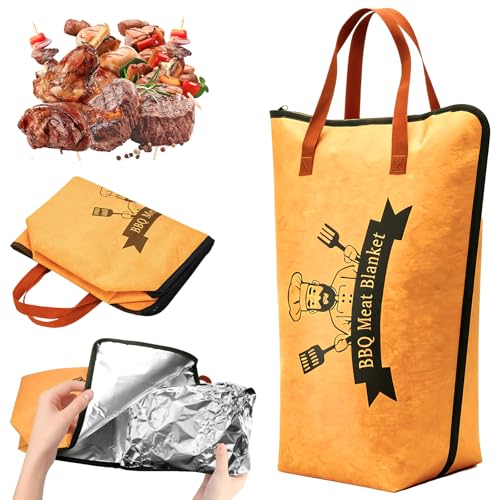
Barbecue Accessories for Resting Meat: This BBQ Blanket features 5 layers of insulation to keep your meat tender and juicy, ensuring your brisket, pork shoulder, steaks and turkey stay an optimal resting temperature, whether during transport or at rest. And full of flavor—just as if they were freshly grilled!
Essential Setup and Preparation Steps
Three critical phases—fuel preparation, ignition, and temperature stabilization—separate successful smoking sessions from frustrating failures. You’ll start by filling your hopper with cooking-grade wood pellets, ensuring proper pellet storage away from moisture. Load 2-4 lbs per hour depending on your smoking method.
Next, you’ll ignite your pellet grill in “smoke” mode with the lid open for 3.5-4 minutes, allowing the fire to catch without muffling. Once flames appear, crank up the temperature after thick smoky clouds develop. Listen carefully for the roar of fan-forced convection, which signals that your grill has successfully ignited and is ready for temperature adjustment. Don’t be alarmed by heavy white smoke during startup, as this is completely normal and indicates proper combustion.
Finally, stabilize your temperature at 225-250°F by adjusting vents to control oxygen flow. Monitor your grill’s actual temperature with a digital thermometer rather than relying on gauges. Achieving smoke density requires balancing fuel load and airflow. For extended smoke sessions lasting 5-8 hours, consider using a hexagon-shaped smoke tube filled with additional pellets to supplement your grill’s natural smoke output. Modern pellet smokers excel at temperature stability, maintaining consistent heat even in challenging cold weather conditions. Wood pellets may not be as readily available as charcoal or gas in all regions, so verify your local supply before committing to a pellet smoker setup. Use the “prime” function to speed pellet delivery to the burn pot, ensuring proper ignition and avoiding error codes. The digital controller monitors internal temperature and automatically adjusts pellet feed rates to maintain your desired heat level. Before beginning your cook, always clean the temperature probe to ensure accurate readings throughout your smoking session. With these phases mastered, you’re ready for flawless results.

Replaces 3 speed smoker control, compatible with Traeger wood pellet grill models (except PTG)
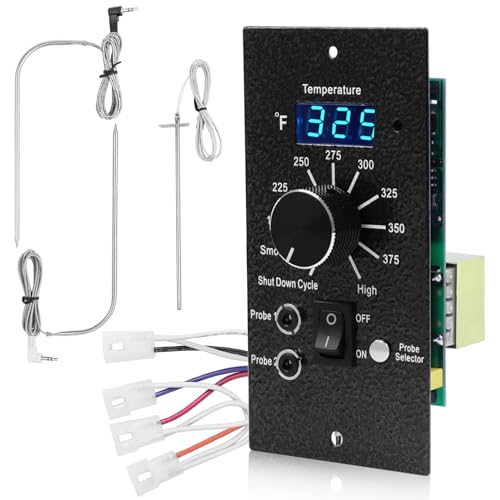
【COMPATIBILITY】: This Traeger Digital Controller kit replacement part compatible with most Traeger Wood Pellet Grills (except PTG), ideal replacement for Traeger Controller BAC365.

【Compatiable】: Our Traeger control panel fits most Traeger wood pellet grill models (except PTG), ideal Traeger Pro controller for Traeger parts replacement BAC236.
Smoking Times and Techniques for Different Meats
How you approach smoking depends entirely on what protein you’re working with—each meat category demands specific temperature ranges and timing to achieve most suitable tenderness and smoke penetration.
Beef brisket requires 225-250°F for 12-20 hours until reaching 190-205°F internally. Pork butt needs 225-250°F for approximately 1.5 hours per pound to 205°F. Poultry smokes faster at 235-350°F, reaching safe 165-170°F in 2-4 hours for whole chickens. Beef tenderloin smokes at 225°F for about 1 to 2 hours until it reaches an internal temperature of 110-125°F, then finish with a high-heat sear to develop a flavorful crust.
Lamb benefits from lower temperatures around 225°F for most appropriate tenderness across all cuts. Fish fillets smoke quickly at 225°F for just 35-45 minutes. Boneless chicken breasts require 45 minutes per pound at 225°F to reach the proper internal temperature.
Enhance smoke flavor enhancement methods by selecting quality wood chips matching your meat type. Apply most appropriate marinade ingredients beforehand—complementary spices penetrate deeper during extended smoking periods, elevating your final product’s complexity and depth. Remember to marinate meat in the refrigerator and never reuse marinade from raw meat or poultry to ensure food safety. During the cook, you may encounter the stall phase, where the meat’s temperature plateaus and requires patient monitoring with a reliable thermometer. Wrapping the brisket in foil can help push through the stall, though it may soften the crust. After removing your brisket from the smoker, allow at least one hour for the juices to redistribute before slicing. For poultry, resting for 5-10 minutes after smoking ensures the juices redistribute throughout the meat for maximum flavor and moisture retention.
Maintaining Your Smoker for Longevity
Perfecting your smoking technique means nothing if your equipment isn’t properly maintained—a well-kept smoker will outlast careless use by years and consistently deliver better results. You’ll establish seasonal maintenance practices by cleaning after every cook, brushing grates while warm, and emptying ash pans immediately. Deep clean monthly, scrubbing interior surfaces and drip trays thoroughly. Troubleshooting common issues requires vigilance: inspect regularly for rust and scrub it off immediately with a wire brush. Apply high-temp oil after each use to maintain seasoning and prevent corrosion. Empty charcoal completely since porous charcoal holds moisture. To preserve your grill’s integrity, lightly coat oil after each use to maintain the seasoning on all interior surfaces and grates. When oiling grates, use high smoke point oils like vegetable or canola oil and allow the grill to burn until the oil begins to smoke, which typically takes 15–30 minutes. For cast-iron grates and surfaces, refined avocado oil and peanut oil are excellent alternatives that polymerize effectively into durable seasoning layers. For stubborn grease buildup, use baking soda and vinegar to effectively loosen residues from interior surfaces. Always empty and wipe the drip pan after each use to prevent grease buildup and avoid attracting pests. For stainless steel exteriors, apply commercial grill cleaners sparingly and always test on an inconspicuous area first to avoid damaging the finish. Store your smoker in a dry area with a weather-resistant cover, and disconnect electronics on pellet models before covering. Tighten screws periodically and replace worn components proactively.
Advanced Tips for Championship-Quality Results
Once you’ve mastered the fundamentals and your smoker’s maintained properly, you’re ready to pursue competition-level excellence—and that’s where precision separates casual pitmasters from champions. Deploy advanced seasoning blends with granulated ingredients applied in layered patterns, intentionally over-spraying for competition level presentation that judges score highly. Remember that fresh spices are essential for creating rubs with vibrant flavor profiles that stand out in blind judging. Master the 2-2 or 2-1.5 rib method rather than the traditional three-hour initial smoking phase before wrapping. Rotate brisket strategically—flipping after three hours, then repositioning the flat directly over coals near turn-in. Implement hold-and-rest strategies post-cooking to preserve rendered fat quality. Position water pans strategically in multi-rack setups, maintaining the flat overhead while the point sits over coals. Mastering airflow and oxygen control throughout your cooking process ensures the consistent heat management necessary for championship-caliber results. Select your smoking woods deliberately—hardwoods like hickory deliver bold, bacon-like sweetness ideal for pork and chicken, while fruit woods such as apple and cherry provide lighter, sweetness that complements poultry without overwhelming delicate flavors. For optimal smoke production, use 1/2 to 1 cup of hickory chips per hour without soaking for shorter grilling sessions or soak them for an hour when preparing for extended smoke sessions. For pellet smoker enthusiasts, premium brands like Lumberjack and Bear Mountain BBQ offer 100% natural hardwoods with no fillers or additives for consistent heat and bold smoky flavor. Your choice of charcoal equally impacts results, with natural lump charcoal burning hotter and cleaner than briquettes while producing minimal ash for extended low-and-slow sessions. While lump charcoal excels in high-heat applications, briquettes offer consistent medium heat and exceptionally long burn times that make them the preferred choice for offset smokers and extended low-and-slow cooking sessions. These technical adjustments transform your results from respectable to championship-caliber.