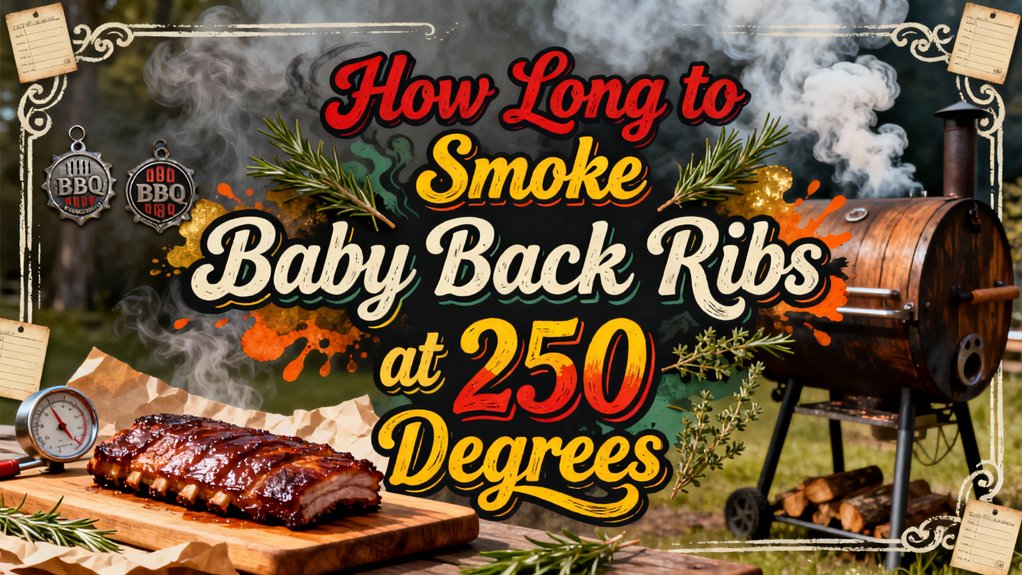
You’ll smoke baby back ribs at 250°F for approximately 4 to 4.5 hours using the proven three-phase method. Start with two unwrapped hours for smoke penetration, then wrap in foil for 1.5 hours to braise and tenderize. Finish with 30 to 60 minutes for glazing. Your meat thermometer—not the clock—guides you toward that perfect 195°F internal temperature. Bones should loosen and meat should pull back from the ends. Understanding the nuances of temperature management, wood selection, and doneness indicators will enhance your smoking technique considerably.
Cooking Time Estimates at 250°F
When you’re smoking baby back ribs at 250°F, you’re looking at approximately 4 to 4.5 hours from start to finish—a substantially faster timeline than the 5 hours required at 225°F. This middle-range temperature balances speed with adequate smoke absorption, delivering predictable results without sacrificing flavor.
Your cooking breaks down into three distinct phases: an initial 2-hour unwrapped smoking period for smoke penetration, a 1.5-hour foil-wrapped braising phase for tenderization, and a final 30-minute to 1-hour sauce application phase for glaze development. Fruit wood like apple or cherry provides the best smoke flavor during these phases. For optimal results, spray ribs with Cherry Coke every 30 minutes during the unwrapped smoking period to enhance moisture and flavor development.
However, temperature fluctuations from wind, external weather, and smoker type can extend your timeline. Before wrapping, consider removing the membrane from the bone side of the ribs to allow better seasoning penetration and improve tenderness. During the foil-wrapped phase, add moisture enhancers like butter and brown sugar inside the foil to keep ribs juicy. Many pitmasters recommend periodic spritzing during the initial smoking phase to maintain surface moisture and build bark development. Cherry’s sweet, fruity smoke complements pork ribs particularly well, making it an excellent choice for this cook. Avoid using softwoods like pine or cedar, as their high resin content produces acrid flavors and burns too quickly for the controlled smoke you need. Monitor meat doneness using a thermometer—you’ll know ribs are ready when they reach 180-185°F internally and probe like room-temperature butter. Bones should be slightly loose, and meat should pull back from bone ends.


Made In the USA: Celebrate homegrown quality with these premium wood chips made in Arkansas and Missouri

1.8 LB APPLE WOOD CHIPS FOR SWEET & FRUITY SMOKE FLAVOR – Elevate your grilling and smoking with this 1.8-pound bag of premium apple wood chips, ideal for infusing meats, poultry, seafood, and veggies with a mild, sweet, and fruity aroma. Perfect for use in charcoal grills, gas grills, electric grills and smokers, these high-quality smoking chips deliver consistent flavor and slow, even smoldering for delicious results.
The Three-Phase Smoking Method
The 3-2-1 method—so named for its three distinct timing phases—is the gold standard for smoking baby back ribs because it orchestrates smoke flavor absorption, tenderization, and glaze development with mechanical precision.
You’ll begin with three hours unwrapped at 225°F to 240°F, allowing the meat to absorb intense wood-fired flavors while developing mahogany bark. You’ll spritz every thirty minutes starting at the ninety-minute mark to maintain moisture. Before smoking, remove the thin silvery membrane covering the bones to prevent the ribs from becoming tough during the cooking process. This preparation step ensures consistent, crowd-pleasing results throughout the cooking process.
Next comes the braising technique duration: two hours wrapped in foil with liquid, creating a steamy environment that breaks down connective tissue rapidly. The meat pulls back from bones as juices penetrate deep into muscle fibers. Maintaining thin, blue smoke rather than thick white smoke is crucial to prevent a bitter taste from developing on your ribs. The low temperature allows the ribs to absorb smoke flavor while breaking down connective tissues without overcooking. Using a meat thermometer ensures accurate doneness rather than relying solely on time. Similar to smoking wings, this temperature range of 225-250°F provides optimal smoke penetration while cooking the meat thoroughly.
Finally, you’ll unwrap for one hour, applying glazes strategically—once at the start, again fifteen minutes before completion—achieving caramelization and fall-off-the-bone texture.
Temperature Management and Monitoring
While the 3-2-1 method gives you a roadmap for timing, maintaining consistent smoker temperature is what actually executes that plan. You’ll want to stabilize your smoker around 225-250°F, accepting temperature fluctuations of 20-25 degrees in either direction.
Use your stack damper for air flow regulation, opening it partially on smaller smokers to manage consistency. Position multiple temperature probes throughout your cooking chamber since firebox proximity creates localized hot spots that skew readings.
Place one probe near the firebox and another in a cooler zone to identify temperature variations across different areas. Reliable meat thermometers track internal rib temperature throughout cooking—aim for approximately 160°F at the three-hour mark and 195°F for final doneness. If you’re considering a hot and fast method, baby back ribs can be smoked at 300°F for about 1.5 hours, significantly reducing your total cooking time. Remember that no magic time formula exists, so environmental conditions like wind and outside temperature’ll impact your actual cooking times, so prioritize temperature stability over rigid timing schedules. Avoid opening the smoker door too often to maintain moisture and preserve the heat you’ve worked to establish. Ensure your vents are opened during the preheating phase to establish even cooking temperature throughout the chamber. Managing your heat zones properly allows you to move ribs to cooler areas if certain sections are cooking too quickly. Keeping the grill lid closed whenever possible helps stabilize temperature and prevents heat loss that can extend your cooking time. Understanding that your smoker uses convection and radiation to cook ribs helps you recognize why consistent airflow and unobstructed heat pathways matter for even cooking results.

More Stable Than Bluetooth: Our advanced RF technology ensures a stronger, more reliable connection than Bluetooth. This smoker thermometer provides the freedom to move around without losing connection! Monitor your BBQ from up to 1,000 feet away!
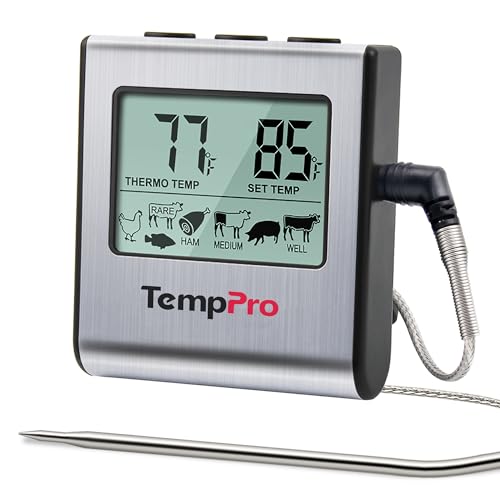
Cook mode with USDA preset temperature settings: TempPro cooking thermometer ideal for meat, oven, smoker or stove top; Programmable alert with preset temperatures for specific foods recommended by USDA; All of the preset temps can be reset to your desired tastes

Bluetooth Monitor Remotely: Govee Bluetooth meat thermometer lets you check the temperature of your grill, smoker, or oven from your phone. With this smart BBQ thermometer, you can multitask while grilling.
Wood Selection and Smoke Application
Smoke flavor’s the final variable you’ll control, and it hinges entirely on which woods you’re burning in your firebox. You’ll want to understand smoke intensity profiles and smoke production rates before committing to your choice. Pecan wood offers balanced performance—it burns evenly while delivering subtle, nutty sweetness without overwhelming your ribs. Cherry produces abundant smoke, requiring careful monitoring, while apple provides delicate fruitiness ideal for extended cooking. Avoid hickory alone; it generates excessive intensity that masks pork’s natural character. For ideal results, blend milder woods with stronger varieties using a 2:1 pecan-to-cherry ratio. This combination creates complexity while preventing flavor overpowering. Wood chunks are ideal for charcoal grills and smokers, as they burn long enough to impart consistent flavor throughout your smoking session. If you do prefer hickory’s bacon-like flavor profile, use only 1/2 to 1 cup per hour to prevent overpowering the meat. When selecting your charcoal base, prioritize natural hardwood options over flavored or additive-laden products, as they burn cleaner and allow your wood smoke to shine through without interference. For pellet smoker users, top-performing brands like Lumberjack Competition Blend and Traeger Gourmet Blend deliver consistent heat and bold smoky flavor with minimal ash production. Never use softwoods like pine, as they contain resins that create bitter, acrid smoke and leave unpleasant residue on your meat. Premium kiln-dried logs maintain consistent moisture levels for cleaner burns and reduced contaminants compared to air-dried alternatives. Your wood selection directly impacts the final product’s depth and character throughout your entire smoking session.


Pecan BBQ Smoking Wood Chunks. Ignites quickly and combusts completely to create a delicate smokey flavor. The essential fuel for your best BBQ yet - perfect for Memorial Day kick-offs, Father’s Day gifting, 4th of July feasts, and every backyard celebration through the height of grilling season.

Preparation and Seasoning Techniques
Before you apply smoke to your ribs, you’ll need to prepare them properly—and that starts with removing the silver membrane clinging to the bone side. Use a paper towel or spoon as your primary membrane removal techniques, sliding the utensil between bone and membrane before peeling it away. This step prevents an unpleasantly chewy texture during smoking.
Next, apply a thin mustard coat to both sides—it acts as a binder for your rub. Combine brown sugar, paprika, garlic powder, onion powder, chili powder, cayenne, black pepper, and oregano for your dry rub. Using your seasoning tools, sprinkle generously across all surfaces including edges. Pat down the mixture firmly, ensuring even coverage. Let it sit briefly before smoking begins, allowing flavors to develop properly. Monitor doneness throughout the cook using a probe thermometer to track internal temperature accurately. A homemade blend of these spices creates superior flavor compared to store-bought options. Choose complementary pellet flavors like oak, hickory, or pecan to enhance the meat’s natural taste during the smoke. For optimal results, set your pellet smoker to 225 degrees before you begin the smoking process to ensure consistent temperature throughout cooking. Models with stable PID controllers help maintain precise temperatures during long smoking sessions, preventing fluctuations that can affect cooking times.

Made for ribs, pork loin, chops, and everyday BBQ

Mouthwatering seasoning best paired with prime rib.

Delicious flavor blend: Combines a balanced mix of spices including paprika, garlic, onion, and brown sugar for perfectly seasoned ribs every time
Performance Comparisons Between Temperature Settings
Temperature control is where you’ll truly dial in your smoking technique, and the range you choose dramatically impacts both cook time and final texture. At 250°F, you’re hitting the ideal spot—your baby backs finish in 4.5 hours while maintaining an exceptional texture and moisture profile. Compare this to 225°F‘s five-hour cook, and you’ll appreciate the efficiency without sacrificing quality. Push to 280°F, and you’ll shave another hour off, though you’ll need to monitor more carefully. Higher temperatures above 300°F demand time-based rather than temperature-based doneness checks. Regardless of your chosen temperature, plan for brief resting period requirements after smoking—this allows carryover cooking and moisture redistribution, ensuring perfect tenderness and juiciness in every bite. For the most accurate results, your ribs will reach peak tenderness at 195°F to 203°F when properly smoked. Target the meat between bones rather than checking temperature against the bone itself, as this gives you the most accurate doneness reading for your ribs. Similar to smoking brisket, you may encounter a temperature stall during the cook where the internal temperature plateaus temporarily due to moisture evaporation from the meat’s surface. Before smoking, ensure you’ve completed essential preparation steps including membrane removal and seasoning to maximize flavor penetration and tenderness. Consider intermittent spritzing with apple juice during the smoking phase to maintain moisture and prevent the surface from drying out. Wrapping ribs in foil partway through the cook can help lock in moisture and accelerate the tenderizing process. This 250°F temperature balances efficiency and tenderness, making it an excellent choice for achieving quality results without extending your cook time unnecessarily.

PREMIUM MATERIALS - Cook or grill for years to come and never worry about rust or corrosion with an ultra-durable rib rack made out of stainless steel.

【Healthy】100% 304 stainless steel for food safety and hygiene.It held the ribs upright without a lot of bending, keeps racks of ribs separated from each other perfectly so smoke can penetrate all sides evenly, cooked evenly, everyone was obsessed with how it turned out

UNCO rib rack is made of high-quality food-grade steel and has a unique design; this roasting rack promises even cooking and incredible flavor.
Achieving the Perfect Tenderness
How do you know when your baby back ribs have reached that elusive sweet spot between tender and structurally intact? You’ll probe them like warm butter—that’s your benchmark. After your initial 3-hour smoke, you’re ready for foiling techniques that’ll transform texture. Wrap your racks tightly with butter, honey, and brown sugar for 1-1.5 hours, positioning them meat-side down to prevent drying. Check rib placement across your smoker’s shelves; rotate if needed for even heat exposure. When you unwrap them, the toothpick slides effortlessly between bones. Internal temperatures should hit 180-190°F. Bones pull slightly loose but don’t detach—that’s peak tenderness. Maintaining a 225°F temperature throughout the cooking process ensures consistent smoke penetration and even cooking. External factors like outside temperature, wind, and rain will impact your total smoking duration. Your ribs’ll reach bite-off-bone readiness in 4-5 hours total, delivering the structural integrity and tenderness you’re after. Using a meat thermometer is essential to verify doneness rather than relying solely on visual cues. For best results, allow proper rest times after smoking to let the juices redistribute throughout the meat. Just as with smoking other meats, checking for tenderness by piercing with a fork helps ensure your ribs are cooked to perfection. Between cooking sessions, maintain your equipment with routine maintenance to ensure optimal performance and food safety. Resting for at least 30 minutes after removing from the smoker helps retain those flavorful juices.
Doneness Tests and Final Results
Now that you’ve wrapped your ribs and they’re approaching that perfect tenderness, you’ll need reliable methods to confirm they’ve actually reached doneness rather than guessing. Your internal temperature range should fall between 195 and 205 degrees Fahrenheit, which guarantees collagen converts fully to gelatin. Begin testing around 3.75 hours into your 250-degree cook using a toothpick—it should slide through with butter-like resistance. Simultaneously, perform the bend test: your slab should crack slightly without separating completely. You’ll notice meat pulling visibly from bone ends as smoke absorption time concludes. Twist individual bones; they’ll feel loose within the meat. Once your ribs reach the 180-190°F target temperature threshold, they’ll achieve that ideal texture. For best results, generously apply BBQ sauce during the final stages of cooking to enhance flavor development. If you want to add extra caramelization and a pleasing grilled crust, you can finish on the grill for 5 to 10 minutes after your low-and-slow smoke. These tactile and temperature indicators work together, confirming your ribs have reached ideal doneness while preserving that essential bark texture.