
You’ll nail perfectly tender, fall-off-the-bone BBQ ribs by matching cook time to rib type—baby backs need 3-4 hours, spare ribs demand 4-6 hours, and beef short ribs require 6-8 hours of low-and-slow heat. Aim for an internal temperature of 195-203°F, use indirect heat at 225-250°F, and employ the bend test to confirm doneness. You’ll uncover that strategic wood selection, moisture management, and precise temperature control transform your results dramatically.
Understanding Rib Types and Cook Times
Before you fire up the grill, you’ll want to understand how different rib cuts behave under heat—because not all ribs are created equal. Baby back ribs, cut from the loin, are leaner and cook faster, typically requiring 3–4 hours. Spare ribs and St. Louis–style ribs contain more fat and connective tissue, demanding 4–6 hours of low-and-slow cooking to guarantee proper rendering. Beef short ribs need even longer—often 6–8 hours—due to their thickness and collagen content.
Your rib preparation techniques should match the cut. Thinner, leaner cuts tolerate higher heat and shorter durations. Thicker, fattier cuts benefit from alternative cooking methods like braising or smoking, which break down collagen gradually. When selecting ribs at the market, look for deep pink to red meat evenly distributed between fat striations to ensure quality. For premium results, consider Duroc-style pork ribs, which render beautifully over hours in the smoker due to their higher fat content and rich marbling. Comprehending these distinctions will ensure you’ll achieve tender, flavorful results every time.

Meets standards for animal welfare, feed, and more, so you can know about what you're buying (and eating)

Baby Back Ribs, averages 11-13 bones per slab, 2.2-pounds

One bone-in pork back ribs weighing between 2.25 and 3.5 pounds
Target Temperatures and Doneness Indicators
Once you’ve matched your cooking method to your rib cut, you’ll need to know when they’re actually done—and that’s where temperature and doneness indicators come in. Target an internal temperature of 195–203°F for fall-off-the-bone tenderness, or 180–190°F if you prefer sliceable ribs. Use a calibrated probe thermometer in the thickest meat between bones—never touching bone itself. Watch for the bend test: your slab should crack slightly at the surface when lifted. Bones should pull back visibly from the meat edge. Once you’ve hit your target, plan for a 3–10°F rise during resting. Removing the membrane on the back before smoking helps smoke penetrate the meat more effectively, ensuring even flavor throughout. Avoid guessing temperature, as a few degrees can make a big difference in achieving the perfect tenderness. Another reliable test is how easily a probe or toothpick slides into the meat, which indicates proper doneness when it penetrates with minimal resistance. Some pitmasters use the 2-2-1 method, smoking ribs for 2 hours uncovered, 2 hours wrapped in foil, and 1 hour unwrapped to develop both tenderness and a flavorful bark. For a more traditional low-and-slow approach, maintain a consistent 225 to 275 degrees Fahrenheit throughout the cook to ensure proper smoke absorption and tender results. Look for visual cues like a mahogany color on the surface of the ribs, which indicates proper smoke development and caramelization. During the smoking process, occasional spritzing with liquid helps maintain moisture and prevents the meat from drying out. Apply sauces and glazes only after reaching doneness to prevent burning, finishing briefly over direct heat at 300–350°F to set them properly.
Popular Cooking Methods and Time Breakdowns
Four primary cooking methods’ll get you to perfectly grilled ribs, each with distinct timing, technique, and results.
Low-and-slow smoking at 225–250°F over 4–6 hours breaks down collagen through indirect heat, using the 3-2-1 method: unwrapped smoke, foil-wrapped phase, then unwrapped finish. Direct grilling suits thin, pre-cooked cuts in 20–40 minutes with high heat and frequent flipping—par cooking techniques here reduce risk of tough, undercooked meat.
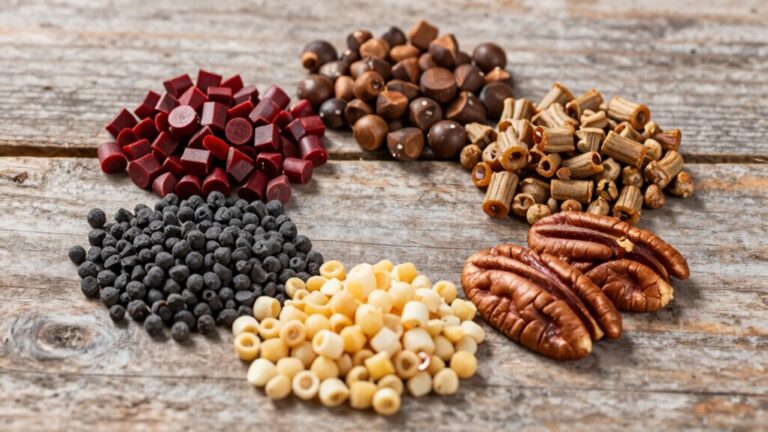
The oven-to-grill hybrid combines 2–3 hours of covered oven braising at 275–300°F with 10–20 minutes of high-heat finishing. This moisture retention strategy preserves tenderness while delivering smoke and char. A Traeger grill with oak charcoal pellets offers consistent temperature control for monitoring finish temperatures and rib reactions to heat. Beef short ribs benefit from this method due to their robust mix of muscle, tendons, and fat that requires patient cooking. Spritzing the meat periodically with a vinegar-water mix helps maintain moisture during extended cooking sessions. Braising submerges ribs in flavorful liquid for 2–3 hours at 300°F, yielding fork-tender results regardless of weather or equipment constraints. For gas grill preparation, start by removing the membrane from the back of the ribs to ensure proper seasoning penetration and tenderness. Kettle-style grills provide even cooking and superior smoky flavor development, making them ideal for maintaining consistent heat during extended rib sessions. Offset smokers with adjustable dampers allow precise temperature control between 160°F and 325°F for versatile cooking applications. Setting up a two-zone fire by piling lit charcoal to one side creates the indirect heat necessary for proper low-and-slow cooking.
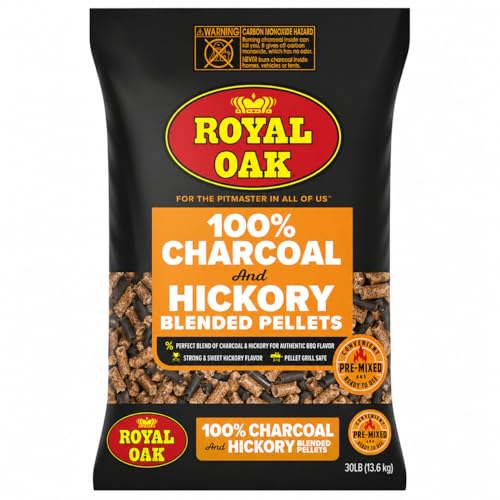
Combines authentic BBQ flavor with sweet, smoky hickory hardwood, trusted by professional pitmasters and backyard pros

KINGSFORD CRAFTSMOKE PREMIUM WOOD PELLETS: Introducing Craftsmoke, the premium line of natural hardwood pellets, crafted in small batches for the chef in all of us; pack may vary

Combines authentic BBQ flavor with sweet apple hardwood, trusted by professional pitmasters and backyard pros
Temperature Settings, Wood Selection, and Moisture Control
Why does temperature control matter more than technique when you’re grilling ribs? Consistent heat—225–275°F—ensures even collagen breakdown and predictable results. You’ll maintain moisture retention by using indirect heat, preventing flare-ups that dry your meat’s surface.
Choose your wood strategically. Hickory delivers traditional pork smoke, while fruitwoods like apple offer subtlety. Oak provides steady, medium-intensity smoke over long cooks. Avoid mesquite’s harshness on ribs; it overpowers easily.
Manage smoke duration carefully. Aim for 2–4 hours of thin, clean smoke—that’s your golden window. Beyond this, heavy smoke creates bitterness rather than flavor depth. Monitor grill temperature with dual thermometers, adjust vents to compensate for wind, and add wood in small increments. Place a water pan near the coals to maintain moisture throughout the cooking process. Ensure your propane tank is full to maintain consistent low and slow cooking throughout the entire grilling session. Before starting your cook, verify the tank valve is closed until the regulator is securely connected to prevent gas leaks. A meat thermometer is essential for checking that ribs reach an internal temperature of 190 to 200 degrees. This discipline yields consistently tender, flavorful ribs.
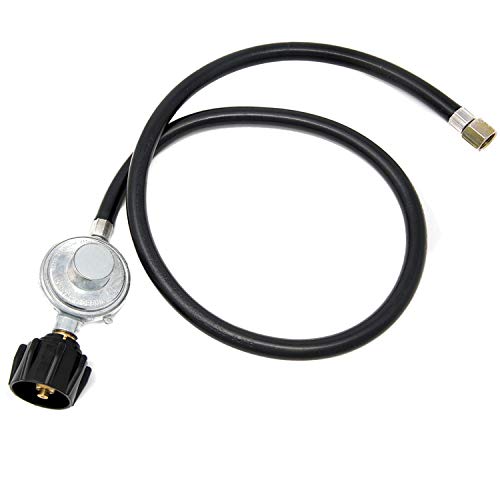
A TOP QUALITY PROPANE REGULATOR AND HOSE - maxing out at 80, 000 BTU, this 3Ft low pressure propane regulator is fiber reinforced to ensure quality performance. The hose is the perfect fit for a wide variety of grills, fire pit tables, and other propane appliances

Multi-Purpose Compatibility: Designed to fit a wide range of outdoor propane grills, Replacement for Weber grills (Spirit/Genesis/Summit Series), Blackstone full size griddles, Char-Broil, Royal Gourmet, Nexgrill, Brinkmann, and other grills with 3/8" male flare fittings. This universal regulator offers versatile compatibility for various grill models.
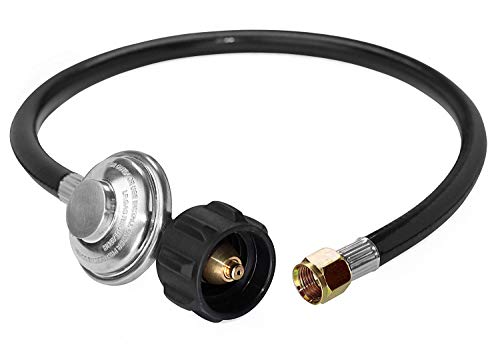
Type-1 (QCC-1) tank (cylinder ) connect - fits all appliances with a type 1 connection. 3/8" Female Flare.Nut Thread 5/8"-18UNF. Swivel Nut.5/16" diameter LP hose.
Timing Adjustments, Troubleshooting, and Final Tips
With your temperature, wood, and moisture management dialed in, you’ll now focus on timing—the variable that separates undercooked ribs from perfectly rendered meat. Thickness-based adjustments matter greatly: baby backs need 4-5 hours at 250°F, while spareribs require up to 6 hours. Larger racks demand extended cooking times. Conduct internal temperature checks at the thickest part, targeting 190-203°F for ideal tenderness. After 60-90 minutes at 300°F, verify you’ve reached 165-170°F minimum. Use the bend test—properly cooked ribs flex easily when lifted. The 3-2-1 method provides a reliable framework for achieving consistent results across different rib varieties. For best results, wrap the ribs in foil during the initial cooking phase to trap moisture and keep the meat tender and juicy. After smoking, allow the meat to reach about 200-205°F and confirm tenderness using the bend test before removing from heat. Rest your ribs 10-20 minutes post-cook to retain juices. For a quicker alternative, try grilling over medium heat on a gas grill, which can reduce cooking time significantly while still delivering flavorful results. If you’re short on time, consider the hot and fast method at 300°F, which requires only 1.5 to 2.5 hours depending on your rib cut and technique. Alternatively, pre-cook ribs in the oven at 275-350°F for 1.5 to 3 hours to render fat and tenderize the meat, then finish them on the grill for 5 to 25 minutes to add caramelization and apply sauce. For those seeking maximum tenderness and smoke absorption, smoking at 180°F for approximately 6 hours allows connective tissues to break down fully while infusing deep flavor into the meat. Finish with sauce for 10-15 minutes over medium-high heat, flipping and basting twice. Rest another 5-10 minutes before slicing.