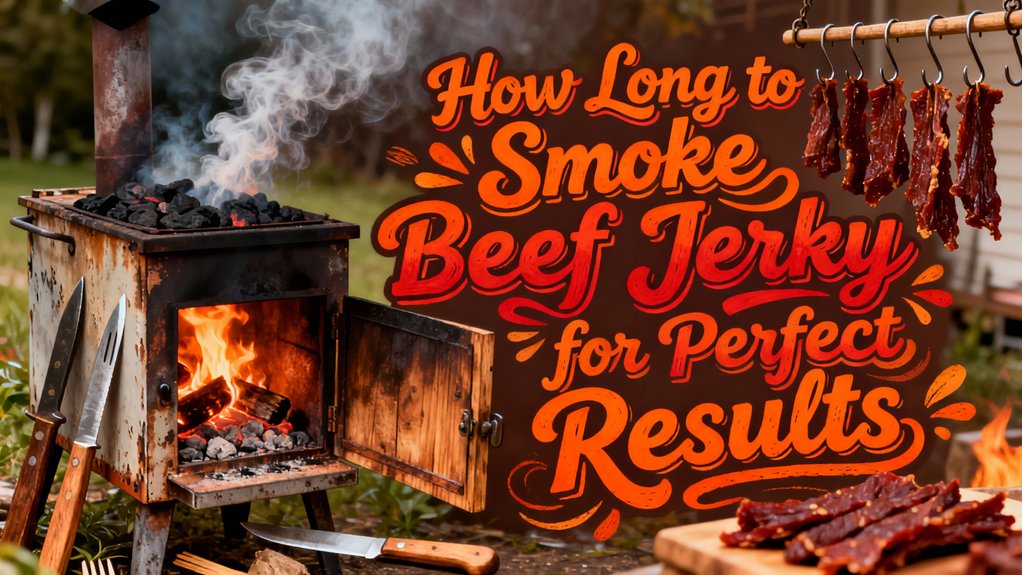
You’ll smoke beef jerky for 3–10 hours depending on your smoker type, maintaining a steady 160–180°F throughout. Pellet smokers deliver fastest results in 3–5 hours, while offset units need 6–8 hours due to temperature fluctuations. The critical factor isn’t duration—it’s limiting active smoking to one hour maximum with quality hardwood like oak or hickory. Thin cuts finish quicker than thick slices. Temperature control and patience during the low-temperature drying phase separate exceptional jerky from subpar batches, though there’s considerably more nuance to master.
Understanding Smoking Temperatures for Beef Jerky
Why’s temperature control so critical when smoking beef jerky? You’ll establish proper smoke foundation and prevent flavor degradation through precise smoke temperature calibration. Start between 140-180°F, ideally at 180-200°F when introducing wood chips. Blue smoke indicates proper combustion; heavy white smoke ruins your jerky with bitter taste.
Your temperature measurement techniques matter crucially. Use thermapen devices for spot-checks, maintaining 160-180°F throughout the primary drying phase. Pellet smokers excel at holding exact temperatures better than charcoal units. Don’t exceed 1 hour of active smoking—additional wood chips after this point cause undesirable flavor and texture degradation. For wood selection, properly seasoned red oak or post oak provides a balanced smoke flavor that enhances beef without overpowering the meat. Remember that minimum of six hours is required to complete the dehydration process, so patience during the low-temperature smoking phase is essential for proper jerky development. Cover the drip pan with aluminum foil to make cleanup easier while monitoring your smoking progress.
The lower end of your range—160°F—works best during final drying stages, preventing over-drying while maintaining food safety standards above the 150-160°F minimum threshold for pathogen elimination.

Large Display: Features a 2 3/8 inches large face for clear visibility; Stem length of 2 7/8 inches enhances accessibility; Enables easy classification of food temperatures in various cooking environments

Temperature Range: 140° to 190°F / 60° to 87°C. Probe Length: 4.75-inches Dial Diameter: 2.375-inches
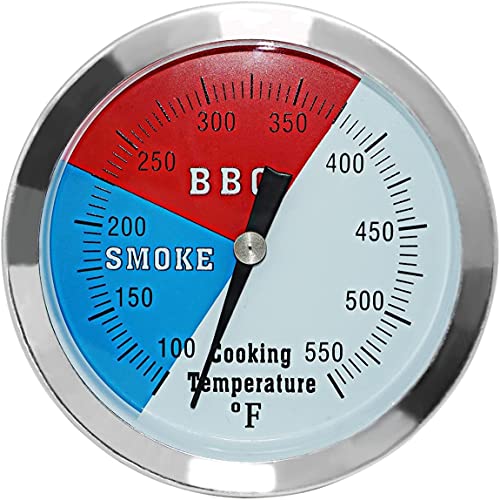
This BBQ Grill Smoker Thermometer perfectly fits for Oklahoma Joe's smokers and most smokers or grills with 13/16 inch opening or hole.
Optimal Smoking Times by Smoker Type
Once you’ve mastered temperature control, you’ll find that smoking duration varies drastically depending on your equipment. Pellet smokers deliver the fastest results—three to five hours—thanks to precise temperature regulation. Traditional offset smokers require six to eight hours due to inherent temperature fluctuations, demanding frequent monitoring and adjustment. Electric smokers fall between these extremes at five to ten hours, offering consistent heat regulation for predictable outcomes.
Factors influencing smoking times include slice thickness, ambient conditions, and your chosen technique. Thin cuts (¼ inch) finish in three to four hours across most smoker types, while thicker slices extend toward the upper time range. Your techniques for temperature control directly impact efficiency; maintaining steady heat reduces overall duration considerably. Cold smoking extends to six to eight hours, prioritizing complete dehydration over speed. Starting at lower temperatures initially and gradually increasing heat helps achieve optimal texture without over-smoking. Remember that safe internal temperature of 160°F must be reached to destroy harmful bacteria and ensure your jerky is safe to consume. Just as with brisket preparation, using a reliable meat thermometer throughout the process ensures consistently successful results. Quality 100% natural hardwoods like hickory, cherry, or apple deliver clean-burning performance and bold smoky flavors ideal for beef jerky. Hickory provides a sweet, bacon-like note that complements beef’s robust flavor, while fruit woods like apple and cherry add subtle sweetness without overpowering the meat. Budget-friendly options like the Pit Boss 440 offer digital temperature control and ease of use for those new to smoking beef jerky. Regular maintenance of your smoker equipment ensures consistent performance and extends the lifespan of your investment.

【WIDELY APPLICABLE】 : 21" Wide, 17.2" Depth and 6" Height Jerky Rack was made to fit Traeger, Pit Boss, Weber, Z Grill, Camp Chef, Green Mountain, Grilla Grills and more 21" Depth pit barrel style pellet smokers grills.(Measuring the inside size of your smoker grills before order)

ZERO SUGAR ORIGINAL FLAVOR: Slow-smoked over real hardwood, this Original flavor Beef Jerky delivers a rich, savory taste with 0g sugar, 0g total carbs, and 14g protein per serving. Crafted from fine cuts of 100% beef for satisfying snacking during busy workdays, travel, workouts, or between meals

Beef Jerky the Old Fashioned Way: We start with 100 percent premium beef, season it with real pronounceable ingredients you could find in your pantry, and slow smoke it over real hardwood
Preparing Your Meat and Wood for Smoking
Success with beef jerky hinges on two critical foundations: selecting quality meat and preparing it properly for the smoking process. You’ll want to choose lean cuts like flank steak and trim excess fat meticulously to prevent spoilage and guarantee uniform drying. Freeze your beef for 30 minutes before slicing against the grain to achieve optimal tenderness, aiming for ¼-inch thickness.
Simultaneously, prepare your smoking wood. You’ll need soaking wood chips—apple wood works exceptionally well—in water for 10-15 minutes before use. Wrap soaked chips in foil to extend burning duration and prevent excessive white smoke that produces bitter flavors. Remember that low and slow is the fundamental principle underlying all successful smoking techniques. For superior smoke penetration and flavor development, use Super Smoke if your Traeger grill offers this feature.
After marinating, pat your meat dry with paper towels to reduce cooking time substantially. Arrange strips on wire racks with adequate spacing to facilitate proper air circulation and even dehydration throughout the smoking process. Consider using a grill basket or topper specifically designed for smaller items to prevent jerky strips from falling through the grates during the smoking session. If you’re using a pellet grill, a hexagon-shaped smoke tube can provide consistent smoke output for up to 5 hours without rolling or wasting valuable grill space. Look for stainless 304 construction when selecting your smoking tube to ensure it withstands repeated use and resists rust over time. For beef jerky, 100% hickory pellets deliver bold, smoky-sweet flavor that complements the meat while providing high BTU output and minimal ash during extended smoking sessions. When selecting wood chips, source high-quality, fresh chips from trusted retailers to avoid mold or pests that could compromise your jerky’s flavor and safety.

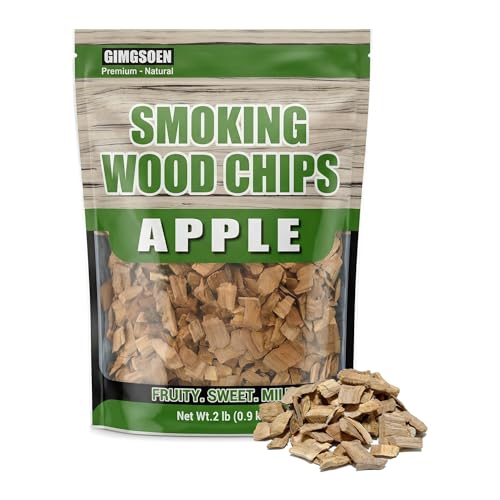
【100% Natural Hardwood – Clean & Safe Smoking】Made from 100% natural hardwood with no chemicals, fillers, or artificial additives. These smoking wood chips deliver clean, pure smoke, ensuring safe and authentic BBQ flavor every time.

Made In the USA: Celebrate homegrown quality with these premium wood chips made in Arkansas and Missouri
The Hot Smoking Method Explained
Now that you’ve prepped your meat and wood, it’s time to master the actual smoking process—the beating heart of jerky production. You’ll maintain your smoker between 160°F and 180°F for guaranteed results. Start by raising the temperature to 180-200°F, adding your soaked wood chips for 30 minutes to an hour. Watch for blue smoke—it indicates proper combustion. Heavy white smoke ruins your batch with bitter flavors.
After your initial smoking phase, lower the temperature back to 160°F and remove additional wood chips. This adjustment combined with ideal smoker maintenance assures consistent drying without overcooking. Your marinading techniques and meat preparation set the foundation, but precise temperature control during smoking determines whether you achieve perfectly dried jerky or a disappointing, burnt product. Monitor your smoker’s high alarm at 185°F and low alarm at 155°F for consistency. The ThermoWorks Thermopop 2 offers an affordable way to verify your smoker’s accuracy without breaking the bank. For best results, limit smoke exposure to 2-3 hours during the initial smoking phase. Using accurate thermometers to verify internal temperatures ensures that any pathogens are destroyed and your jerky is safe to eat. Consider investing in a wireless grill thermometer to monitor your smoker’s temperature remotely without constantly opening the lid and losing heat. For quick temperature checks during the process, an instant-read thermometer like the ThermoWorks Thermapen ONE provides fast and reliable readings. A dual probe thermometer allows you to simultaneously track both the smoker’s ambient temperature and your jerky’s internal temperature throughout the entire cook. When lighting your smoker or checking wood chips, a long-reach lighter helps you safely ignite charcoal or add flames without risking burns near hot grates.

BBQ / Grill pit thermometer, safe and environmentally friendly.

【5G Wi-Fi & Bluetooth5.0 Mode】Inkbird smoker controller fan supports two networking methods;can monitor the grill through smartphone; one smartphone can control multiple smoker controllers at the same time, or multiple people can monitor one smoker controller.
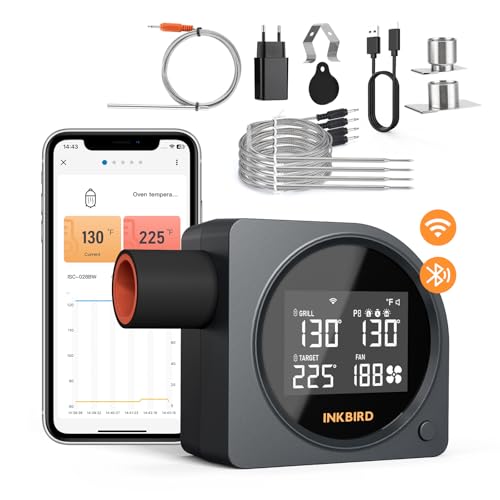
【5G Wi-Fi & Bluetooth5.0 Mode】Inkbird smoker controller fan supports two networking methods;can monitor the grill through smartphone; one smartphone can control multiple smoker controllers at the same time, or multiple people can monitor one smoker controller.
Why Patience Matters During the Smoking Process
While your instinct might be to rush through smoking by cranking up the heat, doing so guarantees case hardening—that frustrating condition where your jerky’s exterior dries rock-hard while moisture remains trapped inside. Instead, commit to low-and-slow techniques that allow uniform dehydration throughout each strip.
Patience demands you monitor smoke quality consistently, verifying blue smoke rather than bitter white smoke that signals overheating. Controlling humidity levels matters equally; high ambient moisture prolongs drying to 15 hours, so you’ll need extended time regardless of temperature. Similar to larger cuts of meat, jerky benefits from consistent temperature control since outdoor conditions can significantly affect your smoking times and final results. Just as briskets can experience a stall phase where temperatures plateau due to evaporative cooling, jerky also undergoes periods where drying seems to slow despite consistent heat.
Rotating racks after four hours balances airflow exposure across pieces. Remove individually dried jerky rather than waiting for everything simultaneously. This deliberate approach prevents spoilage and assures pathogen elimination through proper internal temperature equilibrium, typically requiring 8-15 hours total. Maintaining your smoker at the recommended 225–250°F range ensures consistent dehydration without overcooking the meat’s exterior. Keeping your smoker vents opened during the process promotes better airflow and helps maintain even cooking temperature throughout the smoking session.
Testing for Doneness and Proper Texture
Once your jerky’s been smoking for the prescribed 8-15 hours, you’ll need to determine whether it’s actually ready to eat or requires more time in the smoker. Let your strips cool to room temperature first—warmth temporarily softens texture and distorts assessment accuracy.
Use a bend test progression to evaluate doneness: properly finished jerky bends without snapping immediately, eventually breaking at the fold point with visible fibrous strands. Assess visual texture indicators simultaneously—uniform darkening, matte finish, and rendered fat edges confirm even moisture penetration. Check that no surface moisture beads appear. The jerky should exhibit distinct spider webbing at the tear or bend, indicating proper dehydration has been achieved.
Combine these observations with sensory evaluation: your jerky should feel firm yet pliable, never sticky or brittle. A meaty aroma signals proper drying completion. Over-dried strips that snap completely lack the ideal chew and palatability. Unlike grilling where radiant heat from embers cooks food directly, smoking relies on sustained low temperatures and smoke exposure to slowly dehydrate and flavor the meat. After completion, thoroughly drying your jerky and storing it properly prevents future moisture buildup, similar to how properly re-seasoning cast iron grates maintains their protective surface. When seasoning your smoker grates, choose high-smoke-point oils like refined avocado, canola, or grapeseed to withstand the elevated temperatures without burning. For post-smoking maintenance, consider using wooden grill scrapers instead of wire brushes to safely remove residue from your grates without risking metal bristle contamination. Internal temperature monitoring with a thermometer ensures you’ve achieved optimal results throughout the smoking process. This multifaceted approach guarantees you’ve achieved ideal doneness for preservation and palatability.
Safety Requirements for Beef Jerky Production
You can’t overlook safety when smoking beef jerky—pathogen elimination and moisture control are non-negotiable. Start with fresh, wholesome meat maintained at 40°F or below to minimize initial microbial load control. Heat your meat to an internal temperature of 160°F before smoking to eliminate dangerous pathogens like E. coli O157:H7 and Salmonella.
During the smoking process, maintain relative humidity above 90 percent for ideal lethality. After smoking, dry your jerky to a water activity below 0.70 to prevent mold growth and microbial proliferation. Record keeping practices should document all processing steps to ensure your products meet HACCP guidelines for food safety certification.
Practice rigorous cross contamination prevention by keeping raw meat, cutting surfaces, and equipment separate from finished products. Use approved sanitizers on all food contact surfaces. Clean and sanitize your smoker regularly using warm, soapy water to remove grease buildup and prevent bacterial contamination. For stubborn baked-on residue, consider using a specialized grill cleaner that can dissolve grease and grime without extensive scrubbing. Alternatively, you can create a baking soda paste mixed with vinegar to naturally break down tough residue without harsh chemicals. Inspect your grill grates regularly for rust buildup, which creates unsanitary conditions and can cause food to stick while degrading overall grilling performance. For regular maintenance, scrubbing with crumpled aluminum foil offers a safe alternative that effectively removes grime without the risk of metal bristles contaminating your food. These steps guarantee your jerky is both delicious and safe to consume.
Common Mistakes to Avoid When Smoking
Following proper safety protocols establishes the foundation for quality jerky, but even careful attention to temperature and moisture won’t salvage poor technique in the smoking process itself. You’ll sabotage your jerky by exceeding 225°F, which prioritizes cooking over dehydration. Maintain temperatures between 160°F and 225°F to achieve the desired results. Watch your smoke color carefully—thick, billowing white smoke imparts bitter flavors, while thin blue smoke indicates proper combustion. Don’t overload wood chunks; excessive smoke overwhelms your product. Remember that smoke absorption stops once the meat reaches an internal temperature of around 140°F, as the pores close and prevent further smoke penetration. You must also apply flavor enhancing marinades strategically, trimming excess fat beforehand to prevent off-flavors. Select seasoned hardwoods like oak or hickory for steady, clean smoke rather than softwoods that can impart unpleasant flavors. For longer smoking sessions, wood chunks are preferred over chips because they burn longer and produce more consistent smoke throughout the cook. Confirm proper air circulation within your smoker for even drying. Finally, assess doneness meticulously starting at three hours, checking hourly. Individual slices should cool 5-10 minutes before testing; they’re finished when they bend slightly without snapping completely. For optimal results, slice the meat thinly and evenly at approximately 1/4-inch thickness to ensure all pieces dry uniformly throughout the smoking process.
Finishing and Conditioning Your Jerky
The smoking process doesn’t end when you pull the racks from your smoker—proper finishing and conditioning determine whether your jerky achieves ideal texture and longevity. Allow your jerky to cool for 5 to 10 minutes in slightly ajar containers, enabling condensation to soften the driest areas through stored humidity optimization. This cooling phase prevents brittleness and uneven texturing while chilling temperature adjustments stabilize the meat’s structure.
After cooling, condition your jerky at room temperature for 24 hours. This equilibration period distributes residual moisture evenly throughout each piece, preventing some strips from becoming overly dry while others remain slightly moist. Your finished jerky should be leathery, bending easily with minimal cracking—displaying the mahogany hue characteristic of perfectly smoked beef jerky. When stored properly in the refrigerator, your smoked jerky will maintain quality for up to 4 days, though vacuum-sealed and frozen jerky can last 2 to 3 months or longer. For outdoor enthusiasts who prepare jerky for camping trips or tailgating, consider using portable flat top grills to complement your smoking setup with versatile cooking options. If you’re expanding your outdoor cooking arsenal, outdoor griddles with features like side-shelf space and cleanup ease can streamline your food preparation workflow alongside your jerky production. Models with dual burners provide better heat control across larger cooking surfaces, making them ideal for preparing side dishes while your jerky finishes smoking. Premium options like the Traeger Flatrock deliver superior even cooking with minimal temperature variation, ensuring consistent results across the entire cooking surface.

🔥【Powerful Heating】Our product is equipped with 2 independent stainless steel burners, each capable of providing 10,000 BTUs of heat. With both burners in use, you will have 20,000 BTUs of heat that can reach up to 750°F, and you can adjust the flame size as needed, providing a variety of cooking options. Whether it's cooking eggs, pancakes, grilling cheese, or steak, you can do it all with ease

Tailgating Anytime & Anywhere: Portable enough for pickup cooking with 2-in-1 user-friendly combo design for satisfying your different needs and barely need to reassemble for fast and quick barbecue design for satisfying your different needs and barely need to reassemble for fast and quick barbecue

🔥【Powerful Heating】Our product is equipped with 4 independent stainless steel burners, each capable of providing 10,000 BTUs of heat. With four burners in use, you will have 40,000 BTUs of heat that can reach up to 750°F, and you can adjust the flame size as needed, providing a variety of cooking options. Whether it's cooking eggs, pancakes, grilling cheese, or steak, you can do it all with ease
Adapting Smoking Times for Different Cuts and Conditions
While your jerky conditions over the next 24 hours, understanding how different cuts and environmental variables affect smoking time will sharpen your technique for future batches. Lean cuts like eye of round finish in 2–6 hours due to minimal connective tissue, whereas fattier cuts require adjusted temperatures and shorter times to prevent rancidity. Smoking speeds for meat fat content vary considerably; fatty meat develops off-flavors faster, demanding lower heat settings. Environmental factors—humidity, smoker consistency, and piece spacing—determine whether you’ll hit the 3–4 hour sweet spot or extend beyond 6 hours. Monitor your smoker’s temperature every 30 minutes at higher settings. Thinner slices accelerate drying substantially, while thicker cuts demand extended time and frequent checking for even results. Many smoker enthusiasts maintain a steady 225°F temperature for proteins requiring smoke infusion without excessive cooking, balancing flavor penetration with texture preservation. Using a remote temperature probe helps you track internal conditions without opening the smoker and losing heat. Choose natural hardwood charcoal over flavored or additive-laden products to achieve clean smoke that won’t overpower your jerky’s flavor profile. For extended smoking sessions, briquettes provide consistent medium heat and longer burn times compared to lump charcoal’s higher heat output. After smoking, allowing the jerky to rest briefly helps carryover cooking complete the drying process and stabilize the final texture. Trimming away silverskin and fat before smoking ensures the jerky cooks evenly and remains easy to chew throughout the process. Curing is crucial to make the jerky safe to eat and prevent spoilage during the smoking process.