

You’ll clean cast iron grates by preheating to 500°F, then brushing away debris with brass bristles or aluminum foil. After each use, apply high smoke-point oil and heat to 350°F for proper seasoning. For heavy buildup, try ammonia soaks or Bar Keepers Friend with nylon scrubbers. Always dry completely before storage to prevent rust. A robust maintenance routine keeps your grates functioning ideally—understanding each technique’s nuances reveals why some methods work better than others.
Pre-Use Cleaning and Preparation
Before you fire up your grill for the first time, you’ll need to thoroughly inspect and prepare your cast iron grates. Start with a comprehensive initial inspection process, examining the grates for manufacturing residues, dust, and factory-applied protective coatings. Check for initial surface rust from storage or shipping exposure and verify structural integrity—guaranteeing no cracks or pitting exist.
Next, preheat your grill to 500-550°F for 10-15 minutes to loosen residues. Use a brass-bristle brush on the hot cast iron to protect the seasoning during your pre-use scrub. Alternatively, crumpled aluminum foil works effectively for manufacturing residues removal without damaging potential enamel coatings. For stubborn residues on flat surfaces, pumice-based grill cleaning bricks offer an effective option that requires only water and light pressure to remove caked-on debris without scratching. Heat loosens residue for easier cleaning without requiring excessive scrubbing force on delicate cast iron surfaces. For persistent buildup, consider using a 2-in-1 cleaner specifically designed for grill grates that can cut through grime in just minutes without excessive scrubbing. Wooden grill scrapers made from premium hardwood materials like oak provide a safe alternative that won’t leave behind dangerous bristles while effectively cleaning grill grates. For a natural cleaning alternative, create a paste using baking soda and vinegar to apply on stubborn spots, letting it sit before scrubbing with a non-abrasive cloth. After your initial cleaning, apply a thin layer of clean vegetable oil to the cast iron grates using a lint-free cloth to maintain protective coating and prevent rust formation before your first use. Repeat the oil application and heating steps several times to build a durable coating that will protect your grates.
Avoid sharp-edged tools that could compromise the grate surface. This systematic preparation ensures your grates are ready for ideal performance and longevity.

You Want A Clean Grill Without Having To Worry About Your Family's Safety: We get it. Bristles are great for cleaning your grill, but are a HORRIBLE addition to your deliciously grilled meal. That’s why Grillaholics Essentials Grill Cleaning Brush is built from heavy duty stainless brass and triple machine tested to the highest safety standards. Our brushes are 50% stronger and last 25% longer than other inferior grill brushes.

This grill brush features a black body with a grey grip.

NON-SCRACH BRASS BRISTLES - The high tensile strength brass bristles bbq brush are long lasting without falling apart, and will not scratch or damage your weber porcelain coated and cast-iron grill grates, unlike Steel Wire Bristles
Regular Maintenance After Each Use
Once your grill’s broken in and you’ve completed that initial preparation, you’ll maintain your cast iron grates through consistent post-cook cleaning and seasoning. Immediately after cooking, brush grates with a stainless steel brush while they’re warm, removing food debris thoroughly. Inspect for any broken bristles left behind. Apply a thin, even coat of high smoke point oil—avocado, rice bran, canola, or peanut oil work well—to both sides of the grates. Heat them to approximately 350°F to seal the oil, repeating this process two to three times for durable seasoning. For optimal performance, replace your grill brush annually to maintain effective cleaning and prevent damage to the porcelain enamel coating. Finally, towel dry completely before proper storage, ensuring moisture removal prevents rust formation. Cast iron grates are prone to rusting if exposed to water, so never store them while damp. Cast iron’s superior heat retention makes it ideal for searing on both grills and stovetops, which is why proper maintenance is essential for longevity. Regular inspection of your grates helps identify when replacement is needed due to excessive rust, cracks, or degraded seasoning. Consider nylon-bristle brushes as a safer alternative that won’t shed dangerous metal bristles near your cooking surface, though they should only be used on cool grates to prevent melting. With proper care, cast iron builds a natural non-stick seasoning over time that improves cooking performance and protects the surface. Consistent oil replenishment and meticulous drying protocols maximize protection between cooking sessions. For those seeking even greater safety, bristle-free grill brushes with stainless steel coils or helix designs eliminate ingestion hazards while effectively cleaning between grates.
Seasoning Techniques for Cast Iron Protection
While regular post-cook maintenance keeps your grates protected between uses, establishing a robust initial seasoning foundation and understanding proper application methods will maximize your cast iron’s longevity and non-stick performance.
You’ll apply high flash point oils like vegetable or grapeseed oil using microfiber cloths for even distribution. Heat your grates at 400 degrees for 40-60 minutes, then cool naturally to allow polymerization. Repeat this process multiple times until you achieve a dark, non-stick surface. Cast iron grates can withstand high temperatures without degradation when properly maintained.
For ideal seasoning schedules, reapplication intervals depend on usage frequency. After each grilling session, apply a thin protective coating. Reseason when food begins sticking or following overheating incidents. Single applications typically protect grates for one full season of regular use, while extended storage requires vegetable shortening application. Leave dampers open to prevent condensation buildup inside the grill during storage periods.
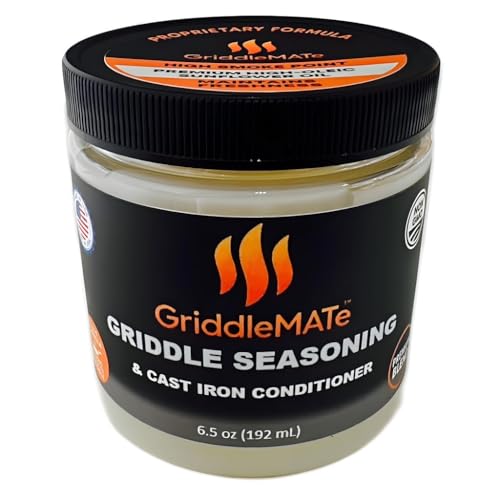
PROPRIETARY FORMULA - Crafted with a unique blend of high-quality ingredients, this proprietary formula is designed to deliver superior seasoning and long-lasting protection for your griddle or cast iron.

TLC for your griddle cooktop: All you need to build a slick, easy-release surface that's protected from rust and easy to work with using Blackstone griddle seasoning and cast iron conditioner

Food Grade Cast Iron Seasoning Oil – Organic & Coconut Derived : Premium food-grade oil made from organic fractionated coconut oil. Designed specifically to season and condition cast iron skillets, pans, grills, griddles and Dutch ovens.
Deep Cleaning Methods for Heavy Buildup
Despite diligent seasoning and regular post-cook maintenance, your cast iron grates will eventually accumulate stubborn carbon buildup that standard cleaning won’t remove. You’ll need specialized deep cleaning methods to restore them.
The heat-based approach involves filling your grill with charcoal and heating grates for two hours minimum, allowing carbon to loosen and separate. For severe buildup, you can employ the ammonia soak method: seal grates overnight in an oven bag with one cup of ammonia. The fumes penetrate hardened deposits without intensive scrubbing. Bar Keepers Friend can also be used with a nylon scrubber for stubborn grime if grates haven’t been cleaned in a while.
Pressure washing at 1500-2000 PSI with proper nozzle distance effectively removes accumulated debris. Alternatively, apply a baking soda paste, let it sit 15-20 minutes, then spray white vinegar to activate the chemical reaction. While pumice stones perform adequately for cleaning, they are generally outperformed by other specialized methods for cast iron maintenance. After removing heavy buildup, thoroughly dry the grates and apply a protective layer of oil to prevent rust formation. For maintenance between deep cleans, use a stainless steel grill brush during regular grilling sessions to prevent excessive accumulation. Regular deep cleaning once or twice a year prevents the need for replacement, as burnt fat deposits can become increasingly difficult to remove over time. Removing and cleaning drip pans regularly also helps prevent grease fires and maintains overall grill safety. Light cleaning after each use complements these intensive methods by preventing excessive buildup between deep cleaning sessions.
These resurfacing techniques restore grate functionality and extend lifespan before storage methods become necessary.
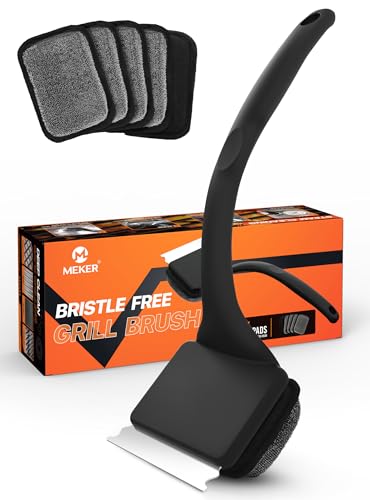
【ULTRA SAFE CLEANING】BBQ is a wonderful thing, but cleaning the grill can be a challenge! MEKER Grill Cleaner Brush can help you! Our grill cleaner brush ensures a bristle-free cleaning experience, eliminating the risk of swallowing dangerous metal bristles. Enjoy safe, worry-free grilling with our innovative design.

【The Safest Bristle Free Grill Cleaner】:No wire bristles at all, no melting like nylon grill brushes; With this safe grill brush and scraper, your food will stay 100% Bristle Free. No more worry about swallowing some metal pieces, Let's free to gobble up some favorite barbecue! Save your effort and time, let’s just have fun! (PATENTED design)

[Safe Wire Brush & Scraper ] - Grill cleaning brush with sharp stainless steel grill scraper can easily scrub stubborn grease and dirt effortless. Our bbq brush tools reuseable after clean.It's also the perfect Father's Day gifts for dad, family, friends, and barbecue enthusiasts.
Rust Removal and Treatment
Rust on cast iron grates requires systematic treatment to prevent structural degradation and restore cooking surfaces. You’ll find chemical pretreatment with vinegar or lemon juice highly effective for dissolving rust accumulation. Soak your grates for 24-48 hours in vinegar solution, or apply lemon juice with baking soda to create an abrasive paste. For stubborn rust, combine vinegar and baking soda to trigger a fizzing reaction that dislodges particles. Mechanical scrubbing with aluminum foil wadding or non-metallic brushes removes loosened rust without scratching the surface. A crumpled ball of aluminum foil works particularly well when combined with baking soda paste to scrub away rust after heating the grates to loosen residue. Cast iron grates are easiest to clean of rust compared to other grate materials. After treatment, rinse thoroughly and dry completely with a non-abrasive sponge to remove any remaining residue. Beyond the metallic off-flavor that rust imparts to food, heavily rusted grates become unsanitary and cause food to stick during cooking. For tougher rust that resists household remedies, consider using non-toxic commercial rust removers specifically designed for cooking surfaces. You can also employ a grill scraper to remove any remaining rust particles before the final seasoning process. Heating the grates on medium-high for 20 minutes can help loosen stubborn rust before scraping. Finally, apply vegetable oil and heat your grates to 250-300°C for 1-2 hours to establish a protective seasoned coating that prevents future rust formation.

TOUGHER THAN THE TOUGHEST RUST: Easy to use spray gel that clings to iron, steel and other metals to remove rust fast

Cast Iron Rust Remover: The Lodge Rust Eraser is a compact, abrasive rust eraser that restores cookware and other cast iron pieces with precision rust removal

EVAPO-RUST RUST REMOVER: Evapo-Rust effortlessly removes rust from automotive parts, hardware, tools, cookware, and antiques without any scrubbing or sanding.
Tool Selection and Safety Considerations
Selecting the right cleaning tool for your cast iron grill grates greatly impacts both your safety and cleaning effectiveness. You should avoid traditional wire brushes entirely due to bristle shedding risks—shed metal fragments can contaminate your food and cause serious internal injuries. Instead, you’ll find steam-based cleaning advantages compelling: these systems eliminate metal contamination while delivering superior performance on cast iron surfaces. Steam-powered tools like the Grill Rescue brush press heated cleaning heads onto grates, loosening debris safely. The detachable cleaning head can be easily removed and cleaned in a dishwasher, typically allowing 50 to 100 cleaning cycles depending on your grill use intensity. Alternatively, you can opt for nylon bristle brushes with integrated scrapers, which clean effectively between valleys without damaging surfaces. For crisscross pattern grates, specialized GrillGrate tools with dual spiral wire helixes prevent catching and snagging while reaching into flavor valleys and along rail walls. Choose dishwasher-safe cleaning heads for thorough sanitization and antimicrobial-treated options to maintain food safety standards. When selecting cleaning tools, prioritize stainless steel scrapers for their corrosion resistance and ability to withstand high heat without degrading. Bristle-free coiled designs offer enhanced family safety through their sturdy construction and 18-inch non-slip handles that keep hands away from heat. Key selection criteria include cleaning performance on grate tops and between grates, safety features, durability, and scraper effectiveness. Remember that oiling grates after water-based cleaning is necessary to prevent rust formation on cast iron surfaces. For exterior grill surfaces, Bar Keepers Friend powder mixed into a paste offers superior cleaning performance on stainless steel components.

Water activated design cleans with the power of steam. Dip in cold water, apply to a hot grill, and let steam loosen grease and burnt-on food instantly.

GRILL BRUSH WITH NOTHING TO BREAK OFF IN YOUR FOOD: Wire brushes shed bristles onto the grate. This one uses a solid aramid-fiber cleaning head instead, so there is no loose wire to end up on a burger.

【Safe Bristle Free】New design “StelFyber Head” free you from wire swallowing nightmare; with our newest no bristle brush, your food can always stay 100% Bristle Free. Wanna gobble up your favorite barbecue with total peace of mind? This could no longer be a problem!