

You’ll restore your Weber grill grates by matching your cleaning method to the material type. For porcelain-coated grates, use soft brass bristles and a vinegar-water solution. Cast iron requires preheating to 500-550°F before scrubbing with stainless steel brushes. Stainless steel grates need high-heat prepping followed by soft-bristle scrubbing and Bar Keeper’s Friend for stubborn deposits. Incorporate baking soda pastes and aluminum foil balls for baked-on grime. Uncover advanced techniques that’ll elevate your maintenance routine.
Cleaning Porcelain-Coated Grates
Porcelain-coated grates demand a gentler touch than their stainless steel counterparts because harsh abrasives will chip and scratch the delicate surface. You’ll want to use only non-corrosive cleaners and brass bristle brushes to safeguard the coating. Stainless steel scrubbers like Scotch-Brite products offer safer alternatives for gentle scrubbing without causing micro-scratches.
For disinfecting grates and removing grease, combine equal parts white vinegar and water in a spray bottle. Let the solution sit several minutes before scrubbing, as vinegar dissolves buildup while disinfecting simultaneously. Alternatively, create a baking soda paste with equal parts water and baking soda for effective degreasing.
After cleaning, you’ll enhance longevity by polishing porcelain with vegetable oil applied via cloth. Once seasoned, apply oil after each use using high-temperature cooking oils like vegetable or canola oil to maintain the protective coating. For best results, choose oils with high smoke points such as refined avocado, peanut, or grapeseed oil that can withstand grilling temperatures without burning. Guarantee complete drying before reinstalling grates to prevent moisture complications during cooking. Avoid using high-pressure water or harsh chemicals that can compromise the porcelain surface and reduce the grill’s lifespan. Mild cleaning methods are essential to prevent scratches and maintain the integrity of the porcelain coating for long-term durability. Regular scrubbing the cooking grates both before and after each use helps maintain optimal performance and extends the life of your Weber grill. Always test-spot any cleaner on an inconspicuous area before full application to ensure it won’t damage the porcelain finish.
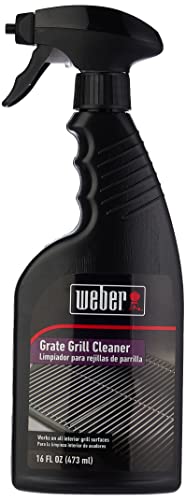
This 16 oz spray bottle of Weber Grill Grate Cleaner was engineered for use on cooking grate surfaces, including stainless steel and porcelain-enameled, cast-iron grates

Citrusafe BBQ Grill Grate Cleaner, 23 FL OZ

Grill Cleaner - Super-strength gel cleans your grill and is safe on food-prep surfaces
Cleaning Cast Iron Grates
Cast iron grates require a distinctly different approach than porcelain-coated surfaces because they’ll rust without proper maintenance and benefit from seasoning rather than polishing. You’ll preheat your grill to 500-550°F, then brush grates with a stainless steel bristle brush to remove debris. For stubborn buildup, perform deep cleans by heating charcoal to at least 450°F for two or more hours, burning off carbon and grease before brushing again.
Use mild dishwashing liquid with hot water for chemical cleaning, or apply Bar Keeper Friend for stuck-on residue. Avoid citrus-based cleaners that corrode cast iron. After washing, thoroughly dry grates immediately with soft cloths to guarantee rust prevention. For rusty grates, soaking in vinegar effectively dissolves rust before scrubbing and re-seasoning. You can also create a paste of baking soda and vinegar to apply on particularly stubborn rust spots before scrubbing. When storing cast iron, make certain it’s completely moisture-free. For best results, use a wooden spatula to scrape off any remaining stubborn remnants while the grill is still hot. Consider using a wire cup brush for tough, baked-on residue that proves particularly difficult to remove. Routine light cleaning after each use prevents excessive buildup and reduces the need for more intensive scrubbing sessions. While pumice stones perform adequately for cleaning, they are outperformed by more effective specialized tools and cleaning combinations. Seasoning cast iron afterward maintains its protective finish and longevity. For deeper cleaning of the interior, apply baking soda and vinegar to loosen any remaining grease buildup.

PRACTICAL: Wire brushes are ideal for removing paint stains, rust, welding slag,solder,scale, Great for remove corrosion and more from parts, equipment, machinery and other surfaces. Also great for cleaning threads, grills or tile.

DETACHABLE SPACE-SAVING DESIGN: Remove the handle after use and store this space-saving grill brush in drawers, cabinets, grill carts, RV compartments, and toolboxes for transport

Extra Strong Ergonomic Handle - Still believe that as long as the bristles are stiff enough, the grill cleaning brush can live up to the name - a good barbecue brush? Of course not! A soft and sturdy handle with a stainless steel ring for hanging can make the clean work easier. No possibility such as the handle breaking up or snapped. You can succeed in using this BBQ cleaner for a very long time!
Cleaning Stainless Steel Grates
Unlike cast iron surfaces that require seasoning and careful moisture management, stainless steel grates demand a straightforward maintenance routine that combines routine brushing with periodic deep cleaning. You’ll preheat your grill on high for 15 minutes, then scrape food particles with a Weber stainless steel brush while warm. For seasonal maintenance, soak grates in dishwashing detergent and scrub with a soft-bristle brush to prevent buildup.
When tackling stubborn carbon deposits, apply Bar Keeper’s Friend or Weber Stubborn Stain Remover before scrubbing. For stainless steel restoration after heavy use, consider power washing grates after soaking or using a wire wheel on a drill. A stainless steel scraper is essential for removing burnt carbon buildup that chemicals alone cannot eliminate. Always rinse thoroughly and dry completely before reuse. Regular maintenance prevents flare-ups and ensures your grates perform optimally for years to come. Replace brushes regularly to maintain effectiveness and protect your investment. For enhanced safety, consider switching to a bristle-free grill brush with stainless steel coils or a helix design that eliminates the risk of wire bristle ingestion while still providing effective cleaning power. If you prefer nylon-bristle brushes, always use them on cool grates to prevent melting, as nylon performs poorly on hot surfaces. Chainmail and foam scraper systems offer an alternative that combines effective cleaning with lower safety risks and easier maintenance. For deep cleaning that cuts through baked-on grime with minimal effort, Carbona’s 2-in-1 cleaner works on cold grates in just five minutes and is safe for both porcelain and stainless steel surfaces. Heat-resistant sponge brushes with detachable cleaning heads provide a wire-free cleaning solution that can be refreshed in the dishwasher for extended use.

[Safe Wire Brush & Scraper ] - Grill cleaning brush with sharp stainless steel grill scraper can easily scrub stubborn grease and dirt effortless. Our bbq brush tools reuseable after clean.It's also the perfect Father's Day gifts for dad, family, friends, and barbecue enthusiasts.
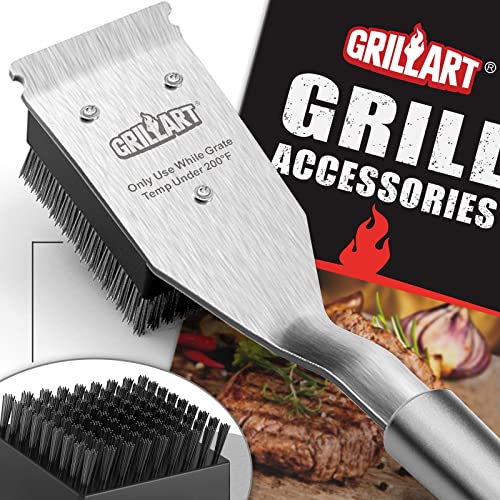
Effortless cleaning - Packed full of stiffer and denser stainless-steel bristles along with a tough grill scraper, you hardly have to use any muscle to keep your grill tidy; Take this home, and be ready to shred off even the toughest grilled on remnants with just a few strokes!

HIGH QUALITY STAINLESS STEEL BRISTLES - Easily Removes Food, Grease, and Debris from all type of Grill Grates without Scratching or Damaging the Surface.
Handling Stubborn Grease and Baked-On Grime
When stubborn grease and baked-on grime accumulate on your grill grates, you’ll need to employ multiple cleaning methods to restore their surface effectively. Start by preheating your grill for 10-15 minutes to loosen debris, then scrub warm grates with soft-bristle brushes. For persistent residue, create a baking soda and vinegar paste, letting it soak for 30 minutes before gently scrubbing. You can also crumple aluminum foil into a ball for additional abrasive action without damaging surfaces.
Consider Weber Grate Grill Cleaner spray for burnt-on buildup—it’s non-toxic and phosphate-free, preventing chemical residue buildup. The Weber Exterior Grill Cleaner is specifically designed for season-to-season maintenance of your grill surfaces. After any cleaning method, rinse thoroughly with water and dry immediately. For especially tough grime, try a lemon juice and salt scrub, which acts as a powerful natural degreaser to break down residue without harsh chemicals. For a chemical-free cleaning approach endorsed by grilling professionals, cut a large onion in half and rub the cut side along the grill grates to remove light carbonization and charred food. If you prefer using a wire brush, opt for bristle-free coiled designs that effectively tackle stubborn grime without leaving metal fragments that could contaminate your food. For stainless steel grill surfaces, Bar Keepers Friend powder mixed into a paste delivers superior cleaning results for exterior maintenance. For best results, use a stainless steel grill brush to complete your cleaning routine. Regular maintenance prevents buildup of food residue and grease, ensuring better cooking results and extending your grill’s lifespan. Avoid oven cleaners and abrasive scrubbing techniques that’ll compromise your grates’ integrity and longevity.
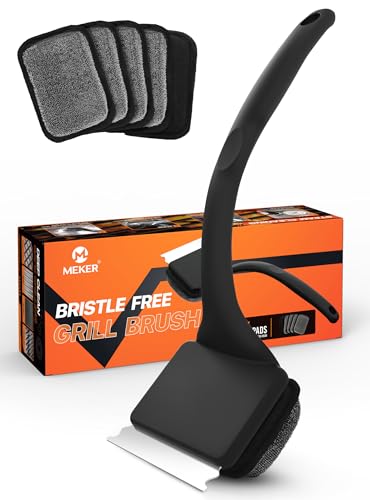
【ULTRA SAFE CLEANING】BBQ is a wonderful thing, but cleaning the grill can be a challenge! MEKER Grill Cleaner Brush can help you! Our grill cleaner brush ensures a bristle-free cleaning experience, eliminating the risk of swallowing dangerous metal bristles. Enjoy safe, worry-free grilling with our innovative design.

Efficient and Comfortable Construction - Grill cleaning brush with heavy duty scraper. 360 degree firm bristle brush cleans quickly and comprehensively. Effortless cleaning with perfect angled and ergonomically handle.

【The Safest Bristle Free Grill Cleaner】:No wire bristles at all, no melting like nylon grill brushes; With this safe grill brush and scraper, your food will stay 100% Bristle Free. No more worry about swallowing some metal pieces, Let's free to gobble up some favorite barbecue! Save your effort and time, let’s just have fun! (PATENTED design)
Essential Cleaning Tools and Products
To effectively tackle the cleaning challenges outlined above, you’ll need the right combination of specialized tools and products designed specifically for Weber grills. Stock the Weber Grate Grill Cleaner ($10.99-$24.98), a non-flammable, phosphate-free spray that removes burnt-on residue safely. Pair this with the Heavy Duty Grill Grate Scrubber (#8026) and either the Three-Sided Brush (#6278) or Detail Brush (#6279) for thorough coverage. The Weber Grill Cleaning Kit ($74.94) bundles these essentials together efficiently. Additionally, gather dedicated cleaning rags, a putty scraper for initial residue removal, and paper towels for exterior work. For enhanced grill maintenance, consider the Weber Exterior Grill Cleaner to protect your grill’s finish between deep cleaning sessions. Implement proper storage techniques by keeping tools dry between uses. The angled bristle head design keeps your hands safely away from heat during the scrubbing process. Apply periodic conditioner application to metal components to extend grill longevity and maintain performance. For a wire brush-free alternative, create a baking soda paste and apply it to warm grates, then scrub with crumpled aluminum foil to safely remove grime without risking metal bristle ingestion. If your grill exterior shows signs of rust or worn finish, apply Rust-Oleum High Heat spray paint rated to withstand temperatures up to 1200°F for durable corrosion resistance. After deep cleaning cast iron grates, re-season them by applying a thin layer of high smoke point oil and heating to medium-high to restore the protective non-stick coating. For heavy carbonization or extremely baked-on grease, consider using Dawn Powerwash or industrial-strength Dawn as a pre-treatment before scrubbing with your grill brush. To protect your deck surface from grease drips and heat damage during cleaning and grilling, position a heat-resistant grill mat underneath your Weber that extends beyond the grill’s footprint to catch spills and splatters.

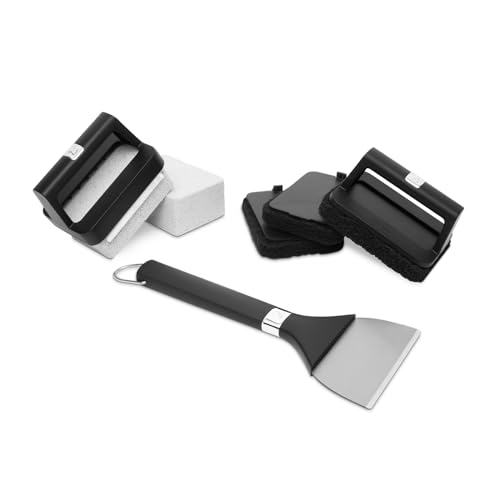
BUNDLE INCLUDES: 1 detail scraper, 3 scour pads, 2 cleaning stones, 2 easy grip handles
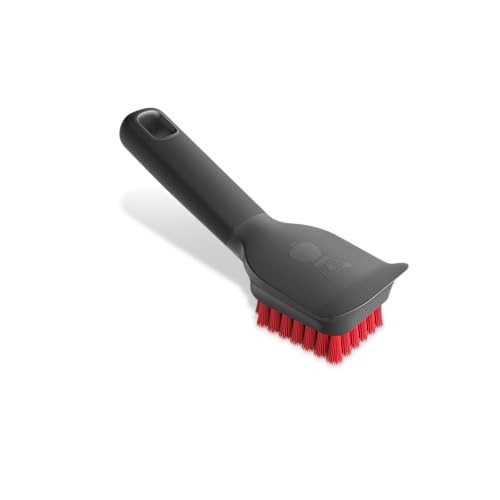
Multipurpose tool for grates, cookboxes, burners and more
Pre-Use Maintenance and Prevention Strategies
Your grill’s longevity and cooking performance depend considerably on establishing a disciplined pre-use routine that combines strategic preheating with intentional food preparation practices. Heat your grill to 500-550°F for 10-15 minutes before cooking begins, allowing food debris to convert to ash for effortless removal. Run all burners on high for 15 minutes initially to burn off residue and achieve proper grate disinfection measures. Before storage, guarantee grates dry completely to prevent moisture damage and corrosion. When preparing food, remove excess marinade liquid and apply oil directly to proteins rather than cooking surfaces—this prevents sticking and reduces debris accumulation. Delay barbecue sauce application until the final 5-10 minutes of grilling. Using a stainless steel bristle brush will effectively remove ash and debris from your grates while protecting the porcelain enamel coating from damage. Inspect your brush regularly to ensure it remains in optimal condition for effective cleaning. For stubborn buildup, specialized cleaners like Bar Keepers Friend can effectively tackle tough grime without damaging grill surfaces. For flat-top griddle surfaces, pumice-based grill cleaning bricks offer an ecological solution that removes grease and rust with just water and light pressure. Consider wooden grill scrapers as a safer alternative to wire brushes, as they eliminate bristle contamination risks while forming customized grooves that conform to your grate pattern over time. After cleaning, apply a protective layer of cooking oil to the grates to create a barrier against future rust formation. Understanding that grilling relies on conduction, convection, and radiation helps you recognize why proper grate maintenance is essential for optimal heat transfer during cooking. Proper grate storage in a dry environment between uses protects against environmental corrosion and extends equipment lifespan tremendously.