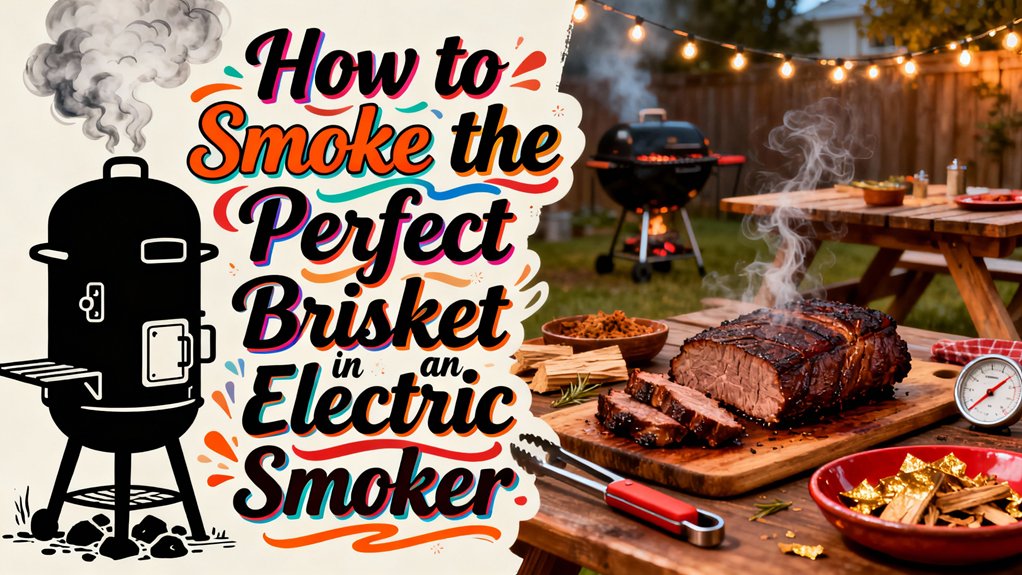
You’ll start by selecting a 10-14 pound packer brisket and applying a Texas-style salt-and-pepper rub. Preheat your electric smoker to 225°F, then smoke unwrapped until the bark forms and internal temperature reaches 165°F. Wrap in butcher paper with beef broth, then continue cooking until you hit 203°F internally. Rest for 2-3 hours minimum before slicing against the grain. The specifics of each phase reveal what truly separates exceptional results from merely acceptable ones.
Preparation and Setup
You’ll want to start by selecting a whole packer cut brisket that weighs between 10-14 pounds with a fat cap around 1/4 inch thick. Choose USDA Choice or Prime grade for ideal marbling. Trim the brisket methodically: place it fat side down to remove silver skin, then flip it to even out the fat layer. Work quickly since fat softens as it warms.
Next, apply 2 tablespoons of olive oil as a binder before seasoning. Mix your preferred rub—whether the traditional blend of salt, pepper, brown sugar, garlic, and smoked paprika, or an alternative combination. Allow the seasoning to adhere for 1-2 hours at room temperature. While the brisket rests, you can enhance the smoke ring by adding Morton’s Tender Quick curing salt to your seasoning mixture. Hickory, oak, and mesquite wood will infuse the meat with strong flavor during the smoking process. Remove it from the fridge to reach room temperature, ensuring even cooking throughout your smoking process. Since brisket requires low and slow cooking to break down collagen effectively, proper preparation at this stage sets the foundation for tender perfection, and you should plan for approximately 1.5 to 2 hours per pound when smoking at 225°F. For best results, place the brisket fat side up to allow the fat cap to baste the meat as it renders. Monitor the stall phase where the brisket’s temperature plateaus, as this is a crucial part of the cooking process that requires careful attention. During the cook, monitor the internal temperature carefully as it is the key indicator for doneness and will guide you toward the perfect result.
Temperature and Heat Management
Temperature control is everything when smoking brisket in an electric smoker—it’s the difference between a tender, smoke-kissed masterpiece and a dried-out disappointment. You’ll want to preheat your smoker 30-45 minutes to reach a stable 225°F, the ideal cooking temperature for most briskets.
Maintain consistent temperature monitoring throughout your cook. For a 6-12 pound brisket, plan roughly one hour per pound at 250°F. Proper probe placement is critical—insert your wireless thermometer into the thickest part of the flat, centering the tip on meat while avoiding fat pockets and bone. The smoker will automatically switch to warm mode once your target temperature is reached, ensuring consistent heat without overcooking. At 180°F you’ll achieve subtle smokiness for high-quality, well-marbled briskets, though this temperature takes longer to cook than higher settings. Remember that evaporative cooling during the cooking process can cause your brisket’s internal temperature to plateau unexpectedly.
Watch for the stall between 145-165°F where evaporation naturally cools your meat. To combat moisture loss during this phase, consider using the Texas Crutch technique of foil-wrapping your brisket partway through cooking. Using hardwoods like pecan, oak, or mesquite will enhance the smoke flavor and develop a rich bark on the exterior of your brisket. Target a final internal temperature of 195-203°F at the thickest point for perfect tenderness. Add wood chips hourly and adjust heat to prevent exceeding 250°F, which risks drying out your brisket.
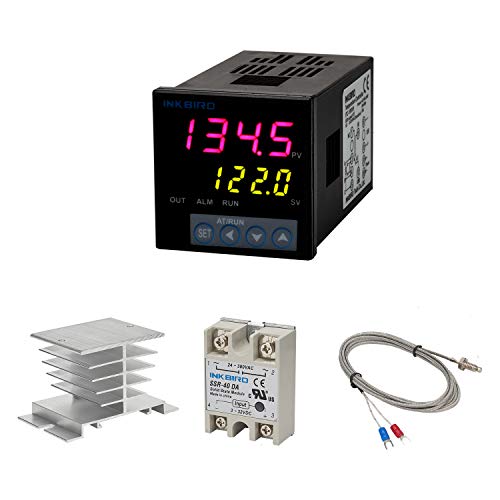
Alarm Output: With 1 alarm relay output, AC250 V, 3 A (Resistive load), ON or NC, you can wire a buzzer

【SPECIFICATION】: 120V 15A Analog controller, adjustable Temperature Range: 50F-500F (Depends on the size of your smoker/grill).

【COMPATIBLE MODELS】- Digital Control Panel Replacement for MASTERBUILT 20071117, 20071217, 21071218, 20071317, 20071417, 20071517, 20071819, 20072318, 20074517, MB20071117, MB20071619, MB20071819, MB20072918, MB20073018, MB20077018, MB20077818, MB21072918, MB25071217 MB26071317, MB28071517. (TIPS: PLEASE CHECK COMPATIBILITY)
Smoking Process
Now that your smoker’s dialed in and your brisket’s prepped, it’s time to execute the smoking process with precision. Place your brisket fat-side up on the top rack with a probe thermometer inserted into the thickest part of the flat. Maintain your smoker at 225-250°F and position the point end facing the heat source for even cooking.
Your wood chip selection—apple, cherry, mesquite, or hickory—directly impacts flavor development. Load your chip tray accordingly and keep the chip loader slightly open to control smoke intensity adjustment without creating flames. This manages oxygen flow while maintaining consistent smoke penetration. Remember to add more wood chips every 30-40 minutes to sustain steady smoke production throughout the cooking process. A water pan can help keep moisture in the meat and prevent the bark from burning during the extended smoking time. Proper heat management with flavorizer bars ensures drippings vaporize effectively rather than causing flare-ups that could char your brisket.
Smoke unwrapped until bark forms and internal temperature reaches 165°F, typically 4-5 hours for a 10-pound brisket. Monitor bark development and use your wireless thermometer for continuous internal reads. You’re building the foundation for your final product. Once your brisket reaches 190°F to 200°F, test for tenderness by probe to ensure the rendered fat and texture have developed properly. Spritzing the meat periodically with a vinegar-water mix helps maintain moisture during the long slow cook. Patience during this extended cooking period is essential, as smoking brisket typically requires 12 to 20 hours at your target temperature to achieve the desired results. Unlike quick grilling methods that take only 8-15 minutes, smoking allows the meat’s collagen to break down completely into gelatin for maximum tenderness.

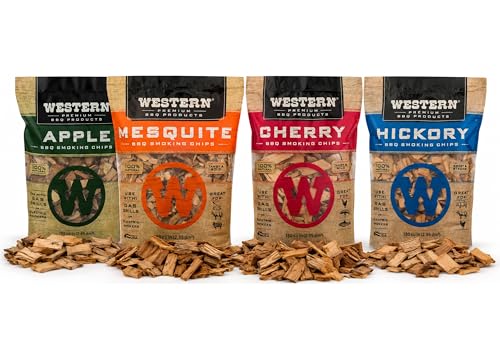
Western BBQ Smoking Wood Chips Variety Pack Bundle (4)- Apple, Mesquite, Hickory, and Cherry Flavors (Original Version)
Wrapping and Finishing
Once your brisket’s bark has darkened and the internal temperature hits 155-170°F, it’s time to wrap. You’ll choose between foil, butcher paper, or a hybrid approach depending on your priorities. Foil accelerates cooking but softens bark, while paper preserves your crispy exterior through breathability.
For liquid volume adjustments, add ½ to ¾ cup based on brisket size—larger cuts need more moisture without over-saturating. Pour liquid directly into your wrap before sealing to trap flavors as connective tissues break down. Beef broth or other savory liquids provide umami-rich flavor that infuses the meat during the wrapping phase. After wrapping, continue smoking at a higher temperature until the brisket reaches 195-200°F for optimal tenderness.
During the final smoker phase, position fat side down to protect bark from washing. The foil boat method exposes the fat cap to higher temperatures for better rendering and development. Maintaining consistent temperature control throughout the cooking process ensures even doneness and prevents fluctuations that could extend your total cooking time. Using a meat thermometer to monitor internal temperature throughout the wrapping and finishing phases will help you achieve the precise doneness level you’re targeting. Just as with poultry, internal temperature is the most reliable indicator of when your brisket has reached proper doneness. Proper storage of your finished brisket requires refrigeration within two hours of smoking to maintain quality and safety. After cooking, rest your wrapped brisket long for ideal juice redistribution. Unwrap, slice against the grain, and you’ll achieve competition-style tenderness with bark development techniques perfected.

【PREMIUM NATURAL QUALITY】Made from premium virgin pulp, our butcher paper is unwaxed, uncoated, and unbleached for a natural and pure product. Ideal for grill masters seeking top-notch, food-safe paper to enhance their culinary creations.

Designed specifically for the culinary enthusiast, our 18 paper roll dispenser is optimally crafted to handle barbecue butcher paper, thereby ensuring the authentic taste of your smoked meats is maintained. This is your ideal bbq wrapping paper for smoking

Untreated: Our Brown Butcher Paper is unbleached, unwaxed, uncoated, and made from the finest virgin pulp. Butcher paper is more durable and resistant to tearing compared to aluminum foil
Cooking Time and Temperature Targets
As your brisket moves through the wrapping phase, you’ll need to dial in precise temperature management to guarantee that perfect tender finish without sacrificing bark quality. Your preheat timing establishes the foundation—target 225°F for consistent low-and-slow cooking. This temperature range breaks down fat and connective tissue effectively over 12-18 hours for a 12-13 lb brisket.
Monitor your internal temperature progression carefully. Smoke until you hit 165°F internally, typically after 8 hours at 225°F. After wrapping, maintain 225°F and continue until you reach 202°F in the thickest part. Finally, pull your brisket when it hits 200-205°F internal—this verifies maximum tenderness. You’re looking at roughly 30-60 minutes per pound total, though individual briskets vary based on size and density. For best results, use a wireless leave-in meat thermometer to monitor your progress without opening the smoker door repeatedly. For hands-off precision throughout your cook, consider a thermometer with an app that allows you to track temperatures remotely. Wrapping your brisket in butcher paper during the stall phase helps retain moisture while maintaining the bark texture you’ve developed.
Resting and Serving
After you pull your brisket at 200-205°F, resist the urge to slice immediately—the resting phase is where your precision pays dividends. Your electric smoker set to 160-170°F holds the meat perfectly without overcooking during extended rest periods. Temperature monitoring isn’t necessary with proper insulation; wrap your brisket in butcher paper and towels inside a cooler for 2-3 hours minimum. This timeframe allows juice redistribution throughout the meat, ensuring consistent tenderness. For optimal results, apply rendered beef tallow to the wrapped brisket before placing it in the cooler to enhance moisture retention. Similar to how smoking requires precise internal temperatures like those needed for starches to gelatinize, your brisket’s resting period allows the muscle fibers to stabilize and reabsorb moisture evenly. Proper cooler insulation is essential for maintaining consistent temperatures during the resting phase, much like how a quality smoker cover protects your equipment from temperature fluctuations between uses.
For extended holds up to 8-12 hours, transfer to a low-temperature oven at 155-160°F. Your slicing technique improves dramatically when the brisket cools slightly—the grain structure stabilizes, preventing shredding. Cut against the grain using a sharp knife for clean, intact slices that showcase your smoking expertise. Rest your brisket on a wire rack over baking sheet to maintain proper air flow and prevent the bottom from becoming soggy during the cooling period.
Tips for Success
Your brisket’s success hinges on deliberate choices made before the smoke even begins. Proper fat trimming to ¼-inch thickness creates the foundation for even heat penetration and moisture retention throughout your cook. You’ll achieve flavorful bark formation by applying a non-sugar rub after your mustard slather, ensuring consistent seasoning across all surfaces. A traditional Texas-style rub of salt and pepper allows your BBQ skills and smoke flavor to truly shine through.
Temperature stability matters tremendously—maintain 225-250°F throughout to prevent drying. Position your brisket with the point away from the heating element for indirect, even cooking. Don’t skip probe placement in the thickest meat section, avoiding fat for accurate internal readings. Just as proper grate maintenance ensures consistent heat distribution in charcoal grills, maintaining your smoker’s heating element cleanliness will support optimal temperature control throughout your cook. A water pan helps maintain the moisture necessary for tender results during your long cook. For additional heat distribution support, consider cleaning your smoker’s interior surfaces with natural cleaning ingredients to remove residue that could affect temperature consistency. Building a protective non-stick layer on your smoker’s interior surfaces through regular cleaning prevents buildup that interferes with heat distribution.
You’ll notice results improve when you add wood consistently every hour, maintaining thin blue smoke. Your patience during the wrap phase at 165°F internal temperature pays dividends, yielding tender, properly rendered meat by 190-202°F.


Variety 6 Pack of Smoking Chips

[4-Flavor Smoking Wood Chips Variety Pack for Smoker] This smoking wood chips variety pack includes Apple, Cherry, Hickory & Oak—four classic hardwood flavors designed to suit different meats and smoking styles. Ideal wood chips for smoker users who want flexibility, balanced smoke intensity, and authentic BBQ flavor across every cook.