
You’ll master smoking brisket by trimming the fat cap to a quarter-inch, applying mustard and a Texas-style rub, then setting your pellet grill to 180°F with natural hardwood pellets. Start fat-side down to develop that pink smoke ring, monitoring until you hit 165-170°F internally. Wrap in butcher paper, continue to 190-205°F, then rest for an hour before slicing against the grain. There’s quite a bit more technique involved in nailing each stage.
Trimming Your Brisket
Proper trimming’s the foundation of smoking a great brisket, and you’ll want to start by chilling your meat for 30 to 60 minutes in the freezer—this firms up both the fat and meat, making precise cuts far easier to execute. Position your brisket fat side up and use a sharp boning knife for proper knife selection, cutting away from your body to safeguard safety. Identify the point and flat sections, then locate the moon-shaped deckle on the point side for strategic fat removal. Reduce the fat cap to 1/4 to 1/2 inch thickness, removing firm fat that won’t render during smoking. Square off long, thin sections to create a uniform shape, and be a minimalist with your cuts since you can always remove more if needed. A properly trimmed brisket should weigh between 15-18 lbs as a full packer before smoking. This preparation typically takes 30 to 45 minutes and sets you up for even cooking and ideal results on your pellet grill. Using the low-and-slow method at 225°F allows the fat and connective tissues to render properly, ensuring tender and flavorful meat throughout the smoking process. Monitor the internal temperature throughout the cook, as the brisket will experience a stall phase where the temperature plateaus before continuing to rise. Wrapping the brisket in butcher paper during the cook can help maintain moisture and develop a good bark. After the brisket reaches an internal temperature between 190°F and 205°F, allow it to rest for at least one hour so the juices can redistribute throughout the meat. Once rested, slice the brisket thinly against the grain to ensure maximum tenderness in every bite.
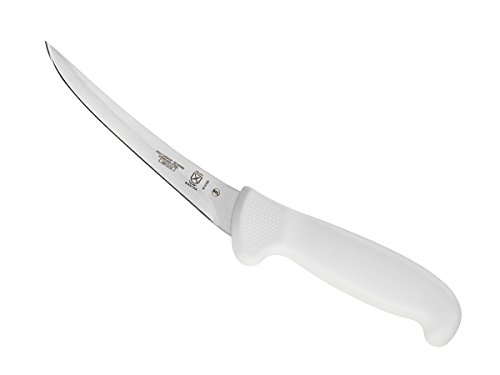
QUALITY CONSTRUCTION: Knives are crafted with high-carbon Japanese steel for easy edge maintenance and a razor sharp blade that lasts
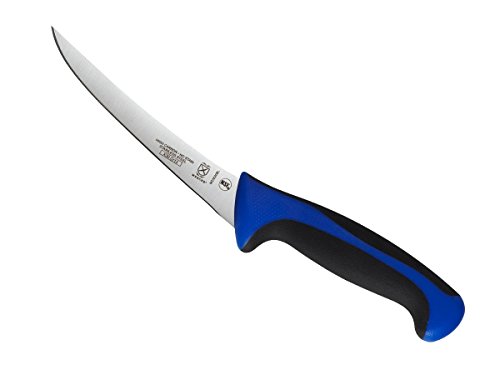
QUALITY CONSTRUCTION: Knife is crafted with one-piece high-carbon Japanese steel for easy edge maintenance and long-lasting sharpness
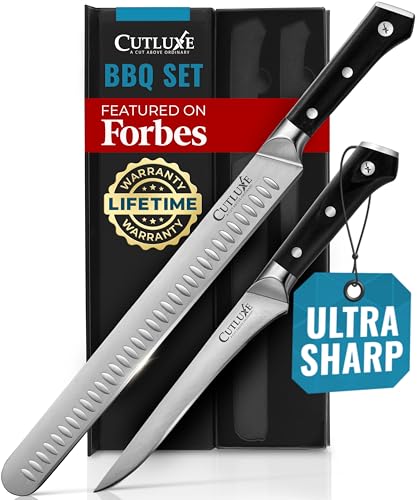
PREMIUM PERFORMANCE: This BBQ knife set includes a 12" brisket slicing knife and a 6" boning knife, designed for precise meat cutting, ensuring a perfect slice every time.
Applying the Perfect Seasoning
What makes a brisket bark truly sing? You’re building layers of flavor that penetrate deep into the meat. Start by applying a binder—mustard or Worcestershire sauce works great for binder composition and helps seasoning stick throughout the cook.
Next, apply your rub generously. Most pitmasters favor Texas-style blends: coarse salt and pepper as your base, with garlic powder, onion powder, and paprika for depth. Press the seasoning firmly into all sides, including edges, ensuring maximum seasoning penetration.
Apply pepper first on the bottom side to catch smoke and build bark effectively. For full coverage on a whole packer, don’t hold back—these large cuts handle liberal seasoning well. A choice grade brisket between 10-14 pounds will ensure even seasoning distribution and consistent cooking throughout the smoke. Let it rest at least 30 minutes, ideally overnight in the fridge, allowing flavors to meld before smoking. Before placing your brisket on the pellet grill, make sure it has reached room temperature for more even cooking throughout. The Texas-style rub blend of salt, pepper, and spices creates the foundation for developing that coveted smoke ring and deep bark flavor during your low and slow cook at 200-225°F. While pellet grills provide consistent heat, adding a small amount of lump charcoal can enhance the smoke flavor and create a more pronounced bark on your brisket. If you prefer the traditional smoky flavor that only charcoal can deliver, consider investing in a Weber Original Kettle Premium for authentic charcoal-smoked brisket with superior heat retention. If you’re looking for precise temperature control beyond your pellet grill, consider using a quality gas grill like the Weber Spirit E-210 for searing or finishing touches that require exact heat management. Wrapping in pink butcher paper rather than foil helps maintain the bark texture while preserving moisture as the internal temperature climbs.

CHAMPIONSHIP BRISKET RUB - This rub is how you do Brisket, period. Developed and used by our award winning Killer Hogs Championship BBQ team, this rub makes you a brisket master.
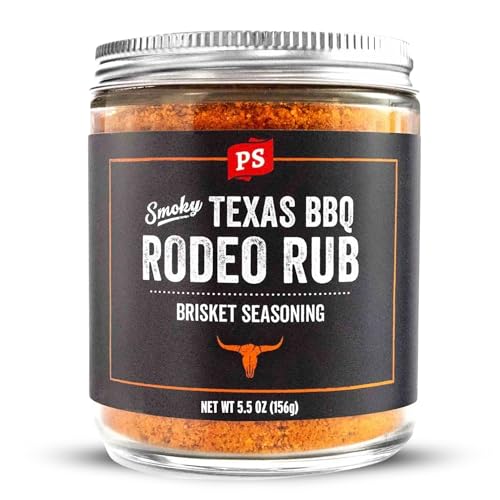
With this flavorful Texas-Style Brisket BBQ dry rub, you can easily impart slow-cooked flavors in your meats and more, without actually having to cook for hours!

Setting Up Your Pellet Grill
Now that your brisket’s seasoned and resting, you’ll want to get your pellet grill dialed in before the meat hits the grates. Start by filling your hopper completely—you’ll need consistent pellet level monitoring for overnight smoking at low temperatures. Set your grill to 225°F and allow proper temperature stabilization before proceeding. Verify the thermometer holds steady; this constancy is vital for even cooking. While preheating, place a foil pan under the grates to catch drippings. Position your brisket fat side down on the main rack with adequate airflow space. Use your grill’s WiFi app or built-in probe integration to monitor temps remotely. Once everything stabilizes, you’re ready to place your seasoned brisket and begin the smoke. Fill the pellet hopper and set the grill to 190°F for optimal overnight smoking with consistent low-temperature results. Choose wood pellets like hickory, maple, apple, or a blend to complement your brisket’s natural flavors during the long smoke. Look for pellets with 100% natural hardwoods and no fillers or additives to ensure clean-burning performance and bold smoky flavor throughout your cook. For brisket smoking, start the grill on low or smoke mode to ensure proper ignition before ramping up to your target temperature. Grills equipped with stable PID controllers offer superior temperature regulation, maintaining your target temp even during extended overnight sessions. For those seeking consistent temperature control, models like the Traeger Grills Pro 22 maintain accuracy within +/-15°F throughout extended cooks. Premium models with advanced PID temperature control can maintain consistency within 5 degrees, which is crucial for low-and-slow brisket cooks requiring precise heat management.

Replaces 3 speed smoker control, compatible with Traeger wood pellet grill models (except PTG)
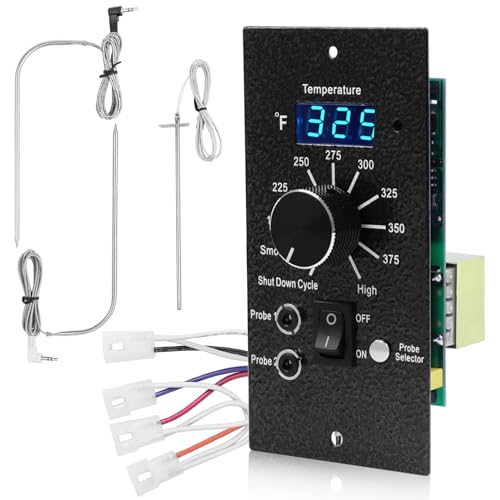
【COMPATIBILITY】: This Traeger Digital Controller kit replacement part compatible with most Traeger Wood Pellet Grills (except PTG), ideal replacement for Traeger Controller BAC365.

High mode can be used for highest heat possible. This product features auto start to self ignite your BBQ.
The Initial Smoking Phase
Once your pellet grill’s stabilized at temperature and your brisket’s positioned fat side down on the grates, you’re ready to begin the low-and-slow process that’ll transform that raw cut into something remarkable. Start at 180°F to maximize smoke ring development during those critical first hours. You’ll want to aim for passing 140°F internally within four hours—this prevents the meat from toughening up.
Keep your brisket revealed throughout this phase. The low temperature guarantees ideal bark texture enhancement as the exterior develops that coveted crust. Rotate the meat every 45 minutes for uniform smoke exposure. Continue smoking revealed until you hit 165°F internally, probing the thickest part of the flat for accuracy. Using a reliable meat thermometer will help you track the internal temperature with precision throughout the cook. Monitor your grill’s temperature remotely via the GMG app to ensure consistent heat throughout the cook. For hands-off monitoring during this extended cook, consider wireless probes with apps that allow you to track both internal and ambient temperatures without constantly opening the grill. Multi-probe Wi-Fi systems enable remote monitoring so you can step away from the grill without worrying about temperature fluctuations. For the most reliable connectivity throughout your house, look for models with radio-frequency technology rather than Bluetooth-only options. Modern pellet grills with WiFi connectivity maintain temperature stability within +/-15°F, giving you peace of mind during those long smoking sessions. After smoking and before any high-heat finishing, allowing the brisket to rest ensures carryover cooking completes and juices redistribute throughout the meat. This patience-driven approach sets the foundation for exceptional results.
Wrapping, Finishing, and Slicing
As your brisket climbs toward 165°F internal, you’re approaching a critical juncture where wrapping becomes your secret weapon against the stall. Your ideal wrapping temperature sits right here—this is when surface evaporation halts your cook’s progress, and wrapping prevents that frustrating plateau.
Choose unwaxed butcher paper over foil. While aluminum foil locks in moisture retention effects and speeds cooking, it softens your bark. Butcher paper preserves that coveted crust while allowing some smoke penetration. Butcher paper retains more of the natural beef flavor compared to foil, which can impart a pot roasty taste that masks the quality of your meat. Wrapping your brisket also insulates the meat, allowing you to increase your smoker temperature without risking a dry final product.
After wrapping, bump your grill to 300°F and push toward 190°F internal. Probe for tenderness—you’ll know you’re done when the probe slides through like butter. Similar to other cooking methods, you can also add broth or beer to your wrap for enhanced moisture and flavor depth. Using a reliable meat thermometer throughout the process ensures you hit your target temperatures accurately and achieve a consistently successful outcome. Continue cooking until the internal temperature reaches about 200-204°F for optimal tenderness and that melt-in-your-mouth texture. After removing from the smoker, resting the brisket for at least 30 minutes is advised to retain juices. Then rest your wrapped brisket two hours at room temperature before slicing, letting those juices redistribute for maximum flavor and texture. Just as with perfectly grilled lamb chops, letting meat rest allows the juices to redistribute throughout the cut, ensuring every slice delivers maximum flavor and moisture.