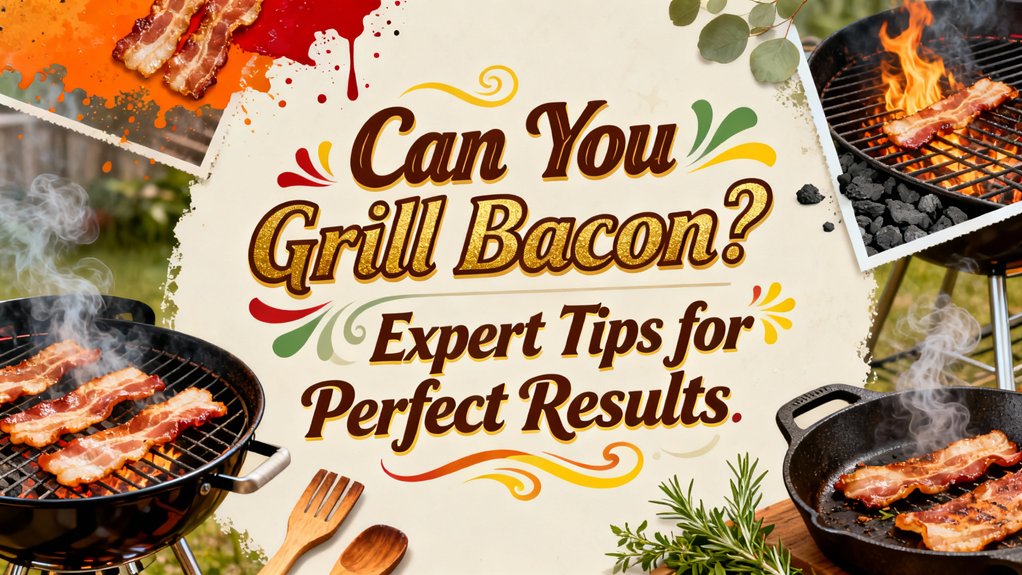
You can grill bacon by preheating your grill to 400°F, then creating a two-zone setup with indirect heat. Position bacon strips on the cooler side away from direct flame, maintaining medium heat around 325°F to minimize flare-ups. Use heavy-duty aluminum foil to contain grease effectively, and flip strips halfway through cooking for even results. Monitor progress without constantly opening the lid to maintain temperature stability. Proper spacing prevents pooling and guarantees crispy, evenly-cooked bacon every time—though mastering advanced techniques like cast-iron griddle alternatives and wrapped foil packets takes your grilling skills further.
Grill Setup and Temperature Configuration
Before you lay down your bacon, you’ll need to set up your grill properly—and that starts with preheating to the right temperature. For gas grills, light all burners and preheat to 400 degrees F, then turn off one burner to create a two-zone setup. With charcoal grills, spread preheated coals along one half of the grill bottom to establish indirect heat zones.
Temperature monitoring is critical for ideal results. You’ll want to target 325-400 degrees F depending on your desired texture—400 degrees F yields chewier bacon faster, while 350 degrees F produces crispier results with longer cooking times. Clean your grates thoroughly with a wire brush, then oil them using a paper towel held with tongs. For gas grills, consider using burner covers to shield your burners from grease splatter during cooking, or install heat shields to protect burners and reduce flare-ups from drippings. A fire-retardant grill cover will also protect your equipment from the elements when not in use. For best results, choose thick-cut bacon that will hold up better to direct grilling heat. Consider using a heavy-duty aluminum foil pan to minimize flare-ups and simplify cleanup. Proper grate positioning and oil application prevent sticking and guarantee even heat distribution across your bacon strips.
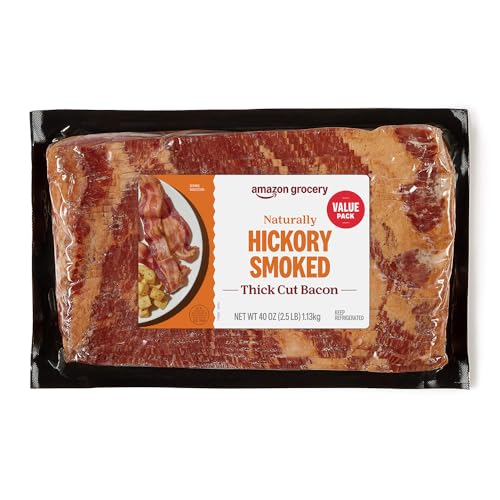
One 40 ounce package of Thick Sliced Hickory Smoked Bacon

Rise and Shine: Start the morning with a boost of happiness so good, it can be tasted. This Premium Hickory Smoked Bacon is thick cut for a bold, yet balanced flavor that will brighten anyone’s morning.

One 22 oz. Package of Oscar Mayer Naturally Hardwood Smoked Thick Cut Bacon Mega Pack, 15-17 Slices
Indirect Heat Cooking Method
The key to grilling bacon successfully lies in mastering indirect heat placement—positioning your strips on the cooler side of the grill away from direct flame or heat sources. On multi-burner gas grills, turn off the burner directly beneath your bacon. For charcoal grills, position strips away from coals entirely.
You’ll maintain medium to medium-low heat (300-325°F) to minimize flare-ups while ensuring even cooking. Close your grill lid to create convection-style cooking through infrared heat distribution, which circulates warmth uniformly without exposing bacon to direct flames.
Residual heat management proves critical—the enclosed environment cooks bacon slowly and evenly. Monitor progress without constantly opening the lid, which disrupts temperature stability. Flip bacon halfway through the cooking cycle, repositioning strips toward cooler zones as needed to prevent charring while achieving uniform crispness. Starting with quality original cut bacon rather than thick-cut varieties can reduce both flare-ups and cooking time for faster, more predictable results. Consider using a non-stick griddle designed for grilling, which offers reinforced coatings for effortless bacon release and quick cleanup. For best results, consider upgrading to a sturdy enclosed grease catcher that shields against flare-ups from rendered fat. A drip pan catches excess fat and prevents flare-ups during the cooking process. Using a grill mat or cast-iron griddle will further manage grease and prevent flare-ups during the cooking process. Premium grill mats can handle temperatures over 600°F on gas grills while offering superior non-stick properties to simplify cleanup.
Aluminum Foil Preparation Technique
While indirect heat creates the ideal cooking environment, you’ll want to implement a protective barrier that prevents grease from dripping onto your grill grates and triggering flare-ups. Heavy-duty aluminum foil offers superior foil material density compared to standard alternatives, guaranteeing durability throughout the cooking process. Double your sheet or fold it in half to enhance foil tray stability and prevent structural failure under bacon’s weight and rendered fat.
Fold all four edges up ½ inch to form a perimeter lip that contains grease effectively. This shallow tray design eliminates mess while maintaining airflow gaps around the edges. Position your foil tray on the grates with adequate spacing to allow heat circulation. For added protection of your grill’s surface, consider using a grill mat underneath to catch any grease that escapes and protect your deck or outdoor space. Selecting a mat with a nonslip backing and raised lip will further contain spills and keep your cooking area secure. Regular maintenance like removing and cleaning drip pans will help prevent grease fires and keep your grill performing safely. Proper preparation using quality materials and precise folding techniques assures your bacon cooks evenly while protecting your grill’s internals from damage. However, be aware that high grilling temperatures can cause aluminum particles to leach into food, so use heavy-duty foil and ensure proper spacing to minimize direct contact between the foil and your food.
To further minimize flare-ups and achieve more consistent results, you might also consider investing in grill plates designed to reduce hot spots and distribute heat more evenly across your cooking surface.

[Compatible with Weber Grills] --- Fits the grease trays and compatible with Weber: Q Grills, Spirit Gas Grills, Genesis and Genesis II LX 200 300 Series

Package Includes: One (1) Reynolds Wrap Pitmaster’s Choice Extra Thick Aluminum Foil Roll measuring 25 feet by 18 inches wide (37.5 square feet total)

No Messy Cleanup: The drip pan liner can go in your Weber grill and catch the greaseis, specifically designed to collect food drips and juices, allowing you to enjoy a clean, pollution-free quality cooking experience. Disposable and recyclable, no cleanup required, just throw it away when you're done
Cooking Time and Flipping Protocol
Once you’ve positioned your foil tray or cast iron skillet on the grill, temperature control becomes your primary focus for achieving consistent results. Your searing technique depends on your chosen method: cast iron requires 7-10 minutes on the first side at 400°F, while direct grate cooking needs just 2-3 minutes on medium heat before reduction.
Arrange bacon strips in single layers without overlapping to guarantee even heat distribution. Use tongs to flip carefully after the initial phase, then cook the second side for 3-5 minutes until you achieve your desired crispness. Drippings management proves essential—proper spacing between strips prevents grease pooling and reduces flare-ups. A heavy-duty stainless steel spatula makes it easier to manage bacon strips and prevent sticking during the cooking process. Monitor frequently as cooking times approach completion, adjusting based on thickness and texture preferences. For larger quantities, oven baking offers a hands-off alternative that provides even cooking across multiple batches. Consider placing moisture-retaining elements like ice cubes near your cooking surface to help maintain juiciness, similar to techniques used for grilling other proteins. Remember that thick-cut bacon is ideal for grilling, as regular cut bacon will stick to the grates and compromise your results.

HIC Kitchen Bacon Press: Flattens bacon for even cooking and crispier results; minimizes curling for perfect presentation every time

【High Quality Material】: This metal spatula is made of food grade stainless steel, which is healthy and safe. The wooden handle insulates heat and is very comfortable to hold and durable.

2 Pack Includes: 1 Pan Scraper and 1 Grill Scraper
Flare-Up Prevention and Safety Measures
Flare-ups represent one of grilling bacon’s most challenging hazards, but you’ll manage them effectively by understanding how grease interacts with heat. Grease dispersion patterns create dangerous flames when fat drips onto hot coals or burners. You’ll prevent this by trimming excess fat beforehand and positioning bacon on cooler indirect zones. For open flame mitigation, keep your grill lid nearby—closing it immediately curtails oxygen supply and extinguishes flames. Space bacon strips without touching to guarantee even grease drainage. Maintain a spray bottle of water for minor flare-ups, though avoid over-spraying that spreads grease further. If flames persist, turn off burners and deploy your fire extinguisher if necessary. Using aluminum foil with upturned edges provides an additional barrier that catches grease before it reaches the heat source below. Clean grates regularly to eliminate accumulated grease buildup that intensifies fire risk. After cleaning, use pumice-based grill cleaning bricks to remove stubborn residue and ensure optimal grate condition for safer cooking. Regular grill maintenance also involves applying protective cooking oil after cleaning to prevent rust buildup that can weaken grate integrity. Consider installing heat tents to prevent flare-ups and ensure even heat distribution across your grill. Routine grill maintenance prevents flare-ups by ensuring your equipment operates safely and efficiently. A two-zone fire setup divides your cooking surface into direct and indirect heat zones, allowing you to move bacon away from active flames when flare-ups occur. For persistent flames that won’t respond to lid closure, remember that cutting off oxygen supply is the most effective method to safely extinguish the fire.
Finishing and Serving Methods
How you manage bacon after it leaves the grill determines whether you’ll enjoy perfectly crispy strips or disappointing soggy ones. Allow your grilled bacon a cooling duration of 5-10 minutes before handling, which prevents burns and facilitates safe cleanup. During this period, transfer strips to absorbent paper or perforated steam table pans to drain residual grease effectively. For ideal texture, serve bacon immediately after cooling reaches completion—direct transfer to serving plates maintains peak temperature while preventing condensation that softens crispiness. This bacon handling approach preserves the intact crispy edges you’ve worked to achieve. If you’re batch cooking for meal prep, store cooled bacon in airtight containers for multiple days of convenient reheating via stovetop or oven methods. Similar to preserving the crispness of other foods, you can use toaster bags or oven reheating wrapped in foil to maintain texture when warming stored bacon. Consider combining grilled bacon with fresh vegetables and complementary ingredients to create satisfying dishes that add variety to everyday meals. For longer storage periods, freezing can extend shelf life to several months, making it an excellent option for advance preparation and time-saving meal planning. To maintain safety and quality, freeze cooled bacon on the day of cooking in airtight containers or freezer bags to prevent freezer burn. Grilled bacon can be frozen and reheated whenever needed, providing flexibility for your cooking schedule.
Cast-Iron Griddle Alternative
If you’re seeking an alternative to grilling bacon outdoors, a cast-iron griddle delivers comparable results through superior heat retention and even temperature distribution. You’ll preheat your griddle on medium heat, then arrange bacon strips without overlapping to guarantee uniform crisping across all surfaces. The cast iron pan preparation proves essential—proper preheating prevents sticking and ensures consistent cooking temperatures throughout the 8-10 minute duration.
Bacon fat management becomes straightforward with this method. You’ll scrape rendered grease during cooking to prevent excessive oil accumulation while allowing sufficient fat to season your cast-iron surface. Cast-iron griddles excel at even temperature distribution, which is why they outperform many other cookware options for consistent results. For maximum performance, consider investing in a griddle with superior thermal mass, as heavier cast-iron constructions maintain more stable temperatures compared to lighter materials. The pre-seasoned readiness of quality cast-iron griddles means your cookware is immediately ready for cooking without additional preparation steps. For cast iron specifically, consider its superior heat retention compared to lighter materials like hard-anodized aluminum, which heats faster but cools more quickly. Properly seasoned cast-iron griddles benefit from high-smoke-point oils that polymerize into durable cooking surfaces. After approximately 4-5 minutes, you’ll execute a single flip, positioning strips for even browning on both sides. For optimal results, separate the bacon slices before adding them to the hot griddle to facilitate easier handling and more consistent cooking. Monitor the bacon’s shrinkage as it cooks to determine the ideal moment for flipping. This technique produces perfectly crispy bacon with superior texture compared to standard cookware, making cast-iron griddles an excellent indoor grilling alternative.

Versatile Square Cast Iron: The Lodge Seasoned Cast Iron Square Griddle Pan is ideal for perfectly cooked pancakes, eggs, and tortillas in any location

Pre-seasoned cast iron, reversible grill/griddle with user friendly handles; oven safe to 500 degrees Fahrenheit

【2-in-1 Reversible Grill & Griddle】: Unlock a world of recipes with a single reversible griddle pan. One ribbed side creates perfect sear marks on steaks, chops, fish, chicken, and veggies; flip to the smooth side for pancakes, eggs, bacon, burgers, tortillas, and more. Ideal for indoor stovetop or outdoor BBQ
Wrapped Foil Packet Method
Sealing bacon strips within a foil packet transforms your grill into a controlled cooking environment that delivers tender, consistently cooked results while eliminating flare-ups. You’ll achieve ideal steam retention by using heavy-duty foil or doubling regular foil layers, then preheating your grill to 350°F.
Place your sealed packet over medium coals for 12–15 minutes, flipping halfway through. After flipping, cut vents to release steam, allowing bacon edges to crisp while maintaining interior tenderness. This method prevents grease from igniting while enabling flavor infusion from wood or coals. For best results, ensure a good crimp around the edges of your foil packet to maintain proper sealing throughout the cooking process. The sealed packets create a moisture-retaining environment similar to the steaming effect achieved when cooking vegetables in foil.
Test doneness with a fork, then open the packet to crisp further if desired. For a vegetarian alternative, smoked paprika can provide the same smokiness and depth of flavor without the meat. You’ll enjoy perfectly textured bacon with grilled char notes, plus simplified cleanup since foil captures all drippings.

Disposable sheet pans for your convenience. Save yourself from hours of scrubbing and cleaning metal sheet pans.Foil pans are also stronog enough to be washed and reused if desired.

Disposable sheet pans for your convenience. Save yourself from hours of scrubbing and cleaning metal sheet pans.Foil pans are also stronog enough to be washed and reused if desired.

STRONG & DURABLE: Aluminum foil sheets are a durable and budget-friendly alternative to non aluminum baking pans. Use our aluminum pans as cookie sheets for baking, or as a pizza baking sheet and rest assured, it will hold strong!