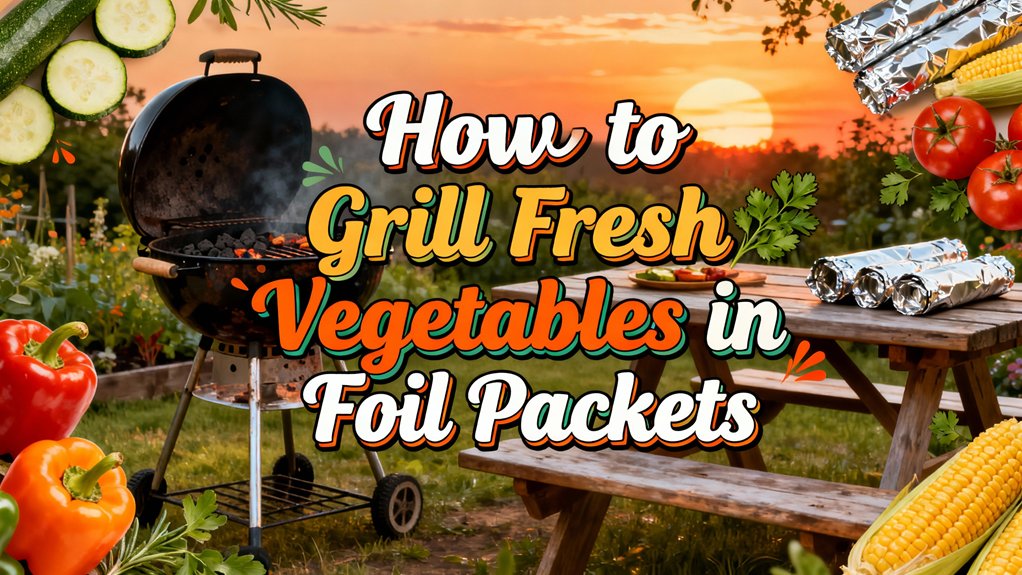
You’ll create perfectly steamed vegetables by washing and uniformly cutting them into consistent pieces, then arranging them on oiled heavy-duty foil sheets. Season your vegetables with high smoke-point oils like avocado or peanut oil, then fold the foil’s long edges together with tight half-inch seals to trap moisture and smoky flavors. Place your sealed packets directly on the grill grate alongside your main course. For best results using professional techniques, specific folding methods guarantee even heat distribution throughout your packet.
Vegetable Preparation
You’ll want to start by washing all vegetables thoroughly under cool running water to remove dirt and residues, then pat them completely dry with clean towels—this step’s critical for promoting browning and preventing steaming on the grill.
Next, focus on vegetable trimming and prepping. Remove ends from asparagus, okra, and green beans. Stem cremini mushrooms and discard damaged sections. For onions, peel back skins to the root end when quartering to maintain structural integrity during cooking. A non-slip grill mat can help prevent your foil packets from shifting around during cooking. Tightly sealing your foil packets creates a steaming environment that helps vegetables cook evenly while allowing for slight charring.
Achieve uniform cutting by chopping vegetables into consistent pieces—rounds or planks for larger items like bell peppers and zucchini. Cut peppers into one-inch pieces and corn into one-inch rounds. Consider vegetable density when sizing; leave cherry tomatoes whole while forming wedges for dense vegetables like cauliflower or sweet potatoes. This uniformity guarantees even cooking throughout your foil packets and ensures all vegetables cook at the same rate. Premium grill mats can withstand high peak temperatures that your gas grill reaches, making them useful accessories for any outdoor cooking setup. For composite decks, ensure your mat is made from PVC material to avoid sticking or discoloration issues. After prepping, drizzle your vegetables with high-heat oil and season generously to enhance browning and help seasonings adhere properly before wrapping them in foil.
Foil Selection and Setup
Getting your foil packets right sets the foundation for successful grilling, so selecting the appropriate material matters tremendously. You’ll want to use heavy duty foil for its superior heat resistance, which prevents tearing during the sealing and cooking process. If you’re using standard foil, layer two sheets together to achieve adequate protection.
For foil dimensions, tear sheets to approximately 17 by 17 inches, providing ample coverage for your vegetable portions. This size accommodates proper folding techniques while allowing room for steam expansion during grilling, similar to how corn husks trap moisture to keep kernels tender. The Traeger 780 Pro Smoker Grill’s cooking surface works well with foil packet dimensions that maintain consistent heat distribution across multiple packets. When grilling vegetables on flat top grills, the compact foil packets ensure even cooking without requiring constant monitoring. Top outdoor griddles like the Solo Stove Steelfire offer ample cooking surfaces for preparing multiple vegetable packets simultaneously. This foil-wrapping technique retains moisture and infuses smoky flavors while simplifying cleanup. For enhanced flavor control, consider adding smoking wood chips to your grill setup to create additional smoky depth in your vegetable packets.
Before adding vegetables, spray or brush your foil’s interior with cooking spray or olive oil. This non-stick preparation prevents vegetables from adhering to the surface, ensuring easy packet opening after grilling. Apply the coating uniformly across single or double-layered sheets for ideal results. Cooking spray prevents sticking and makes cleanup easier once your grilled vegetables are ready to serve.

Disposable sheet pans for your convenience. Save yourself from hours of scrubbing and cleaning metal sheet pans.Foil pans are also stronog enough to be washed and reused if desired.

Disposable sheet pans for your convenience. Save yourself from hours of scrubbing and cleaning metal sheet pans.Foil pans are also stronog enough to be washed and reused if desired.

STRONG & DURABLE: Aluminum foil sheets are a durable and budget-friendly alternative to non aluminum baking pans. Use our aluminum pans as cookie sheets for baking, or as a pizza baking sheet and rest assured, it will hold strong!
Seasoning and Oil
Now that your foil packets are properly prepared and oiled, the flavor profile of your grilled vegetables depends on selecting the right oil and seasoning strategy. You’ll want to prioritize oils with smoke points exceeding 400°F for direct-heat grilling. Avocado oil tops smoke point comparisons at over 500°F, while peanut and sunflower oils deliver 450°F. Canola maintains 400°F with neutral flavor characteristics. Apply oils using the brushing technique—coating each vegetable side thoroughly without creating pooling that causes flare-ups. Reserve premium extra-virgin varieties for post-grilling drizzles to maximize flavor impact. For oil storage, keep high-heat options in cool, dark conditions to maintain integrity. Selecting oils rich in monounsaturated and polyunsaturated fats can bring added nutritional benefits to your grilled vegetable packets. Extra-virgin olive oil adds distinctive flavor benefits that complement most vegetables in foil packets. Refined safflower and grapeseed oils also offer excellent high smoke points for consistent grilling results. While hardwoods like oak and maple are traditionally used for smoking meats, you can experiment with aromatic wood smoke for vegetables as well. Popular pellet blends like hickory and apple can add complementary smoke flavors when grilling vegetables in foil packets. For milder, sweeter smoke notes on delicate vegetables, consider fruitwoods like apple or cherry which provide subtle flavor enhancement without overpowering your ingredients. To prevent excess moisture from making your vegetables soggy, consider salting and draining delicate vegetables like eggplant before adding them to your foil packets. Layer your seasonings—garlic, herbs, and vinegar—directly into foil packets for concentrated flavor development during cooking.

Graza Frizzle Oil Made from 100% Olives: A neutral-flavored, high heat cooking oil made from 100% peak harvest olives. With a smoke point of up to 450 degrees, Frizzle is your high-heat kitchen hero. 1 bottle/750ml.

Light Buttery Flavor That Elevates Every Meal: Algae Cooking Club Chef-Grade Algae Oil enhances every dish with subtle richness. Its neutral profile makes it ideal for searing, baking, and dressings, transforming everyday meals into gourmet experiences.

Graza Frizzle Oil Spray Made from 100% Olives: A neutral-flavored, high heat cooking oil made from 100% peak harvest olives. With a smoke point of up to 450 degrees, Frizzle is your high-heat kitchen hero. 1 can/5 oz.
Packet Folding Techniques
Proper foil folding creates a sealed environment that traps steam, cooks vegetables evenly, and prevents leaks during grilling. You’ll start by pulling up the foil’s long edges to meet in the middle, then fold the top length over by one inch and repeat for a double seal. Next, roll the two long edges together toward the vegetables for a leak-proof barrier. For side and end sealing, you’ll create tight 1/2-inch folds and repeat them, folding each end three to four times. Roll the sides neatly while maintaining air inside for proper steaming. This steam-trapping method is similar to oven-baking techniques that use foil to retain moisture and achieve tender, evenly cooked results. Like traditional outdoor grills, grill pans also use raised ridges to create distinctive cooking marks while allowing excess fat to drain away. Guarantee packet placement allows space on sides for circulation and expansion. Flatten your packet lightly without tearing the foil, preserving that crisp texture your vegetables need while preventing any leakage during cooking. Spray the aluminum foil with cooking spray before adding your vegetable mixture to prevent sticking and ensure easy removal after grilling. Laying vegetables in a longer than wider path ensures adequate spacing so they cook evenly without piling too thick. Preheating your grill to 400-450°F before placing foil packets ensures vegetables cook through with proper char and tenderness. For vegetables like Brussels sprouts, this foil packet method yields crispy, caramelized bits with minimal effort compared to traditional grilling approaches. After grilling, allow the packets to cool slightly before opening, as the steam inside acts as a powerful cleanser that loosens residue from the foil, making cleanup easier when combined with natural degreasers.

Package Includes: One (1) Reynolds Wrap Pitmaster’s Choice Extra Thick Aluminum Foil Roll measuring 25 feet by 18 inches wide (37.5 square feet total)

EXTRA WIDE COVERAGE: This aluminum foil roll measures 18 inches wide to span more grill surface in one sheet, helping cover grates, pans, and larger foods with less overlap. Useful for ribs, corn, vegetables, and wide prep or storage tasks

Size - Katbite heavy duty aluminum foil measures exactly 17.7 Inch wide, total 525 Sqft.
Grilling Instructions
Once you’ve assembled your foil packets, you’ll need to preheat your grill to medium or medium-high heat—aim for 400 degrees Fahrenheit to guarantee even cooking without burning your vegetables. Place your packets seam side up on the grill, then cook for approximately 30 minutes, flipping every 10 minutes to maintain uniform heat distribution. Make grill temperature adjustments if you’re working with particularly delicate vegetables; lower settings prevent overcooking while sustaining ideal texture. Monitor your vegetable flavor combinations closely—potatoes require longer cooking than peppers or zucchini, so consider staggering ingredients accordingly. For best results, bring up the short sides and roll down to seal your packets securely before placing them on the heat. Check tenderness before removing packets from the heat, ensuring potatoes are fully cooked throughout. Like the indirect heat method used for slow-cooking delicate proteins, maintaining consistent temperature control throughout the cooking process ensures even results. Reynolds Wrap® Heavy Duty Foil’s thick and durable construction ensures your packets remain intact throughout the cooking process without splitting or tearing. Since foil packets concentrate heat around food rather than lining the grates directly, they avoid the airflow restriction problems associated with traditional foil-lined grates. Flat top griddles like the Char-Griller Flat Iron Gas Griddle offer superior heat distribution for foil packet cooking compared to traditional grate-style grills. Kettle-style grills like the Weber Original Kettle Premium are particularly effective for foil packet cooking due to their heat retention capabilities. Consider using a grill cover during any downtime between cooking sessions to protect your equipment from the elements. Your vegetables should be tender and caramelized, not soft or mushy.

Standard Size - Aluminum foil roll measures 500 feet long by 12 inches wide (500 square feet total) which is often used for wrapping food. The length of this particular roll would allow for multiple uses, making it a better choice compared to disposable options.

Standard Size - HKZJKJ aluminum foil roll measures 350 feet long by 12 inches wide (350 square feet total) which is often used for wrapping food. The length of this particular roll would allow for multiple uses, making it a better choice compared to disposable options.

Premium 23μm Heavy Duty Strength – Our aluminum foil is crafted with a 23 micron thickness, providing exceptional tear resistance and durability for wrapping, grilling, freezing, and baking. No more flimsy foils that rip easily – this tin foil holds up to high heat and heavy foods.
Alternative Cooking Methods
While grilling offers superior caramelization and smoky depth, you’ll find several reliable alternatives that deliver equally tender, flavorful vegetables without requiring outdoor equipment. Your oven provides consistent heat at 425°F for 20-25 minutes, producing restaurant-quality results. Stovetop cast-iron skillets offer comparable performance with tighter temperature control. For expedited preparation, microwave cooking preconditions dense vegetables like carrots and potatoes, reducing packet cooking time substantially. When using any enclosed method, leave adequate space for steam expansion to prevent rupturing foils and guarantee uniform tenderness. Sealed packets trap moisture effectively, creating an internal convection environment. Pre-prep packets overnight and refrigerate for convenient weeknight meals. Whether you’re addressing time constraints or weather limitations, these alternatives maintain ingredient integrity and flavor concentration comparable to traditional grilling methods. For stovetop preparation, heat your pan over medium-high heat to achieve bright green, tender vegetables with slight charring. Campfire cooking provides another rustic option for those seeking outdoor preparation without a traditional grill setup. For backyard social cooking without a dedicated grill, consider using a fire ring with grill to achieve similar outdoor cooking results. A heat-resistant camping table can serve as a stable platform for preparing and organizing your foil packets before cooking. Using aluminum foil packets ensures vegetables retain their natural flavors while cooking in a controlled, moist environment across all alternative cooking methods. For optimal flavor infusion similar to outdoor grilling, consider marinating vegetables before sealing them in packets for cooking. Indoor broiling methods can achieve charred effects comparable to traditional grilling while maintaining precise temperature control year-round.

Complete 5-Piece Cooking Set: The Lodge Cast Iron Set includes an 8-inch cast iron skillet, 10.25-inch cast iron skillet, 10.5-inch cast iron griddle, and 5-quart cast iron dutch oven with lid

Seasoned with oil for a natural, easy-release finish that improves with use

SOAP FOR CLEANING CAST IRON | Made using traditional soap making methods and free of sulfates, phosphates, parabens & petrochemicals! Gently cleans and maintains the natural seasoning on cast iron skillets, pans, woks and grills.
Pro Tips for Perfect Results
You’ll achieve consistently excellent results by mastering several critical techniques that separate adequate foil packet cooking from truly exceptional outcomes. Follow strict portioning guidelines of 1-1.5 cups per packet to guarantee uniform cooking and prevent overcrowding. Cut vegetables into uniform sizes, adjusting thickness based on density—smaller pieces for carrots, larger for softer vegetables. Arrange ingredients in flat rectangles rather than dense piles to maximize heat circulation and caramelization.
Consider your vegetable preferences when selecting seasoning combinations. Toss vegetables with olive oil and spices before packing, then top with parmesan cheese for enhanced flavor development. For vegetables like sweet potatoes, leaving the skin on can enhance crispiness and development of grill marks. This method prevents the need for extensive cleanup while grilling brings out delicious flavor in every bite. If you prefer a more controlled cooking approach with easier handling, grill baskets offer an alternative that allows you to arrange vegetables with adjustable spacing for even charring. Double-fold all edges securely, positioning seams upward on the grill to prevent steam leaks. Use heavy duty tin foil to ensure your packets withstand high heat without tearing during the cooking process. Prep packets hours ahead and refrigerate; allow thirty minutes warming before grilling at medium-high heat for ideal results.