
You’ll master oven-baked kabobs by cutting ingredients uniformly—1.5-inch steak cubes and 1-inch chicken pieces—then marinating appropriately: beef needs six hours minimum, chicken up to eight. Thread meat and vegetables alternately on soaked skewers, spacing them evenly for proper heat circulation. Preheat your oven to 375–450°F depending on your protein, then bake until your meat thermometer confirms doneness. Broil briefly for a charred exterior. Understanding these foundational techniques grants countless variations to elevate your kabob game.
Preparation Essentials
Before you thread your first piece of meat onto a skewer, you’ll want to prepare your equipment and ingredients properly. Your skewer types matter greatly. Wooden and bamboo skewers require 20 to 30 minutes of water soaking to prevent burning, while metal skewers benefit from refrigeration beforehand.
Precise cutting guarantees even cooking throughout your kabobs. Cut steak into 1½-inch cubes and chicken into 1-inch pieces for ideal doneness. Chop vegetables like bell peppers, onions, and eggplant into 1-inch chunks. Ground beef kebabs require shaping into balls instead. Using lean protein like top sirloin ensures your kabobs support heart health while delivering excellent taste.
Uniform sizing across all ingredients prevents overcooking in some areas while others remain undercooked. This consistency in preparation directly translates to perfectly cooked kabobs with balanced texture and flavor development. Consider using a perforated grill basket as an alternative to traditional skewers for easier handling and even heat distribution. For vegetables specifically, a nonstick grilling basket can ensure quick, even cooking while preventing smaller pieces from falling through. Flat metal skewers excel at preventing meat and vegetables from spinning during cooking, making them ideal for proteins like chicken thighs or kofta. Marinating adds flavor to your ingredients and should be done in a bowl or zip bag while preheating the oven. If you plan to use your grill later, protect your cooking surface with a heat-resistant mat that extends beyond the grill’s footprint to catch drips and spills. After cooking, clean your grill grates thoroughly with a wooden grill scraper to safely remove stuck-on food residues without the risk of dangerous wire bristles.

【PREMIUM STAINLESS STEEL, EXCELLENT WORKMANSHIP】The Metal skewers for Grilling are made of premium stainless steel which is food grade, rust proof and heat resistant. The heavy duty grill skewers are corrosion resistant and can last long. All edges around the metal skewers are well polished, making the barbecue skewers safe to use.

【PREMIUM STAINLESS STEEL, EXCELLENT WORKMANSHIP】The kabob skewers are made of premium stainless steel which is food grade, rust proof and heat resistant. The heavy duty grill skewers are corrosion resistant and can last long. All edges around the metal skewers are well polished, making the barbecue skewers safe to use. Metal skewer sticks is of solid one-piece design. The bbq kabob sticks is thick enough, allowing you put more weight on each skewer without getting bent or twisted

BBQ skewer set Includes both stainless steel skewers and bamboo skewers with grill rack which elevate shish kabobs away from grill grates and hold skewers in place, perfect for grilling shish kabobs on charcoal, gas and electric grills
Marinating Your Ingredients
The right marinade doesn’t just add flavor—it’ll tenderize your meat and infuse every ingredient with depth. Your marinade ingredients should combine oil, acid, and seasonings. Classic options include balsamic vinegar with honey and garlic, or soy sauce with Worcestershire and Dijon mustard.
Marinating times vary by protein. Chicken cubes need 30 minutes to overnight, while beef requires a minimum of 6 hours for ideal tenderness. Beef kabobs benefit from 1-4 hours, and chicken with veggies can marinate up to 8 hours. Seafood, however, marinates just 10 minutes maximum to prevent texture breakdown. For tender cuts like filet mignon tips, the marinade will work efficiently to enhance both flavor and tenderness within the shorter timeframe.
Place your meat in a zip bag or bowl, ensuring direct contact with marinade. Refrigerate throughout. Remove excess marinade before threading onto skewers to prevent tight packing. Poking the meat with a fork helps the marinade infuse the fibers more effectively for enhanced flavor penetration. Starting with dry, well-seasoned meat before applying your marinade ensures better adhesion and more effective flavor absorption. For best results with beef kabobs, marinate for 2 to 4 hours to achieve optimal tenderness and flavor depth. Cutting beef and vegetables into uniform sizes ensures even cooking whether you’re grilling or using your oven. If you’re preparing kabobs for a larger gathering, consider investing in specialized equipment like a Kabobeque grill that features automatically rotating skewers for perfectly even cooking. Just as cast iron offers heft and superior heat retention for smash burgers, cast-iron skewers can provide exceptional heat distribution for even kabob cooking.
Assembling Your Skewers
Once you’ve removed your marinated ingredients from the refrigerator, you’re ready to build your skewers—and your choice of skewer type will considerably impact your cooking success. Metal skewers conduct heat evenly, while soaked bamboo skewers prevent charring. Before threading, shake off excess marinade from your ingredients.
For ideal skewer threading patterns, alternate meat with vegetables to guarantee balanced cooking and variety. Start each skewer with two vegetables for stability, then layer proteins and produce strategically. Space components evenly—don’t pack them tightly—allowing heat to circulate properly around each piece. Different items should be skewered separately to avoid uneven cooking of meat and vegetables. Cut your ingredients into uniform sizes to ensure even cooking throughout the kabob.
Your ingredient arrangement on skewers matters greatly. Group similar sizes and densities together, pairing thin beef with onion layers or thicker pork cubes with larger vegetable chunks. Use two skewers per kabob to prevent rotation during flipping, ensuring uniform doneness throughout. Metal skewers transfer heat through direct conduction, similar to how a hot grill grate creates sear marks, helping cook kabobs from the inside out. Just as cast iron presses deliver superior performance for smashed burgers on the grill, choosing quality metal skewers ensures consistent heat distribution for perfectly cooked kabobs. For vegetables that need extra browning, a cast iron grill pan with tall ridges can provide excellent sear marks and heat retention even in your oven. Look for pans with ridged surfaces that create authentic grill marks and allow fat to drain away from your food during cooking. Cast iron’s superior heat retention makes it an excellent choice for achieving restaurant-quality searing on kabob ingredients.

HIGH QUALITY: Made with high quality stainless steel 304 unlike other skewers made with inferior Stainless Steel 430 that rusts easily; Our food skewers pass in-house quality inspection as well as a third party quality inspection to ensure you get only the best; The sturdy design ensures you will use the barbecue skewers for years to come
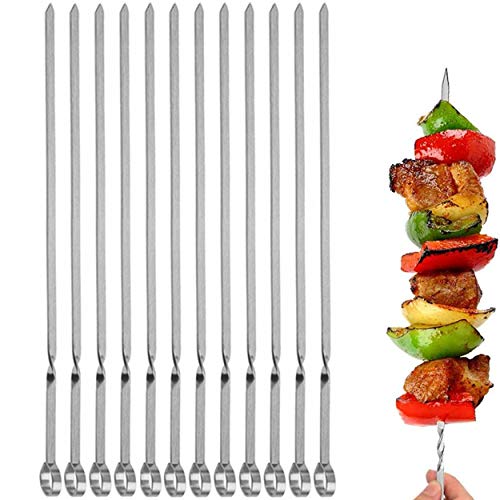
🍖【PREMIUM STAINLESS STEEL, PERFECT WORKMANSHIP】Metal kabob skewers sticks are made of premium stainless steel,food grade, rust-proof, heat-resistant, and corrosion-resistant. These heavy duty grill skewers are corrosion resistant and can last long. The edges of the barbecue skewers are well polished, and the metal skewers are safe to use. Metal shish kabab skewer is of solid one-piece design. The bbq kebab sticks skewers are thick enough to allow you to add weight without bending or twisting.
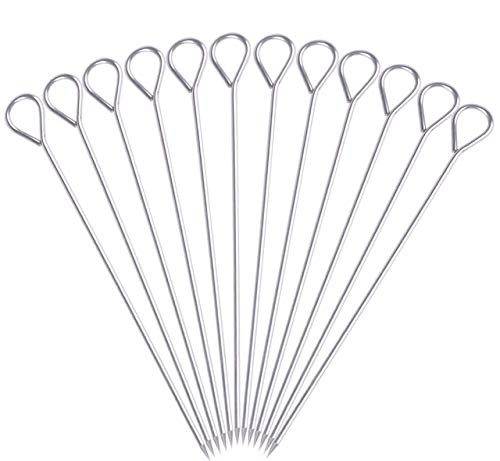
Each kebab/kabob skewer is stainless steel and offer the most reliable and reusable grill accessories for any outdoor barbecue, picnic, cooking kitchen, restaurant, air fryer and home dinner
Oven Setup and Temperature
Getting your oven to the right temperature is essential for achieving perfectly cooked kabobs with properly browned exteriors. You’ll want to preheat between 375°F and 475°F depending on your protein and desired cooking time. Chicken kabobs need 375°F for 20-25 minutes, while steak kabobs cook faster at 450°F for 8-10 minutes medium rare. For chicken, consider brushing with extra olive oil to maintain juiciness since it’s a leaner protein option.
Rack adjustment greatly impacts your results. Position your skewers on the top rack for crispier edges and better color development from closer heat exposure. Use a large shallow baking tray or line your sheet pan with foil to prevent juice pooling, which can cause steaming instead of browning. Each kabob should weigh 7 oz – 8oz including vegetables to ensure even cooking throughout.
Your preheating duration typically takes 10-15 minutes for most home ovens. If your oven has a roast setting, select it for superior hot air circulation around your kabobs.
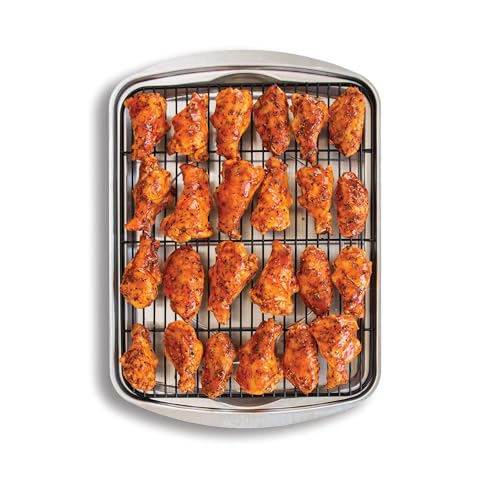
Great for making a variety of delicious treats like bacon, jerky, dried fruits, crisp fries, veggies and more

Great for making a variety of delicious treats like bacon, jerky, dried fruits, crisp fries, veggies and more. Air crisp in your oven with this extra large oven crisp baking tray

Cooking and Serving Your Kabobs
Now that your oven’s prepped and your kabobs are ready to cook, you’ll want to monitor them closely to achieve perfectly cooked meat and caramelized vegetables. Timing variations depend on your cooking method: bake for 20-25 minutes, flipping at 10-12 minutes, or use a grill pan for 10-15 minutes with one turn. Verify doneness by checking internal temperatures—chicken requires 165°F, while steak reaches medium-rare at 8-10 minutes. Look for golden-brown exteriors with crisp edges and tender vegetables.
After cooking, rest your kabobs for 5-10 minutes under loose foil to preserve juices. For best results, soak wooden skewers in water for at least 30 minutes before threading to prevent them from burning during the cooking process. Adding seasoning like smoked paprika helps compensate for the lack of smoky grill flavor when cooking indoors. If you’re preparing potatoes alongside your kabobs, consider wrapping them in foil packets with seasonings for even cooking that takes about 20-25 minutes at similar oven temperatures. If you do decide to use an outdoor grill instead, make sure to clean it thoroughly with a bristle-free brush to avoid any safety hazards before cooking. For safer cleaning, consider using nylon-bristle brushes on cooled grates, as they won’t shed dangerous metal bristles that could contaminate your food. The Grill Rescue Brush works particularly well when used on hot grates at 400°F or higher, utilizing its heat-resistant Kevlar foam head for effective scraping. To maintain your grill grates for future use, apply vegetable or canola oil after each cooking session, as these high-temperature oils help season the surface and prevent rust. Serve on a platter immediately post-rest with serving accompaniments like flatbreads, yogurt mint sauce, or lemon pepper. Pair with baked corn on the cob or complementary side dishes for a complete meal.