
You’ll achieve fall-off-the-bone tenderness by selecting ribs with 3–5 cm meat thickness and marinating them 4–8 hours with enzymatic ingredients like pineapple. Cook low and slow at 225–275°F for 3–5 hours using natural hardwood charcoal. Remove the membrane beforehand, monitor temperatures with instant-read thermometers, and rest your ribs 20–30 minutes before serving. Mastering these three critical elements—selection, marination, and smoking—transforms tough short ribs into perfectly tender results that justify the effort involved.
Selecting and Preparing Your Beef Short Ribs
You’ll find five primary beef short rib cuts, each suited to different cooking methods and preferences. English-cut ribs sectioned between bones work well for grilling, while flanken-cut ribs sliced across bone excel on high heat. Chuck short ribs from the first five ribs offer meaty portions ideal for slow cooking, whereas plate ribs from ribs 6-10 provide longer bones with substantial meat layers.
When evaluating bone-to-meat ratio, prioritize thick meat portions over excessive bone. Assess most suitable thickness by selecting cuts at least 3-5 cm thick for even cooking. Look for deep red coloring indicating freshness and proper aging. Examine marbling distribution—even fat striations enhance tenderness during grilling. Choose Choice grade minimum to avoid excessive exterior fat. Grass-fed options deliver superior flavor and nutrient density. Butchers who cut along the muscle lines produce better-looking and better-tasting ribs. Short ribs contain layers of meat, fat, and bone that create a robust flavor profile when properly prepared. For outdoor grilling excellence, consider using a charcoal grill that offers precise temperature control and consistent heat distribution. Confirm freshness through clean smell and vibrant color before grilling. For optimal results, remove the membrane from the ribs to enhance texture and tenderness during the cooking process. Resting the ribs after cooking for 20-30 minutes covered loosely helps retain juiciness before serving. Proper preparation with a simple rub and seasoning will help you achieve the probe-tender texture that makes grilled beef short ribs so satisfying.

Meets standards for animal welfare, feed, and more, so you can know about what you're buying (and eating)

One bone-in beef chuck flanken style short ribs weighing between 0.25 and 1.25 pounds

ORGANIC, GRASS-FED, REGENERATIVE: Our ribeye steaks are USDA Organic, 100% grass-fed & finished, sourced from regenerative farms, verified by Land to Market,100% pasture-raised, free range, humanely raised with no feedlots EVER. Always fresh, never frozen. Non GMO and never contains antibiotics or added growth hormones. Always fresh, never frozen.
Seasoning and Marinating for Maximum Flavor
Proper seasoning and marination transform beef short ribs from good to exceptional by developing depth of flavor and enhancing tenderness through enzymatic action. You’ll want to understand the time-temperature relationship: refrigerating your ribs for 4-8 hours allows ideal flavor penetration, while extending marination to overnight yields superior results on 3-5 lb portions.
Your marinating techniques should prioritize full submersion in a shallow dish or sealed container. Start by blending onion, ginger, garlic, and pineapple or Korean pear—these fruits contain natural tenderizing enzymes. Strain the puree through a nut milk bag to extract juice, then combine with soy sauce, mirin, and sugar. The bromelain enzyme in pineapple actively breaks down muscle fibers, accelerating the tenderization process beyond what time alone can achieve. For optimal results, brown sugar should be used instead of white sugar for a deeper, more complex flavor in your marinade.
Pat your ribs dry before marinating to remove bone particles, ensuring complete coating on all sides. Apply your marinade with neutral-flavored oils like refined avocado or grapeseed to help distribute the enzymatic components evenly across the meat surface. Monitoring the internal temperature of your ribs during cooking ensures they reach the optimal doneness level while retaining moisture from your marinade preparation. For smoking these marinated ribs after grilling, pair your marinade with hardwood varieties like oak or hickory to complement your preparation without introducing unwanted additives that could interfere with the flavors you’ve carefully developed. Selecting lump charcoal for your grill ensures a clean burn that won’t overpower the complex flavors developed through your marinating process. For smoking these marinated ribs after grilling, consider using natural hardwood charcoal to complement your preparation without introducing unwanted additives that could interfere with the flavors you’ve carefully developed. This methodical approach guarantees maximum flavor development and tenderness.

ALWAYS SUGAR FREE - Yeah, you read that right! You can always expect a savory experience in our sugar free marinades. It's a great fit for anyone wanting a healthier way of life


Tenderness you can taste. An exotic fusion of pineapple juice, soy sauce and traditional Asian-inspired seasonings
Mastering Direct Heat Grilling Techniques
Direct heat grilling demands precise temperature control and strategic grate positioning to develop the deep crust and caramelization that distinguishes exceptional short ribs. You’ll maintain 250-300°F on charcoal setups or approximately 356°F on gas grills with center burners off. Raise grates higher to prevent burning while guaranteeing consistent heat distribution.
Preheat your grill 30-60 minutes before cooking to build adequate coal heat. Position ribs bone-side down directly over your heat source for 25-45 minutes initially, monitoring meat temperature tracking every 25 minutes to assess progress. Perform vent monitoring throughout cooking, adjusting oxygen intake to maintain stable temperatures and prevent thermal fluctuations across different rib portions. This methodical approach ascertains even heat absorption through the bone structure. Before cooking, ensure your grill grates are clean using a bristle-free brush to remove debris without contaminating your food with stray bristles. The ThermoWorks Thermapen ONE provides instant-read accuracy for quick temperature checks between monitoring intervals. Models using radio-frequency technology offer superior range compared to Bluetooth-only options, allowing you to monitor your cook from inside your home without signal loss. For optimal results, consider using wireless meat thermometers with app connectivity for remote temperature monitoring during extended cooks. The Fireboard Pulse delivers superior accuracy in grilling scenarios, making it an excellent choice for maintaining precise temperature control throughout your cook. For optimal results, thaw your beef ribs completely before grilling to ensure even cooking throughout the meat. Use a meat thermometer to verify the internal temperature has reached the target doneness level for your preferred tenderness.

More Stable Than Bluetooth: Our advanced RF technology ensures a stronger, more reliable connection than Bluetooth. This smoker thermometer provides the freedom to move around without losing connection! Monitor your BBQ from up to 1,000 feet away!

Bluetooth Monitor Remotely: Govee Bluetooth meat thermometer lets you check the temperature of your grill, smoker, or oven from your phone. With this smart BBQ thermometer, you can multitask while grilling.

Smart Display Base with Control: The ThermoMaven G1 wireless meat thermometer features a versatile smart display base that offers real-time temperature readings and allows you to set temperatures directly on the device—no app required. With our user-friendly one-click setup, you can connect the probe, pair it with the base, and start cooking in seconds—no complicated setup needed!
Low and Slow Smoking for Tender Results
While direct heat grilling builds that prized crust, low and slow smoking transforms short ribs into fall-apart tenderness by methodically breaking down collagen through prolonged heat exposure. You’ll maintain temperatures between 225°F and 285°F, adjusting smoke duration based on your chosen range. At 250°F-275°F, expect 7-10 hours for ideal texture with juiciness and flavor development. Selecting an offset smoker design suited to consistent heat distribution will help you maintain these precise temperatures throughout the cook. Managing your smoker’s airflow through vents is essential for sustaining the target temperature range and preventing temperature fluctuations. Quality temperature control features like adjustable dampers will make achieving and maintaining your target range significantly easier.
Your temperature probe placement matters critically—insert it into the thickest meat section, avoiding bone contact. Target 203°F internal temperature for that butter-like, probe-tender result. You’ll spritz every 30-60 minutes after the first three hours using apple cider vinegar or water, which extends your smoke phase while building bark. For optimal smoke penetration and flavor development, use dry, seasoned wood that has been properly aged. Hardwoods like pecan, oak, or mesquite provide superior smoke flavor for your short ribs. Prior to smoking, trim the silver skin from the top of the ribs while leaving the membrane on the bone side to preserve moisture and flavor. Internal temperature rather than cook time is the best gauge of doneness for your ribs. Rest your ribs 60-90 minutes post-smoking, wrapped in foil, ensuring complete collagen conversion and perfect tenderness.

Six height-adjustable cooking grates with a total of 1176 Square inches of cooking space
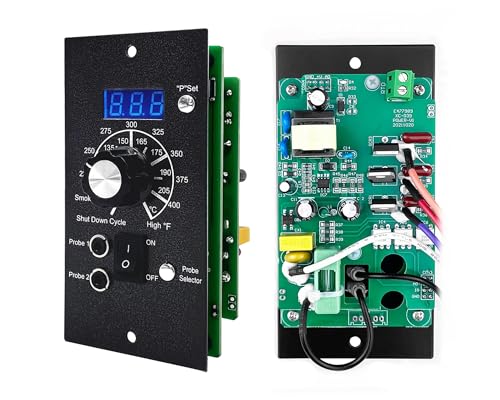
COMPATIBILITY: The grill digital thermostat is replacement for Traeger OEM part BAC365, BAC288, BAC236, fits 20, 22, & 34 Models, including Pro 20/22 34, Texas Elite 34, Lil Tex 22, JUNIOR ELITE 20, Ridgeland, Heartland, Mesa 22, Century 22/34, Silverton (2019), Select Pro, Eastwood 22/24(Not for PTG, Scout, Tailgater, or Bronson)

Fits Almost Any Grill with Easy Installation – Choose the Universal version for nearly all grills and smokers (Not for BGE), including Kamado Joe, other Kamado ceramic grills, Weber Kettle, Weber Smokey Mountain, Bronco, and offset smokers; select the BGE version for Big Green Egg or Primo XL Oval grills. Easily replace your existing dial gauge. Upgrade your grills or smokers with the ProTemp S1, turning your traditional grill or smoker into a high-tech cooking machine.
Slicing and Serving Your Grilled Ribs
Your smoked short ribs require a strategic resting period before you slice and serve them. Allow 10 minutes for juice redistribution, which prevents dryness and maintains tenderness. During this resting period requirements, use the hand-poke test: thumb-to-index indicates rare, thumb-to-middle signals medium-rare to medium. This resting technique follows the same principle used when grilling larger cuts like tomahawk steaks, where allowing the meat to rest locks in juices for optimal tenderness. A meat thermometer provides the most reliable method for verifying your steak has reached the target internal temperature without guesswork. Using an instant-read thermometer ensures you achieve your target doneness level with precision. Like larger steaks, short ribs benefit from higher heat grilling to develop a proper sear before the resting phase.
Next, slice against the grain for improved chewability. Trim excess fat beforehand to avoid greasiness. For even more precision in your cooking process, use butcher’s twine to maintain uniform shape during grilling, which ensures consistent cooking throughout the meat. Your presentation style options include whole-rack displays for dramatic effect, individual sliced portions for shareability, or osso bucco-style cuts centered on bone for premium visual impact. Flanken-cut short ribs showcase the cross-sectioned bone structure particularly well when arranged on the serving platter. The bone-in presentation creates an Instagram-worthy visual that appeals to diners eating with their eyes.
Serve at medium-rare to medium for ideal fat rendering. Pair with ranch tortillas, cheese, and cilantro for taco-style presentation, or garnish with chipotle lime foam for smoky elevation. Display grill marks prominently to showcase your technique.