

You’ll nail medium-rare porterhouse by selecting a steak with a tenderloin at least 1.25 inches wide and 1.5 to 2 inches thick. Remove it from refrigeration 30-45 minutes before grilling. Pat it dry, season generously with kosher salt and pepper, then sear over high heat for 2-3 minutes per side. Move it to low heat and cook until your meat thermometer reads 130-135°F. Rest for 5-10 minutes before serving. The fundamentals matter, but perfecting your technique requires understanding each step’s precise role.
Selecting the Right Porterhouse Steak
Since you’re investing in one of beef’s most prized cuts, understanding what distinguishes a porterhouse is essential. You’ll want to verify that the tenderloin portion meets USDA standards—at least 1.25 inches wide at its widest point. This separates it from the smaller T-bone.
When evaluating steak quality, examine the marbling on the strip loin side; beautiful intramuscular fat guarantees bold, beefy flavor and juiciness. You should also assess steak thickness, aiming for cuts around 1.5 to 2 inches to confirm even cooking and a perfect medium-rare interior. The T-shaped bone separating the two muscles helps retain moisture and adds flavor to your final dish. Midwest Best Beef’s commitment to excellence ensures that every porterhouse meets the highest standards for flavor and tenderness.
Look for meat sourced from the short loin primal, your assurance of exceptional tenderness. Consider dry-aged cuts aged 14-28 days for enhanced flavor complexity. For a porterhouse of this caliber, pair your investment with a luxury outdoor grill featuring professional-grade construction that delivers the high-heat searing capabilities necessary for an exceptional crust. Premium grill brands like Coyote offer diverse options in gas, charcoal, and pellet models with the durability needed for consistent high-heat performance. To ensure your investment in a premium porterhouse reaches its full potential, verify that your grill’s construction grade—particularly 304 stainless steel components—will withstand repeated high-heat searing without degradation. For cooking your premium porterhouse, pair it with a quality stainless steel grill that provides even heating and high-heat searing capabilities. These standards verify you’re selecting a genuinely premium porterhouse.

Pack of 4, avg 24 oz each (Total 96 oz)

This perfect steak combines two prized steakhouse. cuts into one: The Filet Mignon on one side and The NY Strip Steak on the other
Preparing Your Steak for Grilling
Before you place your porterhouse on the grill, proper preparation determines whether you’ll achieve that coveted medium-rare interior with a perfectly caramelized crust. Your thorough preparation begins 30–45 minutes ahead by removing the steak from refrigeration, allowing it to reach room temperature for even cooking. Pat the surface dry with paper towels to promote crust formation during searing. Apply a light coating of high smoke-point oil like avocado or canola, then season generously with kosher salt, freshly ground pepper, and herbs like thyme and rosemary. Oils with elevated smoke points allow you to reach grilling temperatures without burning while creating a properly seared crust. This timed resting phase—10–15 minutes at room temperature after seasoning—locks in flavors before grilling. A John Boos Cutting Board provides the ideal surface for preparing and seasoning your steak before it hits the grill. Look for good marbling throughout the steak as an indicator of quality and flavor potential before you begin your preparation. For precise temperature monitoring, the ThermoWorks Thermapen ONE offers instant-read accuracy to ensure your steak reaches the ideal doneness. Using a meat thermometer ensures you monitor the internal temperature and reach the ideal 130–135°F for medium-rare doneness during cooking. Using a thermometer to monitor the internal temperature ensures your steak reaches the ideal doneness level during cooking. Cast iron grill pans like the Lodge Chef Collection model provide even heating and excellent heat retention for superior searing, making them an ideal choice for achieving that perfect crust on your porterhouse. You’ll invest merely 10 minutes of active preparation to set yourself up for grilling success.
Setting Up Your Grill for Success
Your grill’s configuration makes the difference between a mediocre steak and an exceptional one, so you’ll want to establish a two-zone setup that gives you both high-heat searing and gentle finishing zones. Dedicate one side to direct high heat between 450–500°F for developing that vital crust, while the opposite side maintains low to no heat for indirect cooking. Preheating duration is critical—allow 30 minutes for your grill to reach consistent temperature throughout. This warm-up time guarantees even heat distribution across all cooking surfaces, a feature that separates premium grills from basic models in delivering consistent results. For maximum performance, prioritize grills constructed with stainless or marine-grade steel to ensure durability and reliable heat retention over time. Gas grills with high searing performance like those featuring 30,000 BTUs or more excel at developing the perfect crust on your porterhouse. Establishing cooking zones before placing your steaks prevents temperature fluctuations that compromise results. For thicker steaks around 1.5–2 inches thick, the two-zone method becomes even more essential to avoid burning the exterior before the interior reaches your target temperature. To verify doneness accurately, use a meat thermometer rather than relying solely on cooking time, as this is the most reliable indicator for achieving medium rare. After seasoning your steak evenly with kosher salt, allow it to come to room temperature before placing it on the grill for optimal, even cooking. Brush your grates with neutral oil immediately before grilling to prevent sticking and facilitate professional grill marks.

[Perfect Fits for 18" Grills]-Designed to perfectly fit into any 18" 18.5" kettle grills and Smokers, best hinged cooking grate replacement fits for 18" Weber kettle grills and smokers. Best 22 inch grill grate replacement compatible with weber 18" kettle grills. Upgraded design with more grilling space.

Original Patented Two-Zone Cooking - From 225°F to 1000°F - The Slow 'N Sear is a patented charcoal basket insert for 22" kettle grills. Its patented curved design and radiant heat barrier create a true two-zone cooking system — a dedicated indirect smoke zone that holds 225–250°F for low-and-slow BBQ, and a direct sear zone that reaches 500–1000°F+ for high-heat searing. Smoke brisket low and slow, then remove the water reservoir and crank the heat to sear.

Advanced Broil Zone & Precision Heat Control: Broil Zone sears fast and adjusts for even heat. This 4-burner, 37,000 BTU propane grill hitting up to 500°F in just 5 minutes on full blast—while adjustable burners let you fine-tune the heat for everything from perfect steaks to tender vegetables. Every BBQ session is efficient, flavorful, and fully under your control.
Cleaning and Oiling Your Grill Grates
Clean grates are the foundation of both superior heat transfer and food safety, so you’ll want to remove accumulated debris and grease buildup before oiling. Use a pressure washer at 1500-2000 PSI with 40° nozzles, maintaining 8-12 inches distance. Apply citrus-based degreaser ten minutes prior for ideal grease breakdown. For stubborn residue, employ a baking soda paste with equal parts water, allowing 15-20 minutes sitting time before scrubbing with brass brushes. As an alternative to wire brushes, consider using aluminum foil as a scrubbing tool, which safely removes grime without the risk of metal bristles contaminating your food. Proper cleaning prevents carcinogenic substances from forming on heated combined grill residue.
After cleaning, dry thoroughly using compressed air or warm oven heat to prevent flash rusting. Apply a thin oil layer as protection against oxidation between uses. For additional protection, consider applying a protective layer of cooking oil to prevent future rust formation on your grates. To further extend the life of your grates, store them in a dry location to avoid moisture accumulation. Investing in a durable grill cover provides an extra layer of weather protection when your grill is not in use. For exterior stainless steel components, using a soft brush or microfiber cloth during cleaning helps prevent scratches while maintaining shine. Incorporate this cleaning schedule into your regular maintenance routine. Establish proper storage solutions by storing grates in a dry location, and condition them with food-grade oil or cooking spray before each grilling session. Consistent post-use brushing makes deeper cleanings much easier and extends your grill’s lifespan.
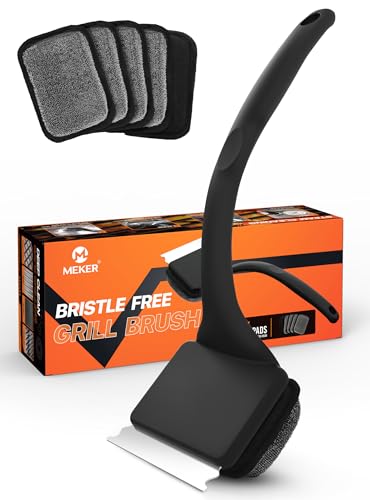
【ULTRA SAFE CLEANING】BBQ is a wonderful thing, but cleaning the grill can be a challenge! MEKER Grill Cleaner Brush can help you! Our grill cleaner brush ensures a bristle-free cleaning experience, eliminating the risk of swallowing dangerous metal bristles. Enjoy safe, worry-free grilling with our innovative design.

Efficient and Comfortable Construction - Grill cleaning brush with heavy duty scraper. 360 degree firm bristle brush cleans quickly and comprehensively. Effortless cleaning with perfect angled and ergonomically handle.

【The Safest Bristle Free Grill Cleaner】:No wire bristles at all, no melting like nylon grill brushes; With this safe grill brush and scraper, your food will stay 100% Bristle Free. No more worry about swallowing some metal pieces, Let's free to gobble up some favorite barbecue! Save your effort and time, let’s just have fun! (PATENTED design)
Searing Your Steak to Perfection
Once you’ve prepared your grill grates, you’ll want to focus on achieving the perfect sear—the hallmark of an exceptional porterhouse. Position your steak on the hottest zone, ensuring uniform heat distribution across the cooking surface. Press the meat flat against the grates without moving it for 3 minutes per side, allowing the Maillard reaction to develop that deeply caramelized crust. Avoid overcrowding by grilling one steak at a time, which maintains consistent temperature control. For superior heat retention and searing ability, consider using a grill equipped with cast iron grates, which provide the consistent, high-temperature cooking surface needed for that perfect crust. Cast iron’s legendary heat retention makes it an exceptional choice for achieving the deep, caramelized sear that distinguishes a perfectly cooked porterhouse.
After the initial sear, shift your porterhouse to indirect heat for even cooking. Apply butter generously to both sides, repeating this basting cycle two to three times. Using oils with high smoke points ensures your butter and seasonings don’t burn during the searing process. For optimal results, use a meat thermometer to monitor the internal temperature with precision. Monitor internal temperature carefully—you’re targeting 125°F to account for the 5-degree carryover rise during resting. Let the steak rest after grilling, as residual heat will finish the cooking process for a juicy result. For best results, ensure your steak has good marbling before it reaches the grill, as this intramuscular fat is essential for achieving a flavorful and juicy final product. Pulling your steak slightly under the target doneness allows carryover heat to complete the cooking process during the resting period.
Mastering the Two-Zone Cooking Method
The two-zone cooking method‘s effectiveness hinges on creating distinct temperature zones that’ll let you sear aggressively while maintaining precise temperature control for even cooking. Your fuel source selection determines setup: for charcoal, pile briquettes to one side; for gas, activate burners on one end only. This arrangement establishes your direct heat zone for searing and an indirect zone for gentle cooking.
Temperature management becomes straightforward with this approach. You’ll cook your porterhouse low and slow on the cool side until it reaches medium-rare internally, then transfer it briefly to the scorching direct heat zone for crust development. The indirect zone simultaneously prevents flare-ups and protects against overcooking, ensuring a perfectly cooked steak with an exceptional golden-brown exterior. The charcoal’s embers emit intense radiant heat upward that works in combination with conduction from the grate and convection from circulating hot air to cook your steak evenly. Allow the grates to heat before adding your steak to the direct heat zone for optimal sear marks and crust formation. Briquettes are particularly effective for this method because they provide consistent medium heat and long burn times, keeping your indirect zone stable throughout the cooking process. Consider investing in lump charcoal for superior purity and performance, as premium fuel sources elevate your grilling results across both temperature zones. For maximum reliability, 100% charcoal pellets offer superior heat output without wood blend additives that can compromise temperature consistency. Maintaining clean ash catchers ensures consistent airflow management for reliable temperature stability across both cooking zones. For optimal results, use Royal Oak Charcoal as your fuel source to add authentic charcoal flavor while maintaining consistent heat across both zones.
Timing Your Cook for Medium Rare
Since achieving medium-rare perfection requires precision, you’ll need to understand how thickness and grill temperature dictate your total cooking duration. For a 1-inch porterhouse, plan 10–13 minutes total; a 1.5-inch cut requires 14–17 minutes at medium-hot heat.
The proper pull temperature matters greatly. Extract your steak at 125–129°F, accounting for understanding carryover temperature—that critical 5°F rise occurring during your 5-minute foil-covered rest. This means your final medium-rare temperature reaches 130–135°F precisely when you serve it. Use a meat thermometer to measure the internal temperature and ensure accuracy throughout the cooking process. For one-second precision readings, consider a thermometer with auto-rotating display to verify doneness without guesswork. Wireless probe thermometers with app connectivity provide hands-off monitoring throughout your cook, allowing you to track internal temperature remotely while managing other grilling tasks. Ensure your porterhouse is 1.5-2 inches thick for optimal and even cooking results. Selecting a grill with even heat distribution and reliable temperature control helps you maintain the medium-hot conditions necessary for consistent doneness across your steak’s surface.
Flip your steak once, about 1 minute before the halfway point. First-side timing typically runs 5–6 minutes; the second side needs 4–5 minutes. Starting with a high-heat sear triggers the Maillard reaction, creating a flavorful crust before finishing over lower heat. Rest immediately after pulling from heat to prevent overcooking. This methodical approach guarantees consistent, perfectly medium-rare results every time.
Checking Internal Temperature Accurately
How do you know when your porterhouse’s reached that ideal 125–129°F pull temperature? You’ll rely on a fast, accurate digital thermometer like the Thermapen Mk4, which delivers readings within 0.7°F in seconds. Insert your probe at a 45-degree angle through the thickest section, avoiding bone and fat pockets entirely. Push past the suspected center, then pull back slowly—the coolest spot you encounter represents your thermal center. That’s where you’ll find your target temperature. Verify calibration precision before grilling by checking your thermometer against ice water. Take multiple readings across different spots to account for uneven cooking. Let each reading stabilize for a few seconds. Using a meat thermometer inserted in the thickest part ensures you achieve accurate doneness without guesswork. For those seeking wireless convenience during longer cooks, wireless grill thermometers with Bluetooth and RF connectivity provide reliable multiprobe monitoring without constant manual checking. Before you begin cooking, ensure your grill is properly maintained by cleaning the cooking grates to remove any debris or buildup from previous use, and regularly clean your drip pans and burners to prevent grease accumulation that could affect heat distribution. Wire-bristle brushes can shed stray bristles onto cooking surfaces, so consider using bristle-free brush designs for safer routine grill maintenance. For a porterhouse, aim for the 130–140°F range that defines medium rare doneness to ensure optimal juiciness and tenderness. Remember that carryover cooking will raise your steak’s temperature by 3–5°F after you pull it from the grill, so factor this rise into your pull temperature decisions. This methodical approach eliminates guesswork and guarantees consistent, perfectly cooked results every time.
Resting and Serving Your Steak
Your porterhouse steak isn’t finished the moment it leaves the grill—in fact, you’ve got one final critical step that determines whether you’ll enjoy a juicy, flavorful masterpiece or a dry disappointment.
Rest your steak for 5-10 minutes under loose foil protection on a carving board. This resting period allows heat-driven juices to redistribute throughout the meat rather than pooling on your plate. During this time, carryover cooking increases internal temperature roughly 5°F, so remove your steak at 125-130°F to achieve the final 130-135°F medium-rare target. The warm, red center with dark pink edges that develops during resting is the quintessential hallmark of a perfectly cooked medium-rare steak. Using an instant-read thermometer ensures you remove your porterhouse at the precise temperature needed for optimal carryover cooking.
Loose foil covering maintains warmth while preventing excessive exterior cooling. Before grilling, ensure your grates are properly cleaned to prevent sticking and flavor interference, so regular brushing and proper drying of your cooking surface will enhance your final result. For optimal safety and cleanliness, consider using bristle-free coiled designs that effectively remove grime without leaving residues on your cooking surface. For deep maintenance, consider soaking grates in vinegar and baking soda seasonally to remove stubborn buildup and keep your cooking surface in optimal condition. For additional grill care, try specialized products like stainless steel grill cleaners to maintain your equipment’s appearance and performance. After cleaning, apply a thin layer of high-smoke point oil to your grates before heating to restore their non-stick surface and prevent future rust. Through careful temperature monitoring and proper resting technique, you’ll preserve those flavorful juices and attain ideal doneness. Slice only after resting concludes, then serve immediately.