

You’ll select a Prime-grade ribeye with generous marbling, then pat it dry and season generously with salt and pepper. Preheat your grill to 575–600°F, establishing direct and indirect heat zones. Sear the steak over high heat for 3–4 minutes per side, rotating 90 degrees midway for crosshatch marks. Move it to indirect heat, monitoring internal temperature until it reaches 135°F for medium-rare. Rest the steak 5–10 minutes before serving. Mastering these variables transforms inconsistent results into reliably exceptional steaks.
Selecting and Preparing Your Ribeye
You’ll consistently find that the foundation of a perfectly grilled ribeye begins with understanding USDA grading standards and their implications for your cooking method. Prime-grade ribeyes, representing the top 2% of beef, feature abundant marbling quality that self-marinates during cooking, creating exceptional juiciness and tenderness. Choice-grade options provide excellent results with moderate intramuscular fat content.
When visually inspecting your selection, seek uniform dark pink-red coloration and generous interior fat flecks throughout the muscle. Assess thickness carefully—aim for 1.5 to 3 inches to guarantee even cooking. Examine the fat cap; larger caps deliver robust beefy flavor. Hand-cut consistency matters substantially for uniform cooking performance. The muscles in a ribeye receive minimal use from the animal, which naturally contributes to the meat’s exceptional tenderness. A ribeye map can help you identify the cap and fat seam to ensure you’re selecting the most flavorful section.
Consult your butcher regarding aging duration and specific cut characteristics. Choose bone-in varieties like Cowboy steaks for moisture retention or boneless options for straightforward preparation. For optimal searing results, consider grilling on stainless steel grates that provide even heat distribution without hot or cold zones. Alternatively, cast iron grates offer superior heat retention and searing ability, though they require regular seasoning to prevent rust. Many grill experts recommend models with high BTU output that can reach the intense temperatures necessary for developing a perfect steak crust. If you prefer indoor grilling, a Lodge Pre-Seasoned Grill Pan delivers excellent sear quality with tall ridges that create defined grill marks while maintaining legendary heat retention. When selecting an outdoor grill, prioritize models with 304 stainless steel components for superior corrosion resistance and longevity.
Essential Grilling Equipment
Before you can execute the searing technique that transforms a quality ribeye into a restaurant-caliber masterpiece, you’ll need to assemble a curated collection of specialized tools that facilitate precise temperature control, ideal grate preparation, and accurate doneness monitoring.
A grill brush with bristles or aluminum foil ball construction removes residue before heating. Long-handled tongs enable safe grate oiling and precise steak placement. An instant-read thermometer monitors internal temperature, targeting 125°F for medium-rare doneness. Pat the steak dry before seasoning to ensure optimal surface browning and crust development, as moisture inhibits browning.
For charcoal grilling, a chimney starter replaces antiquated charcoal lighting methods, igniting briquettes to perfect 575-600°F in fifteen minutes. Preheating your grill to 450-500°F ensures even heat distribution across the cooking surface. Select high smoke-point oils like avocado or canola for grate coating. Refined avocado, peanut, safflower, and grapeseed oils all feature elevated smoke points that withstand grilling temperatures without burning while creating a protective barrier between grates and meat. Royal Oak charcoal delivers consistent heat performance. Once the charcoal has ashed over, arrange the coals to create a two-zone fire with direct heat on one side and indirect heat on the other. Look for chimney starters with a secondary helper handle for safer pouring and better control when transferring hot coals to your grill. Consider bristle-free coiled designs from brands like Grillaholics or Brushtech for family safety, as they tackle stubborn grime without leaving residues in food while featuring sturdy 18-inch handles. For ongoing maintenance, replace brush heads when the bristles or coils show wear to maintain cleaning effectiveness and prevent potential contamination.
These instruments collectively establish the foundational infrastructure necessary for reproducible, exceptional ribeye results.

【8X Faster + 4X More Precise】: Upgraded with an industrial-leading professional thermocouple sensor, Themomonster meat thermometer digital with NIST certified ±0.5℉ precision provides you the accurate temperature of your food in just 0.5 Seconds.

Instant Read Meat Thermometer | Our instant read thermometer features a temperature probe and advanced, highly accurate technology with a 1-2 second response time. Our instant read food thermometer comes pre-calibrated with instructions and a meat temperature chart, plus a recalibration feature if needed.

Fast & Accurate: Get precise readings in just 1 second with ±0.9°F accuracy. NSF Certified for trusted food safety, this digital food thermometer features a 4.3 inches food-grade stainless steel meat probe, perfect for grilling, frying, baking, making candy and more
Setting Up Your Grill for Success
Once you’ve assembled your essential equipment, the next critical phase involves establishing the precise thermal environment that’ll transform your ribeye from raw to restaurant-caliber. Your preheating practices determine searing success; preheat gas grills on high for fifteen minutes before reducing to medium-high. Charcoal grills require fully opened vents and twenty minutes to reach 575-600°F. Pellet grills need fifteen minutes at 225°F initially, then increase to 450°F for the final sear stage.
Maintaining heat zones proves equally essential. Establish direct zones over concentrated coals or burners, positioning cooler indirect areas adjacent for temperature management. This strategic positioning prevents flare-ups while enabling precise cooking control. Deploy these zones deliberately, ensuring your ribeye moves between intense searing and gentler finishing zones as needed. For optimal results, aim for an internal temperature of 135°F to achieve the ideal medium-rare doneness that preserves tenderness. Before grilling, clean the grates using a bristle brush or aluminum foil to ensure optimal heat transfer and prevent sticking. For those seeking alternatives to traditional wire brushes, consider using specialized metal scrapers or even lemon with aluminum foil, which can effectively remove grime without the risk of bristle contamination. A meat thermometer provides the most reliable method for checking doneness and ensuring your steak reaches the perfect internal temperature. Consider investing in a wireless probe thermometer for continuous monitoring during longer cooks or when managing multiple temperature zones across your grill. You can verify your grill has reached proper searing temperature using the 2-second hand rule, where you hold your hand five inches above the grates and count how long you can comfortably keep it there. For added flavor complexity, choose hardwood pellets like oak, cherry, hickory, or mesquite to infuse your ribeye with subtle smoke notes during the cooking process.

Set of four steak thermometers takes the guesswork out of grilling your meats to the desired cooking level
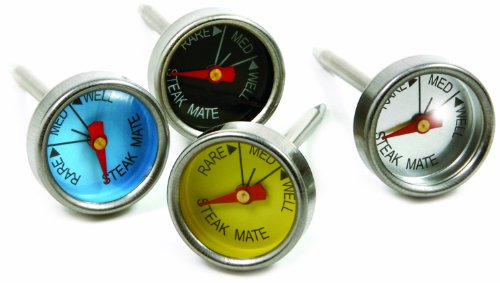
ACCURATE STEAK & BURGER DONENESS: Delivers clear, precision temperature tracking for individual cuts of meat so everyone gets their steaks, burgers, chops, or poultry cooked rare, medium, or well-done.
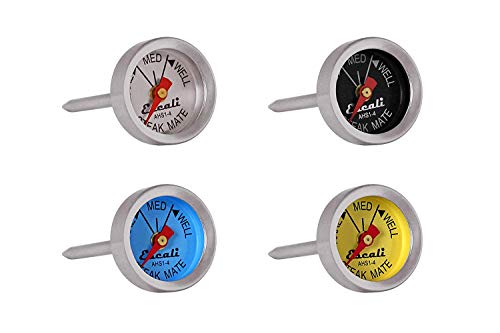
Meat Measurements: Rare, Medium, and Well done for beef steaks. Probe Length: 2.25-inches Dial Diameter: 1-inches
Mastering Grill Times and Temperatures
Temperature precision separates mediocre ribeyes from exceptional ones—the thermal environment you’ve established must now translate into methodical cooking protocols that accommodate both steak thickness and your target doneness level. You’ll employ distinct ideal cooking zones: searing at 450-500°F initially, then shifting to medium heat for controlled finishing. Half-inch steaks demand 2-3 minutes per side for medium-rare; 1.75-inch cuts require 2-3 minutes initial searing followed by 18-19 minutes on the second side. Your heat regulation strategies must include flipping every 6 minutes during extended cooking windows to guarantee even distribution. Remove steaks 5 degrees below target temperature—130°F for medium-rare—accounting for carryover cooking‘s 5-degree increase, then rest 15 minutes to redistribute juices. The high-heat sear triggers the Maillard reaction, developing the flavorful crust that defines a perfectly grilled steak. Boneless ribeyes cook more evenly throughout, eliminating hot spots that can compromise your final results. Apply the Montreal seasoning blend to your steak at least 20 minutes before grilling to allow the spices to penetrate the meat thoroughly.

Ultra-Long Wireless Range:Monitor your food from up to 3000 feet away with Sub-1G wireless technology, which has stronger penetration than bluetooth and delivers signals more stably. Perfect for outdoor BBQs, grilling, or large kitchens, giving you freedom to move without missing a temperature change.

BBQ HI/LOW temp range alarm: Set your desired food temp and HI/LOW temp range for your grill or smoker to know when to add more fuel smoker thermometer will flash and beep to remind you if the temperature ever goes out your set range; HI/LOW temp range alarm is specifically designed for usage with smokers, grills and BBQs

Bluetooth Monitor Remotely: Govee Bluetooth meat thermometer lets you check the temperature of your grill, smoker, or oven from your phone. With this smart BBQ thermometer, you can multitask while grilling.
Achieving the Perfect Internal Temperature
The distinction between an adequately cooked ribeye and an exceptional one hinges entirely on your ability to target and verify precise internal temperatures—a discipline that transforms guesswork into reproducible excellence. Understanding carryover cooking proves essential; remove your steak at 118°F for rare or 125°F for medium-rare, allowing residual heat to elevate the final temperature by approximately 5°F. Deploy a reliable meat thermometer, inserting it horizontally into the thickest section without contacting bone. Monitor steak color changes simultaneously—a cool-to-warm red center indicates rare doneness, while a warm red center with brown crust signals medium-rare. The USDA recommends a minimum steak internal temp of 145°F for safe consumption, though many prefer lower temperatures for tender cuts to maximize flavor and texture. For medium-rare specifically, remove the steak at 130°F and let it rest for 5 minutes covered with foil, during which the temperature will rise to approximately 135°F. Similar to preparing a porterhouse, using an instant-read thermometer ensures you achieve your target doneness consistently regardless of steak thickness. While internal temperature remains the most reliable indicator for doneness, cooking times vary based on grill heat, steak thickness, and cut characteristics. For maximum speed and accuracy during quick temperature checks, the ThermoWorks Thermapen ONE has proven fastest and most consistent in head-to-head testing against competing models. Budget-conscious grillers seeking reliable performance can achieve excellent results with the ThermoWorks Thermopop 2, which delivers accurate readings without the premium price tag. The reverse-sear technique offers an alternative approach where you cook the steak at low temperature first until it reaches about 10°F below your target, then finish with a high-heat sear to develop a flavorful crust. This methodical approach guarantees your ribeye achieves ideal tenderness and juiciness, preserving the marbling’s delicate fat distribution while delivering the precise doneness you’ve engineered throughout the grilling process.

【Fast & Accurate】Our meat thermometer digital delivers accurate readings within ±1°F in just 1–2 seconds, with a wide temperature range of -58°F to 572°F (-50°C to 300°C). No more waiting over the heat - know your food's exact temperature instantly.

UPGRADED PROBE FOR FASTER, MORE STABLE READINGS - This meat thermometer features a precision-upgraded probe with higher sensitivity and enhanced thermal conductivity, delivering more accurate and stable readings in just 0.5 seconds. Unlike standard probes, the upgraded design transfers heat faster from first contact, giving you a more reliable and consistent temperature measurement every time—no more guessing, only perfect meals!
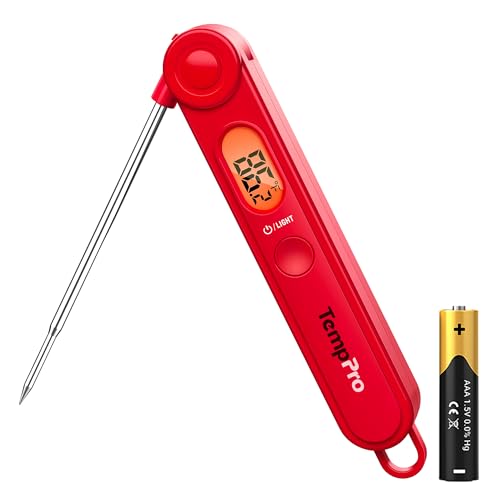
【Easy to Use】Easily release the meat probe at the push of a button, and control the backlight or power with another button. With TempPro, cooking becomes a seamless, stress-free experience
Resting and Serving Your Steak
Why does resting matter after you’ve meticulously grilled your ribeye to the precise internal temperature? During cooking, proteins denature and muscle fibers contract, expelling moisture. Resting allows these fibers to relax and reabsorb those crucial juices throughout the meat.
Your ideal resting period for a ribeye steak is 5-10 minutes minimum. Account for carryover cooking, which elevates internal temperature 5-10°F after removal from heat. Pull your steak 5-10°F below target doneness accordingly. This redistribution of juices throughout the meat ensures even moisture content and enhanced flavor in every section.
Tent your steak loosely with aluminum foil to retain heat while permitting air circulation, preserving the crispy exterior. For larger cuts, expect 10-15°F temperature rise during the resting phase. The resting process allows carryover cooking to gently finish the steak while maintaining its moisture. Rested meat releases greatly less liquid when sliced compared to unrested samples, ensuring each bite remains exceptionally moist and tender. Monitoring internal temperature prevents overcooking and guarantees consistent results across different cuts and sizes. Using a meat thermometer throughout the grilling process helps ensure you achieve the perfect doneness every time. Allowing the juices to redistribute prevents them from running out onto the cutting board and ensures a juicy, flavorful steak. Proper resting after cooking is essential to retain juices and enhance tenderness, regardless of your cooking method.
Your perfect serving temperature remains stable after this pivotal resting period.
Pro Tips for Consistent Results
Now that you’ve mastered the fundamentals of grilling and resting, achieving consistently exceptional results hinges on refining your technique through deliberate control of three variables: heat management, preparation protocols, and monitoring precision.
Maintaining grill grates meticulously secures optimal heat transfer and prevents sticking. Clean grates before each session, then oil them thoroughly. Regulating cooking zones by implementing a two-zone setup—direct and indirect heat—grants you flexibility for different steak thicknesses and prevents temperature fluctuations. Remember that ribeye steaks vary in composition depending on which section of the ribeye roll you select, so a two-zone heat setup allows you to adjust your approach based on the fat content and muscle composition of your specific cut. Thicker steaks are more forgiving when you start them on indirect heat, giving you greater control over the final result.
Invest in a high-quality meat thermometer; it eliminates guesswork and guarantees precise doneness. Understanding that charcoal grills cook through radiant heat, conduction from the grates, and convection from circulating hot air helps you anticipate how heat reaches different parts of your steak. For outdoor grilling over a campfire, consider using a cast iron grate to achieve superior heat retention and an exceptional sear on your ribeye. If you prioritize low maintenance and rust resistance, stainless steel grates offer excellent corrosion resistance with easier cleaning compared to cast iron options. Before placing your steak on the grill, ensure you’ve achieved proper temperature by preheating with opened vents to allow even heat distribution across the cooking surface. Kettle-style charcoal grills excel at delivering smoky flavor and evenness for steaks, making them ideal for achieving that perfect sear. Document your cooking times and temperatures across various conditions, building a personalized reference guide. This systematic approach transforms grilling from intuition-based to reproducible, delivering consistent, restaurant-quality ribeyes every time.

Reliable Quality: The round grill grate is made of heavy duty cast iron material, can withstand higher temperatures than normal grate, will not crack or break due to high temperature. Long lasting, strong and easy to clean, a must have grills replacement parts for your Weber gourmet BBO system.

Fits For Chargriller 2121, 2123, 2222, 2828, 3001, 3008, 3030, 3072, 3232, 3725, 4000, 4001, 4008, 4208, 5050, 5072, 5252, 9020 Gas Grill Models

1 porcelain coated cast iron cooking grid