You’ll smoke your ribeye for 20-50 minutes at 225°F using indirect heat. Pull it at 110-115°F internal temperature to account for carryover cooking during your mandatory 5-minute rest, which’ll bump it to a perfect 115-120°F. Use a meat thermometer positioned in the thickest section, checking every 15-20 minutes as you approach target doneness. Pat your steak dry beforehand and apply your dry brine 2-24 hours prior for ideal smoke absorption and tenderness. The reverse sear technique offers additional precision for achieving that juicy, restaurant-quality result.
Preparing Your Ribeye for Smoking
Start by removing your steak from the refrigerator 60 minutes before smoking. This equilibration allows even heat distribution and more efficient smoke absorption throughout the meat’s thickness.
Apply dry brine using kosher salt 2-24 hours in advance. This process draws out moisture, then reabsorbs it, producing tender results. Next, pat your steak completely dry with paper towels—eliminating surface moisture is critical, as it prevents smoke adhesion.
Brush olive oil onto the dried surface, then apply your seasoning combinations. Use approximately one teaspoon kosher salt per steak, emphasizing fatty areas. Add freshly cracked pepper with light coating, concentrating on marbled sections. For optimal tenderness, ensure you sprinkle salt 1 hour before placing the steak in the smoker. Ribeye’s high fat content makes it particularly suited for smoking, as the fat will render and combine with the smoke flavors. Choose cuts with good marbling to ensure superior flavor and juiciness throughout the smoking process. Once you’ve seasoned your steak, maintain consistent grill temperature throughout the smoking process for even cooking and optimal flavor development. Consider using an instant-read thermometer to monitor internal temperature and achieve your desired doneness. The radiant heat] from your smoker’s heat source will cook the steak directly while also enabling smoke penetration for that distinctive smoked flavor.
Your patting techniques and proper conditioning directly impact smoking success, ensuring smoke penetrates deeply for superior flavor development. After smoking, plan to sear your ribeye at high heat to develop a flavorful crust while preserving the juicy, tender meat you’ve worked to achieve.

ON YOUR TABLE FOR GENERATIONS - Morton has been a household staple since 1848.

No additives; Only pure kosher salt

Premium kosher sea salt from the Mediterranean
Smoking Temperature and Timing Guidelines
Once you’ve seasoned your ribeye and it’s ready for the smoker, temperature control becomes your primary focus. You’ll want to maintain 225°F as your standard ideal smoker condition, though you can adjust between 200-250°F depending on your equipment and environment.
At 225°F, expect 20-50 minutes to reach your target internal temperature of 110-115°F, which prepares the steak perfectly for reverse searing. Smoke time adjustments depend on several variables: steak thickness, smoker efficiency, wind conditions, and whether your meat starts cold from the refrigerator. Using indirect heat for even cooking will help maintain consistent temperatures throughout the smoking process. A meat thermometer is essential for accurately monitoring your steak’s internal temperature and ensuring you don’t overcook the meat. Before smoking, allow your ribeye to come to room temperature so it cooks more evenly throughout the smoking process.
Thicker cuts naturally require longer smoking periods. You’ll prioritize internal temperature readings over fixed timings—this guarantees consistent results regardless of external factors. Unlike tougher cuts like brisket, the ribeye’s tender muscle structure means it doesn’t require extended cooking to render connective tissues. After reaching your target temperature, allow your ribeye to rest for several minutes before proceeding to ensure the juices redistribute throughout the meat. After smoking, finish your ribeye with a high-heat sear in a skillet or on a grill to develop a flavorful crust. Pull your ribeye when it hits 110°F internally, then proceed to your high-heat sear phase for that perfect crust.
Monitoring Internal Temperature for Perfect Doneness
A meat thermometer’s definitive readings eliminate guesswork and guarantee you’ll achieve consistent results across varying smoker conditions. Position your thermometer in the thickest part of the steak, away from bone and fat pockets, for accurate measurements. For the best results, consider using a wireless meat thermometer that allows you to monitor temperature remotely without opening your smoker door constantly. Models with radio-frequency technology offer superior long-range reliability compared to standard Bluetooth options, ensuring consistent signal transmission even through thick smoker walls. The ThermoWorks Thermapen ONE delivers ±0.5°F accuracy with 1-second read times, making it ideal for serious pitmasters who demand precision.
Monitor internal temperature throughout the smoking process, checking every 15-20 minutes as you approach your target doneness. This real-time tracking prevents overcooking while you observe fat rendering—the critical process that develops the ribeye’s signature buttery richness. For high-heat searing techniques used by competitive grillers, understanding how even heat distribution affects your results can help you achieve restaurant-quality steaks at home. Remember that cook time is irrelevant and only internal temperature determines when your steak reaches perfect doneness. For medium-rare, pull your steak at 125-130°F to account for carryover cooking during the 5-minute resting period. After removing from heat, rest steaks for 5 minutes before serving, covering lightly with foil, as the temperature will continue to rise about 5°F during this time.
The Reverse Sear Technique
Why settle for a gray band of overcooked meat surrounding a perfectly pink center? The reverse sear technique eliminates this problem entirely.
You’ll cook your ribeye low and slow first, then finish with a hard sear. Start at 250°F over indirect heat, flipping at 80°F internal temperature. Light your charcoal when you reach 90°F, then pull the steak at 115°F before searing.
When selecting ideal meat cuts, you’ll want minimum 1.5-inch thickness—this method works beautifully on ribeye, New York strip, and filet mignon. While you can adapt technique for thinner steaks at one inch, they’re less ideal since you’ll sacrifice margin for error. Select USDA graded beef to ensure you’re starting with the highest quality meat for this precise cooking method. Gas grills like the Weber Spirit E-210 offer even heat distribution that can also support low-and-slow cooking applications when you need indirect heat for reverse searing.
After resting, sear your steak 45-60 seconds per side in a 600°F cast-iron skillet using refined avocado or peanut oil for optimal heat transfer without burning. You’ll achieve wall-to-wall crust with perfect edge-to-edge doneness. For the most accurate results, let internal temperature be your guide rather than relying solely on cooking time. Using a reliable meat thermometer will ensure you remove the steak at the precise moment for optimal results. The precision of temperature monitoring is equally important when working with alternative cooking equipment like the portable Traveler grill for expansive cooking on the go.

Seasoned with 100% natural vegetable oil for an easy-release finish

REVERSIBLE SIDES: The NutriChef Stovetop Grill features convenient reversible sides. The smooth side is great for making grilled cheese sandwich, eggs & pancakes. The ribbed side is perfect for grilling foods such as steak, fish, chicken & hamburger

Resting and Serving Your Smoked Ribeye
The final step separating a good smoked ribeye from an exceptional one hinges on proper resting. You’ll wrap your steak in foil for 15-20 minutes post-smoker, allowing carryover cooking effects to raise the internal temperature approximately 5°F. This critical phase enables juices redistribution throughout the meat—heat pulled surface moisture back inward, ensuring even moisture retention. Smoking ribeye steak at the proper temperature adds a unique flavor to this already killer cut of meat.
Pull your ribeye at 110-115°F to reach your target 135°F medium-rare after carryover. Resist slicing immediately; patience preserves tenderness and juiciness. Once rested, check final doneness before serving using a meat thermometer to verify the internal temperature matches your desired level of doneness. You’ll notice the difference: a properly rested ribeye maintains its juices when sliced, delivering superior flavor and texture. For best results, use finger pressure techniques in addition to your thermometer for confirming your steak has reached the ideal doneness level. Using a meat thermometer inserted into the thickest part of the steak ensures you achieve proper doneness without overcooking this premium cut. For extended smoking sessions, consider using wireless meat thermometer apps to monitor your steak’s temperature remotely without opening the smoker. The resting period also triggers the Maillard reaction stabilization, which preserves the flavorful crust developed during smoking. Resting allows the meat fibers to relax, which maximizes tenderness and ensures an optimal eating experience. Refrigerate any leftovers in an airtight container up to three days.

SMART BASE CONTROL: Set temperatures, monitor progress, and receive alerts directly from the base without needing your phone nearby.

Smart Display Base with Control: The ThermoMaven G1 wireless meat thermometer features a versatile smart display base that offers real-time temperature readings and allows you to set temperatures directly on the device—no app required. With our user-friendly one-click setup, you can connect the probe, pair it with the base, and start cooking in seconds—no complicated setup needed!
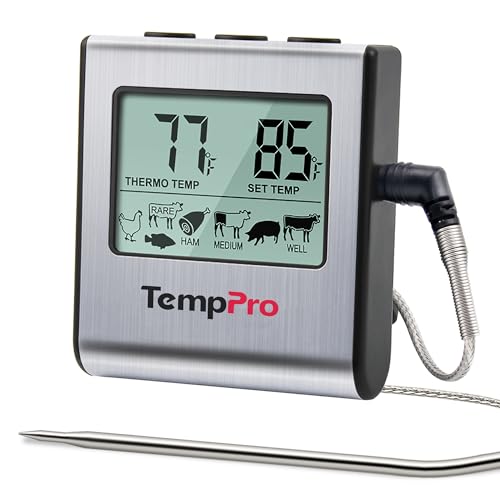
Cook mode with USDA preset temperature settings: TempPro cooking thermometer ideal for meat, oven, smoker or stove top; Programmable alert with preset temperatures for specific foods recommended by USDA; All of the preset temps can be reset to your desired tastes