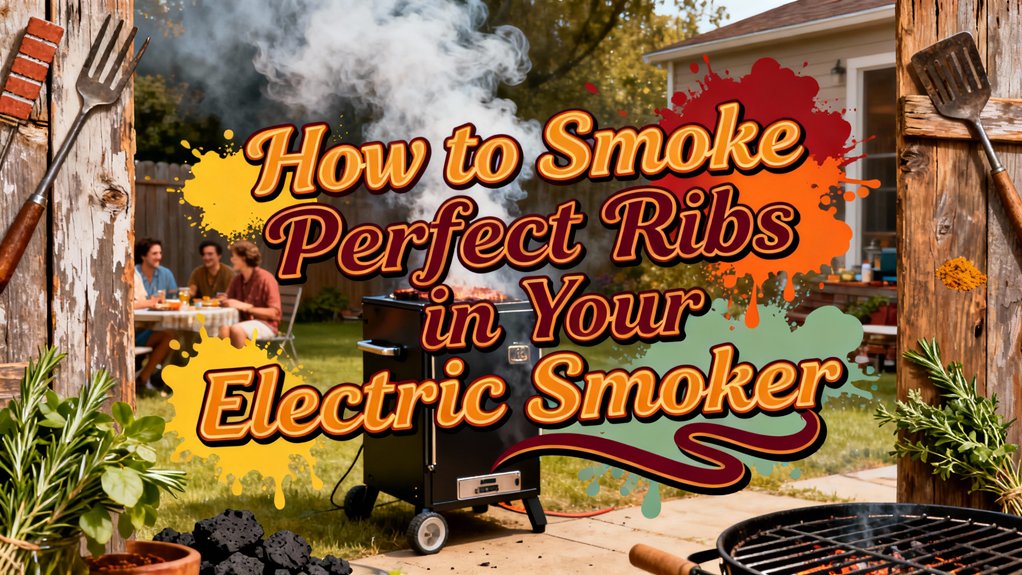
You’ll smoke perfect ribs by prepping them overnight with a dry rub, then smoking at 225°F for roughly six hours using hickory or apple wood. Maintain thin, blue smoke and spray the ribs with apple cider vinegar halfway through. Wrap them in foil with butter and juice around the 3-hour mark, then finish unwrapped to develop that signature bark. Rest your ribs before slicing and saucing for competition-quality results. There’s much more technique involved in mastering each stage.
Preparing Your Ribs
Before you can achieve that perfect smoke ring and tender bark, you’ll need to properly prepare your ribs by removing the membrane from the back. Insert a paring knife under the membrane to create a small tear, then grasp it with gloves or a paper towel for better grip. Pull gently to avoid damaging the meat beneath.
Next, rinse your ribs and pat them dry thoroughly with paper towels. Trim excess fat to prevent flare-ups during smoking. Apply your dry rub—combining brown sugar, sea salt, garlic powder, smoked paprika, onion powder, and pepper—evenly on both sides. Pat the rub gently into the meat and let it penetrate for at least one hour. For best results, refrigerate your ribs for a minimum of 4 hours or overnight to allow the flavors to fully develop. Consider using a probe thermometer to accurately track internal temperature throughout the cooking process.
Finally, remove your ribs from refrigeration thirty minutes before smoking to allow temperature equalization across the entire rack. Preheat your smoker to 225°F and add your wood chips to ensure optimal smoking flavor when you’re ready to begin cooking.
Setting Up Your Electric Smoker
Once you’ve prepared your ribs with a quality dry rub, it’s time to get your electric smoker ready for the low-and-slow cooking process. Start by preheating your smoker to 250°F to compensate for heat loss when you load the ribs, then adjust down to 225°F for ideal results. Allow five minutes for wood chips to generate adequate smoke before placing your food inside.
Fill your water pan to half capacity to maintain moisture throughout the cook. Add hickory or apple wood chips to the tray, limiting additions to preserve steady smoke production without excessive door openings. Using pecan wood chips will provide a balanced, smoky flavor that complements pork exceptionally well. Avoid softwoods like pine and cedar as they contain resins that create unpleasant flavors and burn too quickly. For best results, select wood pellets with no fillers or additives to ensure clean-burning performance and authentic smoke flavor. Most pitmasters agree that 250°F is the ideal smoking temperature for achieving perfectly smoked ribs with optimal bark development. For those seeking faster results without sacrificing quality, electric smoker functions like convection cooking can rival traditional smoking methods while reducing overall cook time. Different hardwood pellet flavors such as hickory and apple can be mixed in various blends to create your preferred smoke profile for exceptional taste. While hardwoods like red oak and post oak are traditionally used as base woods for their balanced smoke flavor and slow burn, they work exceptionally well in electric smokers when paired with fruitwoods.
Position your ribs bone-side down on the rack, then close the door immediately. Maintaining temperature consistency and monitoring smoke production are essential for developing that perfect bark while avoiding dry, tough meat.

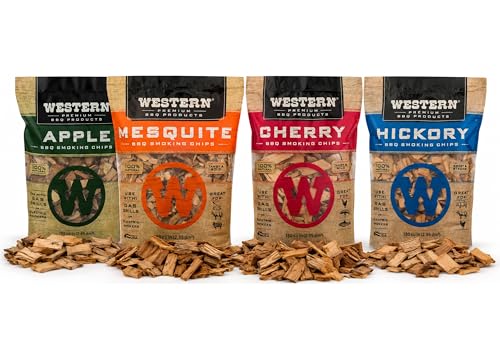
Western BBQ Smoking Wood Chips Variety Pack Bundle (4)- Apple, Mesquite, Hickory, and Cherry Flavors (Original Version)

The Initial Smoking Phase
Now that your electric smoker’s preheated to 225°F with steady smoke production, you’ll place your ribs bone-side down on the rack and close the door—this is where patience becomes your greatest tool. Don’t open that door for at least four hours. You’re building bark, and every opening compromises your temperature stability and smoke consistency.
During this critical phase, you’re monitoring smoke production for clean, thin blue smoke rather than thick white plumes. Keep your top vent open to encourage this. Simultaneously, you’re managing drip pan moisture by ensuring your water bowl stays halfway full. If the rib tops appear dry after 1.5 hours, spray them lightly with apple cider vinegar or Coca-Cola. Remember to position the ribs with the meat side up for optimal smoke absorption and bark development. This controlled environment develops that coveted smoke ring and bark foundation your ribs need. You’re aiming for a mahogany color and visual cues that indicate proper smoke penetration. Many barbecue experts recommend monitoring your ribs until they reach an internal temperature near 180-200°F to ensure optimal tenderness and flavor development. For pork spare ribs, plan for 3 hours smoking at this temperature to create the low and slow smoke that defines authentic barbecue. Smoking at 250°F offers a faster alternative with minimal flavor difference compared to lower temperatures. The stall phase may occur during smoking, requiring careful temperature monitoring with a thermometer to push through this plateau. Consider using the 2-2-1 method as an alternative approach to achieve balanced results with both smoke penetration and sauce caramelization.

Smoker Rib Rack with Even Cooking Design – Engineered to evenly distribute heat and smoke on both sides of the ribs, this rack ensures each piece of meat is perfectly cooked. The sauce is sealed in, enhancing flavor with every bite.

PREMIUM MATERIALS - Cook or grill for years to come and never worry about rust or corrosion with an ultra-durable rib rack made out of stainless steel.
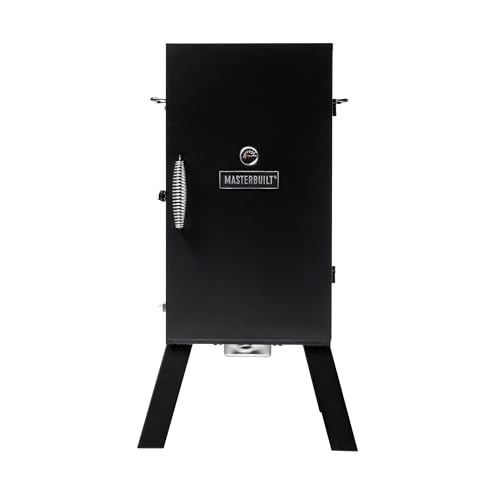
ANALOG CONTROLS - Set your desired smoking temperature using the analog dial for seamless smoking experience up to temperatures of 275°F
Wrapping and Finishing Touches
After your ribs’ve spent three hours developing that essential bark foundation, it’s time to enter the wrapping phase—a technique that’ll dramatically accelerate tenderization and lock in moisture. Choose between heavy-duty foil for complete steam enclosure or pink butcher paper for controlled airflow. Position ribs meat-side down, then apply your moisture addition techniques using apple juice, butter, or beer to enhance juiciness and flavor.
Seal your wrapping tightly, folding edges carefully to prevent bone puncturing while maintaining integrity. Wrapping timing and temperature control work together here—your ribs’ll reach peak tenderness within 10-15 minutes in this braising environment. Double wrapping foil prevents juice leakage and protects against hot spots. This low-temperature braising method renders fat effectively while keeping the meat moist during the wrapping phase. Inspect sealing before returning ribs to your smoker, ensuring steam and juices remain trapped for ideal results. The wrapped ribs will continue to break down connective tissues even after the initial smoking phase, contributing to that tender, juicy final product. Butcher paper allows more airflow to preserve the bark while yielding a firmer, smokier texture compared to foil’s fall-off-the-bone tenderness. Reserved foil juice can be used for glazing] your ribs during the final unwrapped stage for enhanced flavor and moisture. For optimal results, finish your ribs with a quick sear over direct heat to caramelize the sauce and develop a flavorful exterior. Many experts recommend checking for doneness by observing when the meat pulls back from the bones], which indicates your ribs have reached the ideal tender range. Rest your ribs after cooking to allow the meat fibers to relax and reabsorb juices, enhancing overall tenderness and flavor].

Includes one 125 square foot roll of heavy duty aluminum foil

EXTRA WIDE COVERAGE: This aluminum foil roll measures 18 inches wide to span more grill surface in one sheet, helping cover grates, pans, and larger foods with less overlap. Useful for ribs, corn, vegetables, and wide prep or storage tasks
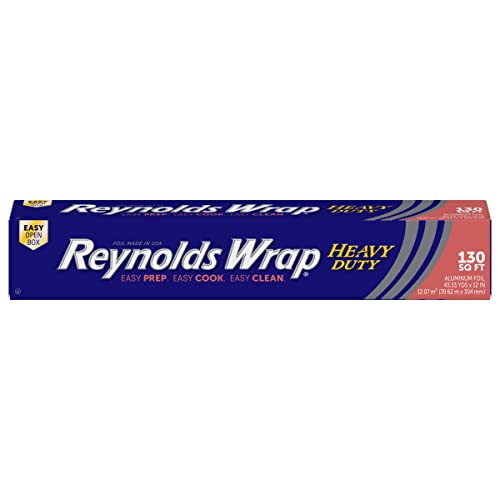
Package Includes-One (1) Reynolds Wrap Heavy Duty Aluminum Foil Roll measuring 130 feet long by 12 inches wide (130 square feet total)
Slicing and Serving Your Smoked Ribs
Your ribs’ve reached their peak when they exit the smoker, but timing the slice is just as crucial as the cook itself. Let them rest 5-10 minutes to redistribute juices, then assess meat quality during slicing by examining the smoke ring and color consistency. An electric knife produces cleaner cuts with minimal meat damage compared to manual techniques.
For sauce application methods, cool your ribs slightly before coating—warm sauce runs off rather than adheres. Consider leaving half unsauced to showcase your bark and smoke ring. Blues Hog Champion Blend mixed with Sweet Baby Ray’s delivers reliable coverage and flavor. Allowing the ribs to rest for 10-15 minutes before serving ensures maximum flavor distribution throughout the meat. Using a reversible roaster rack during the final stages of smoking can help achieve even heat distribution and prevent sagging. For optimal results, aim for an internal temperature of 203°F to achieve fall-off-the-bone tenderness before your final resting period. Quality heat tents designed for grills can also improve temperature consistency during the smoking process, similar to how proper resting techniques preserve your final product.
Present at least one rib with meat side visible to display your smoke ring to guests. Like charcoal baskets that maintain consistent temperatures, proper resting techniques help preserve the quality of your final product. Portion 2-4 ribs per serving, arranging your best-looking cuts bone-side down for maximum visual appeal.