You’ll master charcoal smoking by establishing a two-zone fire setup that separates direct and indirect heat zones using charcoal baskets. Select natural hardwoods like hickory or oak for superior smoke flavor, then control your grill’s temperature between 450-550°F by strategically adjusting both vents. Keep your lid closed throughout cooking and use a meat thermometer for accuracy. These foundational techniques form the backbone of consistent, professional-quality results—though there’s considerably more nuance to explore.
Essential Equipment and Setup
You’ll need a reliable charcoal smoker as your foundation for smoking meat effectively. The Weber Smokey Mountain (WSM) offers beginner-friendly performance in 18-inch and 22-inch models, accommodating different group sizes without requiring modifications.
Quality charcoal smokers perform excellently out of the box, though hinged cooking grates enhance temperature control by enabling wood chip placement and fuel management. Charcoal baskets organize fuel into direct and indirect heat zones, ensuring consistent temperature maintenance across cooking surfaces. Models with rust-proof construction provide durability and longevity for years of smoking sessions. To maintain your smoker’s rust-proof finish, apply a protective layer of cooking oil periodically to prevent rust formation. For exterior stainless steel parts, using a soft brush or microfiber cloth during routine cleaning will help preserve the finish without causing scratches.
For ignition, chimney starters like the Weber Rapidfire provide quick, even charcoal lighting without lighter fluid. Windproof butane torches offer reliable alternatives in challenging weather conditions. A dial thermometer helps monitor your smoker’s internal temperature throughout the cooking process. Oil-soaked paper towels can serve as an effective DIY fire starter if you don’t have a chimney starter available. Consider treating your chimney as a charcoal measuring cup to dial in your desired grill temperature with precision.
Your cooking accessory options should include long locking tongs, heavy-duty spatulas, and meat thermometers for accurate internal temperature tracking. Heat-resistant gloves with insulated lining protect your hands during the smoking process. These essentials establish the technical foundation necessary for successful meat smoking.

Compatible with WSM 14"/18"/22" and Bullet Smokers.

Easily set up your grill for high-heat searing or low-and-slow cooking. Comprised of a cone and diffuser ring, it reduces the guesswork for less experienced grillers and adds a new level of mastery for backyard pros.
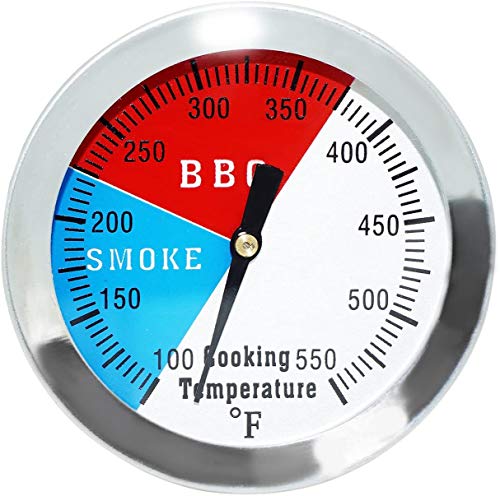
2" BBQ grill smoker pit thermometer stainless steel thermostat pit temp gauge
Charcoal Preparation and Lighting
Proper charcoal preparation sets up the foundation for temperature control throughout your smoking session. You’ll stack briquettes in a pyramid shape at your grill’s center to promote even flame spread and maximize contact during ignition. After 10 minutes of burning, rake coals into your desired configuration—either a two-zone setup or ring arrangement—to establish both direct and indirect heat zones. For smoking, the Burn-Down Method involves filling your charcoal bed with unlit briquettes and adding only a few lit coals to start, allowing the unlit coals to be slowly ignited by those on top for a long, consistent burn.
For lighting, use a chimney starter filled with coals over paraffin cubes or crumpled newspaper on your grate. This method gives you precise charcoal quantity adjustment and superior oxygen flow regulation compared to top-lighting. Once coals develop a lightly coated white ash layer after 20-30 minutes, you’ve achieved full readiness. Modern grills equipped with integrated charcoal ignition systems can simplify this process significantly for beginners. To maintain steady temperatures throughout your cook, ensure your grill vents remain fully open for proper airflow control. Keeping the grill lid closed as much as possible will help stabilize temperature and prevent heat fluctuations during your smoking session. Consistent heat between 450-550°F guarantees reliable smoking temperatures, and choosing high-quality charcoal from factory sources ensures faster and more consistent burning throughout your session. Remember to clean and oil the grill grates before your smoking session to prevent sticking and ensure optimal heat transfer.
Wood Selection and Smoke Management
Since wood choice directly determines your smoke’s character and meat’s final flavor profile, selecting the right variety is as critical as temperature control. Your wood species selection fundamentally impacts smoke flavor intensity and overall results.
Hardwoods like oak, hickory, and mesquite deliver superior performance on charcoal grills. Oak provides clean, medium smoke ideal for beef and ribs, while hickory imparts bold, bacon-like notes perfect for pork. Mesquite yields intense, earthy complexity for large cuts and brisket. When properly seasoned, oak wood produces thin, blue smoke that enhances proteins without overwhelming the meat. Experimenting with different wood combinations allows you to create a signature flavor profile that reflects your personal smoking preferences. Avoid softwoods like pine, which produce bitter residue that negatively impacts meat quality. Top performers like Lumberjack and Traeger offer 100% natural hardwoods with no fillers or additives for consistent, clean-burning results.
Balance smoke flavor intensity by blending strong woods with milder varieties like apple or cherry. Use chunks for extended low-and-slow smoking—they burn steadily for hours. Fruit woods such as apple and cherry are best used in chip form to complement your hardwood base without overwhelming the meat’s natural flavors. For maximum versatility, consider blending woods to balance the intensity between bold hardwoods and subtle fruitwoods based on your specific protein and cooking duration. Prioritizing natural hardwoods over flavored or additive-laden products ensures optimal smoking results and cleaner flavor development. Maintain thin blue smoke by applying wood sparingly; thick white residue indicates excessive fuel. This restraint prevents overpowering your meat while achieving ideal flavor development.

ALL NATURAL HICKORY WOOD CHUNKS: These smoking wood chunks are crafted from 100% hickory hardwood without any harsh chemicals. They naturally enhance chicken, pork, beef, and seafood with a slightly sweet, powerful smoke flavor and a deep color.

INCLUDES: One (1) bag of B&B Charcoal Post Oak Smoking Wood Chunks containing 549 cubic inches of premium natural post oak hardwood, providing plenty of wood for multiple smoking and grilling sessions.

3-PACK VARIETY OF PREMIUM SMOKING WOOD CHIPS – Elevate every barbecue with this ultimate smoking wood chip bundle, featuring three 1.8 lb bags of premium, all-natural wood chips. Includes Hickory for bold, classic BBQ flavor, Applewood for a subtly sweet and fruity aroma, and Mesquite for deep, earthy smokiness—perfect for ribs, brisket, poultry, pork, seafood, lamb, and game meats. Ideal for use in charcoal grills, gas grills, electric grills, and smokers, this variety pack delivers rich, versatile flavor options for backyard BBQs, camping trips, and tailgates.
Temperature Control and Vent Management
Temperature control on a charcoal grill hinges on mastering vent management, the single most critical skill separating amateur barbecuers from competitive pit masters. You’ll achieve steady temp maintenance by understanding that airflow directly correlates with heat intensity—more air increases temperature, less air decreases it. Open both vents fully for high-heat cooking up to 650-700°F, then gradually close them to reach your target low-and-slow range of 225-235°F. Small vent adjustments yield significant temperature changes, so make incremental tweaks rather than dramatic moves. Use a reliable probe thermometer for accurate readings, not your dome gauge. Minimize temperature swings by employing a water pan as a heat sink and adjusting your charcoal tray height to control coal proximity to your meat. For longer cooks, consider using foil-wrapped bricks to absorb and radiate heat steadily throughout your smoking session. Different grill styles like kamado-style grills excel at maintaining consistent temperatures due to their ceramic construction and superior insulation, with premium kamado brands offering enhanced durability for serious barbecuers. The thick ceramic insulation found in quality kamado models provides exceptional heat retention that minimizes temperature fluctuations during extended smoking sessions. Premium hardwood lump charcoal offers high heat output and responsive temperature control, making it an excellent choice for precise heat management in ceramic grills. Heat deflectors can also enhance temperature stability by redirecting heat for indirect cooking applications. Starting with your top vent at least halfway open and your intake vent about one-quarter open provides a solid baseline from which to make these critical adjustments.

Fits Almost Any Grill with Easy Installation – Choose the Universal version for nearly all grills and smokers (Not for BGE), including Kamado Joe, other Kamado ceramic grills, Weber Kettle, Weber Smokey Mountain, Bronco, and offset smokers; select the BGE version for Big Green Egg or Primo XL Oval grills. Easily replace your existing dial gauge. Upgrade your grills or smokers with the ProTemp S1, turning your traditional grill or smoker into a high-tech cooking machine.

【Easy to Control Temperature】The thermometer adopts a large 3.3-inch glass surface, which can be easily read from a distance. Don't worry about missing the baking time, you can have a good grasp of the temperature.

Package Including: ProTemp S1 (universal version),Breezo Fan,Kamado-style mounting plates, high-temperature flue tape, USB data cable, power adapter.
Meat Placement and Cooking Process
Once your grill’s stabilized at 225-250°F, you’ll position your meat directly above the water pan on the cool side of the grate, keeping it away from direct coal contact. This placement guarantees moisture management while preventing flare-ups that compromise your final product.
Monitor your meat’s internal temperature continuously using a probe positioned adjacent to the meat, not in the dome. Rotate larger cuts halfway through cooking for even heat exposure and consistent results. For enhanced flavor, consider adding apple juice to the water pan to infuse moisture and taste into your meat as it cooks. Pairing your wood choice with your meat type—such as fruit woods for lighter meats—will further enhance the subtle smoky notes your charcoal grill produces. Using kiln-dried wood chunks ensures consistent smoke and prevents unpleasant residues from compromising your meat’s flavor.
Make cooking adjustments by checking temperature every 2-3 hours with the snake method. Slide the lid partially if you need to mix hot air from coals with cooler air for temperature regulation. Keep your thermometer probe under the lid or in the vent for accurate readings that guide your smoking decisions. Adding 12-15 lit coals and more wood chunks every 60-90 minutes will replenish your fire and maintain consistent smoking conditions throughout the cooking process. For best results, source wood with moisture under 20% to avoid off-flavors and ensure reliable combustion. Quality grilling equipment with stone elements can also help evenly distribute heat for superior flavor development. Selecting lump charcoal for your smoking setup provides the high heat and clean burning characteristics that complement wood smoke for optimal flavor development.
Smoking Techniques and Timing Guidelines
Your success in smoking meat hinges on mastering temperature regulation through precise vent management and strategic wood placement. You’ll achieve optimum smoke flavor by introducing soaked wood chunks quarter-way through cooking, allowing initial meat marination methods like seasoning to set before intense smoke exposure. Monitor internal temperatures midway—chicken reaches 165°F in roughly 30 minutes, while ribs and pork butt require extended low-and-slow cooking at 225°F. Add wood or coals without lifting the lid frequently, as this disrupts temperature stability. You’ll want to maintain consistent heat by throttling vents gradually when temperatures exceed your target range. Place a meat thermometer in the top vent to monitor your grill temperature throughout the cooking process. For the best results, use seasoned hardwoods like oak or hickory for long, steady burns, or fruit woods like apple and cherry for milder, sweeter smoke profiles. Popular smoking woods include apple, hickory, cherry, and mesquite, each imparting distinct flavor profiles to your meat. You can also finish your smoked meats with complementary seasonings like charred corn seasoning blends to add brightness and complexity to your final dish. Preheating the grill to medium heat ensures even cooking and helps you establish the foundation for stable temperature control throughout your smoking session. The radiant heat from burning charcoal embers is the dominant mode of heat transfer that directly cooks your meat, while convection circulates hot air] inside the grill chamber for more even results when the lid is closed. Proper timing prevents over-smoking and guarantees tender, flavorful results that justify your careful attention to these technical details.
Preparing Your Charcoal Grill for Smoking
Before you’ll need to prepare your charcoal grill methodically to establish the foundation for successful smoking. Start by sweeping accumulated ashes from the bowl’s bottom, then inspect vents and dampers for blockages that compromise airflow optimization. Thoroughly clean grill grates to remove residue from prior uses, ensuring grill surface cleanliness that prevents flavor contamination. For optimal results, consider soaking grill grates in soapy water to loosen stubborn grime before scrubbing. For stubborn buildup, grill cleaners like those designed for heavy residue can accelerate the cleaning process significantly. Alternatively, pumice-based cleaning bricks offer an efficient, water-activated solution for removing caked-on food and rust without scratching your grill surfaces. For maximum safety and effectiveness, bristle-free coiled designs eliminate the risk of stray bristles contaminating your food while maintaining powerful cleaning performance. To prevent future rust damage, establish a regular maintenance routine of cleaning and oiling grates after each use.
Check the grill body for gaps and seal them with aluminum foil to prevent smoke leaks. Verify your charcoal grate’s integrity for even coal placement. Install the cooking grate with its hinged side positioned over coals for convenient replenishment access. Arrange coals one or two deep to establish consistent heat distribution across the smoking surface. Adjust air vents to control airflow and optimize your smoking temperature throughout the cooking process.
Open bottom vents fully during preheating, then replace the lid and open the top vent completely. This setup initiates proper oxygen circulation essential for establishing your ideal smoking environment before introducing meat.
Creating and Maintaining the Two-Zone Fire
The foundation of successful charcoal smoking rests on establishing a two-zone fire that separates your heat source from your cooking surface. You’ll bank approximately 45 unlit briquettes to one side, creating your hot zone, while leaving the opposite side empty for indirect cooking. Light 12-15 briquettes separately until they’re ash-covered, then dump them onto your unlit coal bed. This setup enables even heat distribution across both zones, preventing hot spots that’d char your meat prematurely. Position your top vents over the cool side to direct smoke and heat across your food. Regulate bottom intake vents to control airflow and temperature, managing fuel consumption efficiently. Throttle back the bottom vent if the grill begins running hot to maintain your target smoking temperature. Consider using charcoal baskets to keep your coals clustered together so they burn longer and maintain consistent temperatures throughout your cook. For extended smoking sessions, baskets with small perforations allow optimal airflow without creating large gaps that cause temperature fluctuations. An adjustable cooking grate gives you additional flexibility to fine-tune your distance from the heat source and achieve precise temperature control without constantly managing your vent settings. Investing in a reliable meat thermometer ensures you’re monitoring internal temperatures accurately rather than relying solely on visual cues. Periodically checking your grill temperature throughout the smoking process helps sustain your desired heat level and prolongs burn time by preventing unnecessary fuel waste. This two-zone configuration allows you to sear strategically while maintaining consistent low-and-slow smoking conditions throughout your cook.
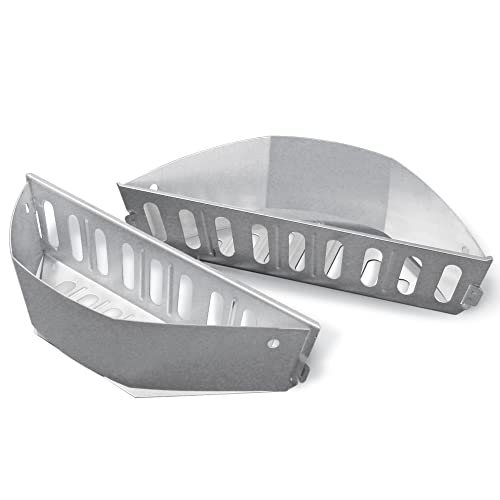
Fit up to 10 regular-sized briquettes in each charcoal holder

【7 LB Total Capacity for 6-8 People】 This 2-piece set holds 7 lbs of charcoal total (3.5 lbs each), ideal for feeding 6-8 guests. Each basket holds 1 gallon of fuel, delivering steady heat for bulk grilling without mid-cook refills. Spend less time tending the fire and more time entertaining.

Precision Two-Zone Cooking System for Kettle Grills: Transforms your kettle grill into a professional two-zone cooker — direct high-heat searing on one side and indirect low-and-slow smoking on the other. Perfect for steaks, brisket, pork butt, ribs, chicken, and more.
Monitoring and Adjusting Temperature Throughout Cooking
Once you’ve established your two-zone fire and positioned your meat, maintaining consistent temperature becomes your primary control mechanism for smoking success. Deploy a remote probe thermometer to monitor real-time conditions, bypassing unreliable dome gauges. Make incremental vent adjustments based on actual data rather than guesswork. Implement moisture control techniques using water pans as heat sinks, stabilizing temperature fluctuations and preventing spikes. Employ insulation strategies with aluminum foil-wrapped bricks to extend heat retention during extended sessions. Adjust charcoal bed proximity to fine-tune intensity—closer placement accelerates cooking while increased distance moderates heat. Remember that opening vents increases air and heat while closing them reduces both, so monitor your top and bottom dampers carefully throughout the smoking process. When you’re finished smoking, safely extinguish your grill by closing all vents to cut off the oxygen supply and allow the coals to cool naturally. For persistent temperature issues above your target range, consider installing a PID controller and blower to automatically regulate air flow into the fire chamber. Small adjustments yield significant temperature changes, so practice patience during observation periods. This methodical approach guarantees your meat cooks evenly at optimal temperatures between 225-250°F for low-and-slow smoking.

Bluetooth Monitor Remotely: Govee Bluetooth meat thermometer lets you check the temperature of your grill, smoker, or oven from your phone. With this smart BBQ thermometer, you can multitask while grilling.

BBQ / Grill pit thermometer, safe and environmentally friendly.
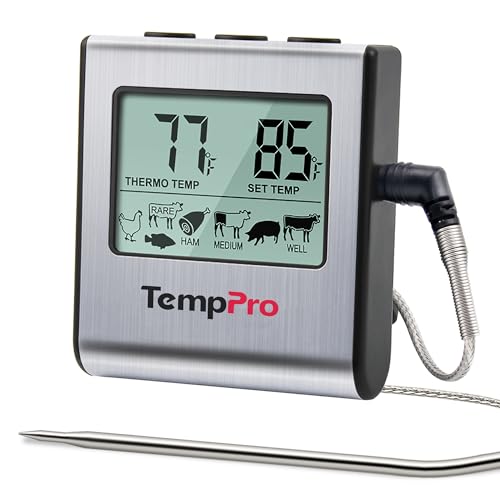
Cook mode with USDA preset temperature settings: TempPro cooking thermometer ideal for meat, oven, smoker or stove top; Programmable alert with preset temperatures for specific foods recommended by USDA; All of the preset temps can be reset to your desired tastes
Common Mistakes to Avoid When Smoking Meat
Even with solid temperature control established, you’ll sabotage your results if you overlook critical setup and material choices. Start by selecting lump charcoal instead of self-lighting briquettes, which introduce chemical tastes. Never use lighter fluid—it creates fire hazards and infuses undesirable flavors; instead, employ a chimney starter for safe, consistent heating. For those without a chimney starter, alternative methods like fire starters under charcoal can effectively ignite your coals while maintaining safety and flavor integrity.
Create distinct heat zones on your grill for direct searing and indirect finishing. Preheating 20-30 minutes stabilizes temperatures and burns off harsh initial smoke. Waiting for the coals to ash over ensures you’re cooking at the optimal temperature rather than grilling with partially black coals that produce inconsistent heat. A water pan should be positioned in your smoker to maintain temperature stability and prevent the meat from drying out during the cooking process. For added convenience, electric charcoal starters like the Kitosun hot coil starter provide a reliable hands-free method to ignite your coals without matches or chemicals. Lump charcoal’s clean-burning properties make it ideal for smoking since it produces minimal ash and doesn’t impart unwanted chemical flavors to your meat. For those seeking pure heat output and reliable temperature control, 100% charcoal pellets outperform blended options in performance. Models like the Weber Smokey Mountain offer adjustable dampers for temperature control that allow you to fine-tune your smoking environment for consistent results.
Avoid oversaturated smoke by using controlled wood chunks of oak, hickory, or fruitwood rather than excessive amounts. Space meat items properly to guarantee uniform heat distribution and smoke absorption. Finally, resist opening your lid frequently—constant temperature fluctuations extend cooking time and risk tough, chewy results.