

You’ll nail perfectly juicy, caramelized chicken leg quarters in 40–55 minutes by mastering three critical variables: grill temperature, cooking method, and internal temperature targets. Set up a two-zone system at 400°F for direct grilling and 325–350°F for indirect cooking. Use an instant-read thermometer to verify 170–195°F internal temperature across multiple spots. Apply BBQ sauce during the final 10 minutes for ideal caramelization. Understanding how each variable influences your results will transform your grilling technique.
Optimal Grill Temperature Range
Getting the temperature right is critical when grilling chicken leg quarters, and you’ll want to establish a two-zone setup on your grill. Heat one side to 400°F for direct grilling, while maintaining 325-350°F on the indirect side using a grill thermometer for consistency. This two-zone approach gives you flexibility: you’ll sear initially over direct heat at medium-high temperatures around 425°F to render fat and crisp skin, then move pieces to the cooler zone for even cooking.
Maintaining consistent grill temperature requires monitoring hot spots and rotating pieces periodically. Regulating heat distribution prevents overcooking while ensuring proper skin crispness. Use an oven-proof digital thermometer to track internal meat temperature, targeting 160°F before saucing and 165°F as your final endpoint for food safety. For enhanced skin crispness, consider air drying the chicken before grilling to remove surface moisture. Keeping your grill lid on while cooking helps distribute heat evenly and reduces the risk of undercooked chicken. The indirect heat method essentially bakes the chicken inside the grill, resulting in juicy, tender meat with a crispy exterior. Flipping frequently every 3 to 5 minutes ensures even cooking throughout the leg quarters. Allowing the chicken to rest for 5 to 10 minutes after grilling permits the juices to redistribute for maximum juiciness. Applying BBQ sauce near the end can add flavor and char without burning the exterior.

Instant Read Meat Thermometer | Our instant read thermometer features a temperature probe and advanced, highly accurate technology with a 1-2 second response time. Our instant read food thermometer comes pre-calibrated with instructions and a meat temperature chart, plus a recalibration feature if needed.

【Fast & Accurate】Our meat thermometer digital delivers accurate readings within ±1°F in just 1–2 seconds, with a wide temperature range of -58°F to 572°F (-50°C to 300°C). No more waiting over the heat - know your food's exact temperature instantly.

【8X Faster + 4X More Precise】: Upgraded with an industrial-leading professional thermocouple sensor, Themomonster meat thermometer digital with NIST certified ±0.5℉ precision provides you the accurate temperature of your food in just 0.5 Seconds.
Total Cooking Time Guidelines
Once you’ve established your two-zone setup and confirmed your grill thermometer readings, timing becomes your next focal point. Your ideal cooking times depend heavily on piece size considerations. Smaller chicken quarters typically finish in under 30 minutes when covered, while average-sized quarters require 45-55 minutes total. Larger leg quarters may extend to 30-35 minutes with frequent turning to prevent burning.
Direct heat methods generally span 20-25 minutes, flipping every 5 minutes until you reach 155°F internally. Indirect cooking takes approximately 40 minutes before saucing, with 20 minutes skin-side up followed by 20 additional minutes after flipping. Final direct heat caramelization adds just 4 minutes total—2 minutes per side. Account for hot spots by adjusting your intervals accordingly. For optimal results, aim for 185°F internal temperature in the thickest part of the thigh for pull-apart tenderness. Remember to use a meat thermometer to verify that your chicken has reached the proper internal temperature for food safety. The recommended grill temperature should be set to medium or medium-high heat between 350°F and 375°F to cook chicken properly without drying it out. Optional techniques such as spraying with apple cider vinegar during cooking may help keep the meat moist. The low-and-slow method helps keep the chicken moist by allowing fat and connective tissues to break down gradually. After cooking, resting the chicken for 5 to 10 minutes helps redistribute the juices for best texture and flavor.

Temperature Range: 140° to 190°F / 60° to 87°C. Probe Length: 4.75-inches Dial Diameter: 2.375-inches

FOOD SAFETY: Thermometer displays true oven temperature instantly to ensure safe food preparation

【No More Overcooking, 8X Faster】Ultra-fast 0.5 second instant read meat thermometer delivers accurate temperature instantly, helping you avoid overcooking and achieve perfect doneness every time.
Internal Temperature Targets
Achieving the right internal temperature isn’t just about food safety—it’s critical for transforming your grilled leg quarters into juicy, tender meat. You’ll want to target 170°F for ideal juiciness, though 180-195°F delivers superior tenderness as collagen breaks down into gelatin.
Use an instant-read thermometer, inserting the probe into the thickest part without touching bone. Check multiple spots across each quarter for accuracy. Remember the carryover temperature effect: your meat continues cooking 5-10°F after removal, so pull it off the grill slightly early. Many pitmasters recommend lining your grill with foil to ease cleanup and ensure even heat distribution across your chicken quarters. For even better results, consider using upright racks or multi-slot holders to keep your leg quarters evenly spaced for consistent heat circulation. Sturdy chicken holders provide reliable support for achieving even cooking results across multiple pieces. Chicken leg quarters are highly regarded as being the most flavorful parts of a chicken, making precise temperature control essential for showcasing their natural taste.
While 165°F meets USDA safety standards, stopping there yields tough, chewy dark meat. Pushing toward 195°F secures succulent results and maximum collagen conversion. Precise measurement eliminates guesswork and guarantees consistent, restaurant-quality leg quarters every time.
Direct Heat Cooking Method
Direct heat’s the foundation for achieving crispy, golden skin on your leg quarters while developing a flavorful crust. You’ll maintain temperatures between 325-375°F, adjusting based on your grill’s hot spots and your desired char level.
Start skin-side down for 5-7 minutes at lower direct temperature. Then flip every 2 minutes during the final 10-minute direct phase, rotating positions to guarantee uniform surface heat exposure. This frequent turning prevents excessive charring while crisping the exterior evenly. Using a BBQ thermometer makes grilling stress-free and eliminates guesswork about doneness. A meat thermometer helps you verify the internal temperature has reached the safe consumption threshold of 165°F. For the most accurate temperature readings during extended cooks, consider wireless probe thermometers with apps that provide real-time monitoring without constant manual checks.
Cook until internal temperature reaches 155°F before applying sauce. Your sauce application technique matters—brush barbecue sauce during those final 10 minutes, turning constantly to caramelize without burning. Turn chicken leg quarters often to prevent burning and ensure even cooking throughout the grilling process. Total direct grilling time typically runs 30-35 minutes for properly cooked leg quarters.

Smart Display Base with Control: The ThermoMaven G1 wireless meat thermometer features a versatile smart display base that offers real-time temperature readings and allows you to set temperatures directly on the device—no app required. With our user-friendly one-click setup, you can connect the probe, pair it with the base, and start cooking in seconds—no complicated setup needed!

SMART BASE CONTROL: Set temperatures, monitor progress, and receive alerts directly from the base without needing your phone nearby.

Smart Display Base: Unlike other thermometers that require an app to function, the P2’s smart base provides direct target temperature setting and real-time readings display. For advanced features like cooking history and AI-guided cooking, the free ThermoMaven APP (iOS/Andriod) is also available, giving you the best of both worlds.
Indirect Heat Cooking Method
The indirect heat method‘s your best approach when you’re prioritizing tender, evenly cooked meat over aggressive char. Position your leg quarters skin-side-up on the cool side of your grill, away from direct flames. Maintain a consistent indirect temperature between 325-350°F throughout cooking.
Close your lid immediately after placement to trap heat. Cook undisturbed for 20 minutes, then monitor internal temperatures using a meat thermometer inserted into the thickest thigh part. Flip skin-side-down for an additional 20 minutes, targeting 155-165°F before finishing. Letting the chicken rest after cooking allows juices to redistribute, ensuring maximum tenderness and flavor throughout the meat.
Perfect indirect transferal requires patience—avoid moving chicken excessively. Total indirect cooking takes 30-45 minutes. For enhanced flavor, add soaked wood chips to your coals during this phase, which works exceptionally well when combined with Kinder’s Grilled Chicken Seasoning for maximum taste development. After cooking, let the chicken rest for 5-10 minutes to redistribute juices for maximum flavor and tenderness. Consider pairing your grilled chicken with recipes from Andrew Zimmern’s website for inspired side dish ideas. Baste with barbecue sauce during the final 10 minutes if desired, reaching 165-170°F final temperature. Once finished grilling, safely extinguish your charcoal by closing all vents to cut off the oxygen supply and allow the coals to cool naturally.

Large Display: Features a 2 3/8 inches large face for clear visibility; Stem length of 2 7/8 inches enhances accessibility; Enables easy classification of food temperatures in various cooking environments
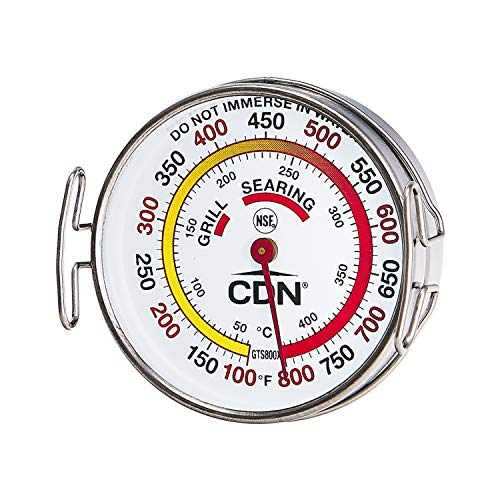
ACCURATE TEMPERATURE ZONES. The CDN GTS800X Grill Surface Thermometer features a color-coded scale that allows precise monitoring of temperature zones, providing optimal control over your grilling experience.

【2-Pack Value Set + Large Easy-Read Display】Comes with 2 grill thermometers, each featuring a 2 3/8" oversized dial and 2 7/8" stem length—clear numbering ensures quick temperature reading, even from a distance, and the long stem enhances accessibility in various cooking environments.
Finishing and Resting Procedures
Once you’ve finished basting and your chicken leg quarters reach 170°F, you’ll remove them from the grill and begin the resting phase—a step that’s just as important as the cooking itself. Immediately employ proper covering methods by placing your chicken on a plate or shallow pan, then tent it with foil to retain residual heat. Observe a resting duration of 10–15 minutes before serving. During this critical period, juices redistribute throughout the meat, preventing dryness and enhancing tenderness. This rest also allows carryover cooking, bringing temperature to approximately 175°F. The resting phase also supports muscle growth and tenderness by allowing the protein fibers to relax after the cooking process. After resting, cut your chicken to retain juices, then serve alongside your prepared sides. Always allow at least 5 minutes of rest time to ensure the chicken has adequately settled before cutting into it. The resting phase guarantees ideal moisture and texture in every bite. For any leftover chicken leg quarters, store them in the refrigerator at or below 40°F for three to four days to maintain food safety. For extended storage, you can freeze leftover chicken in airtight containers or freezer bags to minimize air exposure and prevent freezer burn for up to four months at 0°F or lower.
Achieving Perfectly Caramelized Skin
Crispy, caramelized skin requires you to master the interplay between temperature control and timing. You’ll achieve ideal results by maintaining 300-350°F at grate level while executing precise dry rub application before grilling. Your basting technique determines final texture—apply BBQ sauce during the last 10-15 minutes, brushing skin-side-up as internal temperatures reach 160°F, then 170°F, and finally 180°F.
Return chicken to direct heat after indirect cooking to activate caramelization. Turn every 2-4 minutes, allowing sauce to set between flips. This repeated basting and turning creates a lacquered, caramelized exterior without burning seasonings.
Never skip the initial searing phase—2 minutes per side over direct heat establishes the foundation for proper browning. Time your sauce application strategically; premature application burns, while delayed application prevents caramelization. Using a meat thermometer ensures you reach the proper internal temperature while achieving optimal caramelization. For the most precise temperature monitoring during this critical phase, consider an instant-read thermometer that provides readings in one second or less. A bristle-free grill brush helps maintain a clean cooking surface throughout the grilling process, preventing residue buildup that can interfere with heat distribution and caramelization. For ambient temperature accuracy during extended cooking sessions, wireless thermometer models offer remote monitoring capabilities to track your grill’s performance. Unlike chicken tenders which reach doneness at 165°F internal temperature, leg quarters require higher heat tolerance for caramelization. This controlled sequence yields professional-quality results consistently.

Fast & Accurate: Get precise readings in just 1 second with ±0.9°F accuracy. NSF Certified for trusted food safety, this digital food thermometer features a 4.3 inches food-grade stainless steel meat probe, perfect for grilling, frying, baking, making candy and more

UPGRADED PROBE FOR FASTER, MORE STABLE READINGS - This meat thermometer features a precision-upgraded probe with higher sensitivity and enhanced thermal conductivity, delivering more accurate and stable readings in just 0.5 seconds. Unlike standard probes, the upgraded design transfers heat faster from first contact, giving you a more reliable and consistent temperature measurement every time—no more guessing, only perfect meals!
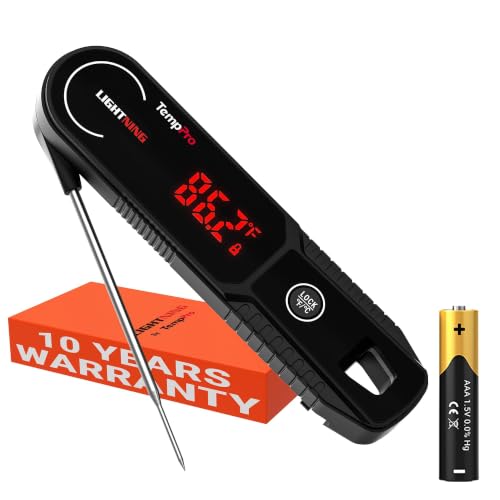
【Professional Precision & Lightning Speed】With full readings in 1 second and +/-0.5°F Pro-Accuracy through industrial-leading thermocouple design, this instant read thermometer is up to 200% quicker than the competition, taking the guesswork out of your cooking!
Food Safety and Doneness Testing
While perfectly caramelized skin signals excellent grilling technique, it doesn’t assure food safety—you’ll need a food thermometer to confirm your chicken’s actually safe to eat. Insert an instant-read thermometer into the thickest thigh area, avoiding bone contact, to verify you’ve reached 165°F. This temperature immediately kills foodborne bacteria like salmonella.
After grilling, allow your leg quarters 10 minutes standing time before testing. Equipment calibration guarantees accuracy, so verify your thermometer functions properly before use. Our facilities have maintained high standards of food safety since 2007 through rigorous HACCP programs and comprehensive staff training in proper handling practices. Minimize cross contamination risks by using dedicated utensils and surfaces throughout handling. Raw chicken and its juices can contaminate ready-to-eat foods, so keep them separated to prevent foodborne illness. Before you begin grilling, ensure your grill is clean and free from debris by performing regular grill maintenance to prevent any residue from affecting your food. For stubborn residue, consider using grill cleaning products designed to cut through baked-on grease and grime. A deep cleaning that includes scrubbing the cooking grates] and removing grease buildup will eliminate potential contaminants, and using a soft brush or microfiber cloth prevents scratching your stainless steel surfaces. Keep a fire extinguisher nearby during grilling for quick response to any flare-ups or emergencies. Check multiple sites—innermost thigh, wing, and thickest breast—for consistent doneness. While 170-175°F enhances tenderness, 165°F remains your non-negotiable safety baseline.