

You’ll nail restaurant-quality chicken thighs by marinating for thirty minutes, then patting them dry to maximize skin crispness. Preheat your gas grill to 220–300°C with all burners maxed out. Sear skin-side down for 3–6 minutes, flip, then sear again for 4–5 minutes. Move thighs to indirect heat at 149°C until they hit 74°C internally. Pull at 71°C, allowing carryover cooking to finish the job. Rest for 10–15 minutes wrapped in foil. Master these techniques, and you’ll uncover the precise temperature control that separates mediocre from exceptional results.
Preparing Your Chicken Thighs for the Grill
Before you fire up your gas grill, you’ll want to marinate your chicken thighs for at least 30 minutes—this step’s essential for developing deeper flavor penetration and enhancing tenderness. Keep your chicken refrigerated throughout marination to prevent spoilage and maintain marinade quality.
Next, pat your thighs dry with paper towels to remove excess moisture content. This critical step prevents steaming and promotes superior browning and grill marks. Dry surfaces allow seasonings to adhere more effectively.
Generously apply your spice rub to both sides, working the blend underneath the skin for extensive flavor distribution. Massage seasonings directly into the meat for full coverage. Consider using spice blends like Cajun Seasoning or a simple combination of salt, pepper, garlic, and paprika for reliable, delicious results. A dry rub with spices like chili powder and paprika will create that savory and flavorful profile you’re aiming for. Flavorful rubs applied before cooking enhance the taste and create a more satisfying final product. Whether you’re working with boneless or bone-in thighs, proper seasoning ensures flavorful results with every cook. For added moisture during cooking, you can also prepare a basting liquid like apple juice to brush on the chicken as it grills.
Finally, remove your chicken from refrigeration 15–30 minutes before grilling. Room temperature pieces cook uniformly across your grill surface, ensuring consistent results throughout each thigh. Using a meat thermometer will help you accurately determine when your chicken has reached the safe internal temperature for consumption. Chicken thighs are an excellent lean protein source that delivers essential vitamins and minerals while supporting muscle growth and maintaining energy levels.

A CERTIFIED CAJUN LOUISIANA SPICE BLEND | The best all around cajun seasoning is finally on Amazon! Get a taste of an authentic Louisiana cajun seasoning that promises great cajun flavor. Use it on everything; it's guaranteed to give full creole and cajun flavor to any type of food.

Chicken seasoning with a Cajun twist: Ragin' Cajun Chicken & Gator pairs garlic, lemon, butter flavor, herbs and spices in a zesty seasoning and rub. The balanced profile brings savory flavor without an intensely spicy finish.

Setting Up Your Gas Grill for Optimal Heat
Once you’ve prepped your chicken thighs to perfection, you’ll need to dial in your gas grill’s heat zones to execute flawless cooking. Set all burners to maximum for a direct heat zone reaching 220–300 degrees Celsius, which creates ideal conditions for searing and developing complex Maillard flavors. For even heat distribution across your cooking surface, verify that your right and left sides reach comparable temperatures by using an infrared temperature gun rather than relying solely on built-in thermometers.
Proper preheating time—approximately 15 minutes with the lid closed—ensures your grill reaches stable cooking temperatures before placing chicken thighs. This timeframe allows heat to equilibrate throughout the cooking chamber, preventing hot spots that compromise texture and moisture retention in your poultry. The searing effect created during preheating also helps lock in juices and develops the flavorful crust that distinguishes professional grilling results. To maintain consistent results, adjust burners gradually every 2-3 minutes during the preheating process rather than jumping immediately to maximum heat. For precision monitoring during long cooks, consider investing in multi-probe Wi-Fi systems that allow remote temperature tracking and ensure your chicken reaches the perfect doneness. Monitor the chicken’s doneness by checking that it reaches an internal temperature of 165°F (74°C) at the thickest part. Bone-in thighs benefit from cooking to 170°F to 185°F to achieve optimal tenderness while ensuring food safety. Understanding that gas grills cook through a combination of conduction, convection, and radiation helps you manage heat more effectively for consistent results. After grilling, let the chicken thighs rest for 10 to 15 minutes before serving to allow juices to redistribute, ensuring moist meat.

Temperature measurement range:-50℃-500℃ (-58℉-932℉)Display resolution: 0.1 ℃ or 0.1 ℉

“Point and Shoot” infrared temperature gauge helps test the temperature of any surface

𝐕𝐞𝐫𝐬𝐚𝐭𝐢𝐥𝐞 𝐓𝐨𝐨𝐥𝐬: Infrared technology allows you to measure various objects at home and outdoors; Use it for 𝒎𝒆𝒂𝒕, 𝑫𝑰𝒀 𝒄𝒂𝒏𝒅𝒚, 𝒐𝒗𝒆𝒏𝒔, 𝒈𝒓𝒊𝒍𝒍𝒊𝒏𝒈, 𝒇𝒐𝒐𝒅, 𝒄𝒐𝒐𝒌𝒊𝒏𝒈, 𝒂𝒖𝒕𝒐𝒎𝒐𝒕𝒊𝒗𝒆 𝒖𝒔𝒆, 𝑨/𝑪, 𝒓𝒆𝒇𝒓𝒊𝒈𝒆𝒓𝒂𝒕𝒐𝒓𝒔, etc.
Grilling Techniques for Perfect Results
Three critical preparation steps’ll transform your chicken thighs from good to exceptional: trim excess fat to prevent flare-ups and guarantee uniform cooking, pat the meat dry to maximize skin crispness, then lightly oil the skin side for enhanced browning and even seasoning adhesion.
Master searing techniques by positioning skin-side down over direct heat for 3-6 minutes, developing a golden crust. Flip and sear the second side for 4-5 minutes, rotating positions to evade flare-ups from dripping fat. Move thighs to indirect heat at 300°F for 3-8 minutes until reaching 165°F internally, ideally 175-185°F for peak tenderness. Season your chicken thighs with kosher salt, black pepper or your favorite seasoning to enhance the natural flavors of the meat. Bone-in thighs work exceptionally well with any seasoning or marinade, allowing you to customize the flavor profile to your preferences.
Brush additional marinade during flips to layer flavor variations. For best results, flip the chicken halfway through cooking to ensure even cooking on both sides. Preheating the grill ensures consistent medium-high heat for optimal cooking performance. Ensure your grill grate is clean before placing the chicken to prevent sticking and achieve better grill marks. Rest thighs 5-10 minutes post-grill for juice redistribution. After grilling, wrapping the chicken in foil during the resting period helps the connective tissue break down for more tender, moist meat. Bone-in thighs require 8-10 minutes per side; boneless need 6-7 minutes per side. Monitoring internal temperature throughout the cooking process is essential to achieve safe and juicy results.

Zesty blend of garlic, onion, black and red pepper, and paprika
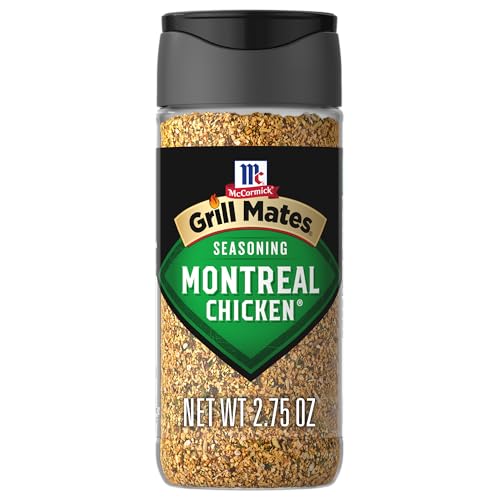
Bold blend of garlic, salt, onion, peppers, orange peel, paprika

FLAVORFUL BLEND: McCormick Grill Mates Montreal Chicken Seasoning offers vibrant flavors for exceptional recipes with an unmatched, made-from-scratch taste; robust with a kick of spice
Monitoring Temperature and Doneness
How do you know when your chicken thighs’ve reached peak juiciness and food safety? You’ll rely on accurate readings from an instant-read thermometer inserted into the thickest part without touching bone. Pull your thighs at 160°F, allowing 5–10 minutes of carryover cooking to reach the safe 165°F target. This technique prevents overcooking while ensuring food safety.
For ideal tenderness, aim for 185°F where connective tissue breaks down completely. Bone-in, skin-on thighs benefit from higher temperatures of 180–195°F, while boneless, skinless versions reach perfect texture at 170–175°F. Remove the chicken from the marinade, shaking off any excess before placing it on the grill. Always pat your thighs dry with paper towels before grilling to achieve maximum skin crispness. Look for models with ±0.5°F accuracy like the ThermoWorks Thermapen ONE to ensure your readings are precise enough for perfect results.
Visual cues matter too: golden-brown, crispy skin signals doneness. Fat renders visibly, juices clarify, and meat practically falls from bone at proper temperatures. Skip the hood gauge—grill surface thermometers provide superior accuracy. For hands-off monitoring during longer cooks, consider wireless probes with apps that let you track temperature without constantly opening the grill lid. If you need extended range to monitor from inside your house, radiofrequency thermometers like the FireBoard Pulse or ThermoWorks RFX deliver more reliable through-wall connectivity than Bluetooth-only models. Routine maintenance like grease-trap cleaning helps your grill maintain consistent temperatures for accurate cooking results. After cooking, use a bristle-free grill brush to clean your grates safely, eliminating the risk of metal bristles contaminating your food.

【Fast & Accurate】Our meat thermometer digital delivers accurate readings within ±1°F in just 1–2 seconds, with a wide temperature range of -58°F to 572°F (-50°C to 300°C). No more waiting over the heat - know your food's exact temperature instantly.

【8X Faster + 4X More Precise】: Upgraded with an industrial-leading professional thermocouple sensor, Themomonster meat thermometer digital with NIST certified ±0.5℉ precision provides you the accurate temperature of your food in just 0.5 Seconds.

【No More Overcooking, 8X Faster】Ultra-fast 0.5 second instant read meat thermometer delivers accurate temperature instantly, helping you avoid overcooking and achieve perfect doneness every time.
Resting and Serving Your Grilled Thighs
Removing your thighs from the grill’s heat isn’t the final step—it’s where the magic of moisture retention truly happens. You’ll tent them loosely with aluminum foil, allowing carryover temperature impact to raise internal temps from 165°F to 170-175°F. This critical five to ten-minute rest redistributes juices throughout the meat while connective tissue breaks down, ensuring tenderness and juiciness with every bite. Cooking to the 170-175°F range makes the meat pull away from the bone easily, improving both texture and presentation.
For flavor enhancement techniques, transfer your rested thighs to a serving platter and garnish with fresh parsley for added flavor and visual appeal. Pair your chicken thighs with rice, roasted vegetables, salads, soups, and pastas to create a complete meal that complements the rich, juicy meat. You can also add grilled pineapple slices as a sweet accompaniment, achieving golden grill marks by cooking them for 3 to 5 minutes per side. Slice only after resting completes—cutting prematurely causes precious juices to spill away. Serve hot alongside grilled vegetables, salad, or rice, paired with your favorite BBQ sauce. For best results, place items perpendicular to the grill grates to prevent them from falling through and to achieve professional-looking sear marks. This strategic resting protocol transforms properly cooked chicken thighs into restaurant-quality results. If you have leftovers, reheat them in an air fryer or oven with a spray of cooking oil to maintain the same juiciness and texture you worked hard to achieve. Store any remaining grilled chicken thighs in the refrigerator for three to four days at or below 40°F to maintain food safety.