
You’ll smoke bratwurst for 50-60 minutes total at 225°F, flipping halfway through 20-25 minute intervals. Monitor your brats’ internal temperature with an instant-read thermometer, targeting 160°F for proper doneness. You’re looking for a rich reddish-brown exterior and firm texture when squeezed. Keep your smoker temperature consistent to preserve essential juices. Thaw frozen brats beforehand for even heat distribution. There’s quite a bit more to master about pellet selection, preparation techniques, and serving methods that’ll elevate your results.
Smoking Duration and Temperature Guidelines
Because temperature directly influences both cooking time and smoke absorption, you’ll want to establish your target range before placing brats on the grates. At 225°F, you’re engaging in low-and-slow smoking that maximizes smoke thickness and moisture retention. You’ll smoke your brats for 50-60 minutes total, flipping halfway through the 20-25 minute intervals.
Cooking time variations depend on several factors: brat size, fat content, and your smoker type. Electric smokers maintain consistent temperatures, while charcoal units fluctuate more dramatically. Lower temperatures extend duration but enhance smoke flavor substantially. Avoid pre-boiling your brats, as this strips essential juices that contribute to final texture and taste. Thaw frozen brats beforehand to guarantee even heat distribution throughout your smoking session. Maintaining a steady temperature throughout the process helps achieve consistent results similar to smoking larger cuts of meat. Like larger cuts of meat such as brisket, the temperature stall can occur during the smoking process, which is why monitoring internal temperature becomes essential. However, the most reliable indicator of doneness is reaching an internal temperature of 160°F rather than relying solely on time estimates. For optimal results, plan to rest your brats for 5 to 10 minutes after smoking to seal in the juices. Some enthusiasts recommend using beer and onions in a parboiling liquid if you choose that method, though smoking is generally preferable. The gentle heat of smoking prevents the casing from bursting and ensures all of the juice remains inside the bratwurst. Smoking brats is a better method than boiling them in beer, which allows the natural pork flavors to develop more fully.
Internal Temperature Targets and Doneness
Once your bratwurst reaches the target smoking duration at 225°F, you’ll need to verify doneness through internal temperature measurement rather than relying solely on elapsed time. Use an instant-read thermometer to confirm your bratwurst achieves 160°F (71°C) internally, the safe minimum for sausage. Beyond temperature, you’ll recognize proper doneness through firmness indicators—the meat should feel firm when gently squeezed with tongs. Visual doneness signs include a rich reddish-brown exterior coloring and turning brats to achieve even color on all sides, and fully cooked interior sections visible when breaking open a brat. Similar to smoking larger cuts like brisket, maintaining consistent smoking temperature control throughout the process helps preserve the natural juices that contribute to flavor and prevents the tender casing from splitting during the cooking process. Maintaining the smoking temperature under 190°F helps preserve the natural juices that contribute to flavor and prevents the tender casing from splitting during the cooking process. For additional moisture retention during extended cooking times, consider using broth or beer to enhance the juices that keep bratwurst tender and flavorful. To avoid frequent lid opening that compromises the smoking environment, plan your cooking timeline in advance similar to how denser cuts like ribs and brisket require hours of patience for optimal results. Keeping your smoker’s vents and dampers properly adjusted maintains the consistent heat needed for even cooking throughout your bratwurst. Before you begin smoking, ensure your smoker’s propane connection is secure by checking for leak-free connections to prevent gas safety issues. These complementary methods guarantee you’ve reached ideal doneness while preventing common pitfalls like casing splits and moisture loss that occur with excessive heat exposure, which simultaneously compromises flavor intensity and texture quality.
Pellet Smoker Specific Instructions
Pellet smokers require three essential preparation steps before you introduce your bratwurst to the cooking chamber. First, preheat your unit to 225-250°F and let smoke production stabilize. Second, keep your brats refrigerated until the smoker reaches steady temperature, which guarantees better smoke absorption. Third, activate high smoke mode if available.
Position uncooked brats directly on grill grates without overcrowding. Smoke for 20-25 minutes initially, then flip and continue for another 20-25 minutes at 225°F. Your total low-and-slow phase reaches 50-60 minutes. Use a meat thermometer to check that your brats reach 160°F for optimal juiciness and food safety.
Consider smoking technique adjustments by raising temperature to 275°F or 300°F after the initial phase to shorten cooking time while building color. Different pellet blends affect smoke intensity, so monitor your results accordingly. For enhanced smoke production, consider using a smoke tube for pellet grills to boost your smoker’s output. Modern pellet smokers with WiFi temperature stability maintain precise heat control within +/-15°F, ensuring consistent results across multiple cook sessions. Top brands like Traeger and Pit Boss offer reliable models ranging from budget-friendly options to premium choices with advanced connectivity features. Budget-friendly entry-level models like the Pit Boss PB440D2 offer reliable temperature control without premium price tags. Z Grills models such as the 700D3 and 700D4E provide competitive alternatives with strong temperature stability and fuel efficiency at sub-$600 to mid-price points. For best results, Bear Mountain Premium BBQ Pellets are recommended to enhance the flavor profile of your bratwurst. Total duration typically ranges from one to two hours depending on brat size and smoker fluctuations.
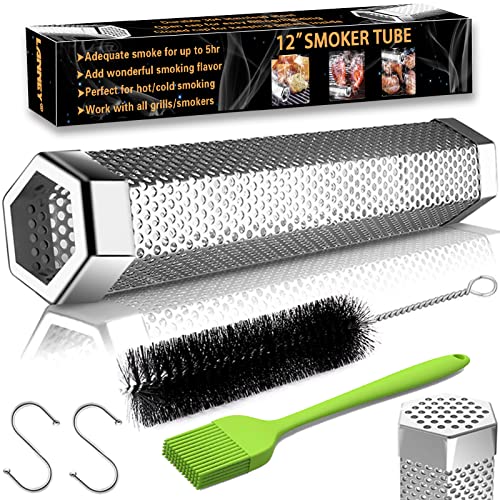
【BILLOWING SMOKE AND BIG CAPACITY】 The pellet smoker tube has massive density diffusion holes on its body. So the smoker tube can let air come in, diffusing smoke efficiently and evenly to your food. The perforated design and hexagon shape of tube smoker allow the pellets stay lit the fully burn to provide constant smoke. With a length of 12 inches large capacity, the wood pellets smoker tube is capable of holding enough pellets and will produce abundant quantity of smoke up to 5hrs

【304 Stainless Steel Materiai】This smoker tube is made of 100% high-quality 304 stainless steel, anti-rust and heat-resistant, durable and sturdy, not be broken or bent easily after repeated use. With 1 12inch heat resistant 304 stainless steel smoker tube, 1 tube brush for efficient cleaning,1 oil brush, so you brush oil more convenient, 1 S hooks for hanging the smoker tubeKeep you and your family in healthy
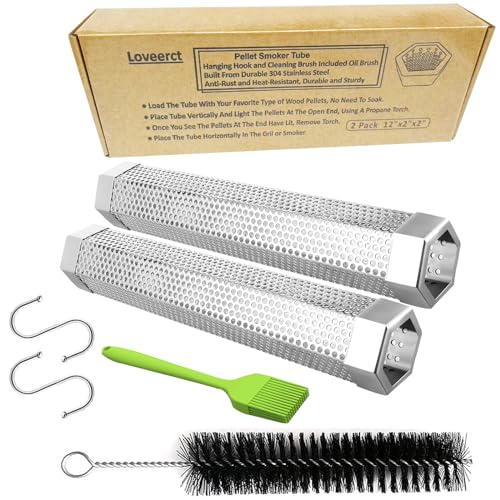
【UP TO 5+ HOURS BILLOWING SMOKE】Our unique hexagonal smoke tube stays firmly in place on any grill grate and won't roll. Strategically placed air holes ensure optimal airflow for complete pellet combustion, producing consistent, thick smoke for over 5 hours to infuse deep, delicious smoky flavor into your food
Wood Chip and Pellet Selection
Now that you’ve mastered the smoking technique, selecting the right wood pellets becomes your next lever for controlling flavor and smoke intensity. You’ll find that apple, hickory, and cherry pellets work exceptionally well for bratwurst, each delivering distinct profiles without overwhelming delicate sausage meat. Avoid mesquite entirely—its dominant smoke proves too aggressive for this application.
Consider blended wood pellet recipes combining hickory, cherry, and maple to achieve full-body flavor suitable for various bratwurst preparations. Pecan adds subtle nuttiness when paired strategically with fruit woods. The forming die rotates while pressurizing the wood and a knife cuts pellets into uniform sizes that burn consistently. Top performers like Traeger and Lumberjack have been tested for their consistency and minimal ash production in head-to-head comparisons. Different flavor profiles from various wood blends can be explored to discover your preferred smoke intensity for sausage smoking.
For pellet storage tips, purchase 100% natural pellets without additives or binders, which guarantee consistent smoke generation and minimal creosote buildup. Store pellets in cool, dry conditions to maintain quality and burn characteristics throughout your smoking session. For temperature control and cleaner burning properties, 100% charcoal pellets like Royal Oak offer superior heat output compared to wood blends alone. Avoid softwoods like pine, as they produce bitter residue that compromises the sausage’s delicate taste. Matching wood choice to your protein and cook time ensures optimal flavor development without overpowering the delicate sausage profile.


APPLE WOOD FIRED FLAVOR: With Traeger Apple Hardwood Pellets, naturally enhance baked goods, chicken, and pork with a subtly sweet, fruity flavor.

HICKORY WOOD FIRED FLAVOR: Traeger Hickory Hardwood Pellets are great for naturally enhancing beef, chicken, pork, and veggies with full-bodied, bold flavor. So it should come as no surprise that Hickory’s assertive flavor is one of the most popular choices for classic BBQ cooking.
Preparation Methods and Serving Recommendations
Before you place your bratwurst on the grates, you’ll need to preheat your smoker to 225-250°F and allow it to stabilize completely. Keep raw brats refrigerated until your smoker reaches steady temperature, ensuring ideal sausage texture development during smoking.
You can employ two primary preparation methods. Direct smoking involves placing uncooked brats on grates for 40-50 minutes total, flipping halfway through. Alternatively, braise brats in a beer and onion mixture within a cast-iron skillet for 15 minutes per side at 225°F, then smoke for 30-45 minutes more to enhance flavor profiles. Consider adding jalapenos and red onions as a flavorful enhancement to your bratwurst preparation. Using flat metal skewers can help keep your bratwurst and vegetable accompaniments securely positioned during the smoking process.
When serving, arrange brats on toasted buns with sauerkraut, chopped onions, and mustard. Hold finished brats in warm beer bath at low temperature. For optimal food safety, use a meat thermometer to verify your bratwurst has reached the proper internal temperature before serving. Always ensure your grill’s gas regulator connection is secure before cooking to maintain consistent heat and prevent leaks. To protect your outdoor deck from grease splatters and heat damage during smoking, consider using a grill mat underneath your smoker setup, which should be placed on non-combustible materials to ensure fire safety. For efficient grate cleaning after smoking, employ bristle-free coiled designs that safely remove stubborn residue without leaving wire fragments on your cooking surface. Store leftovers in airtight containers up to four days, reheating wrapped in foil at 300°F for 6-8 minutes.