
You’ll start by selecting skin-on wild salmon fillets and brining them 4-24 hours in a base of water, brown sugar, and kosher salt. After thoroughly drying and air-curing for 2-4 hours to form a pellicle, you’ll place them skin-side down on preheated grates at 180-225°F. Monitor internal temperature carefully while maintaining consistent heat, using 100% hardwood pellets for excellent smoke flavor. The specifics of temperature control, timing adjustments, and achieving that perfect doneness level require a deeper understanding of your grill’s capabilities.
Essential Equipment and Supplies
Before you can smoke salmon successfully, you’ll need to assemble the right equipment to guarantee consistent results and food safety. Your pellet grill becomes the foundation for consistent temperature management, requiring preheating to 180°F-225°F before cooking. Invest in a quality meat thermometer with a probe to monitor internal temperatures accurately in the thickest salmon section. You’ll want wire racks and rimmed baking sheets for easy handling and prep work. Stock your pellet storage guidelines by choosing 100% hardwood pellets—alder for mild flavor or hickory for intensity—ensuring low moisture content prevents bitterness. Mild woods like alder, apple, or cherry are preferred for smoking salmon to avoid overpowering the delicate fish flavor. Using a fillet with the skin on creates a barrier between the hot grill and the fish to protect your salmon during cooking. Include a sharp fillet knife for precise portioning, a nylon grill brush for grate cleaning, and a 26-inch cutting board for fillets. If you’re planning longer smoking sessions, consider keeping wood chunks on hand as they burn slower than chips and provide more consistent smoke. Ensure your grill has adequate rack space to accommodate multiple fillets without crowding, which allows smoke to circulate evenly around each piece. Don’t forget clean paper towels to pat the salmon dry before seasoning, which helps the rub adhere better and promotes proper smoke absorption. For an alternative smoking method, you can also use cedar planks that have been soaked in water for 1-3 hours to prevent burning while imparting a subtle smoky wood flavor. After curing your salmon, allow it to air-dry until a pellicle formation develops on the surface, creating a tacky layer that helps smoke adhere more effectively to the fish. These essentials establish your foundation for professional-grade smoked salmon.

SIGNATURE BLEND WOOD FIRED FLAVOR: The flavors of hickory, maple, and cherry hardwoods combine for in our Traeger Signature Blend Hardwood Pellets for flavor that can take on just about anything you cook; From classic BBQ meats, to fish and veggies, this versatile blend gives you full-bodied flavor you'll go back to time and time again

Time to Fire It Up –– Produce superior flavor that will drop jaws and make mouths water. These temperature chart pellet grill accessories include everything you need to know to hone your skills. From suggested wood pairings to internal temperature, smoke like a pro with these grill accessories for outdoor grill setups

You Need This - Smoking meat goes wrong fast. One brisket pulled at 175 instead of 195 and twelve hours of work are gone. This meat smoking guide gives you the temperatures and cook times for brisket, baby back ribs, pork shoulder, whole chicken, turkey, and 23 more cuts on the chart.
Preparing Your Salmon for Smoking
To achieve superior results with your pellet grill, you’ll need to start with high-quality salmon that’s been properly selected and portioned. Choose wild-caught king or sockeye fillets with bright, firm flesh and skin-on to prevent sticking. Ask your fish monger to remove pin bones for a better eating experience. Look for firm, springy flesh with moist, shiny skin to ensure optimal quality for smoking.
Cut your salmon into uniform thickness of 1-2 inches at the center for consistent smoke penetration and even cooking. After brining, rinse thoroughly under cold running water for 1-2 minutes to remove excess salt and sugar, then pat dry immediately with paper towels.
Air-dry your salmon on a wire rack for 2-4 hours in a cool area to form the pellicle—that tacky surface that seals the fish and enhances moisture retention during smoking. Before placing salmon on the grill grates, ensure they’re clean and rust-free to prevent metallic off-flavors and maintain food safety. Finally, coat the flesh side lightly with Dijon mustard and season with salt and pepper for ideal adhesion and flavor development. Use a meat thermometer to monitor doneness throughout the smoking process, removing the salmon when it reaches your desired internal temperature. For the most accurate temperature readings, consider using an instant-read thermometer that provides quick feedback without leaving the probe in the fish during the entire cook. If you plan to smoke extra salmon for later use, consider portioning it into meal-sized servings before smoking for easier storage and minimal waste. When serving your smoked salmon as an appetizer, consider using bamboo skewers to create bite-sized portions that are easy for guests to handle.
Brining Techniques for Maximum Flavor
Since brining is where you’ll establish your salmon’s foundational flavors, mastering this technique directly determines your final product’s quality. You’ll start with proper ingredient ratios: 4 cups water, 1 cup brown sugar, and 1/3 to 1 cup kosher salt create your base. Enhance this foundation with soy sauce for umami, wine for acidity, and dill or thyme for herbaceous notes.
Your brine time variations greatly impact flavor intensity. Minimum brining takes 4 hours for basic penetration, while 8 hours develops deeper complexity. Extending to 24 hours amplifies profiles without oversalting. Similar to scallop preparation, thoroughly drying your salmon after brining is essential for achieving proper texture and smoke absorption. Guarantee complete submersion using glass dishes or food-safe plastic bags, then refrigerate your fillets flat. Keeping the skin on your salmon helps maintain structural integrity throughout the brining and smoking process. The brine penetrates the flesh, resulting in tender and flavorful salmon ready for the pellet grill. Once smoked, your salmon will stay fresh for about a week when properly stored in an airtight container in the refrigerator. Consider placing a grill mat on your deck to protect the surface from grease splatters and heat damage while smoking. While some grillers line their grates with aluminum foil for easier cleanup, this practice can restrict airflow and heat, leading to uneven cooking and potentially affecting your salmon’s texture. For optimal smoke flavor, choose 100% natural hardwood pellets like apple, cherry, or maple that complement salmon’s delicate taste without overpowering it. This methodical approach assures evenly flavored salmon ready for smoking.

MAPLE BROWN SUGAR FLAVOR Rich maple and brown sugar blend for smoked salmon, trout, steelhead and other fish with sweet, savory flavor.

ALL-PURPOSE FISH BRINE Balanced herbs and spices for smoked salmon, trout, steelhead, halibut, cod and many favorite fish.

CLASSIC HERB & SPICE BLEND Traditional seasoning crafted for smoked trout, salmon, steelhead and other freshwater fish.
Setting Up Your Pellet Grill
Your pellet grill’s foundation depends on proper initialization, which begins with connecting to a 240V AC power supply and flipping the switch—you’ll see it flash three times to confirm startup. Next, set the grill to SMOKE and verify the auger turns slowly while air flows into the fire-pot. Before proceeding with initial startup checks, you’ll need to address hopper fill levels by clearing debris and adding pellets to your desired level. Clear the hopper thoroughly to prevent contamination. For smoking salmon, plan on roughly 1 pound of pellets per hour at low heat settings. Store opened pellet bags in sealed buckets to maintain freshness and protect against moisture. Most pellet grills ignite at the press of a button, so familiarize yourself with your specific model’s ignition procedure before your first cook. The digital controller monitors temperature via sensors and precisely regulates pellet feeding and airflow, enabling consistent cooking results throughout your smoking session. If pellets aren’t feeding properly to the burn pot, use the “prime” function to speed delivery and prevent ignition errors. Running through the full shutdown cycle after your initial startup ensures the grill is properly calibrated before you begin cooking. Before loading your salmon, test for hot spots by placing bread slices across the grates to identify uneven heating areas. After completing your smoking session, allow the grill to cool completely before removing all racks and drip pans for thorough cleaning with soapy water. Quality pellet grills feature auto-start ignition systems that eliminate the need for lighter fluid or manual lighting procedures. These preparation steps guarantee consistent temperature control and reliable performance throughout your smoking session.
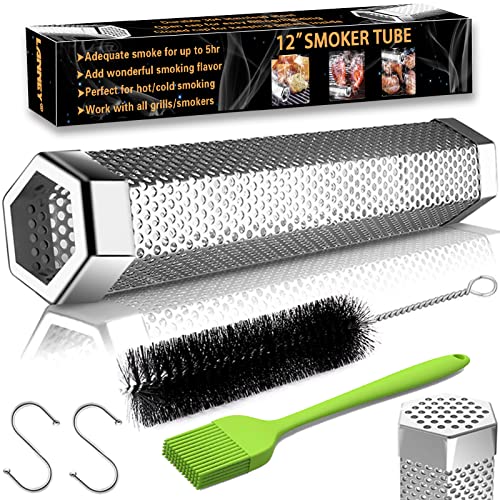
【BILLOWING SMOKE AND BIG CAPACITY】 The pellet smoker tube has massive density diffusion holes on its body. So the smoker tube can let air come in, diffusing smoke efficiently and evenly to your food. The perforated design and hexagon shape of tube smoker allow the pellets stay lit the fully burn to provide constant smoke. With a length of 12 inches large capacity, the wood pellets smoker tube is capable of holding enough pellets and will produce abundant quantity of smoke up to 5hrs

Keep the Cook Moving: Check wood pairings, smoker settings and approximate cooking times at a glance instead of searching your phone.

Package includes 1pcs black grill gasket, perfect for sealing air leaks on your grill.
The Smoking Process Step-by-Step
Once you’ve completed your grill setup, the smoking process begins with properly preparing your salmon through brining—a critical step that enhances flavor and texture. You’ll choose wood pellets like alder, oak, or maple to establish your desired smoke profile. After brining, pat your fillet dry and air-dry it on a wire rack for 10-13 hours to develop a pellicle.
Position your salmon skin-side down at the grill’s center, leaving adequate spacing for air circulation. Insert a probe thermometer into the thickest portion. Smoke at 180°F for 3-3.5 hours, targeting 140°F internal temperature, or accelerate to 225°F for 50-60 minutes until reaching 145°F. Regulating smoke density ensures even cooking. Always verify doneness with your thermometer rather than relying on time estimates. Modern pellet smokers with PID controllers maintain stable temperatures throughout extended smoking sessions, ensuring consistent results. Grills with WiFIRE connectivity allow you to monitor and adjust temperatures remotely from your smartphone for added convenience. Top-tier models like the Traeger Pro 575 deliver temperature stability within +/-15°F, which is essential for achieving perfectly smoked salmon every time. Many pellet grills feature a 20 lb. pellet hopper that conveniently matches standard pellet bag sizes, eliminating the need for storage of partial bags. For serious enthusiasts seeking superior build quality, the Rec Tec RT-700 and Yoder Smokers YS640S represent flagship high-end options that excel at long smoking sessions. Rest your salmon for 10 minutes post-smoking. For optimal results, monitor your smoking time carefully as smaller salmon pieces may require less cooking time than larger fillets. Farm-raised salmon works particularly well for smoking because the extra fat content helps keep the fillet tender and moist throughout the cooking process.

Gourmet Blend Pellets: Bear Mountain all-natural hardwood BBQ pellets deliver a sweet, tasty finish to red meats, poultry, and vegetable dishes, supplied as two 20-pound bags.
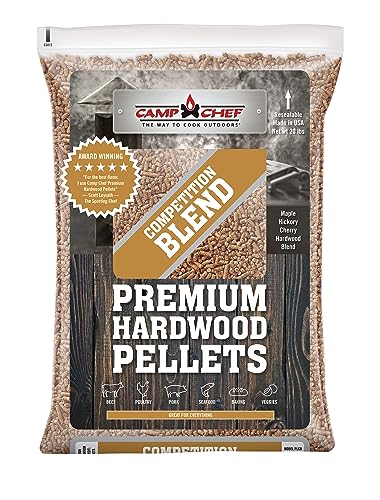
Maple, Hickory, and Cherry Blend: Competition blend is the Jack of All Trades. It's great with poultry, pork, baking, veggies, beef, and seafood. HARDWOODS: Camp Chef Hardwood bbq pellets are not a byproduct. They are 100% pure virgin hardwoods.

KINGSFORD CRAFTSMOKE PREMIUM WOOD PELLETS: Introducing Craftsmoke, the premium line of natural hardwood pellets, crafted in small batches for the chef in all of us; pack may vary
Achieving Perfect Temperature and Doneness
Getting your salmon to the perfect doneness hinges on understanding both target temperatures and the science behind carryover cooking. You’ll want to remove your salmon at 135°F-140°F, allowing residual heat to push it toward the USDA-recommended safe threshold of 145°F.
Internal temperature monitoring requires a digital meat thermometer inserted into the thickest portion of your fillet. Avoid lifting the grill lid excessively, as this causes temperature fluctuations that compromise precision. For optimal results, maintain your pellet grill at 215°F throughout the smoking process to ensure consistent heat and smoke delivery.
Beyond thermometer readings, assess texture and appearance visually. Your salmon should flake easily with a fork, displaying opaque flesh rather than translucent appearance. The surface should feel nearly dry, indicating proper moisture evaporation. Using a meat thermometer is essential to verify your salmon has reached the proper temperature for safe consumption. After cooking, allow your salmon to rest for an hour to let the juices redistribute throughout the fish. For the best results, smoke your salmon at the lowest possible temperature between 130-150°F to achieve optimal flavor and texture development. Pellet grills function as wood pellet-fired convection ovens, using a heating baffle to distribute heat evenly and produce authentic wood-fired flavor throughout the cooking process. Modern smokers with Bluetooth connectivity allow you to monitor temperatures remotely through smartphone apps, ensuring precision without constantly checking your grill. This combination of precise temperature control and sensory evaluation guarantees moist, tender results that melt in your mouth. Once your salmon is properly smoked and cooled, it keeps for up to three days in the refrigerator or two months in the freezer when properly wrapped.

Instant Read Meat Thermometer | Our instant read thermometer features a temperature probe and advanced, highly accurate technology with a 1-2 second response time. Our instant read food thermometer comes pre-calibrated with instructions and a meat temperature chart, plus a recalibration feature if needed.

【Fast & Accurate】Our meat thermometer digital delivers accurate readings within ±1°F in just 1–2 seconds, with a wide temperature range of -58°F to 572°F (-50°C to 300°C). No more waiting over the heat - know your food's exact temperature instantly.

【8X Faster + 4X More Precise】: Upgraded with an industrial-leading professional thermocouple sensor, Themomonster meat thermometer digital with NIST certified ±0.5℉ precision provides you the accurate temperature of your food in just 0.5 Seconds.