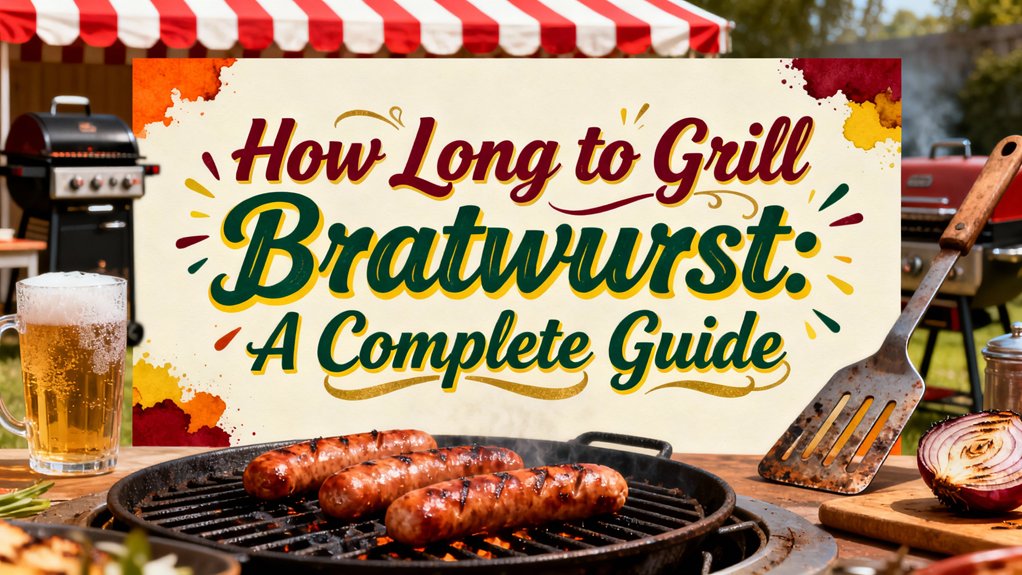
You’ll grill bratwurst for 15-20 minutes total, turning frequently to guarantee even cooking. Target an internal temperature of 160°F using an instant-read thermometer, pulling at 155°F to account for carryover cooking. Your heat source matters: gas grills work best at 300-350°F, while charcoal requires a two-zone setup with indirect then direct heat. Pellet smokers at 225-250°F deliver rich flavor through smoke infusion. For assured safety without sacrificing juiciness, consider parboiling or sous vide beforehand. The specifics of each method reveal critical timing distinctions that’ll transform your results.
Understanding Internal Temperature Requirements
You’ll need to hit 160°F (71°C) as your target internal temperature for grilled bratwurst—that’s the USDA’s non-negotiable standard for ground meat and sausage products. This temperature eliminates pathogens that cause foodborne illness in fresh brats.
Account for carryover cooking by pulling your bratwurst at 155°F. The internal temperature will continue rising several degrees after removal from heat, reaching your safe endpoint without overdrying the meat. Use an instant-read thermometer with proper thermometer calibration to verify the thickest section accurately. For optimal results, grill at 250°F to ensure the casing remains tender and doesn’t split during the cooking process. Aim to grill your brats for 15-20 minutes, turning them a quarter turn until each side has a rich reddish-brown color.
If you’re using sous vide preparation beforehand, you’ll still need to sear your pre-cooked bratwurst and confirm it reaches 160°F. Some cooks prefer parboiling bratwurst in beer or broth for 10-15 minutes until they reach about 150°F before grilling for approximately 5 minutes to add char and lock in juiciness. This dual verification guarantees safety while maintaining optimal texture and juiciness throughout the casing. Consider poking holes in the casing before cooking to prevent bursting from internal pressure buildup. After grilling, you can rest your brats in a beer bath with onions to keep them warm and add extra flavor. Like grilling any meat, internal temperature serves as the most reliable indicator for doneness rather than relying solely on cooking time. Maintaining clean ash catchers on your charcoal grill ensures consistent airflow and stable temperatures throughout the cooking process.

Fast & Accurate: Get precise readings in just 1 second with ±0.9°F accuracy. NSF Certified for trusted food safety, this digital food thermometer features a 4.3 inches food-grade stainless steel meat probe, perfect for grilling, frying, baking, making candy and more

【8X Faster + 4X More Precise】: Upgraded with an industrial-leading professional thermocouple sensor, Themomonster meat thermometer digital with NIST certified ±0.5℉ precision provides you the accurate temperature of your food in just 0.5 Seconds.

【Fast & Accurate】Our meat thermometer digital delivers accurate readings within ±1°F in just 1–2 seconds, with a wide temperature range of -58°F to 572°F (-50°C to 300°C). No more waiting over the heat - know your food's exact temperature instantly.
Gas Grill Cooking Times and Techniques
Because gas grills deliver consistent, controllable heat, you can achieve the ideal medium temperature range of 300 to 350°F without the heat spikes that charcoal creates. Oil your grates thoroughly to prevent sticking and guarantee proper heat contact with each bratwurst.
Preheat your grill before placing the bratwurst on the cooking surface. Use tongs to turn your bratwurst every few minutes throughout the 15 to 20-minute cooking window. This frequent rotation distributes heat evenly across all sides, promoting consistent browning while eliminating casing splits that plague charcoal-grilled bratwurst. For enhanced flavor, consider adding peppers and onions to a disposable foil pan alongside your bratwurst during the final cooking stages.
During the final minutes, increase heat to medium-high for deeper char development. Close your lid to trap heat and maintain temperature consistency. This technique creates visual appeal while preserving the interior juiciness you’re after. If you’re cooking on a portable gas grill like the Weber Q1200, a dedicated grill table provides the stability and workspace needed for managing multiple bratwurst and toppings simultaneously. Many portable models include quality cast iron grates that retain heat effectively for achieving consistent browning and char marks on bratwurst. When selecting a portable grill for bratwurst, prioritize models with reliable ignition systems to ensure quick startups without the frustration of repeated button-pressing at tailgates or campsites. Verify doneness by checking that your bratwurst reaches an internal temperature of 160 degrees using a digital meat thermometer, as external charring alone does not guarantee the brats are fully cooked through. Protect your gas grill investment with a durable grill cover that resists weather elements and UV damage to ensure consistent performance for years of bratwurst grilling. Position a heat-resistant grill mat beneath your gas grill to shield deck surfaces from grease drips and prevent staining on wood or composite materials.
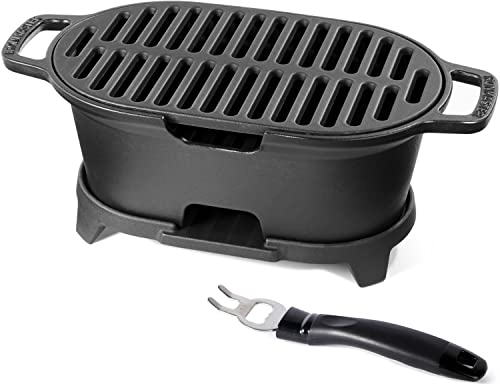
Heads Up! This hefty cast iron grill isn’t for lightweight seekers. Prone to rust without care (needs quick brush, dry, and oil wipe)—but with basic upkeep, it lasts a lifetime! Ideal for 2 people—too small for big groups. We’re transparent to help you find your perfect match.
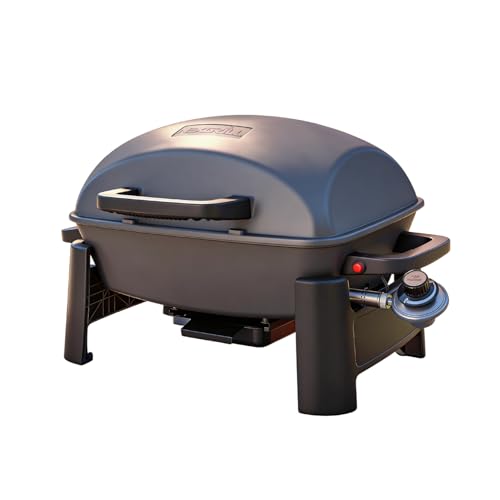
LIGHTWEIGHT CAST ALUMINUM FRAME: Constructed from durable cast aluminum, this small propane grill offers superior heat distribution and retention, while also resisting rust and corrosion

PORTABLE: The stack ‘n go design with a rubberized comfort-grip handle makes it easy to carry, store, and set up anywhere. Never grill without a prep area again!
Charcoal Grill Methods and Timing
While gas grills offer predictable temperature control, charcoal grilling demands a different approach—one that rewards careful preparation and active management. Start with charcoal preparation by allowing briquettes a 10-minute burndown until grey ash forms on the surface, ensuring even, hot embers before placing brats. For faster, more reliable lighting, use a charcoal chimney starter with newspaper or starter cubes rather than chemical lighter fluid that can impart unwanted flavors.
For ideal results, employ a two zone setup by spreading coals on one side, leaving the opposite side coal-free for indirect heat. Cook your bratwurst over indirect heat for approximately 15 minutes with frequent turning, then transfer to the hot side for final searing until charred in spots. This method extends your total cooking time to around 20 minutes while ensuring thorough, even cooking. Monitor your grill lid position based on heat levels—open if too low, closed if excessive. Target an internal temperature of 160 degrees Fahrenheit for food safety. While briquettes excel at providing consistent medium heat for extended cooking sessions, lump charcoal can reach higher temperatures for more aggressive searing if desired. Before placing your brats on the grill, clean and oil the grates to prevent the casings from sticking and tearing during cooking. The burning charcoal cooks through radiant heat from glowing embers, conduction from the hot grate, and convection from circulating hot air inside the chamber. To maintain optimal heat throughout the cooking process, adjust vents and dampers to control oxygen supply and regulate temperature as needed.

FAST CHARCOAL LIGHTER PULLS STEADY AIRFLOW FOR EVEN IGNITION: Helps get briquettes lit quickly and more evenly by pulling steady airflow through the chimney, reducing time from lighting to cooking for grills, smokers, and kettles.

Designed to quickly produce hot coals for cooking

COMPACT SIZE FOR SMALL TO MEDIUM GRILLS: Measures 8.1 x 5.7 x 10 inches and is built for small to medium sized grills, not full-sized ones. Check these dimensions against your grill before ordering. Sits on top of a cold, clean grill.
Pellet Grill Smoking Process
How does a pellet smoker differ from traditional charcoal grilling? Pellet smokers offer precise temperature control and consistent smoke infusion methods that charcoal can’t match.
You’ll preheat your pellet smoker to your preferred temperature range of 225-250°F, ensuring the startup completes before placing brats. This prevents thick white smoke that’d compromise flavor. Position brats directly on grill grates using indirect heating to prevent bursting. Lightly coat them in olive oil for moisture retention.
Smoke for 20-25 minutes before flipping, then continue for another 25-35 minutes until reaching 165°F internal temperature. You can raise heat to 275°F midway for faster finishing. Some methods apply 270°F with oak wood throughout the 60-minute process. The low temperature approach ensures your brats develop tenderness while absorbing maximum smoke flavor without drying out. Pellet grills burn compressed wood pellets that provide enhanced smoky flavors while requiring less manual tending than traditional methods. Wood pellets feed from a hopper via an auger to a fire pot ignited by a rod, with a fan circulating heat and smoke for consistent cooking. Advanced models feature PID controllers for maintaining precise temperatures during extended cooking sessions. Quality pellet grills like the Traeger Pro 22 maintain +/-15°F temperature control for consistent results throughout your cook. The heating baffle distributes heat evenly throughout the cooking chamber, functioning similarly to a convection oven for consistent results.
For a crisp exterior, sear at 500°F for 1-2 minutes per side after smoking completes.

Gourmet Blend Pellets: Bear Mountain all-natural hardwood BBQ pellets deliver a sweet, tasty finish to red meats, poultry, and vegetable dishes, supplied as two 20-pound bags.

SIGNATURE BLEND WOOD FIRED FLAVOR: The flavors of hickory, maple, and cherry hardwoods combine for in our Traeger Signature Blend Hardwood Pellets for flavor that can take on just about anything you cook; From classic BBQ meats, to fish and veggies, this versatile blend gives you full-bodied flavor you'll go back to time and time again
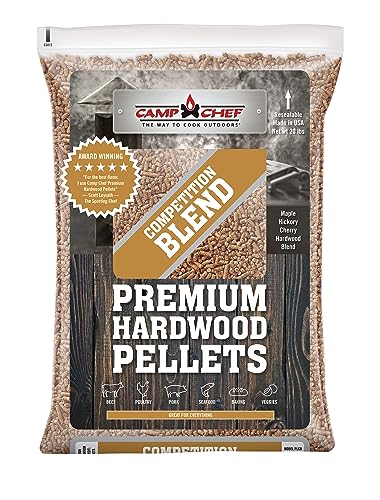
Maple, Hickory, and Cherry Blend: Competition blend is the Jack of All Trades. It's great with poultry, pork, baking, veggies, beef, and seafood. HARDWOODS: Camp Chef Hardwood bbq pellets are not a byproduct. They are 100% pure virgin hardwoods.
Preparation and Safety Best Practices
Now that you understand the controlled environment a pellet smoker provides, you’ll need to master the fundamentals of temperature management and safety protocols that apply across all grilling methods. Implement flame control strategies by maintaining medium-low heat between 300-350 degrees Fahrenheit, preventing casings from bursting and ensuring even cooking. Use a two-zone configuration, dedicating one side to low or no heat for temperature modulation.
Prioritize moisture retention techniques by avoiding pre-grilling punctures or slicing, which cause juices and flavorful fats to escape. Oil your grates thoroughly to prevent sticking and promote even heat distribution. When oiling grates for high-heat grilling, choose high-smoke-point oils like refined avocado, canola, or grapeseed oil that can withstand elevated temperatures without burning. Never use lighter fluid; instead, employ charcoal starters for safe, clean fires that won’t impart a synthetic taste to your brats. If you don’t have a chimney starter, arrange charcoal in small piles over fire starters or use paper towels soaked with cooking oil to ignite the coals safely. For reliable ignition, consider using natural fire starters like ZIP cubes or Kamado Joe products that provide consistent heat output without chemical additives. Ensure proper airflow by fully opening the grill vents to maintain consistent temperature throughout the cooking process. For optimal flavor enhancement, consider pre-cooking the bratwurst in a beer and water broth for 15 minutes before grilling to fully cook the sausage and infuse it with additional flavor. Insert an instant-read thermometer into the thickest section, targeting 160 degrees Fahrenheit for ground pork bratwurst, ensuring food safety before serving. When finished grilling, safely extinguish your charcoal by closing all vents completely to cut off the oxygen supply and allow the coals to cool naturally.

Graza Frizzle Oil Made from 100% Olives: A neutral-flavored, high heat cooking oil made from 100% peak harvest olives. With a smoke point of up to 450 degrees, Frizzle is your high-heat kitchen hero. 1 bottle/750ml.

Graza Frizzle Oil Spray Made from 100% Olives: A neutral-flavored, high heat cooking oil made from 100% peak harvest olives. With a smoke point of up to 450 degrees, Frizzle is your high-heat kitchen hero. 1 can/5 oz.

Light Buttery Flavor That Elevates Every Meal: Algae Cooking Club Chef-Grade Algae Oil enhances every dish with subtle richness. Its neutral profile makes it ideal for searing, baking, and dressings, transforming everyday meals into gourmet experiences.