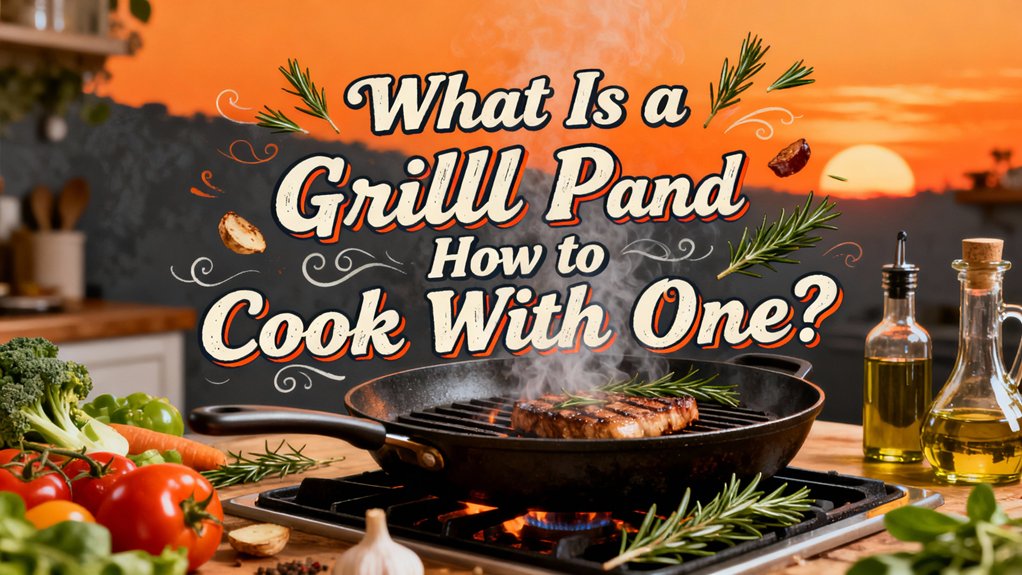
A grill pan’s raised ridges elevate your food for ideal searing and drainage, creating authentic grill marks indoors. You’ll preheat it on any cooktop, then sear meats, vegetables, and other proteins to achieve the Maillard reaction for superior flavor. The ridges channel excess fat away while preventing cold spots for consistent cooking. You’ve got options—cast iron, carbon steel, and stainless steel each offer distinct advantages depending on your needs. Determine which material suits your kitchen best and master essential techniques that’ll elevate your indoor grilling.
Understanding Grill Pan Basics
A grill pan’s defining feature is its raised ridges—typically 1-2cm high—that create the distinctive char marks and searing capability you’d get from outdoor grilling. These unique design elements serve multiple functions: they elevate your food for ideal airflow, enable effective fat drainage into grooves below, and produce authentic grill lines without steaming.
You’ll find user-friendly handles designed for safe maneuvering between stovetop and oven. The ribbed cooking surface mimics traditional grills, letting you achieve professional results indoors year-round. Grill pans work on all cooktop types, including induction, and remain oven-safe up to 260°C (500°F). Enamelled cast iron construction ensures your grill pan provides superior heat retention and even cooking performance across the entire surface. Common grill pan materials also include stainless steel and aluminum options for different cooking preferences. Lodge’s pre-seasoned cast iron grill pans are recognized for their even heating and quick searing capabilities. Cast-iron grates require proper seasoning and rust prevention to maintain their durability and performance over time. Many professional cooks prefer reversible griddle models with both smooth and ridged sides for maximum cooking versatility.
The raised grates’ primary advantage is reducing fat content by collecting excess drippings separately. This design eliminates cold spots, ensuring consistent cooking throughout your meal. Like outdoor stainless steel grills, indoor grill pans benefit from quality material construction that resists warping and extends the cookware’s lifespan. When selecting a grill pan, considering stove compatibility will ensure the pan works efficiently with your specific cooktop type. You’ll appreciate how the ridges create superior searing for deeper flavor and attractive presentation.
Types of Grill Pans Available
Now that you understand how grill pans work, you’ll want to examine which type best fits your cooking needs and kitchen setup. Unique grill pan designs range from compact round models at 10–10.5 inches for individual portions to rectangular griddles measuring 10.5 x 20 inches for larger meals. Double-burner griddles expand to 13 x 20 inches, offering expanded capacity for batch cooking.
Dual purpose grill pan surfaces represent a significant advantage. Reversible griddles feature grill ridges on one side and flat surfaces on the other, maximizing versatility. Material choices include cast iron for superior heat retention, die-cast aluminum for lightweight convenience, and stainless steel for reliability. Cast iron grill pans with tall ridges measuring 7.1 mm produce defined grill marks that enhance both appearance and flavor development. Consider enameled cast iron if you prioritize oven safety and reduced maintenance, or non-stick surfaces for simplified cleanup and effortless food release. Like grill mats designed for outdoor cooking, quality grill pans feature heat resistance properties that ensure durability and consistent performance across multiple cooking sessions. A flat top grill scraper can help maintain your grill pan’s cooking surface and extend its lifespan. When seasoning cast iron grill pans, choose oils with high smoke points to achieve a durable, polymerized seasoning layer. For stainless steel grill pans, using stainless steel grill cleaners will maintain their shine and reliability over time. The GreenPan Prime Midnight nonstick option stands out as an excellent choice for home cooks seeking an easy-to-clean grill pan that delivers consistent cooking performance.

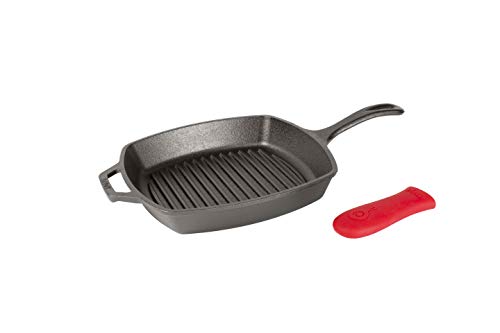
Steakhouse Sear At Home: The Lodge Square Cast Iron Grill Pan delivers high-heat searing and bold grill marks while channeling excess grease away

Material Comparison and Features
Since selecting the right grill pan material directly impacts your cooking results and long-term satisfaction, you’ll want to understand how cast iron, stainless steel, carbon steel, and aluminum options perform across key dimensions.
Cast iron excels in heat retention and durability but demands rigorous maintenance to prevent rust. Carbon steel delivers superior thermal efficiency, heating faster while weighing half as much, making manipulation easier during cooking. Carbon steel cookware becomes increasingly non-stick with use, especially when cooking fatty proteins, which enhances its performance over time. Stainless steel offers non-reactivity with acidic foods, making it a reliable choice for diverse cooking applications. Stainless steel with aluminum or copper cores minimizes hot spots effectively, though it requires different cleaning requirements than seasoned surfaces. Commercial-grade stainless steel construction provides exceptional durability and even heating performance for demanding outdoor cooking environments.
Aluminum heats quickly but distributes temperature less evenly. Enameled and granite-coated alternatives eliminate seasoning obligations while resisting scratching. To maintain stainless steel’s bright finish and prevent corrosion, regular cleaning and maintenance will keep your grill pan looking and performing like new. For extended use and maintenance, investing in heavy-duty covers protects your grill pan investment during storage and between cooking sessions. Thicker, smoother griddle construction without seams enhances durability and versatility across different cooktop types including induction and electric. For those prioritizing even heating and consistent results, considering grill pans with heat distribution and retention features can significantly improve your cooking experience. Your choice depends on balancing thermal efficiency against your tolerance for cleaning requirements and maintenance commitment.

Tri-Ply Clad Construction: Ensures precise and even heat distribution across the entire pan for superior cooking results on any stovetop.

ROOM FOR MORE: This carbon steel double burner griddle has plenty of room for big batches and the pre-seasoned cooking surface delivers effortless pancakes, burgers, and stir-fries wherever you need them

CARBON STEEL GRILL PAN - The MINERAL B Carbon Steel Steak Pan is ideal for grilling, browning & adding unique sear marks on food with its ridged bottom. It’s made of carbon steel, which is one of the most natural cooking materials.
Key Benefits of Grill Pan Cooking
Once you’ve selected your ideal grill pan material, you’ll discover that this versatile cookware delivers substantial advantages over conventional stovetop cooking methods. The raised ridges facilitate efficient indoor grilling by creating direct contact points where the Maillard reaction produces complex flavor compounds above 121°C. You’ll achieve evenly seared proteins with distinctive crosshatch marks that deliver restaurant-quality presentation instantly.
The grill pan’s design enables year-round cooking regardless of weather conditions. Fat drips away through the ridged surface, promoting healthier meal preparation while non-stick surfaces minimize oil requirements. You’ll experience consistent browning across steaks, fish, vegetables, and poultry without outdoor equipment. Like traditional griddles, grill pans are designed to distribute heat evenly across their cooking surface for uniform results. Grill pans are available in a variety of materials, sizes, and price points to suit different cooking needs and budgets. For superior heat retention and faster cooking results, selecting cookware with adequate thermal mass ensures optimal performance across various stovetop types. When choosing between cast iron and aluminum options, consider that enameled cast iron and heavy cast iron deliver superior heat retention and sear marks but take longer to preheat and can be heavy. Unlike outdoor griddles that require permanent installation or significant counter space, grill pans offer portability for different cooking locations without sacrificing searing capability. For those seeking electric alternatives with advanced features, options like digital temperature controls provide precise heat management similar to modern outdoor equipment.
Cleanup proves remarkably simple, as most dishwasher-safe models require minimal maintenance. This cookware adapts seamlessly to gas, electric, or induction stovetops, maximizing versatility for diverse culinary applications and ingredient types.
Getting Started: Preheating and Setup
Proper preheating establishes the foundation for successful grill pan cooking, transforming your cookware into an efficient searing surface. Set your stovetop to medium-high heat and allow 5 to 8 minutes for preheating, extending this duration if you’re using cast iron. You’ll know your pan’s ready when a slight wisp of smoke rises from the surface.
For measuring pan temperature, employ the water droplet test: sprinkle a few drops onto the pan’s center, and they should sizzle and evaporate immediately. Alternatively, use a surface thermometer to confirm you’ve reached 350-375°F for high-heat cooking applications.
After confirming readiness, apply your oil or fat immediately before placing food. This timing prevents burning and maintains consistent heat throughout your cooking process while achieving ideal browning results. Choose oils with high smoke points like grapeseed, avocado, or canola to ensure optimal performance. For maximum durability and performance, consider seasoning your cookware with corrosion resistance techniques similar to those used for protecting outdoor cooking equipment. Seasoning the pan with a thin layer of vegetable oil before your first use creates a protective non-stick layer that enhances performance across multiple cooking sessions. To maintain your grill pan’s cooking surface over time, you can employ natural cleaning methods like baking soda and vinegar to remove stubborn residue without harsh chemicals. Avoid using abrasive pads on your grill pan’s surface, as they can scratch and damage the finish just as they would compromise stainless steel cookware. Regular maintenance through brushing and scraping your grill pan after use will preserve its cooking surface and extend its lifespan. Additionally, ensure you’re removing grease buildup promptly after each use to prevent deterioration of your pan’s surface and maintain consistent cooking performance.

Graza Frizzle Oil Made from 100% Olives: A neutral-flavored, high heat cooking oil made from 100% peak harvest olives. With a smoke point of up to 450 degrees, Frizzle is your high-heat kitchen hero. 1 bottle/750ml.

Light Buttery Flavor That Elevates Every Meal: Algae Cooking Club Chef-Grade Algae Oil enhances every dish with subtle richness. Its neutral profile makes it ideal for searing, baking, and dressings, transforming everyday meals into gourmet experiences.

America's #1 Avocado Oil for Cooking — Every batch of Chosen Foods avocado oil is independently tested to confirm 100% pure avocado oil with no fillers or seed oil blends. Our purity standard was verified by UC Davis as one of only two avocado oil brands to pass their rigorous quality test. This bottle delivers the clean, neutral taste and consistent high-heat performance that has made Chosen Foods the avocado oil of choice for home cooks, professional chefs, and clean-eating households across the United States.
Cooking Techniques for Perfect Results
Now that you’ve prepped your grill pan, mastering several key techniques will transform your results from adequate to exceptional. Your searing strategies should prioritize proper heat management—maintain medium-high temperatures initially, then reduce heat after adding food to prevent burning. Place food diagonally across ridges, press gently for one minute to guarantee full contact, then rotate diagonally for crosshatch patterns without flipping prematurely.
Flip once and repeat on the reverse side. Use tongs rather than forks to preserve juices and maintain marks. For ideal flavor combinations, baste with cold butter and fresh rosemary during the final minute. Before cooking, ensure your steak reaches room temperature for at least 30 minutes to promote even cooking throughout. The diagonal ridge pattern of your grill pan will create superior char marks compared to traditional designs through conduction heat transfer from the hot metal surface directly to the food. Check internal temperatures with a thermometer—target 55–57°C for medium-rare. For steaks thicker than one inch, remember that internal temperature is the most reliable indicator of doneness rather than relying solely on cooking time. After cooking, allow the meat to rest for several minutes to enable juice redistribution and achieve perfect results. Letting the steak rest after cooking allows residual heat to finish the cooking process for a juicy, perfectly medium-rare result. Using a meat thermometer ensures precise doneness and removes guesswork from the grilling process.

Double Burner Configuration: The Lodge Double Play Reversible Cast Iron Grill/Griddle covers two burners, offering a generous breakfast grill plate for family breakfasts or meal prep with ease

【2-in-1 Reversible Grill & Griddle】: Unlock a world of recipes with a single reversible griddle pan. One ribbed side creates perfect sear marks on steaks, chops, fish, chicken, and veggies; flip to the smooth side for pancakes, eggs, bacon, burgers, tortillas, and more. Ideal for indoor stovetop or outdoor BBQ
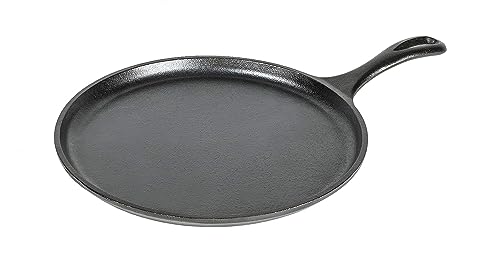
Pre-Seasoned & Ready to Use: The Lodge Cast Iron Griddle comes naturally pre-seasoned and ready to use for tortillas, pancakes, and more right from the box
Foods That Cook Best on Grill Pans
Your grill pan’s ridges and heat retention reveal exceptional results across numerous ingredients, from premium steaks to delicate seafood and charred vegetables. Perfectly seared proteins like ribeye, flank steak, and lamb chops develop golden-brown crusts with distinctive ridge marks that lock in juices and enhance flavor complexity. Shrimp and scallops cook rapidly, achieving ideal texture without overcooking.
Evenly charred vegetables including peppers, onions, and squash gain smoky depth while maintaining structural integrity. Mushrooms benefit from proper heat control and direct then indirect heat techniques to achieve tender, juicy results with enhanced flavor. Halloumi cheese grills without excessive melting, while romaine lettuce transforms with vinaigrette applications. Non-traditional options flourish too—tofu absorbs marinades effectively, flatbreads toast uniformly, and quesadillas develop crisp exteriors with melted centers. Grilled lamb chops with garlic and rosemary require only five minutes of prep time yet deliver an exceptional burst of flavor. Delicate fish like halibut should be grilled to an internal temperature of 135-145°F to ensure tender, flavorful results without drying out. For optimal results with premium cuts, allow your porterhouse or other high-quality steaks to rest after cooking to retain juices and maximize tenderness. Let ribeye steaks come to room temperature before grilling to ensure even cooking throughout. The flat surface of your grill pan works exceptionally well for cooking pancakes and crepes with consistent results across the entire cooking area.
Your grill pan’s versatility across these categories guarantees professional-quality results for any culinary application.

Versatile Square Cast Iron: The Lodge Seasoned Cast Iron Square Griddle Pan is ideal for perfectly cooked pancakes, eggs, and tortillas in any location

【SAFE-TO-USE COOKWARE】Crafted with pure iron and oil, just as traditional seasoned cast iron should be — our cookware is free of harmful PFOA and PTFE. We’re dedicated to creating products that keep you and your loved ones safe: every stage of our manufacturing process prioritizes the well-being of our employees and our customers.

Cast Iron Grill Pan: This 11-inch square grill pan, a part of Lodge's Chef Collection, is a durable cast iron pan ready to help you experiment in the kitchen like a pro
Maintenance and Long-Term Care
A grill pan’s longevity depends on consistent, deliberate care that protects its seasoning and prevents rust formation. Your cleaning procedures should remove food residue without stripping the protective layer. After each use, wipe grease with paper towels, then wash with warm soapy water and a stiff brush. For stubborn buildup, boil water on the surface and scrape with a spatula. Consider using a grill brush for more effective debris removal during routine cleaning. To avoid damage to your seasoned surface, choose bristle-free or replaceable-head brush designs that minimize the risk of stray bristles contaminating your food.
Your seasoning routine requires regular maintenance. After cleaning and drying completely, apply a thin oil layer across the entire surface, including grooves and edges. Heat the pan until the oil smokes, then wipe away excess to prevent stickiness. To maintain optimal protection between uses, remove accumulated grease between cooking batches to prevent the buildup of rancid residue. Wooden scrapers like The Great Scrape Woody Shovel are also excellent alternatives for removing stubborn residues without damaging the seasoned surface. Store your grill pan in a dry environment, never in the dishwasher or soaking water. Reseason annually or when the surface appears dull and matte to maintain ideal protection.