
You’ll smoke your drumsticks to perfection in approximately 2-3 hours total. Start low and slow at 225°-250°F for the first hour, keeping the lid closed to maximize smoke flavor. Then bump up to 275°F, cooking until your drumsticks reach an internal temperature of 175-180°F. Finally, finish them at 375-425°F for that irresistible crispy skin you’re after. There’s quite a bit more to master about wood selection, misting techniques, and achieving that perfect texture.
Preparing Your Drumsticks for Smoking
Before you’ll need to pat your drumsticks completely dry with paper towels. This moisture removal is critical—excess surface liquid prevents skin crispiness during smoking.
Next, drizzle vegetable or olive oil lightly over all surfaces, then toss the drumsticks to reveal complete coverage. The oil coating helps your dry rub adhere evenly while preventing excessive moisture that impedes crisping.
Apply your seasoning generously, using a gentle rubbing motion to work the spice mixture into the chicken skin. Layer an SPG rub followed by BBQ rub for complex flavor development. Dark meat needs higher temperature for optimal tenderness and crispiness, so ensure your internal thermometer reads 175-190°F by the end of cooking.
For seasoning enhancement, refrigerate uncovered on a wire rack for at least two hours. Space drumsticks one inch apart to maintain proper air circulation patterns, which is especially important when using chicken leg holders to ensure even heat exposure. Overnight refrigeration further improves seasoning penetration and guarantees even temperature equalization before smoking. When storing any leftover smoked drumsticks, ensure they cool completely before freezing in airtight containers to preserve quality and prevent freezer burn. The low-and-slow smoking method helps keep the chicken moist by allowing fat and connective tissues to break down gradually. Cherry or apple wood will impart the best flavor without overpowering your carefully seasoned drumsticks.

Made from soybeans, with a light taste that lets the flavor of your food shine through

One gallon bottle of Vegetable Oil

One 48-fluid-ounce bottle of Canola Oil
Choosing the Right Wood and Pellets
Once you’ve got your drumsticks seasoned and ready, selecting the right wood will make or break your smoke flavor. You’ll find that hickory delivers robust, earthy smoke perfect for traditional BBQ notes, though it can overpower chicken—blending it with milder apple works exceptionally well. Apple pellets provide subtle sweetness ideal for family-friendly results, while cherry offers bright, fruity brightness that enhances drumsticks without dominating. Consider regional wood preferences; post oak pairs beautifully with fruitwoods in Southern traditions, while pecan adds complexity. Red oak and post oak are praised for their slow burn and balanced smoke flavor that won’t overpower poultry when properly seasoned to produce thin, blue smoke. Pre-mixed blends like CookinPellets Perfect Mix balance multiple woods effortlessly. Bear Mountain Hickory Pellets deliver deeper, traditional BBQ notes that work nicely with chicken thighs, drumsticks, and grilled breasts for longer cooks. For extended smoking sessions, wood chunks burn longer than chips, making them ideal for achieving consistent smoke flavor throughout your cook. Top-performing brands like Traeger and Lumberjack offer competition-grade blends that ensure consistent flavor development across extended cooks. Dry wood burns clean smoke rather than steam, ensuring optimal flavor development. Avoid softwoods and resinous species like pine which create unpleasant flavors and harmful smoke. When sourcing hickory or other woods, aim for 100% natural chips from trusted retailers to avoid mold or pests that compromise flavor quality. Guarantee proper pellet storage in dry conditions to maintain consistent burn quality. Choose 100% natural hardwoods free of fillers for clean, predictable smoke at your target temperature.

SIGNATURE BLEND WOOD FIRED FLAVOR: The flavors of hickory, maple, and cherry hardwoods combine for in our Traeger Signature Blend Hardwood Pellets for flavor that can take on just about anything you cook; From classic BBQ meats, to fish and veggies, this versatile blend gives you full-bodied flavor you'll go back to time and time again

HICKORY WOOD FIRED FLAVOR: Traeger Hickory Hardwood Pellets are great for naturally enhancing beef, chicken, pork, and veggies with full-bodied, bold flavor. So it should come as no surprise that Hickory’s assertive flavor is one of the most popular choices for classic BBQ cooking.

APPLE WOOD FIRED FLAVOR: With Traeger Apple Hardwood Pellets, naturally enhance baked goods, chicken, and pork with a subtly sweet, fruity flavor.
Setting Up Your Smoker Temperature
Getting your smoker to the right temperature is absolutely critical—it’s the foundation that’ll determine whether you end up with juicy, smoky drumsticks or a disappointing batch. You’ll want to preheat your smoker to 225°F, which provides the ideal low-and-slow smoking environment for building authentic smoke flavor.
Start by stabilizing smoker temperature at 225°–250°F during your initial phase. If you’re using a pellet grill, activate the super smoke option at 225°F for enhanced flavor development. Once you’ve verified steady temperature, place your drumsticks on the grates with at least 1 inch of space between each piece. Wood choices such as hickory, pecan, and maple will enhance the smoke flavor profile of your drumsticks.
For faster cooking with crispier skin, consider adjusting temperature range to 275°F after the first hour. At 225°F, your drumsticks will typically require a little over 2 hours to reach the target internal temperature of 175-180°F. Many guides recommend finishing your drumsticks at a higher temperature around 375-425°F to achieve extra crispiness and skin texture. Optional techniques such as spraying the drumsticks with apple cider vinegar during cooking may help keep the meat moist. Using a meat thermometer ensures you achieve the perfect doneness without guesswork. Minimize lid openings throughout smoking to maintain temperature stability and prevent heat loss. This deliberate approach guarantees consistent, superior results.

【Compatiable】: Our Traeger control panel fits most Traeger wood pellet grill models (except PTG), ideal Traeger Pro controller for Traeger parts replacement BAC236.

Wide Compatibility: This grill ambient probe works with Traeger Pellet Grills (except PTG) and Z-Grill. Replace old RTD probes seamlessly to maintain grill efficiency.
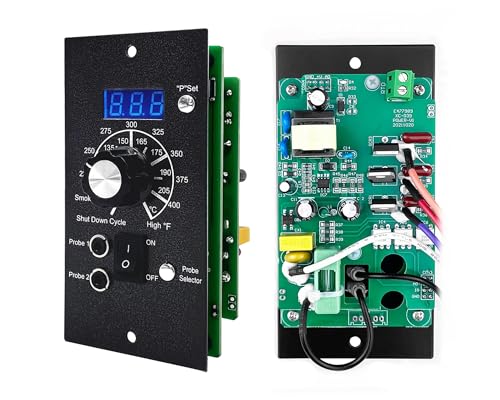
COMPATIBILITY: The grill digital thermostat is replacement for Traeger OEM part BAC365, BAC288, BAC236, fits 20, 22, & 34 Models, including Pro 20/22 34, Texas Elite 34, Lil Tex 22, JUNIOR ELITE 20, Ridgeland, Heartland, Mesa 22, Century 22/34, Silverton (2019), Select Pro, Eastwood 22/24(Not for PTG, Scout, Tailgater, or Bronson)
The Initial Smoking Phase
Now that your smoker’s holding steady at 225°F, you’re ready to load the drumsticks and let the smoke work its magic. Space each piece at least an inch apart on the grate to guarantee even smoke density around all surfaces. Close the lid immediately—don’t open it for the next 1 to 1.5 hours. Each lift releases precious smoke and drops your temperature, disrupting the process.
During this critical phase, you’re building smoke flavor through vapor absorption. The moist drumstick surface captures smoke compounds maximally in this closed environment. Resist the urge to check on them. Your drumsticks are developing that coveted smoke ring and rich flavor profile. To enhance the smoking process, mist chicken with apple juice every 30 minutes during smoking to keep the surface moist and receptive to smoke. Based on successful results using apple and hickory wood, a blend of mild and robust smoke sources will deliver complex flavor without overpowering the natural chicken taste. For gas grills specifically, smoker tubes provide consistent smoke output throughout your cooking session. The drumsticks are done when they reach an internal temperature of 165°F, ensuring food safety while maintaining optimal tenderness. Resting the meat after smoking allows carryover cooking to reach ideal temperature without drying out the drumsticks. Continuing to smoke until the internal temperature reaches 175-180°F ensures the connective tissues break down for exceptionally tender meat. Stay disciplined with the lid, and you’ll achieve perfectly smoked results.
Managing Temperature Throughout Cooking
After that first 1 to 1.5 hours of low-temperature smoke absorption, you’ll increase your smoker’s temperature to 400°F to accelerate cooking and lock in the flavors you’ve built. This mid-cook temperature boost prevents prolonged low-temperature exposure that creates tough, leathery skin.
Maintain consistent temperature control throughout this phase—fluctuations cause uneven cooking and textural problems. Even heat distribution around your drumsticks reveals they cook uniformly without dry spots or undercooked areas. Using fruitwoods like apple or cherry will enhance the smoky flavor profile during this critical cooking stage. Drizzling your drumsticks with olive oil before this temperature increase helps protect the skin from drying out. Letting the meat rest for 5 to 10 minutes after cooking will retain the juiciness you’ve worked to achieve.
Monitor your internal temperatures carefully. You’re targeting 175-190°F in the thickest part of the thigh for perfect tenderness, though the food safety minimum of 165°F can be reached earlier in the cooking process. Don’t settle for the 165°F food safety minimum; you’ll sacrifice moisture and texture. Woods such as oak, pecan, and hickory complement chicken without overpowering it during the smoking process. An instant-read thermometer ensures you achieve the ideal internal temperature without overcooking your drumsticks.
During the final 5-10 minutes, expose your drumsticks to develop that crispy skin finish you’re after. This deliberate approach delivers flawlessly cooked drumsticks every time.
Monitoring Internal Temperature for Doneness
Your thermometer—not your eyes—tells you when your drumsticks are truly done. Before smoking, verify your thermometer’s accuracy through proper thermometer calibration methods to prevent dangerous undercooked results. Insert your probe into the thickest part of the drumstick, avoiding bone contact, which skews readings.
Target 165°F for food safety, though 170-175°F optimizes tenderness in dark meat. Don’t rely on pink coloration; fully cooked drumsticks often appear pink inside. Check multiple locations to confirm the thickest sections reach safe temperatures. Bone marrow expansion can cause fluid seepage that resembles blood, so slightly pink juices are normal even in properly cooked chicken. Even if your thermometer reads 10°F lower than actual, 155°F for 60 seconds still eliminates foodborne bacteria safely. For chicken safety and optimal juiciness, using a meat thermometer inserted in the thickest part ensures proper doneness without overcooking.
Digital thermometers like the Thermoworks Thermapen provide superior reliability compared to dial versions, which can be off by 10°F. The ThermoWorks Thermapen ONE stands out for its fastest and most accurate performance in speed and consistency tests against competing instant-read models. For wireless monitoring during extended smoking sessions, consider app-enabled dual-probe thermometers that allow you to track multiple drumsticks simultaneously from a distance. Radio frequency thermometers offer superior range reliability compared to standard Bluetooth models for monitoring drumsticks from across your yard. For the most accurate readings during smoking sessions, consider models with auto-rotating backlit displays that enhance visibility in outdoor cooking conditions. This precision prevents both food safety risks and avoiding overcooking mistakes that dry out your meat.
Applying Sauce and Final Touches
Once your drumsticks hit 165°F internally, you’ve got the perfect window to elevate them with sauce and glaze. Brush or dip your chicken into your chosen sauce—whether it’s Alabama White or peach whiskey BBQ—ensuring full coverage for ideal sauce absorption. The hot meat readily accepts the flavoring, preventing that undesirable starchy texture.
For caramelization techniques, return your glazed drumsticks to the grill briefly. This step develops a caramelized crust that locks in flavors. Alternatively, dunk hot chicken directly into sauce at 180°F for superior caramelization. Keeping the smoker’s water pan dry will help prevent excess humidity that can interfere with crust formation. Ensure you’ve preheated your smoker according to manufacturer guidelines before beginning the smoking process, pressing and holding the ignite button if your grill features a touchscreen WiFIRE controller. To achieve the crispiest skin possible, consider that increasing temperature to 325°F in the final minutes provides a quick blast of heat that complements your glaze beautifully.
Finish with a light brush of warmed sauce drizzled across both sides. This final touch creates an impressive presentation while enhancing taste. Serve immediately while the glaze remains tacky and flavorful—your guests will notice the professional execution.

Campbell's Condensed Sauces, new from America's favorite soup maker, make dinner easy when you add your favorite protein

One 12 ounce bottle of Chicken Dipping Sauce

【Sweet & Smoky Perfection】 – A rich, sticky BBQ glaze with deep maple sweetness and a smooth bourbon finish—perfect for giving your BBQ the ultimate flavor boost.
Resting Your Smoked Drumsticks
The final—and often overlooked—step to perfectly smoked drumsticks is a brief 5-10 minute rest immediately after removal from the smoker. Your ideal resting temperature ranges from 175-185°F, allowing meat fibers to relax and redistribute juices throughout. This critical window prevents chewiness while maintaining moisture retention.
For proper resting technique, place drumsticks on a cutting board away from drafts. You can tent loosely with foil if you need additional warmth. Avoid resting beyond 10 minutes, as prolonged holding dries out the meat and compromises quality. This brief pause aligns perfectly with final sauce application or side dish preparation, streamlining your service timing. During this resting period, you can prepare your barbecue sauce glaze to apply once the drumsticks have reached the optimal temperature range of 185-190°F. Resting allows the meat fibers to relax and ensures your drumsticks maintain their superior tenderness and flavor profile. Similar to smoking techniques that balance smoky flavor with tenderness, this resting step is essential for developing the balance of smoky flavor and moisture your guests expect. Using an instant-read thermometer to verify your drumsticks have reached the proper internal temperature during the resting period ensures food safety without compromising the quality you’ve worked to achieve. After resting, ensure your drumsticks are placed on a clean surface, as cleaning the grill] regularly prevents cross-contamination and maintains food safety standards. A clean grill surface also prevents residual debris from affecting the flavor of your perfectly rested drumsticks, similar to how routine light cleaning after each use maintains optimal grill performance.
Achieving Crispy Skin Results
How do you transform soft, rendered skin into a crackling, golden exterior? You’ll need high heat and strategic timing.
After your drumsticks reach 165°F, increase your smoker temperature to 400°F-450°F for the final 10-15 minutes. This phase guarantees even heating distribution across all drumsticks, preventing undercooked spots. Rotate them every 2-3 minutes to achieve uniform browning without burning. Different smoking woods like hickory or applewood can enhance the final flavor profile during this crisping phase. Using a meat thermometer throughout the cooking process ensures you hit your target temperatures accurately. Hardwoods like apple and cherry impart sweet, fruity notes that complement poultry particularly well. Allow the drumsticks to rest after smoking for juices to redistribute throughout the meat. The high heat during this crisping phase primarily operates through radiant heat transfer from the hot surfaces to cook the exterior of the drumsticks efficiently.
For superior results, perform a reverse sear on your grill—one minute per side at high heat. Alternatively, finish on a gas grill at medium flame for ten minutes to tighten mushy skin. Flipping frequently during the final high-heat phase ensures even crisping and prevents charring on any single side.
Target a final internal temperature of 170°F-175°F. The combination of low-and-slow smoking followed by aggressive high-heat crisping delivers restaurant-quality results with perfectly crispy skin and tender, juicy meat.
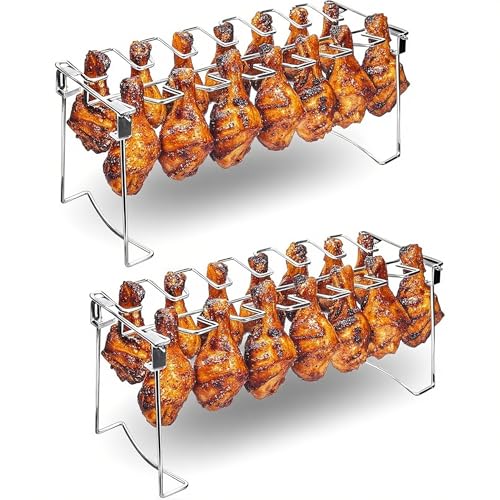
【Holds 14 Drumsticks Securely for Even Cooking】Two racks included – each holds 14 chicken legs upright without flipping. Cooks evenly indoors or outdoors on grills, smokers, or ovens

Just Hang And Leave - Don't have to worry about turning them, this 14-slot chicken drumstick grill rack will make your chicken legs and wings perfectly cooked on all sides evenly and incredibly juicy!

Just Hang And Leave - Don't have to worry about turning them, this 14-slot chicken drumstick grill rack will make your chicken legs and wings perfectly cooked on all sides evenly and incredibly juicy!
Pro Tips for Perfect Drumsticks Every Time
Mastering the variables between your smoker’s temperature dial and your drumsticks’ internal doneness separates good results from consistently excellent ones. You’ll achieve remarkable consistency by implementing strategic brining techniques—soak your drumsticks 24 hours in kosher salt solution, then pat them dry and refrigerate for ideal skin texture. For smoke flavor enhancement, start low at 180°F during your initial hour to build depth before raising temperatures. Space drumsticks at least an inch apart on grates, ensuring even smoke circulation without crowding. Rest your finished drumsticks 5-10 minutes after reaching 175°-185°F internal temperature. Medium-smoking woods like pecan or hickory provide optimal flavor development for your drumsticks. Avoid softwoods that create bitter residue and compromise your final product. For extended smoking sessions, consider using lump charcoal which burns cleaner and hotter than briquettes, allowing for better temperature control throughout your cook. 100% charcoal pellets like Royal Oak offer superior heat output and water resistance compared to blended options for consistent results. Like wrapping proteins in aluminum foil during cooking, this method helps retain moisture and maintain consistent heat distribution. These practices eliminate guesswork, transforming your smoking process into a predictable, repeatable method that yields restaurant-quality results every single time. Higher cooking temperatures above 275°F are essential for crispy skin and should be prioritized over prolonged low-temperature smoking to avoid the rubbery texture that plagues traditional low-and-slow methods.