

You’ll smoke your chicken thighs for 1.5 to 2 hours at 225°F for superior texture and deep smoke penetration. Prefer faster results? Bump the temperature to 275°F for 45 minutes to 1 hour 15 minutes, or push to 300–350°F for accelerated crisping in roughly 45 minutes. Target an internal temperature of 175°F measured at the thickest part near the bone using an instant-read thermometer. The ideal approach depends on your priorities—smoke intensity versus expediency—and we’ll show you exactly how to nail it.
Temperature Selection for Perfect Results
When you’re smoking chicken thighs, temperature control is the foundation of success—it’ll determine whether you’re pulling succulent, deeply flavored meat from the smoker or dealing with rubbery skin and dried-out flesh. You’ll find three viable temperature ranges: 225-250°F for enhanced smoke intensity adjustments and extended flavor development, 275°F for balanced results with improved skin quality, or 300-350°F for accelerated crisping without additional finishing steps. Your wood source selection directly impacts outcome—fruitwoods like applewood deliver milder profiles, while hickory provides variation when blended with fruitwoods. Lower temperatures maximize smoke absorption but require longer cooking times, whereas higher temperatures reduce overall duration while maintaining juiciness. Smoking at the recommended 225°F temperature ensures that chicken thighs do not dry out during the extended cooking process. Most home smokers perform optimally when you preheat to 275 degrees F before adding your seasoned chicken. Regardless of your chosen smoking temperature, always verify that the internal temperature reaches 165°F in the thickest part of the thigh to ensure food safety. For chicken thighs smoked at moderate heat, expect a cook time around 1 to 1.5 hours depending on thickness and smoker consistency. Some cooks prefer to apply BBQ sauce when the meat reaches 165°F, allowing it to set properly during the final minutes of cooking. After smoking, resting the chicken for 5 to 10 minutes helps redistribute the juices for best texture and flavor. Using a reliable meat thermometer eliminates guesswork and prevents both undercooking and overcooking your chicken thighs. Choose your temperature based on your desired balance between smoke flavor depth and cooking efficiency.
Cooking Duration at Different Temperature Settings
How long you’ll spend tending your smoker depends entirely on which temperature strategy you’ve chosen—and that decision fundamentally shapes your entire smoking session. At 225°F, you’re investing 1.5 to 2 hours for superior meat texture profiles and deep smoke penetration. The medium approach at 275°F cuts that to roughly 45 minutes to 1 hour 15 minutes, offering balanced results. If you’re racing the clock, the higher temperature method at 300-375°F completes cooking in approximately 45 minutes after an initial low-temperature phase.
The variable two-stage approach splits the difference: 60-90 minutes at 200-225°F for flavor development techniques, then 300-400°F to finish. For competition-level results, aim for 175°F internal temperature rather than the minimum 165°F to break down connective tissues and achieve that tender, juicy texture judges expect. This super easy recipe approach makes smoking chicken thighs accessible to beginners and experienced pitmasters alike. Regardless of your method, rely on internal temperature targets—165°F minimum—rather than elapsed time. Thicker thighs demand longer duration regardless of heat level. Similar to chicken wings, some pitmasters enhance texture by finishing at higher temperatures of 375-425°F after the initial smoke phase. To maintain temperature and smoke consistency, avoid opening the smoker frequently during the cooking process. Techniques such as brining the chicken beforehand can enhance tenderness and moisture retention throughout the smoking process. The low-and-slow method allows fat and connective tissues to break down gradually, resulting in exceptionally moist and tender chicken. Resting the meat 10-15 minutes after smoking allows carryover cooking to optimize final temperature and preserve juiciness. Always use a reliable meat thermometer to monitor doneness accurately.
Internal Temperature Monitoring Standards
Temperature’s the true north of smoking chicken thighs—it’s what separates perfectly rendered, fall-apart meat from a rubbery disappointment.
You’ll measure the thickest part near the bone with an instant-read thermometer, avoiding contact with bone itself. Deploy a leave-in probe thermometer like a Thermapen for precision monitoring throughout your smoke. Set your high alarm at 175°F on devices like BlueDOT or ChefAlarm to catch temperature variability before overshooting.
Your smoke duration considerations hinge on this reading. At 225°F, you’re targeting 160°F initially, then pushing to 175°F for crisping. Competition pitmasters favor 175–180°F at 300°F smoker temps for ideal collagen breakdown. Skip the USDA minimum—165°F leaves chewy connective tissue. Higher temperatures transform dark meat from acceptable to extraordinary. Cooking to 170-175°F improves texture significantly, making the meat pull away from the bone easily and delivering that sought-after tenderness. Using a meat thermometer inserted in the thickest part ensures you don’t undercook or dry out your chicken. After removing from the smoker, resting the chicken wrapped in foil for about 10 minutes helps break down connective tissue while keeping the meat moist. While thighs need higher temps than breast meat, remember that chicken breast meat reaches safe consumption at 165°F. Bone-in, skin-on thighs require indirect heat for 195°F “fall-off-the-bone” tenderness when you’re aiming for that premium result. Start checking the temperature around the 2.5 to 3-hour mark to avoid overcooking and maintain optimal texture.
Preparation Methods for Enhanced Results
Because you’ve nailed your temperature targets, the real magic happens in prep—this is where you’ll transform ordinary chicken thighs into competition-worthy results. Master your marinade blending methods by combining BBQ sauce, Italian dressing, and minced garlic, then refrigerating for at least two hours. For spice blend customization, you’ll want to experiment with dry rubs featuring brown sugar, smoked paprika, and cayenne—adjust ratios based on your preference profile. Trim excess skin and fat meticulously for even seasoning adhesion. Pat thighs down after applying oil and rubs to guarantee proper coating. Roll trimmed pieces into uniform shapes for consistent cooking. Consider using upright racks or holders to keep thighs evenly spaced during smoking, which promotes better airflow around each piece and helps achieve crispier skin while minimizing flare-ups. For optimal airflow and heat distribution, vertical chicken racks serve as valuable accessories that enable efficient positioning on limited grill space while maintaining consistent cooking temperatures. If you’re working with multiple proteins or want to maximize your smoker’s capacity, rib racks can help you stack chicken thighs vertically to free up space for sides or additional meats. These preparation techniques directly impact your final smoke, guaranteeing every bite delivers maximum flavor and texture while reducing moisture loss during the smoking process.
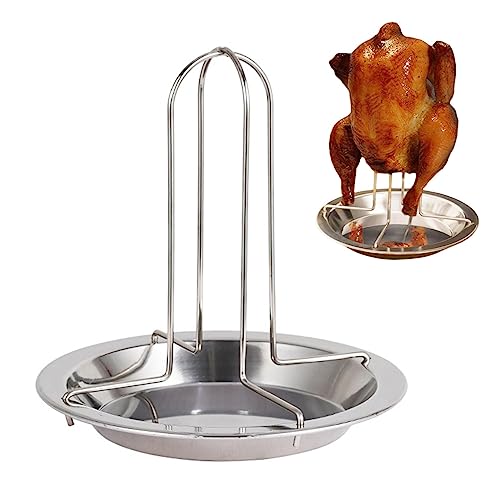
【Material】Chicken holder and drip pan made of stainless steel,easy to clean, durable, high temperature resistan t and can be used in ovens and ovens.
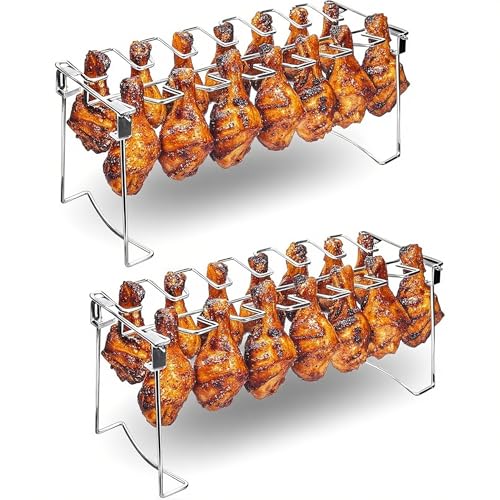
【Holds 14 Drumsticks Securely for Even Cooking】Two racks included – each holds 14 chicken legs upright without flipping. Cooks evenly indoors or outdoors on grills, smokers, or ovens

Reusable & Sturdy:The beer can chicken holder is made of heavy duty stainless steel, strong and sturdy.Will nor crooked while using.A helpful tool for making beer can chicken, help all of you become great housewife
Techniques for Achieving Crispy Skin
Your meticulous prep work sets the foundation, but you’ll access the true potential of smoked chicken thighs through strategic techniques that transform skin from flabby to crackling. Your marinade selection profoundly impacts final texture—buttermilk brines and Italian dressing marinades penetrate meat while promoting browning. Incorporate cornstarch into your seasoning rub for guaranteed crispiness.
During smoking, apply a medium fat coat before cooking, then spray with duck fat after temperature increases. Smoke wood types matter critically; post oak delivers superior flavor while supporting skin crisping at 275F-300F temperatures. For poultry like chicken thighs, fruit woods such as apple or cherry provide a lighter, sweeter smoke that complements the meat without overpowering it. Pan-searing the chicken thighs after smoking renders off most of the fat, leaving behind a thin, crispy, and delicious skin. Dark meat can withstand higher internal temperatures between 185-195°F, which ensures optimal fat rendering and superior crispiness. Consider air-drying the thighs with kosher salt beforehand to further promote skin crispiness.
Execute a temperature ramping strategy: begin at 225F for smoke penetration, then increase to 325F during the final phase. This two-stage approach balances smokiness with skin crackling, delivering thighs with tender interiors and audibly crispy exteriors. Choose natural hardwood charcoal over products with additives to maintain clean smoke and optimal flavor throughout your cook. Lump charcoal burns hotter and cleaner than briquettes, making it ideal for achieving the high temperatures needed for crispy skin in kamado-style smokers. Once you’ve finished cooking, let the smoker cool completely before placing a waterproof cover over it to protect your equipment from the elements and extend its service life.
Finishing Techniques and Resting Procedures
Perfecting smoked chicken thighs demands attention to the critical moments after they’ve left the smoker—this final phase determines whether you’ll serve juicy, flavorful meat or disappointingly dry results. Rest your thighs for 10-15 minutes under loose foil covering techniques that preserve residual heat while allowing carryover cooking. Apply sauce strategically, then return thighs to the smoker for 10 minutes—this flavor enhancement applications method sets the glaze without temperature loss. After this brief smoking session, tent them loosely again for another 10 minutes. This disciplined resting protocol redistributes internal juices throughout the meat, ensuring every bite retains moisture. Coating the skin with a light layer of olive oil before smoking helps the seasoning adhere and promotes crispy skin that complements the tender interior. Always verify doneness with a meat thermometer to check that the internal temperature has reached the safe minimum before resting. The residual heat will finish cooking the chicken thighs during the resting period, bringing them to their final safe temperature. Whether smoking thighs or a whole butterflied chicken, the target is consistent: internal temperature of 165°F ensures the meat is fully cooked and safe to eat. If you have leftover smoked chicken thighs, they can be safely stored in the refrigerator for three to four days when kept at or below 40°F. After your smoking session, clean your grill grates with a baking soda and vinegar paste to remove residue without harsh chemicals. You’ll notice the difference immediately: succulent texture and maximized flavor impact that separates competition-level results from ordinary smoked chicken.
Choosing the Right Smoker Temperature for Your Needs
Three distinct temperature ranges’ll transform your smoked chicken thighs into competition-level results, each offering unique advantages that demand careful consideration based on your priorities.
Low-temperature smoking (225-250°F) maximizes smoke times, developing profound flavor complexity while preserving moisture in darker meat. However, you’ll encounter rubbery skin unless you crisp it afterward.
Medium-temperature smoking (275-300°F) accelerates your cook dramatically—delivering flawlessly textured skin without additional finishing steps. Your heat control remains manageable, and you’ll achieve ideal results in under two hours. For best results, brush on BBQ sauce during the final minutes of smoking to enhance flavor and appearance.
You’ll prioritize heat control above all else, maintaining consistent temperatures for predictable timing. Temperature control and consistency are critical for avoiding overcooking and ensuring tender, juicy results with flavorful bark. Minimum 275°F prevents skin quality issues while ensuring tender, juicy results. Monitor your internal temperature targets carefully, as overheating can cause dryness and compromise the final texture of your chicken thighs. After removing from the smoker, rest the chicken for 5 to 10 minutes to allow the juices to redistribute throughout the meat. Consider applying mustard as a binder before your dry rub to help seasonings adhere and develop a more flavorful crust. Pair your smoked chicken thighs with smoked mashed potatoes for a complete barbecue feast that elevates your outdoor dining experience. Your choice depends on whether you value extended smoke times or expedited, hassle-free preparation.

BBQ / Grill pit thermometer, safe and environmentally friendly.

Large Display: Features a 2 3/8 inches large face for clear visibility; Stem length of 2 7/8 inches enhances accessibility; Enables easy classification of food temperatures in various cooking environments

✅[ Easy Temperature Reading ] - 3 3/16'' Large Dial BBQ Grill Smoker Thermometer with enlarged degree scales and numbers , easy to read even from far away. Perfectly fits for most smokers or grills with a 3/8 inch opening or hole