
You’ll smoke chicken leg quarters for approximately 1.5 to 2 hours at 225°F, depending on quarter size and brining. Maintain consistent temperature throughout the process. Insert your digital thermometer into the thickest part without touching bone—target 160°F for initial removal, allowing carryover cooking to reach 165–190°F. Spray with apple cider vinegar periodically to retain moisture. Finish by crisping at 400–425°F for 4–5 minutes per side. The specifics of preparation, setup, and timing variations deserve deeper exploration.
Preparing Your Chicken Leg Quarters
Before you smoke chicken leg quarters, you’ll want to start with proper preparation to guarantee crispy skin and even cooking. Begin by removing quarters from packaging and placing them on a rack over a baking sheet. Refrigerate exposed for at least three hours or overnight to air-dry the skin thoroughly. Patting chicken skin dry with paper towels removes excess moisture before seasoning. Trim any excess fat, skin, or hip bone for uniform cooking and improved presentation. Brining chicken leg quarters beforehand enhances flavor and moisture retention throughout the smoking process. Next, drizzle your quarters with oil in a large bowl, using approximately two tablespoons to help seasonings adhere properly. Apply your chosen spice blend generously to both sides, ensuring coverage under the skin. Wet brining is particularly effective for larger cuts like leg quarters, loading the chicken with enough moisture to prevent it from drying out during the smoking process. For best results, spray with canola oil before applying your favorite rub to ensure even seasoning distribution and enhanced flavor development. Consider using fruitwoods like cherry or other aromatic woods to enhance the natural flavor of your chicken quarters. Resting the meat after smoking allows carryover cooking to reach ideal temperature without drying out the leg quarters. Finally, arrange your seasoned quarters skin-side up on the smoker grates before cooking. Reaching an internal temperature of 175-180°F ensures the connective tissues break down, resulting in exceptionally tender meat. Use an instant-read meat thermometer inserted into the thickest part of the leg quarter without touching the bone to monitor doneness throughout the smoking process. Bone-in pieces like leg quarters should reach 170°F to 185°F for both tenderness and food safety.

CHAMPIONSHIP BIRD BRINE - This Bird Brine seasoning was developed by our award winning Killer Hogs Championship BBQ team.

AUTHENTIC ORIGINAL CHICKEN INJECTION & BRINE: Our secret combination of ingredients capture the true taste of Memphis-style championship BBQ with the perfect balance of sweet & heat to take your BBQ to the next level.

LOCKS IN MOISTURE FOR JUICY RESULTS: Kosmos Q Chicken Soak Brine delivers a balanced mix of brown sugar, Worcestershire, and savory spices that draws moisture deep into the meat. Whether you're cooking whole birds or just tenderloins, this soak helps you get that juicy, flavorful bite in every piece without complex prep.
Setting Up Your Smoker
Proper smoker placement is your foundation for successful cooking, and you’ll want to choose a flat, stable surface that’s sheltered from direct wind exposure. Position your unit away from structures to prevent fire hazards and guarantee secure ground-level installation.
Before your first cook, assemble all core components with precision. Verify that your efficient pellet delivery system functions correctly, inspect the auger mechanism, and tighten every fastener thoroughly. Proper insulation installation around the cooking chamber stabilizes internal temperatures and safeguards against environmental fluctuations. Ensure your firebox is clean and free of ash before starting to prevent undesirable flavors and maintain optimal airflow. For thorough maintenance, consider using all-natural degreasers to remove any residue from the firebox. You can also apply a baking soda and vinegar paste to break down tough grease buildup inside the firebox. For stubborn carbon deposits, pumice-based cleaning bricks offer an effective method to restore your firebox surfaces without scratching. Regular grill brush cleaning helps maintain consistent heat distribution and prevents carbon buildup from affecting your smoking results.
Set up your temperature control system by configuring intake and exhaust vents—top vent at halfway open, intake vent at one-quarter open. Install an external thermometer to verify your PID controller’s accuracy. Tight seals around the door and openings prevent uncontrolled airflow that could compromise your temperature stability. Remember that cutting off oxygen supply is crucial for fire safety, whether you’re actively cooking or extinguishing your smoker after use. This setup secures consistent heat maintenance throughout your cooking session.

Safety: Our grilling bricks are made from non-toxic materials,can safely be used on hot grill tops to remove grime and stains.
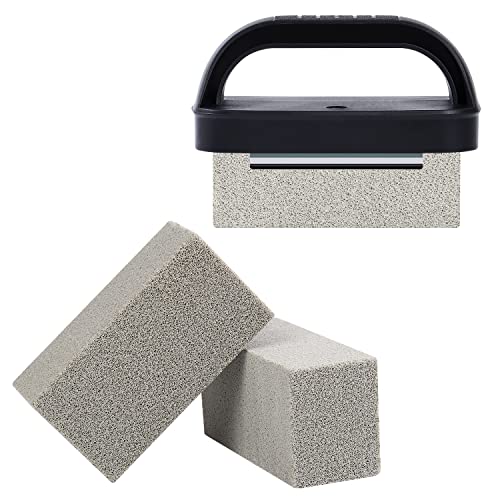
Non-toxic Material: Our BBQ grill stones are made of natural ecological Pumice Stone, won't hurt your utensils, safer than traditional wire grill brush, no loose wire falling off, safe, fast and effective cleaning

NON-TOXIC & SAFE FOR HOT GRILLS: Made from non-toxic material, this grill brick is designed for use on hot grill surfaces to help remove stubborn grease, grime, burnt-on food and tough stains. The durable grill stone provides a simple and effective way to keep your grill clean and ready for the next cookout.
Smoking Timeline and Temperature Monitoring
Consistency is your greatest ally when you’re smoking chicken leg quarters. You’ll maintain your smoker between 225°F and 250°F throughout the entire process, avoiding fluctuations below or above this range. Insert a digital thermometer into the thickest part of the leg—never touching bone—and monitor it continuously for accurate readings. For best results, use mild woods such as apple, cherry, or pecan to complement the chicken without overpowering its natural flavors.
Your timeline spans 2.5 to 4 hours depending on piece size and smoker type. During the first hour, you’ll notice rapid internal temperature rise, which slows considerably afterward. Target 165°F minimum for food safety, but push toward 185-190°F for ideal tenderness and smoke aroma development. This low-and-slow method guarantees even surface texture optimization. Charcoal and offset smokers provide more smoky flavor compared to other smoking equipment options. Versatile options like smoker boxes can also be placed over coals in charcoal grills to infuse wood chip smoke into your chicken. Air drying your chicken before smoking enhances skin crispness and improves the final texture. To achieve additional browning and crispness, raise your smoker temperature to 375-400°F for 10-15 minutes after the initial smoking phase. Consider spraying your chicken with apple cider vinegar during cooking to help retain moisture and enhance flavor development. Adjust your timeline based on real-time internal temperatures rather than clock time alone, allowing the meat to dictate your cooking pace.
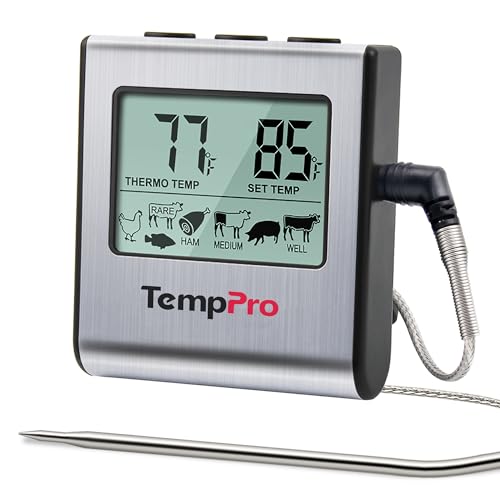
Cook mode with USDA preset temperature settings: TempPro cooking thermometer ideal for meat, oven, smoker or stove top; Programmable alert with preset temperatures for specific foods recommended by USDA; All of the preset temps can be reset to your desired tastes

BBQ HI/LOW temp range alarm: Set your desired food temp and HI/LOW temp range for your grill or smoker to know when to add more fuel smoker thermometer will flash and beep to remind you if the temperature ever goes out your set range; HI/LOW temp range alarm is specifically designed for usage with smokers, grills and BBQs

Smart Display Base with Control: The ThermoMaven G1 wireless meat thermometer features a versatile smart display base that offers real-time temperature readings and allows you to set temperatures directly on the device—no app required. With our user-friendly one-click setup, you can connect the probe, pair it with the base, and start cooking in seconds—no complicated setup needed!
Achieving the Perfect Internal Temperature
Temperature accuracy separates mediocre smoked chicken from exceptional results. You’ll need a digital meat thermometer accuracy to guarantee safe, properly cooked leg quarters every time.
Insert your thermometer into the thickest meat portion, avoiding bone contact. Target 165°F minimum for food safety, though dark meat reaches peak tenderness between 175°F and 190°F. Check multiple quarters for consistency across your batch.
Consider carryover temperature when pulling your chicken. Remove quarters at 160°F and let them rest 3–15 minutes; residual heat carries them to your target safely. This technique prevents overcooking while ensuring juices redistribute throughout the meat. Chicken leg quarters are dark meat with higher fat content that allows them to tolerate longer smoking times without drying out. For crispier skin, consider finishing with a short high-heat session to develop texture. Flipping your quarters every 3 to 5 minutes during the high-heat finish ensures even browning and texture development. Let the meat rest for 3 minutes after removing it from the smoker to allow the juices to settle.
Monitor temperatures starting after one hour at 225°F. Dark meat’s higher fat content tolerates elevated temperatures better than white meat, so you’ll achieve that fall-off-the-bone texture without drying out your quarters. Applying BBQ sauce near the end of cooking enhances flavor while keeping the exterior moist. Using pecan wood or other flavorful woods during the smoking process can enhance the overall taste and complexity of your chicken quarters.

Fast & Accurate: Get precise readings in just 1 second with ±0.9°F accuracy. NSF Certified for trusted food safety, this digital food thermometer features a 4.3 inches food-grade stainless steel meat probe, perfect for grilling, frying, baking, making candy and more

【Fast & Accurate】Our meat thermometer digital delivers accurate readings within ±1°F in just 1–2 seconds, with a wide temperature range of -58°F to 572°F (-50°C to 300°C). No more waiting over the heat - know your food's exact temperature instantly.

【8X Faster + 4X More Precise】: Upgraded with an industrial-leading professional thermocouple sensor, Themomonster meat thermometer digital with NIST certified ±0.5℉ precision provides you the accurate temperature of your food in just 0.5 Seconds.
Finishing and Serving Your Smoked Chicken
How you finish your smoked chicken leg quarters determines whether you’ll achieve that restaurant-quality presentation and ideal texture your effort deserves. After smoking, implement proper resting procedures by allowing your chicken to rest for a minimum of 30 minutes, positioning skin-side up to maintain crispiness. For enhanced texture, increase your smoker’s heat to 400°F-425°F and return chicken to the grates for 4-5 minutes per side, ensuring clean, oiled grates prevent sticking. This crisping the skin step transforms the exterior into an irresistible golden finish. Once complete, baste immediately with your preferred barbecue sauce using a basting brush. Allow additional resting to redistribute the juices throughout the meat, then garnish with fresh herbs and lemon slices for visual appeal. Using upright racks on your smoker grates during the crisping phase helps maintain even spacing and prevents flareups from dripping juices. For optimal results, ensure your smoker has proper venting to control the heat distribution during the final crisping stage. Some recipes enhance crispiness further through air frying or oven broiling after the initial smoking phase for additional texture improvement. Your chicken is done when it reaches an internal temperature of at least 165°F in both the breast and thigh. Consider pairing your finished chicken leg quarters with complementary sides like smoked mac and cheese, hasselback potatoes, or grilled corn on the cob to create a complete meal. Serving your finished chicken leg quarters on top of grilled roasted vegetables creates an elevated presentation that complements the tender, juicy dark meat.
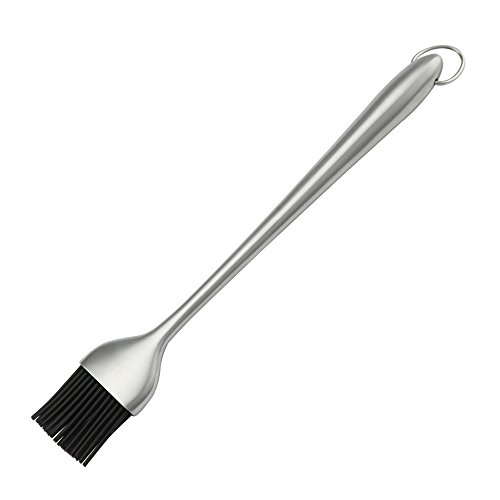
Heavy-duty BBQ Basting Brush by HQY - Silicone Bristles with 12 Inch Stainless Steel Handle - Make Grilling Easy - 5 Year Guarantee

★Upgraded ONE-PIECE DESIGN & STAINLESS STEEL CORE TECHNOLOGY - Owing to ONE-PIECE design, the silicone bristles will not break or shed in your food, unlike other bristle brushes. The handle built with internal steel core results in a solid durability to our basting oil brush, it is also long enough to get a firm grip, never break and rust.

✔ With 4 Extra Replacement Heads : This BBQ mop brushes for sauce allows you to keep your barbecue moist, infuse it with flavor while you are cooking or add sauce. It can pick up more thin sauces than silicone pastry brush. Best mop to add sauce, marinate, oil, tenderizer grill or smoke BBQ ribs, brisket, chicken and pork.