
You’ll achieve fundamentally different results depending on your priorities. Smoking delivers complex, multidimensional flavor through wood infusion—hickory provides bold warmth, while apple offers subtler notes—maintaining juicy tenderness at 225-275°F over roughly 30 minutes per pound. Roasting produces crispy, golden skin through direct oven heat at 325°F in 3-4 hours, though it carries higher drying risks. Smoking creates darker, lacquered skin; roasting renders fat for textural crunch. Your choice hinges on whether you prioritize smoky depth or classic golden appearance and herb-forward seasoning.
Flavor Profile and Smoke Infusion
The wood you select fundamentally shapes your smoked turkey’s flavor foundation, as each variety imparts distinct taste characteristics that’ll build throughout the slow-cooking process. Hickory delivers bold, deep warmth with a distinctive bite, while apple and cherry woods provide sweeter, subtler profiles. Mesquite produces intense notes that dominate your overall experience. Top-performing brands like Traeger and Lumberjack offer quality hardwood pellets specifically blended for consistent smoke delivery and minimal ash production.
You’ll achieve smoke penetration depth through extended cooking at 225-300 degrees Fahrenheit, allowing flavor compounds to gradually permeate the meat. Pre-smoking brining enhances brine flavor saturation, enabling your turkey to absorb and retain wood smoke throughout cooking. For poultry like turkey, apple, cherry, and maple woods are ideal choices that complement the delicate meat without overpowering it. Mixing milder fruit woods with pecan or walnut can help balance intensity while maintaining the subtle sweetness that works best with turkey. Avoid using softwoods like pine as they create bitter residue that negates the delicate poultry flavor you’ve worked to develop. For best results, invest in a pellet grill with digital temperature control to maintain consistent cooking temperatures throughout the smoking process. The careful selection of wood combined with meticulous smoking techniques creates a satisfying contrast between the crispy exterior and moist interior. This moisture retention allows deeper smoke integration compared to roasted turkey’s milder profile, which relies on herb seasonings rather than wood infusion. The slightly salty taste from the brining process distinguishes smoked turkey from its roasted counterpart. The result? A multidimensional taste experience combining natural sweetness with complex smoky depth.

APPLE WOOD FIRED FLAVOR: With Traeger Apple Hardwood Pellets, naturally enhance baked goods, chicken, and pork with a subtly sweet, fruity flavor.

THE #1 PELLET FUEL BRAND: Trusted by backyard grillers and pitmasters alike, Pit Boss Hardwood BBQ Pellets deliver premium quality, reliable performance, and authentic wood-fired flavor for every cook

100% all-natural premium hardwood food grade pellets works with Camp Chef, Traeger, Green Mountain, and Many other grills
Texture and Moisture Content
Beyond the complex flavor layers you’ve developed through smoke infusion, your cooking method dramatically shapes how the turkey feels on your plate and how it retains its natural juices. Smoked turkey delivers mouthfeel characteristics defined by tenderness—low-and-slow heat locks moisture inside while the meat remains juicy despite longer cook times around 300°F. You’ll notice consistency variations between methods: smoked breast yields a fountain of juice with a smoother texture, while roasted turkey achieves crispy, golden skin through direct oven heat. However, roasting carries higher drying risks because oven heat removes moisture from the air. Smoked excels in internal juiciness; roasted triumphs in skin crispness. Both require precision: brining and basting enhance roasted moisture retention, while smoking’s indirect heat naturally preserves the bird’s moisture without compromise. Using a meat thermometer ensures you achieve the proper internal temperature rather than relying solely on cooking time. Resting the turkey after smoking by wrapping it in foil helps maintain juiciness before serving. The outer layer of smoked turkey absorbs the aromatic essence of smoke, creating a distinctive textural experience that sets it apart from traditional roasting methods. For best results, allow sufficient time for the smoking process—maintaining a consistent smoker temperature throughout cooking ensures even heat distribution and optimal moisture retention. Electric smokers like Masterbuilt and Cusinart models maintain precise temperature control, typically between 250°F and 275°F, which helps achieve the tender, juicy results that define smoked turkey’s superior moisture retention. Aiming for 160-165°F in the breast and about 175°F in the thigh ensures both safety and optimal doneness across different parts of the bird.
Cooking Temperature and Time Requirements
While texture and moisture define your eating experience, temperature and time control determine whether you’ll achieve that ideal outcome—and smoking demands fundamentally different parameters than roasting. You’ll maintain your smoker at 225°F, cooking approximately 30 minutes per pound for tenderness consistency and even heating. A 15-pound turkey requires roughly 7.5 hours. Alternatively, you can increase to 275°F, reducing time to 2-3 hours for spatchcock preparations. Roasting at 325°F typically takes 3-4 hours for similar-sized birds. Both methods require reaching 165°F internal temperature in the thickest thigh section. However, smoking at lower temperatures like 275°F maintains smaller thermal gradients that prevent the thin breast sections from overcooking while the thicker center finishes. Using wood pellets enhances the smoky flavor while you monitor your bird throughout the cooking process. Popular smoking woods include almond, pecan, apple, or maple for balanced flavor development. For optimal moisture retention, consider dry brining the turkey before smoking to enhance both flavor and juiciness. Incorporating aromatics like lemon, onion, and herbs in the turkey cavity adds extra flavor complexity to your final dish. You’ll then rest your turkey for 15-30 minutes, insulated with foil and towels. For best results, begin checking for doneness about one hour before the planned finish time using an instant-read thermometer to check breast and thigh temperatures on both sides. The key difference: smoking’s lower temperature demands precision monitoring with a reliable probe thermometer to guarantee food safety without overcooking.

Festive Holiday Flavor: Holiday Turkey blend with Maple, Hickory & Cherry infuses a sweet, smoky flavor into turkey, lamb, pork, beef, veggies, and even desserts

HICKORY WOOD FIRED FLAVOR: Traeger Hickory Hardwood Pellets are great for naturally enhancing beef, chicken, pork, and veggies with full-bodied, bold flavor. So it should come as no surprise that Hickory’s assertive flavor is one of the most popular choices for classic BBQ cooking.

Skin Appearance and Crispness
Once you’ve nailed your cooking temperatures and timing, you’ll immediately notice that skin appearance separates these two methods as dramatically as their flavor profiles do. Roasting delivers crispy, golden-brown skin through dry oven heat that renders fat efficiently, creating the textural crunch you’re after. Smoking, conversely, produces darker, lacquered skin from smoke exposure and moisture retention in the cooking environment, resulting in a chewier texture despite its visual appeal.
Your coloring technique matters greatly. Roasting at 375-425°F generates even browning and superior crispness, especially when basting. Smoking darkens skin through prolonged smoke exposure, intensified by wood choice like hickory, but struggles to achieve crispness due to moisture retention. For enhanced skin crispiness on smoked turkey, consider using indirect heat during the initial smoking phase to better control moisture levels. Models like the Weber Smokey Mountain offer excellent temperature stability for consistent skin darkening without excessive moisture. Hybrid smoker-grill combos with digital temperature controllers provide even more precise moisture and heat management for superior skin results. For those seeking optimal results, investing in a grill with integrated smoker functionality allows for better temperature control and moisture management throughout the cooking process. Consider finishing smoked turkey in the oven for improved skin rendering and that desired textural contrast between exterior and juicy interior. A covered outdoor grill station with weather protection enables you to monitor and adjust your smoking process while shielded from the elements. The smoke ring visible on smoked turkey provides visual evidence of the smoking process, though it doesn’t contribute to the crispy exterior many prefer during holiday meals.
Preparation Requirements and Brining
Brining’s your secret weapon for transforming turkey—whether you’re smoking or roasting—because it fundamentally changes how the meat retains moisture during extended cooking. You’ll prepare a salt-based solution that penetrates meat fibers, locking in juices throughout the cooking process.
For brine consistency, you’ll dissolve salt thoroughly to guarantee even distribution. The brine time duration typically precedes your chosen cooking method, allowing the saltwater to work its magic on the protein structure. Smoking at lower temperatures like 300°F requires extended smoking periods of 15-25 minutes per pound to ensure the brine’s moisturizing effects fully develop throughout the meat.
Both smoking and roasting benefit substantially from brining, though smoking demands particular attention since lower temperatures require extended cooking periods. A meat thermometer is essential for monitoring the internal temperature to ensure your turkey reaches the safe 165°F threshold. Consider using medium-smoking woods like pecan or hickory if you’re smoking to enhance the flavor profile alongside your brining efforts. Using wood pellets such as apple or cherry can also complement your brining strategy for enhanced smoky flavor development. You’ll notice the finished turkey develops a slightly salty taste profile and improved texture. After brining, rest your turkey before applying additional seasonings specific to your cooking method—this step ensures optimal flavor development and moisture retention. For best results, protect your hands with grill mitts while handling your turkey during preparation and cooking. Ensure your turkey is properly thawed prior to cooking to guarantee the brine penetrates evenly throughout the meat.
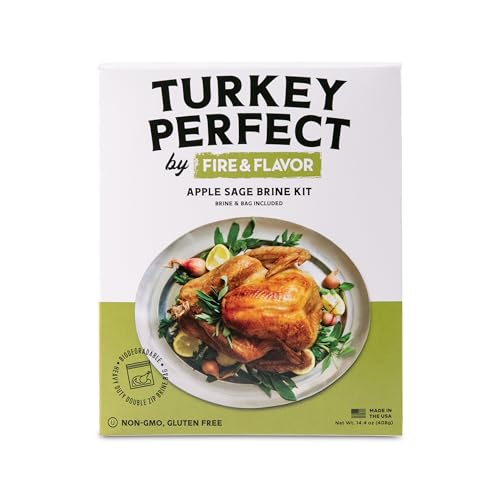
MAKE YOUR BEST TURKEY: In 5 simple steps, you'll have your best-tasting turkey ever. The brine ensures excellent flavor, and the bag keeps your turkey moist and tender. Our kit is gluten-free, non-GMO, and kosher.

MAKE YOUR BEST TURKEY: In 5 simple steps, you'll have your best-tasting turkey ever. The brine ensures excellent flavor, and the bag keeps your turkey moist and tender. Our kit is gluten-free, non-GMO, and kosher.

A PERFECT TURKEY BRINE BAG ENOUGH TO ACCOMMODATE UP TO 2 SOAKS. No need to search for additional supplies to season your bird. Our brine bags for turkey have enough brine for 2 soaks. Make your meats perform better with our Lanes turkey brine kit.
Wood Selection for Smoking
Start with mild fruitwoods like apple or cherry for subtle sweetness without overpowering your turkey’s delicate meat. If you want added depth, pecan delivers nutty richness that complements poultry beautifully. Maple offers broad appeal with its smooth, honey-like character—ideal for smoke-hesitant guests.
Avoid mesquite and heavy hickory alone; they’ll obliterate turkey’s natural flavors. Instead, blend hickory with apple or cherry to achieve balanced wood flavor intensity. Post oak provides medium smokiness without overwhelming results. For the best results, choose kiln-dried, certified hickory when blending to ensure purity and prevent off-flavors in your turkey. When using wood chips, fresh chips should be added every 35 to 45 minutes to maintain consistent smoke throughout your cooking process. Expert pitmasters recommend experimenting with various woods to find your preferred flavor profile, as experimentation with various woods is common among experienced smokers. Hickory’s bacon-like flavor profile makes it particularly effective when used sparingly in blends with milder woods. Red oak and post oak serve as reliable base woods, offering balanced smoke flavor** that enhances poultry without overpowering the delicate meat. Apple wood burns cleaner and faster than dense hardwoods, so you may need more frequent replenishing** on longer smokes to maintain steady smoke production.
Consider cleanup considerations too—lighter woods produce cleaner burns with minimal residue buildup in your pellet grill, reducing maintenance between smokes. For maximum heat and quick cooking, lump charcoal offers an excellent complement to wood smoking, providing intense heat for searing or finishing your turkey.

100% NATURAL WOODCHIPS: Includes 6 ounces each of hickory extra fine wood chips (100% all natural - no fillers) for stovetop smokers and smoking guns.

Hickory BBQ Smoker Extra Fine Wood Chips. Ignite quickly and combust completely to create a delicate smokey flavor. The essential fuel for your best BBQ yet - perfect for Memorial Day kick-offs, Father’s Day gifting, 4th of July feasts, and every backyard barbecue all summer long.

REAL CHUNKS, NOT CHIPS — 2"x3" pieces burn 30-60 min each. Chips burn out in 5 minutes.
Equipment and Space Considerations
The fundamental difference between smoking and roasting comes down to your available space and equipment investment. Smoking demands dedicated outdoor space needs and specialized equipment—whether you’re using a charcoal grill, offset smoker, or bullet smoker. You’ll need digital thermometers for precise temperature monitoring during extended cooking sessions. Roasting, conversely, utilizes standard kitchen appliances already in your home, requiring only an oven rack and roasting pan. Your storage requirements differ enormously: smoking equipment necessitates considerable space for the smoker unit itself, while roasting demands minimal additional storage. If you lack outdoor space or want to avoid equipment purchases, roasting delivers superior convenience. A Traeger smoker like the Traeger Timberline 1300 represents the specialized equipment investment required for smoking, which differs significantly from roasting’s minimal setup needs. However, smoking’s specialized setup—including water pans for humidity control and two-zone heat configuration—yields distinct flavor profiles impossible to replicate through traditional roasting methods. Pellet grills offer consistent temperature control that simplifies the smoking process compared to traditional charcoal or offset smokers. For budget-conscious buyers, Z Grills wood pellet smokers provide affordable alternatives to premium brands while maintaining strong performance. When evaluating smoking equipment, consider the build materials and warranty of any smoker you’re considering, as durability impacts long-term value and performance reliability. For either method, investing in reliable digital thermometers rather than relying on built-in grill thermometers or pop-up indicators ensures accurate temperature readings and food safety.

Precision Cooking with Z-Ultra PID 3.0 – The upgraded PID 3.0 system automatically manages pellet feed and airflow to maintain stable temperatures between 180°F and 450°F, giving you consistent results every cook

Pit Boss Mahogany Series 440 Wood Pellet Grill and Smoker

Taste Test Results and Preferences
When you place smoked and roasted turkey side by side on the table, the differences become immediately apparent—both in appearance and in what your palate experiences. Smoked turkey wins decisively in richness of flavor, developing a prominent hickory profile that fills your mouth with warmth and bite. You’ll notice the juiciness of meat surpasses its roasted counterpart—smoking releases moisture into the air, keeping the breast remarkably tender. The smoked skin darkens to a lacquered finish resembling Peking duck, though it remains chewier than the crispy-rendered skin you’d achieve through roasting. However, it’s important to note that smoked turkey can dry out easily if not cooked with proper temperature control and timing. To maintain optimal juiciness, smoking should be done low and slow at around 250°F until the meat reaches an internal temperature of 165°F, a method that breaks down connective tissue for ultimate tenderness. Using indirect heat allows for even cooking and helps preserve moisture throughout the smoking process. Like grilling techniques that benefit from turning regularly to avoid burning, smoking also requires careful attention to prevent uneven cooking. In taste tests comparing store-bought options, Sam’s turkey was slightly preferred for its tender dark meat and juicy white meat over roasted alternatives. Tasters consistently favor smoked turkey’s distinct, complex taste over traditional oven-baked results. Both methods absorb the lightly salted brine equally well, yet smoked turkey’s superior moisture retention and deeper flavor profile make it the preferred choice among most testers.
Practical Considerations for Holiday Cooking
Beyond taste preferences, you’ll need to weigh several practical factors that’ll substantially impact your holiday cooking success. Consider your cooking timeline: roasting demands 13-15 hours total, while smoking requires 4 times longer with extended low-temperature preparation at 225-300°F. Evaluate cost savings through equipment requirements. Roasting uses your existing standard oven, requiring minimal setup. Smoking demands a dedicated outdoor smoker or grill with proper indirect heat zones, charcoal or wood pellets, and moisture management accessories. If you own a pellet grill, you might also consider rotisserie attachment kits that provide even cooking and self-basting benefits for your turkey.
Your kitchen geography matters too. Roasting occupies critical oven space during peak holiday cooking when multiple side dishes compete for real estate. Smoking frees your indoor oven entirely, enabling simultaneous preparation of casseroles, vegetables, and desserts. Like grilling vegetables in foil packets that retain moisture and flavor through sealed cooking, you can apply similar moisture retention techniques to your smoked turkey. For best results, select apple wood pellets to complement your smoked turkey with a flavorful, smoky enhancement. However, smoking requires available outdoor space and stable weather conditions—potentially problematic in harsh climates or limited yard situations. Overheating your smoked turkey can cause the meat to dry out and lose its desirable texture, similar to the albumin leakage that occurs when smoking other proteins at excessive temperatures. Use a meat thermometer to monitor the internal temperature accurately and ensure the turkey reaches 165°F for white meat and 180°F for dark meat. Brining the turkey before smoking prevents the meat from drying out during the extended cooking process. For optimal results, inject brine throughout the turkey breast to ensure the cure penetrates evenly and delivers that desired state fair flavor profile.