You’ll smoke your 20-pound turkey in 6-8 hours at 225-275°F or accelerate the process to 3-4 hours at 350°F by spatchcocking. Monitor thigh temperature continuously, targeting 160°F for completion, then rest for 10-15 minutes before carving. Use an instant-read thermometer to verify the breast reaches 165°F and thighs hit 175-180°F. Proper dry brining beforehand enhances moisture and flavor tremendously. However, several critical techniques’ll guarantee your turkey achieves excellent results beyond these fundamentals.
Preparing Your Turkey for Smoking
You’ll want to start by thawing your turkey properly, which requires planning ahead. Remove your 20-pound bird from packaging, discarding plastic trussing and the pop-up timer. Rinse it thoroughly under cold water, then pat completely dry with paper towels. Extract giblets and neck from both cavities, checking carefully for any remaining packaging materials. Plan at least 24 hours per 5 pounds to ensure your turkey is completely defrosted before cooking.
Next, allow your turkey to reach room temperature before proceeding. Separate the skin from the breast to create pockets for your butter and herb mixtures. Apply your seasoning application strategically by slipping softened butter combined with sage, rosemary, thyme, kosher salt, and black pepper under the skin in even quarter-inch layers across the breast and legs. For maximum flavor impact, season your turkey 12-24 hours before smoking to allow the seasonings to fully penetrate the meat. Consider dry brining the bird beforehand to further enhance both flavor and moisture retention. Optional brining techniques can ensure your turkey retains maximum moisture and develops deeper flavor throughout the smoking process. For best results, brine for up to 48 hours before smoking to maximize moisture retention and flavor development. During the smoking process, periodic basting with melted butter will help keep the meat moist and add additional flavor.
Finally, coat the exterior with olive oil or melted butter, then apply your chosen dry rub or poultry seasoning. Insert an oven-safe thermometer into the thickest thigh portion. Using a disposable pan underneath the turkey will significantly ease cleanup while catching drippings that can be used for gravy.
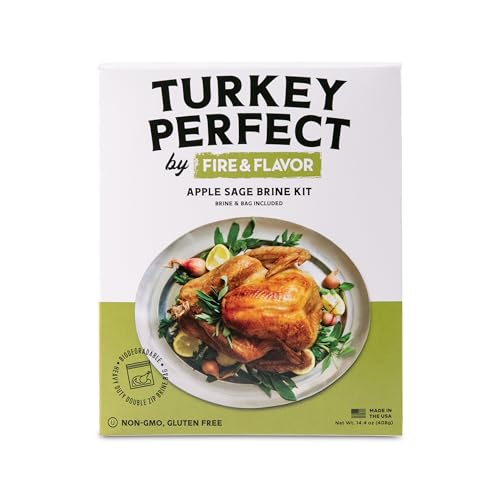
MAKE YOUR BEST TURKEY: In 5 simple steps, you'll have your best-tasting turkey ever. The brine ensures excellent flavor, and the bag keeps your turkey moist and tender. Our kit is gluten-free, non-GMO, and kosher.

13oz package contains packet of brine mixture and packet of rub

MAKE YOUR BEST TURKEY: In 5 simple steps, you'll have your best-tasting turkey ever. The brine ensures excellent flavor, and the bag keeps your turkey moist and tender. Our kit is gluten-free, non-GMO, and kosher.
Low Temperature Smoking Times
Low-and-slow smoking of a 20-pound turkey requires careful temperature management and timing precision. You’ll need to plan a full day for this cooking method, as smoking temperature variations drastically impact your results. Start your smoker at 225-275°F to guarantee optimal outcomes. The turkey size requirements demand you pass through the critical 40-140°F danger zone within four hours or less to reduce food contamination risks.
At 225°F, expect 6-8 hours total cooking time. Monitor your thigh temperature continuously with a probe thermometer, targeting 160°F for completion. If progress stalls after 3.5 hours, remove the turkey and finish it using alternative methods. Remember that minimal carryover cooking occurs during low-temperature smoking, so you’ll rely entirely on accurate temperature monitoring to achieve food safety and perfect doneness throughout your bird. After removing the turkey from the smoker, let it rest for 10 to 15 minutes before carving to allow the juices to redistribute throughout the meat. Consider using a Smoke X4 remote thermometer to track both turkey and smoker conditions throughout the cooking process. Brining the turkey beforehand will help keep the meat moist and may slightly reduce your overall cooking time. Adding a water pan to your electric smoker helps maintain moisture levels and prevents the turkey from drying out during the extended cooking process. Some methods suggest smoking breast side down to allow natural juices to flow into the breast meat, keeping it exceptionally moist throughout the long cooking process. Using quality wood pellets adds rich smoke flavor that penetrates the meat during the extended cooking time. Stuffing the cavity with aromatics like lemon and herbs enhances the flavor profile during the long smoking process.
Higher Temperature Smoking Times
Smoking at higher temperatures dramatically cuts your cooking time while maintaining food safety and developing a crispy exterior on your 20-pound turkey. You’ll complete the entire process in approximately 3-4 hours at 350°F, compared to 5+ hours at lower temperatures.
Higher temperature cooking factors include spatchcocking, which accelerates results considerably by increasing surface area exposure. Cherry wood chunks enhance color development at these temperatures without compromising taste. Placing temperature probes in both the breast and thigh ensures you monitor doneness accurately throughout the smoking process.
Food safety considerations make this approach advantageous: you’ll pass through the 40-140°F danger zone faster, reducing pathogen multiplication risk. Since whole large poultry requires extended cooking times at lower temperatures, elevated heat provides critical safety benefits. Your turkey reaches the required 165°F internal temperature for white meat safely while achieving ideal texture throughout. Always verify doneness by using a meat thermometer rather than relying on external appearance, as color cannot reliably indicate whether harmful vegetative bacteria like Salmonella have been eliminated. Brining the turkey beforehand can further enhance both flavor and moisture retention during the smoking process. Smoking at 275°F balances a shorter cook time with maintaining juiciness while still producing crispy skin on your bird. Allowing the turkey to rest after smoking helps juices redistribute and the temperature rise an additional 5 degrees, ensuring safe final temperature around 165°F. For enhanced monitoring capabilities, consider wireless thermometer systems that allow you to track internal temperatures remotely throughout the entire smoking process. An instant-read thermometer like the ThermoWorks Thermapen ONE delivers accurate spot-checks in just one second, making it invaluable for verifying multiple points on your turkey without heat loss.
Understanding Internal Temperature Targets
Since a meat thermometer—not color or appearance—is your only reliable indicator of doneness, you’ll need to establish clear temperature targets for different sections of your turkey. Set your high-alarm at 150°F for breast meat and 175°F for thigh meat, accounting for darker meat’s denser structure. Your probe placement matters: position the breast probe in the thickest section, avoiding bone contact, while the thigh probe goes into the meatiest area. During temperature checks, verify your lowest reading across all sections reaches at least 157°F minimum for food safety. Perform spot-checks with a Thermapen ONE at alarm sounds to confirm probe accuracy. Multiple probes enable simultaneous monitoring, preventing the danger zone delays that compromise both safety and quality. To preserve the quality of your original cook and avoid dryness, aim for 145°F when reheating smoked turkey the following day rather than pushing temperatures higher. Consistent, steady heat throughout the smoking process is essential for ensuring your turkey reaches these target temperatures evenly across all sections. Once your turkey reaches the proper internal temperature, allow it to rest after smoking so the juices can redistribute throughout the meat for optimal flavor and moisture. If you plan to share leftovers with your dog, be aware that smoked turkey’s high sodium content and preservatives can cause digestive issues, making plain cooked turkey a safer alternative.
Essential Smoking Techniques
Once you’ve established your temperature targets, you’re ready to execute the smoking process itself. Your brining techniques directly influence moisture retention and flavor penetration, so do not neglect this preparatory step. Whether you’ve chosen wet or dry brining, you’ll notice reduced basting requirements during the smoke.
Select your wood carefully—oak, apple, hickory, cherry, and pecan each deliver distinct smoke flavor profiles. Maintain consistent temperatures between 225-250°F throughout the cook, using a probe thermometer to monitor progress without frequent lid openings that compromise heat stability. For a 20-pound turkey, plan for 3.5-4 hours of cooking time until it reaches 165°F internally. Thoroughly rinse and pat dry the turkey before applying your seasonings to ensure optimal smoke penetration and crispy skin development.
Position your turkey breast-side up on the grate with a water-filled drip pan beneath it. This setup guarantees even heat circulation and preserves the humidity necessary for tender, juicy results. After cooking, allow the turkey to rest for 20-30 minutes so the juices can redistribute throughout the meat, ensuring maximum tenderness and flavor. Increase temperature to 300°F during the final stage to achieve crispy, mahogany skin.

PREMIUM WOOD CHIPS: Made from all-natural wood that burns cleanly and evenly, these wood chips can be used on top of charcoal and in smoker boxes to deliver professional-level, mouth-watering results.

Made In the USA: Celebrate homegrown quality with these premium wood chips made in Arkansas and Missouri

3-PACK VARIETY OF PREMIUM SMOKING WOOD CHIPS – Elevate every barbecue with this ultimate smoking wood chip bundle, featuring three 1.8 lb bags of premium, all-natural wood chips. Includes Hickory for bold, classic BBQ flavor, Applewood for a subtly sweet and fruity aroma, and Mesquite for deep, earthy smokiness—perfect for ribs, brisket, poultry, pork, seafood, lamb, and game meats. Ideal for use in charcoal grills, gas grills, electric grills, and smokers, this variety pack delivers rich, versatile flavor options for backyard BBQs, camping trips, and tailgates.
Monitoring Doneness and Safe Temperatures
The difference between a perfectly smoked turkey and an overcooked one hinges on accurate temperature monitoring rather than elapsed time. You’ll need an instant-read thermometer to verify doneness in the breast and thigh’s thickest parts on both sides, using the lowest reading to determine removal.
Target 165°F for safety and ideal juiciness. However, you can achieve bacterial kill-off at 157°F held for 47.9 seconds, which prevents avoiding overcooking when smoking at higher temperatures like 275°F. This approach proves especially valuable for monitoring temperature variations across uneven heat zones. Consider brining your turkey in a salt solution beforehand, as this denatures proteins and prevents moisture loss during the smoking process.
Check multiple spots before removing your turkey. Set a high-temp alarm on your meat thermometer channel to signal approach to your target temperature, ensuring consistent results without relying solely on time estimates. After removing the turkey from the smoker, let the meat rest 15 to 20 minutes before carving to retain the juices and allow for carryover cooking. Adding moisture in the smoker with a water pan or by basting with butter or broth helps prevent the turkey from drying out during the long cooking process. Avoid overheating, which can cause albumin leakage and dryness in the meat. The slow cooking over wood smoke not only develops the characteristic flavor but also creates a firm texture with dark, lacquered skin that distinguishes smoked turkey from its oven-roasted counterpart. For a 20-pound turkey, plan for approximately 8.3 to 10 hours of smoking time at 225°F, accounting for the larger size and potential heat variations in your smoker. A reliable thermometer is essential equipment for any smoking session, as it removes the guesswork and ensures your turkey reaches the proper internal temperature throughout.

Fast & Accurate: Get precise readings in just 1 second with ±0.9°F accuracy. NSF Certified for trusted food safety, this digital food thermometer features a 4.3 inches food-grade stainless steel meat probe, perfect for grilling, frying, baking, making candy and more

【Fast & Accurate】Our meat thermometer digital delivers accurate readings within ±1°F in just 1–2 seconds, with a wide temperature range of -58°F to 572°F (-50°C to 300°C). No more waiting over the heat - know your food's exact temperature instantly.

【8X Faster + 4X More Precise】: Upgraded with an industrial-leading professional thermocouple sensor, Themomonster meat thermometer digital with NIST certified ±0.5℉ precision provides you the accurate temperature of your food in just 0.5 Seconds.
The Importance of Resting Your Turkey
After you’ve confirmed your turkey’s reached the proper internal temperature and removed it from the smoker, your work isn’t finished—you’ll now guide it through a critical phase that’ll determine whether your bird stays juicy or turns dry on the plate. Rest duration adjustments depend on your turkey’s size; a 20-pound bird requires 45-60 minutes. During this period, residual heat raises internal temperature 5-10°F while myoglobin redistributes throughout the meat, reabsorbing internal juices evenly.
Place your turkey on a sheet pan initially to collect drippings for gravy. After 10-15 minutes, transfer it to a wire rack. Avoid covering to preserve skin crispiness. This resting allows internal juices to be reabsorbed into the meat, enhancing the overall flavor profile. Your perfect serving temperature targets 140°F, ensuring ideal texture and moisture retention across breast, thigh, and leg meat. Longer, lower temperature resting periods result in more tender, juicy meat compared to immediate carving. Similar to smoking other large cuts of meat, resting for at least 30 minutes helps retain juices and prevents them from running out when you begin slicing. Just as with brisket, testing for tenderness by probe confirms your turkey has reached the ideal texture throughout. Allowing the meat to rest before serving helps concentrate flavors throughout the bird, creating a more professional-quality result. If you need to reheat your smoked turkey later, use low temperature methods with a covered roasting pan and a little water or broth to maintain moisture. Any leftover smoked turkey can be safely stored in the refrigerator for three to four days when kept at or below 40°F.
Adjustments for High Altitude Cooking
If you’re smoking your turkey above 5,000 feet, you’ll need to account for dramatic atmospheric pressure changes that fundamentally alter your cooking process. Lower atmospheric pressure reduces water’s boiling point, extending your smoking time by up to 25% compared to sea-level cooking.
Implement robust moisture retention strategies to combat low-humidity evaporation. Place your 20-pound turkey in an aluminum roasting pan to trap escaping moisture. Baste every 40-60 minutes with vinegar mixture or broth. Maintain your smoker at 225°F, but expect substantially longer times reaching safe internal temperatures of 165°F for breast meat and 170-175°F for thighs. Apply your spice blend generously before placing the turkey in the pan to ensure maximum flavor absorption during the extended cooking process.
Monitor internal temperatures closely with a meat thermometer. Wind, cold, and wet weather compound altitude’s effects, further extending your total cook time. Always verify doneness with a probe rather than relying on estimated timing alone. Consider using apple wood pellets to enhance flavor during the extended cooking process at high altitude. Experimenting with different hardwood pellet flavors like hickory can also complement your turkey’s taste profile during these longer smoking sessions. For optimal results, choose pellets with low moisture content to ensure consistent heat output and minimal ash production throughout your extended smoking time.

APPLE WOOD FIRED FLAVOR: With Traeger Apple Hardwood Pellets, naturally enhance baked goods, chicken, and pork with a subtly sweet, fruity flavor.

Festive Holiday Flavor: Holiday Turkey blend with Maple, Hickory & Cherry infuses a sweet, smoky flavor into turkey, lamb, pork, beef, veggies, and even desserts

HICKORY WOOD FIRED FLAVOR: Traeger Hickory Hardwood Pellets are great for naturally enhancing beef, chicken, pork, and veggies with full-bodied, bold flavor. So it should come as no surprise that Hickory’s assertive flavor is one of the most popular choices for classic BBQ cooking.
Serving and Storing Your Smoked Turkey
Your smoked turkey’s final stages demand as much precision as the smoking process itself. You’ll serve your turkey at 165°F breast internal temperature—the USDA’s instantaneous pathogen reduction standard. Use proper carving technique after resting 15-20 minutes to prevent juice loss. Insert your thermometer into the deepest breast part, avoiding bones for accurate readings.
For safe internal storage, refrigerate leftovers promptly below 40°F. Don’t let your turkey linger in the 40°F-140°F danger zone beyond four hours. When reheating, guarantee it reaches 165°F throughout before serving. If you’ve smoked your turkey the day before, wrap it in foil with butter and honey for extended rest. Allowing the turkey to rest for 15-30 minutes before carving redistributes the juices throughout the meat for optimal moisture and flavor. For best results, use an instant-read meat thermometer to verify the thigh has reached 170°F before carving, ensuring food safety and doneness. The ThermoWorks Thermapen ONE has proven to be the fastest and most accurate instant-read thermometer in speed and consistency tests, making it ideal for verifying multiple temperature points during carving. For monitoring temperature throughout the smoking process, wireless grill thermometers eliminate the need to constantly open your smoker and check manually. Avoid refreezing thawed turkey post-smoking—it compromises safety and quality.

Completely Waterproof: IPX6 waterproof rating means you can wash this cooking thermometer under running water without fear. This food thermometer for cooking ensures cleanup is ultra-fast

【8X Faster + 4X More Precise】: Upgraded with an industrial-leading professional thermocouple sensor, Themomonster meat thermometer digital with NIST certified ±0.5℉ precision provides you the accurate temperature of your food in just 0.5 Seconds.

【No More Overcooking, 8X Faster】Ultra-fast 0.5 second instant read meat thermometer delivers accurate temperature instantly, helping you avoid overcooking and achieve perfect doneness every time.