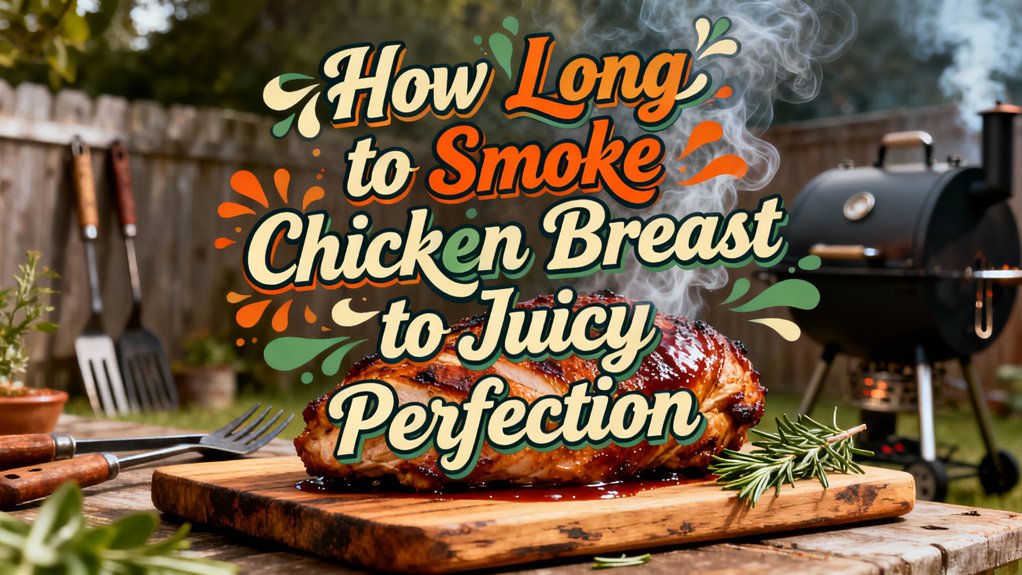
You’ll smoke boneless chicken breasts to juicy perfection in 45–50 minutes at 275°F. Pull them at 157°F internal temperature to account for carryover cooking, ensuring they’ll safely reach 165°F during resting. Brine your breasts for 1–6 hours beforehand, then baste every 30 minutes with garlic grilling oil to lock in moisture. Rest for 5–10 minutes before serving. The specifics of temperature management, wood selection, and seasoning techniques will elevate your results even further.
Setting the Right Temperature Range
Since temperature control directly impacts both flavor absorption and meat quality, you’ll want to dial in your smoker to 275°F for the best results. This temperature strikes the ideal balance between smoke penetration and exterior texture quality.
Start by preheating your smoker effectively to guarantee consistent heat from the moment you place your chicken inside. Maintaining consistent smoke throughout the cooking process prevents temperature fluctuations that compromise moisture retention. For optimal results, use a 275°F temperature to achieve juicy meat with good smoke flavor while avoiding the rubbery texture that occurs at lower settings. The most critical factor in determining doneness is reaching an internal temperature of 165°F, which ensures all bacteria are killed while preventing the chicken from becoming dry and tough. Using a digital thermometer to monitor the thickest part of the breast ensures accurate temperature readings throughout the cook. An instant-read thermometer is key to ensure the chicken reaches the safe and ideal internal temperature without overcooking.
Avoid temperatures below 250°F, which create an undesirable rubbery exterior. Conversely, temperatures above 275°F accelerate moisture loss and reduce smoke infusion into the meat. At 275°F, your chicken breasts will develop superior flavor while staying tender and juicy inside. The low-and-slow method helps keep chicken moist by allowing fat and connective tissues to break down slowly during the smoking process. While smoking at lower temperatures like 225°F allows for deep smoky flavor, it requires significantly more time to reach the target internal temperature. After smoking, resting the chicken for 5 to 10 minutes helps redistribute the juices for best texture and flavor. This temperature range typically requires 45-50 minutes total cooking time, making it efficient without sacrificing quality.

【Fast & Accurate】Our meat thermometer digital delivers accurate readings within ±1°F in just 1–2 seconds, with a wide temperature range of -58°F to 572°F (-50°C to 300°C). No more waiting over the heat - know your food's exact temperature instantly.

Instant Read Meat Thermometer | Our instant read thermometer features a temperature probe and advanced, highly accurate technology with a 1-2 second response time. Our instant read food thermometer comes pre-calibrated with instructions and a meat temperature chart, plus a recalibration feature if needed.

【8X Faster + 4X More Precise】: Upgraded with an industrial-leading professional thermocouple sensor, Themomonster meat thermometer digital with NIST certified ±0.5℉ precision provides you the accurate temperature of your food in just 0.5 Seconds.
Calculating Cooking Time for Boneless Breasts
Most boneless chicken breasts’ll reach the safe internal temperature of 165°F in 45–90 minutes, depending on your smoker’s temperature setting and the meat’s thickness. At 225°F, expect approximately one hour for full cook-through, though you’ll risk a rubbery exterior. The 250–275°F range delivers superior results, balancing texture and smoke penetration in roughly one hour. At 300°F, large breasts finish in about an hour with milder smoke rings.
Your prepping surface area matters—arrange breasts with consistent spacing for even heat distribution. Adjusting airflow controls your smoker’s temperature stability, directly impacting cooking time. Brining changes the cell structure of the meat to retain more liquid, which can improve juiciness throughout the cooking process. For best results, grease the smoker grates to deter sticking and prevent your chicken from adhering to the surface. Thinner breasts finish faster, so probe the thickest portion for accurate doneness monitoring. Large breasts typically require a full hour regardless of temperature, while individual size variations affect total duration. Using a reliable meat thermometer ensures you achieve proper doneness rather than relying solely on time estimates. Wireless meat thermometers with app connectivity allow you to monitor temperature without opening the smoker lid repeatedly. For enhanced smoke flavor during the initial cooking phase, maintain a low temperature around 225°F for 30 minutes to an hour before increasing the heat. Wood choices like oak, pecan, and hickory complement poultry without overpowering the delicate meat flavor. After smoking, let the chicken rest for 10 to 15 minutes so juices redistribute throughout the meat for maximum moisture.

Smart Display Base with Control: The ThermoMaven G1 wireless meat thermometer features a versatile smart display base that offers real-time temperature readings and allows you to set temperatures directly on the device—no app required. With our user-friendly one-click setup, you can connect the probe, pair it with the base, and start cooking in seconds—no complicated setup needed!

SMART BASE CONTROL: Set temperatures, monitor progress, and receive alerts directly from the base without needing your phone nearby.

More Stable Than Bluetooth: Our advanced RF technology ensures a stronger, more reliable connection than Bluetooth. This smoker thermometer provides the freedom to move around without losing connection! Monitor your BBQ from up to 1,000 feet away!
Monitoring Internal Temperature for Food Safety
Calculating your cook time gets you close, but you can’t rely on the clock alone—you’ll need a reliable food thermometer to confirm your chicken’s actually safe to eat. Insert your temperature probe into the thickest part of the breast, avoiding bone and fat pockets that skew readings. You’re targeting 165°F (74°C) for instant bacterial elimination.
Check multiple times during smoking to verify even heat distribution. The health impacts of undercooking are serious—Salmonella and other pathogens survive below safe temperatures, causing severe foodborne illness. Color and juices mislead you; only thermometer readings guarantee safety. Using a fast and accurate thermometer, such as a Thermapen, is the only way to know your chicken’s true doneness. Clean your probe between checks to prevent cross-contamination. The danger zone for bacterial growth exists between 40°F and 140°F, which is why maintaining proper temperatures throughout cooking is critical. If you’re smoking at lower temperatures, you’ll need precise resting times to achieve pasteurization equivalence. For longer smoking sessions, wireless models with app connectivity allow you to monitor temperature remotely without constantly opening your grill.
Proven Methods to Keep Chicken Moist
While you’ve confirmed your chicken’s safely cooked, you’ll find that hitting the right internal temperature doesn’t automatically guarantee juicy results—low-temperature smoking can paradoxically dry out breasts despite proper doneness. You’ll combat this through strategic moisture retention techniques. Brining with proper brine strength for 1-6 hours before smoking maintains internal juices effectively. Alternatively, marinade applications using oil-based solutions lock in moisture while infusing flavor. During smoking, baste every 30 minutes with garlic grilling oil to seal moisture and prevent surface drying. Pre-smoking, coat breasts with oil followed by seasoning rub—this creates a protective barrier. A heavy application of rub ensures full coverage that helps the chicken soak up smoky goodness during the smoking process. Using a leave-in probe thermometer allows you to monitor the internal temperature throughout smoking and pull the chicken at the optimal 157°F to prevent overcooking. A meat thermometer inserted in the thickest part of the breast ensures you’ve reached the safe internal temperature range of 165°F to 170°F for perfectly cooked chicken. After smoking, rest the chicken for 5 to 30 minutes to allow juices to redistribute before slicing. Similar to grilling techniques, flipping every 5 to 8 minutes when using higher-heat methods ensures even cooking and prevents moisture loss on one side. Air drying the chicken before smoking can also enhance skin crispness and improve overall texture. Maintaining appropriate grill temperature and monitoring airflow ensures consistent heat distribution throughout the smoking process. Combined, these methods work synergistically: brining prepares the meat, coating seals it, and basting sustains moisture throughout the 50-90 minute process, delivering consistently tender, juicy results.

CHAMPIONSHIP BIRD BRINE - This Bird Brine seasoning was developed by our award winning Killer Hogs Championship BBQ team.

LOCKS IN MOISTURE FOR JUICY RESULTS: Kosmos Q Chicken Soak Brine delivers a balanced mix of brown sugar, Worcestershire, and savory spices that draws moisture deep into the meat. Whether you're cooking whole birds or just tenderloins, this soak helps you get that juicy, flavorful bite in every piece without complex prep.

AUTHENTIC ORIGINAL CHICKEN INJECTION & BRINE: Our secret combination of ingredients capture the true taste of Memphis-style championship BBQ with the perfect balance of sweet & heat to take your BBQ to the next level.
Selecting the Best Wood for Chicken
Since wood selection fundamentally shapes your smoked chicken’s flavor profile, you’ll want to match wood characteristics to your taste preferences and brining approach. Apple and cherry woods deliver mild, fruity aromas ideal for brined chicken, while dry-rubbed breasts shine with cherry’s sophisticated sweetness. Oak provides balanced smoke intensity—neither overwhelming nor subtle—making it your safest single-wood choice. If you prefer bolder flavors, hickory imparts robust smokiness, though it requires cautious temperature management. Pecan offers moderate burn rates with nutty undertones that let natural chicken flavors emerge. Consider your desired smoke intensity when selecting wood: light woods for understated profiles, medium woods for depth, and strong woods for pronounced presence. Each wood species has a distinct organic makeup that affects the aroma and flavor during combustion. Mixing different wood types can add layers of complexity to your smoked chicken’s overall flavor. Maple is another excellent mild option that works beautifully with chicken and fish, providing subtle sweetness without overpowering delicate poultry flavors. For pellet smokers, look for 100% natural hardwoods without fillers or additives to ensure clean-burning performance and authentic smoke flavor. Avoid softwoods like pine or cedar, which contain resins that produce acrid smoke and burn too quickly for proper flavor development. Hickory is particularly well-suited for chicken because it provides a sweet, bacon-like note that complements poultry’s natural flavors. Apple wood burns cleaner and faster than dense hardwoods, so plan to replenish it more frequently during extended smoking sessions. Consistent medium heat guarantees proper smoke absorption regardless of your choice.

100 Percent Hickory Hardwood: Plain hickory and nothing else, so the smoke tastes like the classic BBQ wood you actually asked for instead of a blend built around lower-grade oak filler wood

Add a good, smokey flavor to your BBQ with these 100-percent natural hardwood smoking pellets; Quantity: 2

Includes (2) 40-pound bags of premium hickory hardwood pellets to take your next barbecue cookout to the next level
Preparing and Seasoning Your Chicken Breast
Now that you’ve selected your wood, you’ll prepare your chicken breasts to maximize smoke absorption and flavor development. Start by pat-drying your brined chicken to remove excess moisture, then apply oil using light spray coats in layers rather than one heavy application. This layered approach guarantees even coating techniques that distribute seasoning uniformly across all surfaces.
Next, apply your chosen rub—whether dry dust seasonings, hot honey blends, or garlic herb mixes—completely covering each breast. Control seasoning quantity by adjusting salt to your taste preferences; you’re aiming for complementary flavor, not overwhelming spice. For best results, evenly coat the chicken breasts with olive oil, sea salt, and pepper before applying any optional spice blends.
Finally, grease your smoker grates immediately before placement to prevent sticking. Timing your preparation correctly ascertains seasoning doesn’t settle unevenly, delivering consistent, flavorful results throughout your smoking process.

Features a blend of natural flavors and seasonings, including garlic and rosemary

Amazon Fresh Chicken Rub

Premium quality
Resting and Serving Your Smoked Chicken
How you finish your smoked chicken breast matters as much as the smoking itself—proper resting and serving transforms your effort into perfectly juicy, safe-to-eat results.
Pull your chicken at your preferred resting temperature of 157°F, then tent it loosely with foil for exactly 10 minutes. This resting process consistency allows carryover cooking to safely elevate internal temperature to 165°F while preserving moisture. Monitor the thickest part with your probe to confirm doneness.
After resting, slice and serve immediately to maintain the smoky flavor and tender texture you’ve worked to achieve. You’ll notice considerably juicier results compared to pulling at 165°F directly. For additional moisture retention, consider using a mayo-based rub on your chicken before smoking to enhance juiciness throughout the cooking process. Allowing the chicken to rest after smoking helps the juices to redistribute throughout the meat for optimal texture and flavor. Monitoring internal temperature rather than relying solely on time ensures your chicken reaches the perfect level of doneness. As a lean protein source, smoked chicken breast delivers essential vitamins and minerals while remaining low in saturated fat and calories. If you have leftovers, you can safely refrigerate cooked chicken for three to four days when stored at or below 40°F. For longer storage, freeze cooked chicken on the day of cooking in airtight containers to maintain quality for up to four months at 0°F or lower. This technique—combining lower pull temperatures with proper resting—consistently delivers superior juiciness and food safety simultaneously.