

You’ll maintain moisture by using low-temperature oven methods at 325°F or slow stovetop simmering rather than high heat. Wrap your legs in foil with broth, tent them during cooking, and monitor internal temperature to 165°F without overcooking. Crockpot and grill methods work well too—just guarantee liquid reaches midway up the legs. These techniques break down collagen gradually, keeping meat tender and juicy. Ascertain which specific method best suits your situation.
Oven Slow-Baking Method
The oven slow-baking method‘s success hinges on precise temperature control—you’ll want to set your oven to 325°F (160°C) to reheat turkey legs evenly while preserving moisture. This lower temperature allows collagen to break down gradually, maintaining the meat’s juiciness better than high-heat methods. Similar to smoking techniques that use indirect heat for even cooking, this approach ensures consistent results throughout the reheating process.
Begin by pan preheating your deep roasting pan and positioning a tall wire rack to elevate the turkey legs above a 1/2-inch water base. Proper rack positioning facilitates steam circulating effectively around the meat, utilizing convection heat transfer to distribute warmth evenly throughout the chamber. Add 1 to 1.5 hours of cooking time depending on leg size, with 1-pound legs requiring approximately 1 hour. The extended duration accommodates the substantial muscle and tendon tissue throughout turkey legs, guaranteeing thorough, even reheating without drying out your meat. Similar to the importance of monitoring internal temperature emphasized in smoking techniques, checking your turkey legs ensures they reach the proper doneness level. Tenting the turkey legs with aluminum foil helps seal in the juices and further enhances moisture retention during the slow reheating process. While this reheating method is ideal for human consumption, it’s important to note that smoked turkey is not recommended for dogs due to its high sodium content and potential health concerns. For enhanced flavor, consider tossing the reheated turkey legs with the Chinese-inspired spice mix to restore the savory warmth that complements the dark meat. Using a meat thermometer to check that the internal temperature reaches 165°F ensures your reheated turkey legs are both safe to eat and perfectly moist throughout.

MADE FOR FAMILY ROASTS — The 16 in. stainless steel roasting pan and removable rack handle holiday birds, large roasts and everyday oven meals. The rack elevates food while the pan collects drippings for gravy or sauces. Backed by a lifetime warranty.

SUPERIOR COOKING FOR YEARS TO COME: Heavy-duty steel roaster pan designed to resist warping for years of roasting performance

High-Quality Construction: Our Stainless Steel Deep Turkey Roasting Pan with Rack and Lid is made of premium stainless steel, ensuring durability and resistance to rust without any harmful coatings
Quick Oven Heating Method
When you’re short on time, quick oven heating methods‘ll get your smoked turkey legs ready to eat in under an hour. Preheat your oven to 250°F while you prepare your baking dish selection considerations—choose one that accommodates your legs without crowding. Wrap each turkey leg individually in aluminum foil using proper foil wrapping techniques, ensuring a complete seal to trap moisture and prevent surface drying. Place the wrapped legs in your prepared baking dish and bake for 35-40 minutes until thoroughly heated. After removal, allow 5 minutes cooling time before unwrapping and serving. For optimal results, you can also add a small amount of smoked turkey broth to the bottom of your baking dish to further enhance moisture retention. However, be aware that aluminum particles can leach into food at high temperatures, so consider using parchment paper as an alternative protective layer. Using a meat thermometer to verify the internal temperature reaches 165°F ensures your turkey legs are safely reheated. This method maintains internal juices effectively while dramatically reducing reheating duration compared to slow-baking approaches, delivering tender, moist results quickly. Similar to the initial smoking process, proper temperature management during reheating is crucial for maintaining the quality of your smoked turkey. To preserve the quality of your reheated smoked turkey legs, handle them with the same care you would use for proper storage and handling to prevent bacterial growth. You can also create a rich gravy from drippings to serve alongside your reheated turkey legs for enhanced flavor and juiciness. Allowing the turkey to rest for a few minutes after removing it from the oven helps redistribute juices before serving, similar to the resting period recommended after initial smoking.
Stovetop Simmering Technique
For a method that infuses moisture directly into your smoked turkey legs, stovetop simmering offers superior results compared to dry-heat approaches. You’ll rinse pre-smoked legs under cold water to reduce sodium, then pat them dry. Fill a large stock pot with water or chicken broth to fully cover the legs, bringing the liquid to a gentle simmer over medium heat before reducing to low.
Add your turkey legs and maintain a gentle simmer for 20-30 minutes for warming through, or extend to 50-60 minutes for fall-off-the-bone tenderness. Broth enhancement options include incorporating sliced onions, whole garlic cloves, and bay leaves. For flavor profile variations, consider adding granulated onion, parsley, or red pepper flakes. This technique reaches the safe 165°F internal temperature while preserving the smoky flavor and meat moisture. Turkey legs become especially tender when simmered gently, as the moist heat penetrates the bone. Similar to grilling techniques that ensure even cooking through rotation, stovetop simmering benefits from occasionally rotating the legs in the broth for uniform heat distribution. Once finished, you can store leftovers in an airtight container and refrigerate for up to 3-4 days for future meals, following standard food safety guidelines for cooked poultry storage. For optimal safety, ensure that frozen turkey legs are thawed safely in the refrigerator, cold water, or microwave rather than at room temperature.

【Multiple Function】Equipped with a strainer basket, steaming rack and lifting hook, our stock pot integrates multiple cooking functions in one. Whether it is frying chicken, boiling seafood, cooking soup, steaming vegetables, or stewing meat, it can easily cope with, meeting your diverse cooking needs.

【Multiple Cooking Methods】This turkey fryer pot comes with a strainer basket and lid, and supports various cooking methods such as frying turkey, cooking seafood, steaming vegetables, or stewing soup. The crawfish boil pot eliminates the need for multiple pots, making it easy to operate, simplifying your cooking process, and allowing you to easily prepare a variety of delicious dishes.

[Reusable Mason Potpourri]Six scents of all-natural potpourri, each with its unique botanical recipe, individually jarred in reusable Mason jars
Grill Reheating Method
Grilling brings out the smoked turkey legs’ crispy exterior while you’re reheating them through, making it an excellent alternative to stovetop methods. Start by preheating your grill to medium heat, targeting a suitable cooking temperature between 325°F and 350°F for indirect heat. For efficient fuel management, position coals to one side and place a drip pan underneath.
Wrap each leg in aluminum foil with a splash of chicken broth to retain moisture during the initial 15-20 minute heating phase. Turn the legs 2-3 times to prevent burning. Once the internal temperature reaches 165°F, unwrap the legs and sear them directly over heat for 2-3 minutes per side to achieve that desired crispy skin. Remember that the pink tone of the meat is safe to eat and a byproduct of smoking. Rest the legs covered for 5-10 minutes before serving. Maintaining steady heat during reheating, similar to smoking temperature guidelines, ensures even cooking throughout the meat. The rich, smoky flavor developed during the initial smoking process can be complemented by careful reheating that preserves the meat’s moisture and texture. For an enhanced smoky flavor, consider adding wood chips to your grill during the reheating process. Using a water pan] during the reheating phase can help keep the turkey legs moist and prevent them from drying out, much like techniques used when smoking larger cuts of meat. Periodically basting with juices or butter during the searing phase will further enhance the moisture and flavor of your reheated turkey legs. While both grilling and smoking can introduce polycyclic aromatic hydrocarbons, moderate consumption and careful cooking practices help mitigate potential health risks.
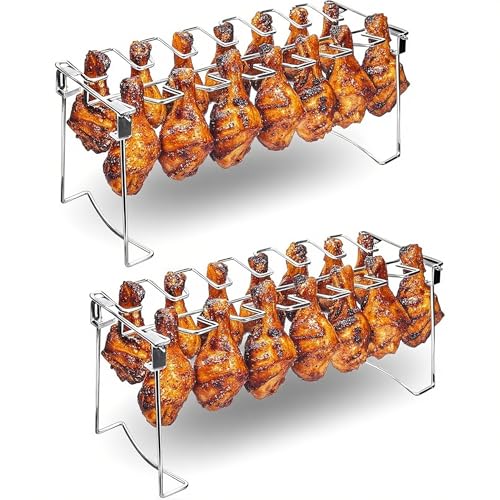
【Holds 14 Drumsticks Securely for Even Cooking】Two racks included – each holds 14 chicken legs upright without flipping. Cooks evenly indoors or outdoors on grills, smokers, or ovens


14 Slots: The Chicken Leg & Wing Rack can cook up to 14 chicken drumsticks. The rack will fix the chicken legs tightly. Easy to use, each wing or leg is evenly cooked without the need to turn them, making it a useful tool for both indoor and outdoor cooking. (2 packs of grill racks in the package)
Crockpot Low-and-Slow Approach
The crockpot method offers a hands-off alternative that’ll gently reheat your smoked turkey legs while preserving their moisture and tenderness. Pour one cup of chicken broth into your crockpot and arrange legs in a single layer, avoiding overcrowding. Pat them dry first if they’re moist from thawing.
For ideal crockpot settings, set the temperature to low heat. Your crockpot heating times depend on desired texture: use 45-60 minutes for reheated tenderness or extend to 5-6 hours for fall-off-bone results. Guarantee the liquid reaches midway up the legs for optimal moisture retention. The crockpot’s heat retention capability ensures even warming throughout the meat without the risk of hot spots that can dry out portions of the turkey. Using proper equipment maintenance practices, such as keeping your crockpot clean and in good working condition, helps ensure consistent heat distribution during the reheating process. Regular cleaning and maintenance of your cooking equipment will preserve its effectiveness and longevity for future meals. A clean crockpot with well-maintained components prevents grease buildup and ensures reliable performance every time you use it. Covering the crockpot with its lid will help trap steam and retain moisture throughout the reheating process.
Season with black pepper, garlic powder, and a small amount of brown sugar. Consider adding optional aromatics like bay leaf or garlic cloves. Heat to 165°F internal temperature, then rest 15 minutes before serving.

No hydrogenated fats or high fructose corn syrup allowed in any food
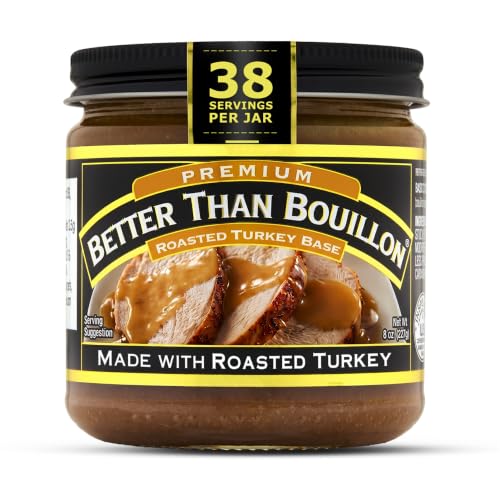
With Better Than Bouillon Turkey Base, you can add the rich and robust taste of turkey to all your favorite meals.

Herb-Ox Bouillon Packets Chicken Instant Broth & Seasoning 1.13 oz box
Essential Moisture-Retention Practices
Since smoked turkey legs contain minimal natural fat compared to other poultry cuts, you’ll need deliberate moisture-retention strategies to prevent them from drying during reheating.
The foil lining technique creates an effective steam chamber. You’ll wrap legs tightly in aluminum foil with chicken broth or olive oil inside, trapping steam that redistributes juices throughout the meat during heating. For optimal results, remove the skin and crisp it separately in a hot oven to maintain the meat’s moisture content while achieving desired crispness. Similar to smoking methods that use foil covering during parts of the cooking process, this approach preserves internal juices while allowing surface texture enhancement. Just as maintaining low and steady temperature is critical when smoking brisket, controlling heat during reheating prevents protein breakdown.
The liquid immersion method provides direct moisture contact. You’ll submerge drumsticks halfway or fully in water or broth within a covered pan, allowing the liquid to steam and tenderize the meat simultaneously. Monitoring the internal temperature with a meat thermometer ensures you achieve the target of 165°F for food safety without overcooking. Proper storage at consistent temperatures before reheating also ensures the meat maintains its quality and safety throughout the process. For poultry cuts like turkey legs, achieving optimal tenderness may require slightly higher internal temperatures than the standard 165°F threshold.
Both methods require covering your cooking vessel completely—whether using foil or lids—to eliminate moisture escape. You’ll reheat at low temperatures (275-325°F) for 20-40 minutes, ensuring even heating without protein dehydration. Using a meat thermometer to verify the internal temperature reaches 165°F (74°C) guarantees both safety and optimal texture. This deliberate approach preserves the smoked flavor while maintaining ideal tenderness.
Temperature Monitoring and Safety Guidelines
Maintaining proper internal temperatures complements your moisture-retention strategies by ensuring both safety and ideal texture. You’ll need a meat thermometer placed in the thickest part of the meat to verify that your turkey legs reach the 165°F minimum safe temperature standard. This temperature requirement applies regardless of smoking or pre-cooking status.
Your evaporation prevention techniques work effectively when combined with lower oven temperatures (250–325°F), which inherently protect against overcooking while you monitor internal temperatures. The lower heat ranges prevent rapid moisture loss during extended heating periods of 30–40 minutes. Consider using apple wood chips to enhance the smoke flavor profile if you’re reheating turkey legs that were originally smoked. For optimal smoke infusion, plan your reheating time around 30 minutes of smoking to achieve a balanced flavor without overdrying the meat. Remove turkey from refrigerator 2 hours before reheating to allow the meat to come to room temperature, which promotes even heating throughout the turkey legs. For smoked turkey that has been frozen, thaw in the refrigerator overnight before reheating to ensure uniform temperature distribution and optimal moisture retention. Different hardwood pellet flavors can complement your original smoking method if you choose to add additional smoke during the reheating process. Seasoned or kiln-dried wood with low moisture content will burn more cleanly and avoid introducing off-flavors that might compromise your carefully preserved smoked turkey. Proper storage in a tightly wrapped or airtight container is essential for maintaining quality before you begin the reheating process.
For gentler methods like slow cookers and water baths, passive heating eliminates frequent temperature checks while maintaining safety. These low-temperature approaches provide automatic protection by keeping temperatures below typical cooking ranges, preventing both foodborne illness risk and the dryness that results from excessive heat exposure.
Preparing Frozen Turkey Legs for Reheating
How do you properly thaw frozen smoked turkey legs before reheating? You’ll need to understand both thawing duration and thawing methods to guarantee food safety and even cooking.
Refrigerator thawing is the recommended method, requiring 12-24 hours for complete thawing. This approach prevents bacterial growth while maintaining meat quality. If time is limited, cold water thawing accelerates the process—submerge sealed legs in cold water, changing it every 30 minutes.
After thawing completes, rinse legs under cold water to reduce excess sodium from smoking. Pat them dry with paper towels to remove surface moisture. Allow legs to reach room temperature slightly before reheating for uniform heat distribution. Inspect thoroughly for remaining ice crystals to confirm complete thawing before proceeding with your chosen reheating technique. Similar to how proper grill maintenance ensures optimal cooking results, preparing your turkey legs correctly will enhance your reheating outcome. When transporting thawed turkey legs to an outdoor grill, always keep them in a well-ventilated container to maintain food safety. Ensure your grill is positioned away from flammable materials before beginning the reheating process. For optimal results, store cooled legs in an airtight container to maintain moisture and prevent freezer burn during storage. For outdoor grilling, consider using a grill mat to protect your deck surface during the reheating process.