

You’ll master exceptional BBQ on basic models by understanding that heat distribution and temperature control—not price tags—determine your results. Focus on even airflow, solid construction, and vent mastery rather than premium aesthetics. Porcelain-coated grates deliver durability without luxury costs. Whether you’re grilling on a Spirit or Summit, your technique trumps the grill’s bells and whistles. Once you grasp these fundamentals, you’ll uncover what separates mediocre barbecue from truly remarkable outdoor cooking.
Even Heat Distribution: The Foundation of Great Grilling
Whether you’re searing a ribeye or slow-cooking a brisket, your grill’s ability to maintain consistent temperatures across the cooking surface separates mediocre results from exceptional ones. You’ll find that even basic grills deliver exceptional performance when they’re engineered with well-designed diffuser systems and optimized air circulation patterns. Metal or ceramic diffusers rapidly distribute heat across your cooking area while channeling grease safely away from burners, virtually eliminating flare-ups that compromise your food. The combustion system’s internal chamber controls flame stability, preventing hot and cold spots that plague poorly engineered models. You’ll appreciate how strategic maintenance considerations—keeping diffusers clean and burners unobstructed—preserve these thermal dynamics. Flavorizer bars catch drippings and vaporize them to enhance the smoky flavor profile of your grilled food. When selecting replacement bars, consider that Weber commonly uses 340 stainless while higher-end options use 316 for superior corrosion resistance and longevity. Stainless steel and porcelain-coated heat shields offer different benefits depending on your priorities, with stainless providing superior corrosion resistance for long-term durability. Even budget-conscious buyers benefit from understanding how 304 stainless steel grades significantly outperform lower-grade alloys in withstanding rust and degradation over time. Premium models like the Weber Genesis S-435 showcase how even heat distribution combined with thoughtful burner design creates superior performance for consistent searing results. Quality heat distribution isn’t about raw BTU output; it’s about intelligent engineering that transforms burner energy into uniform, controllable cooking zones. Models like the Weber Genesis SX-335s excel at even heat distribution and innovative design. Specialized grilling accessories like exact-fit griddles and smoker boxes further expand your grill’s versatility and performance capabilities.
Temperature Control Without Breaking the Bank
Temperature control doesn’t require expensive digital thermometers or complicated electronic systems—it’s fundamentally about understanding the simple mechanics that govern your charcoal grill’s thermal behavior. You’ll master intuitive temperature tweaks through three straightforward approaches: simple vent control, charcoal repositioning, and rack height adjustment. Keep your intake vent fully open while using the exhaust damper for precise adjustments. Push coals together for higher heat; spread them apart to cool down. Raising your grill rack creates cooler temperatures, while lowering it intensifies direct heat. These mechanical controls cost nothing beyond what you’ve already invested in your basic grill. The two-zone method allows you to simultaneously cook different foods at varying temperatures by stacking coals on one side and leaving the other bare. Maintaining clean ash catchers and grill interiors ensures consistent airflow management throughout your cooking session. Preheating your grill with opened vents ensures even cooking temperature across both zones before you add your food. The intense radiant heat from burning charcoal embers directly cooks your food while also enabling the convection and conduction that work in concert with your vent adjustments. For optimal performance, consider upgrading to cast iron grates which provide superior heat retention and searing compared to basic steel alternatives. Allow adequate time for your grill to stabilize after making vent adjustments rather than constantly tweaking settings. You don’t need gadgets—you need understanding. Your fundamental grill setup delivers everything necessary for exceptional barbecue.

✅ Special Notes for this item: If you are looking for parts, the BRAND and MODEL No.# listed below are just for your reference. Please Kindly check again for the SIZE and MODEL of your original parts before purchasing. if you have any problem with the item, please feel free to contact us 7 * 24 Hours. ✅Cast iron grids are fragile and may be broken during transportation. If you meet this situation, please feel free to email us and ask for solution.
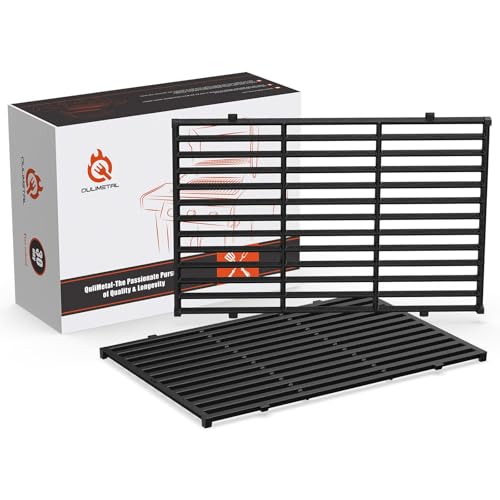
【Compatible with Weber Spirit & Genesis Models】 Precisely engineered to fit Weber Spirit 300 Series including Spirit E310, S310, E315, S315, E320, E330, S320, S330, as well as Spirit 700, for Weber 900, and multiple Genesis models like Genesis Silver B/C, Gold B/C (2002+), Genesis 1000–3500 and Genesis Platinum (2000–2010). - Not compatible with Genesis Silver A. - Replacement for Weber parts #7638, 7525, 7527, 65619, 65906. Also fits Weber SmokeFire EX4 / EX6 pellet grills. This set is a direct for weber spirit 300 grill grates replacement, ideal for weber spirit grill parts with confidence and precision.

Fits For Chargriller 2121, 2123, 2222, 2828, 3001, 3008, 3030, 3072, 3232, 3725, 4000, 4001, 4008, 4208, 5050, 5072, 5252, 9020 Gas Grill Models
Porcelain-Coated Grates: Durability Meets Performance
Porcelain-coated cast iron grates strike an appealing balance for budget-conscious grillers who don’t want to compromise on cooking performance. You’ll appreciate the superior heat retention that delivers bold sear marks while the non-stick coating minimizes food adhesion. The cleaning convenience sets them apart from bare cast iron—you’ll skip the tedious seasoning rituals and simply wipe down after grilling. To maintain their appearance and extend their lifespan, incorporate routine light cleaning after each use to prevent buildup and debris accumulation. For best results, use a soft brush or microfiber cloth rather than abrasive tools to avoid scratching the delicate coating. When cleaning, consider using natural ingredients like baking soda to gently remove residue without harsh chemicals that could damage the porcelain surface. Methods such as using aluminum foil as a scrubbing tool provide safe alternatives that protect your coating while effectively removing grime. For tougher buildup, soaking and scrubbing the grates can help remove baked-on residue without damaging the porcelain surface.
However, coating longevity demands respect. You must handle these grates gently; vigorous scrubbing scratches the surface, accelerating deterioration. Chips expose underlying cast iron to rust, rapidly shortening lifespan. Heavy use and high temperatures intensify this degradation, and rapid temperature changes between heating and cooling can cause micro cracks leading to rust. Despite these limitations, porcelain-coated grates offer exceptional value for moderate grilling frequency, delivering reliable performance without stainless steel’s premium price tag. The chipping leads to fast rusting process means you’ll need to monitor your grates closely for any signs of damage during the season.

Fits Weber 22.5" charcoal kettles, model includes 22.5-Inch Weber Original Kettle Premium Charcoal Grill, Weber Original Kettle 22.5" Charcoal Grill, 22.5" Weber Performer Premium Charcoal Grill

Fits for Large Big Green Egg Grill, Fits for Vision Grill VGKSS-CC2, Vision Grill B-11N1A1-Y2A, Kamado Charcoal Grill Accessories. And replacement for Kamado Joe KJ-23RHC Classic II, Kamado Joe KJ23NRHCI Classic III, KJ23RH Classic I, Kamado Joe Stand-Alone Classic.

【Dimension】17 x 9 1/2" Each, 17 x 28 1/2" Total, 3-pack, Material: Porcelain Coated Cast Iron gas grill cooking grates.Original Part Number: G533-0009-W1
Spirit vs. Genesis vs. Summit: Understanding the Real Differences
As you step up Weber’s gas grill hierarchy, you’re not just paying more—you’re investing in substantially greater cooking versatility, power, and durability. The Spirit delivers 32,000-39,000 BTU with modest searing power at 7,500 BTU, perfect for casual grilling on a basic plastic cart. Genesis models jump 30% higher in output, reaching 39,000-48,000 BTU with searing power between 9,500-13,000 BTU, plus stainless steel construction and battery ignition. Summit reigns supreme with five 13,000 BTU burners plus 16,000 BTU infrared sear capability, built-in rotisserie and smoker box, and double-insulated hood for wind resistance. The Summit’s sliding front lid design limits workspace compared to the full clamshell openings of Genesis and Spirit models. All three series accommodate Weber Crafted modular accessories that expand functionality beyond standard grilling. For those seeking even greater professional-grade performance, luxury built-in options like the True Flame TF40 offer cast stainless steel burners and advanced ignition systems that rival high-end competitors. Built-in grills also typically feature 304 stainless steel construction for superior corrosion resistance and longevity in outdoor kitchen installations. Premium grills like the Genesis SX-335 include an internal temperature probe for precise monitoring during cooking. High-end models such as the Monument Mesa excel with dedicated extra sear burners that achieve significantly higher center temperatures for superior searing results. For portable grilling enthusiasts, the Weber Traveler combines exceptional output with transportability for cooking away from home. Considering exterior design considerations, Genesis’s enclosed cart with prep tables offers substantial versatility, while Summit’s stainless steel grates and smart controls justify premium pricing for serious barbecue enthusiasts seeking maximum searing power differences and professional-grade performance.

Transform your outdoor grill into a griddle; This Weber Outdoor Griddle Insert fits Spirit 4-burner gas grills manufactured since 2025, Spirit and Spirit II 3-burner gas grills manufactured from 2016-2024, and Searwood pellet grills

JUICIER RESULTS: Our patented Amplifire cooking system produces the best-tasting food with 50% juicier results, while on-the-go.

Features out of carton dimensions - 0.5 inches x 11.9 inches x 11.9 inches with individual carton dimensions - 15.8 inches x 2.6 inches x 15.3 inches
Why Premium Features Aren’t Always Necessary
You don’t need a Summit’s infrared sear burners or smart controls to nail consistent, restaurant-quality results—and frankly, most weekend warriors never will. Basic gas grills deliver ideal performance metrics through proven burner configurations that distribute heat evenly across your cooking surface. Push-button ignition systems ignite reliably without electronic complexity, while simple maintenance regimes keep your grill running strong for years. Standard multi-zone capabilities let you sear proteins and cook vegetables simultaneously at different temperatures. You’re investing in functional excellence, not unnecessary technology. Entry-level models eliminate the premium expenses haunting luxury grills—costly infrared replacements, sensor repairs, extended warranties. Instead, you’ll redirect those savings toward quality ingredients and better entertaining experiences. Properly maintained basic grills typically last 2-3 years longer than poorly maintained premium models, proving that user discipline matters more than price point. Affordable options like 4-burner propane models in stainless steel provide excellent value for beginners without sacrificing performance. Top-rated budget grills such as the Weber Spirit II E-310 have earned praise from major review sites for their exceptional performance and durability. With gas grills dominating the market due to their convenience and accurate temperature control, a straightforward model gives you access to proven technology that keeps your weekend cooking consistent. Brands like Weber and Blaze offer reliable entry-level options that deliver consistent performance without the complexity of premium features. Your backyard doesn’t demand cutting-edge innovation; it demands reliable heat and consistent results.

Powerful 42000BTU Output: Fire up all 4 stainless steel burners at 8000BTU each for intense, even heat that locks in juices and creates perfect grill marks. The 10000BTU side burner adds extra cooking space for vegetables, sauces, or keeping sides warm. Whether you call it a gas grill, propane grill, or bbq grill, this 4 burner gas grill delivers serious firepower for every outdoor cookout

CANDANA Heat Tents for Nexgrill Gas Grill measures 14.6" x 4.05", these heat shields sit over the burner and are responsible for even heat distribution. Please measure your original parts to be sure they will lit properly.

Tri-Ply Clad Construction: Ensures precise and even heat distribution across the entire pan for superior cooking results on any stovetop.
Build Quality That Lasts: Material Matters More Than Price
While reliability matters more than bells and whistles, the materials underlying that reliability deserve your full attention. You’ll find that metal gauge and construction directly impact your grill’s longevity. Thicker gauge stainless steel combined with seamless welds creates superior structural integrity, preventing moisture accumulation and premature corrosion. You don’t need premium grades like 316L for basic models; 304 stainless steel delivers excellent corrosion resistance and heat retention at reasonable costs. 304-grade stainless steel contains 18% chromium and 8% nickel for superior rust resistance and durability. Weld quality and durability separate grills that last decades from those failing within years. Cast aluminum alternatives offer lightweight and rust-proof construction suitable for seasonal grillers seeking lower maintenance requirements. Regular cleaning and grease-tray maintenance prevent buildup that can compromise structural integrity and performance. Beyond routine upkeep, deep cleaning your grill] seasonally removes grease accumulation that accelerates corrosion and degradation. For grates and cooking surfaces, consider using oils with high smoke points when seasoning to create a durable protective layer. Protecting the stainless steel’s finish through proper care—such as cleaning with non-abrasive cloths and applying stainless steel cleaners along the grain—preserves the chromium oxide layer that provides corrosion resistance. You’ll notice that high-quality construction techniques prevent scratches and wear, protecting your investment. When you prioritize robust welded frames over bolted alternatives, you’re choosing stability and performance that compounds over time. For stubborn rust issues that develop despite preventive measures, soaking grates overnight in vinegar and salt can help loosen rust before scrubbing with a soft brush.
Mastering Low-Heat Cooking on Basic Models
The difference between a dried-out brisket and one that’s fall-apart tender lies in temperature control—and basic models absolutely can deliver it. You’ll master low-heat cooking by implementing the two-zone setup: pile coals on one side, leaving the opposite bare for your indirect zone. Maintain 225-275°F using the snake method—arrange briquettes in two rows at 45-degree angles, light 8-10 separately, and watch them burn gradually for 8-12 hours of consistent heat.
Your temperature monitoring demands precision. Install a digital thermometer probe directly on your cooking grate, not the dome. Adjust your top vent halfway to stabilize temperatures in 10-15 minutes. The longer cooking time breaks down the sinew and turns collagen into gelatin, transforming tougher cuts into perfectly tender meat. At these low temperatures, salt has sufficient time to migrate toward the center, seasoning your meat throughout rather than just on the surface. Most pitmasters encounter a temperature stall around 150-160°F due to moisture evaporation, which you can manage by wrapping the brisket while maintaining your smoking crust. The stall phase requires careful monitoring to ensure your brisket continues cooking through this plateau. The internal temperature should reach approximately 190-205°F before the brisket is fully cooked and ready to rest. After the brisket finishes cooking, allow it to rest for several hours so the connective tissues can break down fully for maximum tenderness.
This approach eliminates browning, allowing your seasoning techniques to shine. Heavy rubs penetrate deeply when Maillard reactions don’t occur, while convection air distributes heat evenly, producing edge-to-edge pink meat without overcooked bands. For final finishing touches, consider a quick sear on the hot zone to develop a flavorful crust before serving.
The Thermocouple Test: Proof That Basic Works
Before you trust your basic BBQ setup with hours of low-heat cooking, you’ll need to verify your thermometer’s accuracy—and that’s where the thermocouple test becomes your essential validation tool.
You’ll run two critical tests: ice water at 32°F and boiling water at 212°F. Insert your probe into each mixture, ensuring it doesn’t contact container sides. Readings within ±2°F meet health department standards. Lid thermometers display average temperature readings across the grill rather than pinpoint measurements at any single location.
Here’s the reality: built-in grill thermometers often deviate 25°F or more from actual grate temperature. Real world temperature variance exists because air temperature differs markedly from cooking surface temperature. RTD sensors average entire grill surfaces rather than spot-reading. For those seeking faster feedback during critical moments, instant-read thermometers deliver sub-second temperature readings that pinpoint meat doneness with exceptional precision. Wireless thermometers with multiple probe capability allow you to monitor different temperature zones simultaneously for superior accuracy across your cooking surface. For pinpoint accuracy during critical cooks, consider upgrading to wireless models like the Fireboard Pulse that provide real-time temperature monitoring across multiple zones. Controlling air vents on your charcoal grill allows you to fine-tune these temperature variations and maintain consistent heat zones. Instant-read thermometers like the ThermoWorks Thermapen ONE offer speed and accuracy for quick temperature checks during your cook. Regularly scrubbing the cooking grates before and after use ensures accurate heat transfer and prevents temperature fluctuations caused by debris buildup.
Don’t assume accuracy. Test your thermometer. Understanding these accuracy limitations transforms basic models into reliable low-heat cooking instruments.
Finding Your Perfect Grill: Matching Features to Your Needs
Once you’ve validated your thermometer’s accuracy, you’re ready to find the grill that actually fits how you cook. Consider your versatility considerations—pellet grills deliver 8-in-1 functionality from 180°F to 500°F, ideal if you smoke, bake, and sear. Gas grills heat rapidly with precise knob control, perfect for weeknight dinners. Fuel efficiency comparisons matter too: pellets offer consistent temperature management through digital PID controllers, while gas requires less maintenance but demands propane refills. For those who travel frequently, compact portable grills under 60 pounds provide excellent cooking capability without sacrificing performance. The Weber Traveler stands out among portable options with its 320 square inches of cooking space and sturdy built-in cart for convenient transport. Prioritizing ignition reliability ensures your grill starts consistently every time you need it.
Evaluate your space. Genesis models max out at 994 square inches, whereas Pit Boss Austin XL exceeds 1,000 for crowd-sized cookouts. Assess features—Wi-Fi connectivity, rotisserie compatibility, side burners—matching your cooking ambitions. The total cooking space directly impacts how many items you can prepare simultaneously. Durable stainless steel construction guarantees longevity. Your grill choice hinges on balancing cooking style, capacity, and budget against authentic performance fundamentals.

Superior Construction - The Gas On barbecue grill charcoal features a 14-inch / 150-square inch cooking surface which is spacious enough to prepare steaks or vegetables but compact at the same time to ensure even heat distribution and uniform cooking
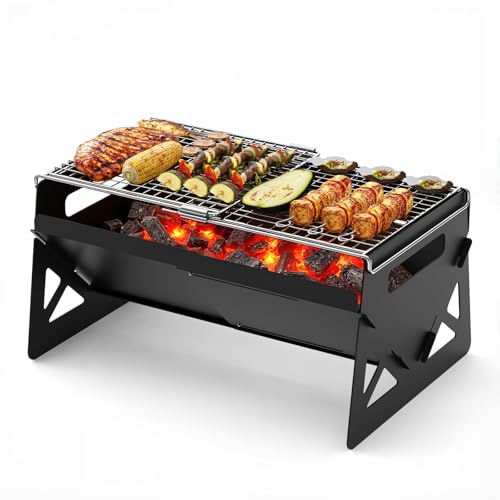
Versatile for Every Outdoor Adventure: Our portable camping fire pit supports both charcoal and firewood, working as a BBQ grill or wood-burning stove. It's perfect for various outdoor occasions: backyard BBQs, campfire dinners at campsites, cooking meals on hiking trips, or keeping warm at outdoor gatherings.

Small Charcoal Grill Designed to Serve 1-2 Persons, Notebook-sized. This BBQ grill is small, lightweight. When the grill is folded, it looks like a book, taking up no space. You can prepare 1 unit of our grill in the kitchen like cookers, ovens. If you love grilled meats, vegetables, etc., this simple charcoal grill allows you to make barbecue anywhere and anytime. Be noted: When charcoal is burning, the grill will be very hot. Please put a heat-resistant mat between the grill and tabletop.