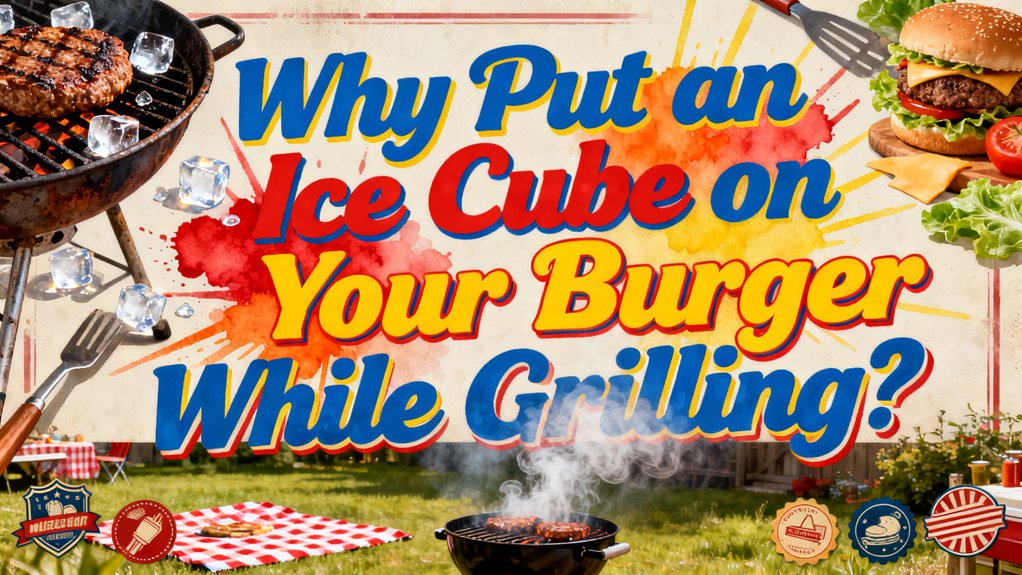
You’ll transform your burgers by placing an ice cube in the patty’s center before grilling. As it melts, you’ll create a steam effect that distributes heat evenly throughout the meat, preventing exterior charring while the interior cooks uniformly. This technique slows the center’s temperature rise, giving you precise control over doneness. You’ll retain moisture and preserve the meat’s natural savory characteristics, achieving that perfect balance of juiciness and texture. Understanding the science behind this method reveals even deeper strategies for grilling excellence.
The Science Behind Ice Cube Burgers
When you place an ice cube on your burger patty while grilling, you’re leveraging a deceptively simple heat management strategy. The melting ice creates a uniform cooking surface by distributing heat evenly throughout the patty’s interior. This prevents the exterior from charring while the center undercooks—a common problem with unpredictable heat sources like charcoal grills.
As the ice melts, it slows the center’s temperature rise, allowing the patty to cook from outside to inside at a controlled rate. The resulting steam keeps moisture locked within the meat without diluting flavor. This even heat distribution effectively functions as de facto temperature control, reducing overcooking risk substantially. By skipping constant flipping, you allow the ice cube to remain intact throughout the cooking process. The steam effect is particularly beneficial for thicker patties and lean ground beef that are more prone to drying out during the grilling process. Similar to smoking techniques that monitor internal meat temperature to achieve optimal doneness, the ice cube method ensures your burger reaches the desired internal temperature without constant attention. For the most reliable results, consider using radio-frequency thermometers that maintain strong wireless range even in challenging outdoor environments with multiple obstacles between your grill and monitoring device.
Using a meat thermometer to monitor internal temperature ensures you achieve the ideal doneness level while the ice cube method maintains consistent heat distribution. For precision temperature readings, many experts recommend wireless meat thermometers with app connectivity for remote monitoring during extended grilling sessions. Models like the Fireboard Pulse excel in high-heat tolerance up to 1000°F for searing applications. You’re fundamentally using thermodynamics to achieve restaurant-quality results on your grill.
Moisture Retention Benefits
Because the ice cube melts gradually during the grilling process, you’re introducing a controlled amount of moisture directly into the patty’s center—the zone most vulnerable to drying out. This creates a steam effect that maintains internal moisture levels, delivering improved juiciness without compromising flavor.
The water either evaporates as steam or absorbs into the beef, preserving your burger’s natural savory characteristics while preventing over-drying. You’ll achieve a balanced texture that harmonizes meat and fat, enhancing mouthfeel through retained natural juices rather than external additions. Placing the ice cube at the center of your raw patty ensures the moisture distributes evenly as it melts during cooking.
This moisture-retention method prevents excessive heat distribution that breaks down meat fibers. The result? A burger that stays tender and flavorful throughout cooking, with ideal internal temperature and consistent texture from edge to center. Quality gas grills with features like even heat distribution help maintain consistent cooking temperatures that work synergistically with the ice cube method. Models such as the Weber Spirit are engineered with non-stick grates and reliable performance to complement moisture-retention techniques during the cooking process. Top-rated options like the Weber GENESIS E-325 Propane Grill provide the sear power and temperature control needed for optimal burger grilling results. For best results, preheat your gas grill to high temperature before cooking to ensure proper searing while the ice cube works internally to retain moisture. Medium-sized ice cubes contain enough water to keep the patty moist without significantly lowering its temperature during the cooking process.

3-IN-1 BURGER PRESS: Craft stuffed burgers, regular patties (up to ¾ lb), and sliders all with one versatile tool.
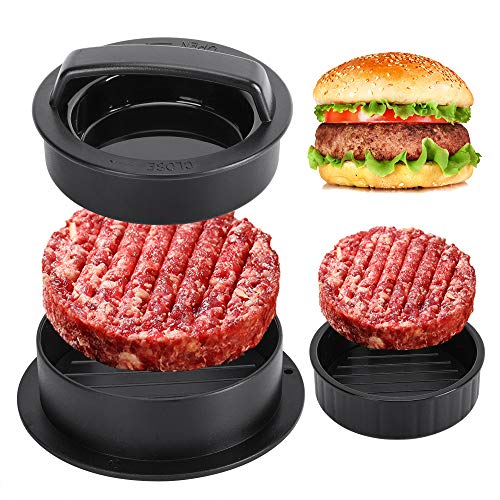
Ultimate Hamburger Tool: Our burger press will help you make different size and thickness of round formed hamburgers stuffed patty. Top small base is for mini burger patty and sliders, detachable indent press help you create a well for filling, and bottom large base is for big or stuffed hamburger patty

SMART DESIGN: This burger press and patty maker ensures accurate cooking and sizing. Marking inside the base indicate press depth for quarter-pound, third-pound, and half-pound patties.
How to Apply the Technique
Mastering this technique starts with selecting a standard ice cube from your freezer tray and positioning it directly in the center of your raw burger patty—either by folding the meat around it or placing it on top, depending on your patty thickness. For thicker patties, fold the meat around the cube to safeguard uniform moisture distribution throughout. For thinner patties, simply press the cube gently onto the surface once grilling begins. Time your placement carefully: apply it just before the patty hits the grill or within the first one to two minutes of cooking. As the ice cube melts, it creates a pocket of steam that gets absorbed into the meat, keeping the center juicy and preventing the outside from charring while the inside dries out. Similar to how added liquid creates steam when reheating chicken to maintain moisture, the melting ice cube uses the same principle to preserve juiciness throughout the cooking process. Patty placement considerations determine your method’s success. This strategic positioning guarantees the ice melts gradually, releasing moisture evenly across the entire burger while preventing exterior overcooking.

Set: You will receive 1 hamburger patty maker, 100 round patty papers, and 1 elegant color box. The patty papers and patty maker are completely separated within the box to prevent scratches. The packaging is superb and well worth your consideration.
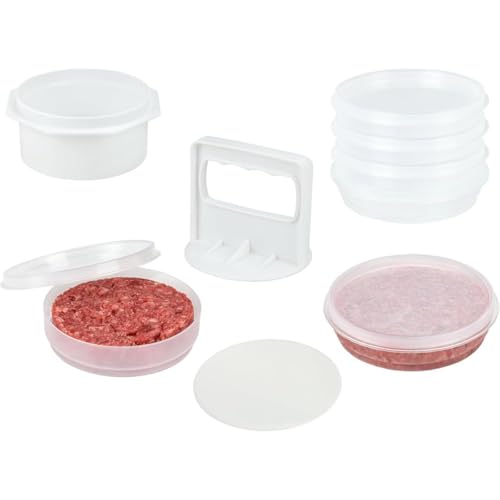
𝗜𝗻𝗰𝗹𝘂𝗱𝗲𝗱: All parts of the burger maker set are made of BPA-free plastic; the kit includes a burger patty mold, burger patty press, 6 hamburger patty storage containers and 100 round patty liners; burger maker set is dishwasher safe

Makes perfect patties - Designed to make the perfect 4.5" patties look
Ideal Beef Types and Sizes
Your burger’s success hinges equally on the beef you select as it does on the ice cube technique itself. You’ll want to prioritize meat quality factors like marbling and fat consistency. Ground blend ratios matter greatly—aim for 80/20 or 75/25 lean-to-fat proportions to maintain juiciness without excess grease. By law, ground beef cannot contain less than 70/30 lean-to-fat ratio.
Ground chuck serves as your reliable foundation, offering balanced fat that prevents shrinking. For elevated results, you can blend chuck with short rib for steakhouse-quality flavor and buttery texture, or incorporate ribeye for luxurious marbling. Brisket adds richness when combined with leaner cuts like sirloin. A butcher can help you identify the best cuts and ratios for your specific preferences and cooking method. The right grill equipment, such as models known for even heat distribution, will complement your beef selection perfectly. Pairing quality beef with proper cooking grates ensures optimal heat contact and browning for superior results. Top-rated propane gas grills offer exceptional BTU output and consistent performance that work seamlessly with your premium beef preparation.
Size your patties slightly larger than your buns—they’ll shrink during cooking. The ice cube will help retain moisture, making premium blends unnecessary, though quality beef enhances your final product enormously. A quality grill press with proper weight and flatness ensures even cooking and excellent crust development across your patty. For the most effective results, pair your quality beef selection with a reliable hamburger press to achieve consistent patty thickness and optimal contact with the cooking surface.

One 16 ounce package of 100% Pure Ground Beef, 80% Lean/20% Fat

Meets standards for animal welfare, feed, and more, so you can know about what you're buying (and eating)

Three individually sealed 16 ounce packs of 100% Pure Ground Beef, 80% Lean/20% Fat
Cooking Tips and Precautions
Proper ice cube placement is essential—after you set the patty on the grill, press a shallow indent into the center and nestle a single ice cube into it, then gently wrap the surrounding beef around the cube to seal it internally. Flip patties only once after achieving an initial sear; resist the urge to press down, which forces out valuable moisture. Use a meat thermometer to verify doneness accurately and prevent undercooking.
For texture adjustment and flavor enhancement, consider substituting frozen broth cubes instead of plain ice. This technique extends cooking time, so plan accordingly. Monitor lean blends closely, as they’re prone to dryness without moisture support. The steam generated from melting ice creates an even heat distribution that prevents charring while maintaining juiciness throughout your burger. To achieve the best results, preheat your grill to medium-high heat before placing patties to ensure proper searing and consistent cooking. Cook ground beef to an internal temperature that balances both safety and tenderness for optimal results. Creating direct and indirect heat zones on your charcoal grill allows you to move burgers away from flare-ups while maintaining even cooking. Most store-bought burgers are prepared using this ice cube method to ensure consistent quality and moisture retention across high-volume production. Proper heat distribution during grilling prevents hot spots that can lead to uneven cooking or excessive charring on the exterior while the interior remains undercooked. An internal temperature probe helps monitor your burger’s progress throughout the cooking process to eliminate guesswork.