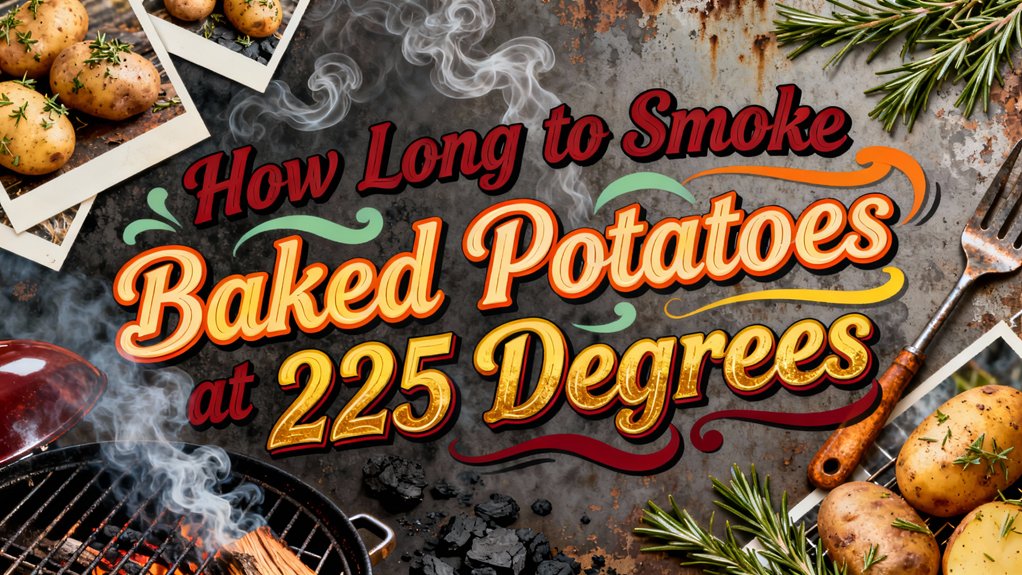
You’ll smoke medium potatoes for 2-3 hours at 225°F, while larger baker potatoes need 3-3.5 hours. Target an internal temperature of 205-210°F at the thermal center using an instant-read thermometer—the probe should slide through without resistance. Proper preparation matters: scrub, dry thoroughly, poke six times with a fork, rub generously with olive oil, and apply sea salt. Don’t wrap in foil, as this prevents that crispy exterior you’re after. There’s more to mastering this technique.
Understanding Smoking Temperature and Time at 225°F
How long should you actually smoke a potato at 225°F? You’re looking at 2-3 hours for medium potatoes, though full-size baker varieties may need 3-3.5 hours. However, testing reveals potatoes often lack ideal softness even after 3+ hours at this temperature.
Several factors influencing pellet consumption and cook times come into play. Smoker model accuracy matters greatly—some units maintain precise 225°F while others fluctuate considerably. Ambient temperature, humidity, and wind exposure all affect internal consistency. Airflow adjustments for temperature control become critical when environmental conditions shift. Like brisket smoking, the low-and-slow method allows proper rendering of starches and moisture evaporation. Similar to how briskets experience evaporative cooling during the stall phase, potatoes also lose internal heat through moisture release. Just as wrapping briskets in butcher paper helps maintain moisture during the cook, similar moisture retention techniques can improve potato smoking results. Wood chunks like mesquite or oak can enhance the smoke flavor of your potatoes just as they do with brisket. After removing potatoes from the smoker, resting them briefly helps retain internal moisture and ensures better texture. Potatoes are done when the internal temperature reaches 205-210°F, indicating they’re cooked through and ready to serve. You can also cook potatoes up to 4 hours without damaging them, giving you flexibility with your smoking schedule.
Potato size and variety also impact duration. Larger potatoes with higher internal density require extended cooking. Selecting uniformly-sized potatoes guarantees predictable results across your batch, giving you better control over the smoking process.


Internal Temperature Targets for Perfect Doneness
Once you’ve got your timing dialed in, nailing the internal temperature becomes your real control lever for perfect doneness. Your temperature thresholds should target 205-210°F at the thermal center—this is where you’ll find maximum tenderness with gelatinized starches. Use an instant-read thermometer like the Thermapen ONE to verify accuracy. At 205°F, your probe slides through without resistance, a critical tenderness indicator alongside fork-piercing ease. Set a leave-in probe alarm to 203°F for confirmation. Stay below 212°F to avoid dense, sticky interiors that degrade quality. Above this threshold, you’re risking texture degradation. Precise 205°F targeting guarantees that fluffy interior you’re after, which results from the low moisture and high starch content of Russet potatoes creating that perfect balance. For best results, smoke your potatoes at a consistent 225 degrees F to ensure even heat distribution throughout the cooking process. Like brisket, allowing the potatoes to rest after cooking helps break down the interior structure for optimal texture. The key to success is understanding that low and slow cooking produces superior results compared to higher temperatures. Monitoring with a thermometer during the stall phase, similar to brisket smoking, ensures you don’t plateau prematurely. After smoking, remove the foil and place potatoes over direct heat briefly to crisp the skin and add smoky flavor. Rest briefly post-cook to enhance your final result. Allowing the potatoes to rest after smoking helps redistribute juices before serving, much like with smoked turkey.
How Potato Size Impacts Cooking Duration
Potato size dictates your smoking timeline more than any other single factor, so you’ll want to sort your batch by dimensions before laying them on the grate. Medium to large russets need approximately 2-3 hours at 225°F, while full-size bakers benefit from extended 3-3.5 hour durations. Smaller fingerling or standard varieties finish in 1.5-2 hours.
This variance stems from how potato moisture content and starch composition absorb heat differently across sizes. Larger potatoes maintain better moisture retention during extended smoking periods, allowing ideal texture development. Conversely, smaller potatoes’ reduced mass permits faster heat penetration, demanding careful monitoring to prevent overcooking and texture degradation. The radiant heat from your smoker’s burning charcoal plays a crucial role in cooking the potatoes evenly throughout the smoking process. Like brisket smoking, achieving low and steady temperature control is essential for optimal results. Smoking the potatoes first adds depth of flavor before any additional preparation, contributing to superior results across all size categories. For optimal searing and heat distribution, consider using a cast iron grill pan to ensure even cooking. When maintaining your grill, keep the grates clean to prevent any debris from affecting your potatoes’ flavor. Consistent smoker temperature management ensures even cooking throughout your batch. You can also add potatoes about an hour into smoking] your favorite meats to coordinate timing with other dishes.
Check doneness individually after two hours, regardless of batch uniformity, ensuring each potato reaches fork-tender consistency without unnecessary cooking.

【12 Inch Cast Iron Dual Handle Grill Basket】Designed for delicate foods and small pieces that will fall into the grill: vegetables, fish, kebabs, onions, broccoli, asparagus, potatoes, diced mushrooms, veggies, diced meat, sausage, shrimp and other foods.

Steakhouse Sear At Home: The Lodge Square Cast Iron Grill Pan delivers high-heat searing and bold grill marks while channeling excess grease away

Premium Material: This pre-seasoned chicken holder made of high-quality cast iron materials which keeps the original flavor of food, with optimal heat distribution that great for cooking.
Essential Potato Preparation Steps
Before you lay a single potato on the smoker grate, you’ll want to prepare them properly—this foundation determines whether you’ll achieve that ideal crispy exterior and fluffy interior or end up with disappointing results.
Start by scrubbing russet potatoes under cold water to remove all dirt, then pat them completely dry. This moisture removal is critical for achieving crispy skin. Select medium to large potatoes of uniform size for even cooking and texture throughout your batch.
Next, poke each potato firmly with a fork about six times across all surfaces. This venting prevents bursting during smoking. Rub them generously with olive oil, then apply sea salt liberally. The oil enhances browning while salt draws out additional moisture and enables flavor infusion into the skin layer. Do not wrap potatoes in foil as this will soften the skin and prevent the crispy texture you’re working to achieve. Using foil on grates also restricts airflow and heat distribution, which compromises even cooking results. Opening smoked potatoes immediately after cooking helps maintain a fluffy interior similar to traditionally baked preparations. For optimal results, ensure your smoker grate has adequate cooking surface size to accommodate potatoes without crowding, which allows for proper heat circulation around each potato. Consider measuring your grill space before smoking to verify you have room for all potatoes, similar to how measuring your grill ensures proper equipment fit. To protect your deck or patio surface from grease drips and heat damage, consider using a fire-resistant grill pad underneath your smoker setup. Just as sealing food in foil packets on a grill preserves moisture and flavor, avoiding foil on potatoes allows the smoker’s heat to create that desirable crispy exterior.

Thin & Crispy Texture: Designed to be thinner and crispier, these chips offer a light and airy crunch with every bite.

No hydrogenated fats or high fructose corn syrup allowed in any food

Includes one (1) 6-ounce bag of kettle brand made with avocado oil sea salt with a hint of pink peppercorn chips
Environmental Factors That Affect Cook Time
While you’ve prepared your potatoes perfectly, their smoking time doesn’t depend solely on your technique—the environment surrounding your smoker plays an equally critical role in determining doneness and flavor development.
You’ll notice that external temperature fluctuations drastically impact cook duration. Cold conditions require extended preheat times to maintain your steady 225°F, while sudden ambient drops can lengthen cooking by 15-30 minutes. Conversely, extreme external heat accelerates evaporation, potentially shortening total time. Remember that baked potatoes are TCS foods requiring careful attention to time and temperature to prevent foodborne illness. Studies on extreme smoke exposure have demonstrated that smoke amounts significantly higher than natural conditions can affect how potatoes develop during growth, which similarly underscores the importance of controlled environmental factors in cooking. For optimal results, consider using smokeless fire pit grills that maintain consistent heat and smoke levels regardless of external conditions. A non-slip grill mat placed beneath your smoker can also help stabilize equipment and protect your deck surface from heat damage during extended cooking sessions.
Altitude and atmospheric composition affect your results immensely. Higher elevations lower moisture boiling points, extending cook times slightly. Pressure fluctuations alter smoke density and flavor absorption rates, while reduced oxygen levels at elevation increase smoker stabilization time. Selecting grill trays with perforated or solid bottoms appropriate to your environment ensures consistent smoke infusion and heat distribution. Models featuring height adjustability allow you to fine-tune your cooking surface distance from heat sources for better environmental adaptation.
Wind patterns also matter greatly. Strong winds disperse smoke quickly, reducing infusion time, whereas protected environments maintain consistent smoke concentration and predictable doneness.
Temperature Variations Across Different Smoker Settings
You’ll frequently encounter temperature inconsistencies across your smoker that’ll throw off your baked potato timing if you’re not vigilant about probe calibration and vent management. Grate temperature variation can reach 150°F between your thermometer’s reading and actual cooking surface conditions, especially when probes sit 8 inches or higher above the grates. Front and back positions often register differently despite identical probe readings.
To combat this, deploy calibrated air probes across multiple zones. Offset smokers tolerate ±25 to 50 degrees variation without compromising results, while pellet grills should fluctuate no more than ±25°F. Fine-tune intake vents in quarter-inch increments and keep exhaust vents at least halfway open for primary temperature regulation. Maintaining a water pan stabilizes heat distribution, reducing fluctuation severity throughout your smoking session. Proper airflow management through dampers ensures consistent temperature zones across your cooking chamber. Opening and closing dampers directly controls oxygen flow to regulate your smoker’s heat output. Before your first smoking session, consider seasoning your grill to burn off any manufacturing residues that could affect temperature accuracy. Cooking low and slow with indirect heat produces the most consistent results across all temperature zones in your smoker. Regular grill maintenance prevents debris buildup in burner ports and ensures accurate temperature readings during your smoke. Quick chamber access for temperature checks has minimal impact on overall cooking time, so monitor your potatoes without hesitation during the smoke.
Wood Selection for Optimal Flavor
Once your smoker’s temperature stabilizes within the proper range, wood selection becomes your primary lever for controlling potato flavor. You’ll find that wood density considerations directly impact smoke penetration factors and final taste complexity.
Mild fruit woods like apple and cherry deliver subtle sweetness without overwhelming your potatoes during extended 225°F sessions. These lower-density woods produce gentler smoke that penetrates evenly without bitterness. Fruit woods are particularly effective because they create lighter, sweeter smoke that complements vegetables as easily as they do lighter proteins. To achieve the cleanest flavor, aim for thin blue smoke rather than thick white smoke, which can introduce harsh flavors. Avoid softwoods like pine as they produce bitter residue that will negatively impact your final dish. For optimal results, use kiln-dried chunks to ensure consistent smoke without unwanted mold or bug contamination.
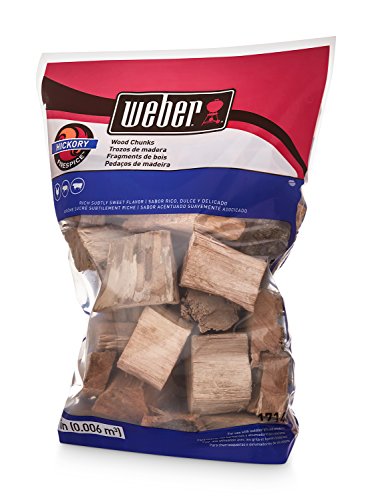
For bolder results, you’re choosing hickory or mesquite—denser hardwoods that increase smoke penetration past the potato skin. These stronger varieties suit longer cooking times and pair strategically with your main protein. Oak varieties like post oak and red oak provide balanced smoke flavor that enhances vegetables without the overpowering intensity of mesquite. Remember that potatoes should reach an internal temperature of 205-210°F to ensure they’re fully cooked regardless of your wood selection.
You’ll achieve desired layered complexity by blending mild and strong woods. Match your wood choice to your main course for flavor consistency throughout your meal. This technical approach guarantees you control every dimension of your smoked potato profile. Be cautious with mesquite’s intense heat, as it can overpower subtle potato flavors when used too generously.

SWEET, SUBTLE SMOKE FLAVOR: Apple wood chunks produce a mild, fruity smoke perfect for pork, poultry, seafood, and veggies

Apple BBQ Smoking Wood Chunks. Ignites quickly and combusts complete to create a delicate smokey flavor. The essential fuel for your best BBQ yet - perfect for Memorial Day kick-offs, Father’s Day gifting, 4th of July feasts, and every backyard celebration through the height of grilling season.

SWEET, SUBTLE SMOKE FLAVOR: Cherry wood chunks produce a mild, fruity smoke perfect for pork, poultry, seafood, and veggies
Testing for Fork Tenderness and Readiness
After roughly 90 minutes at 225°F, your smoked potatoes should be approaching doneness, but timing alone won’t guarantee ideal results—the fork test does. Use your fork insertion technique by pressing tines directly into the flesh. If they slide through without resistance, you’ve achieved fork tenderness. Simultaneously check your internal temperature with a probe thermometer, targeting 203°F when starches fully gelatinize. This dual verification verifies even cooking throughout. Maintain skin texture preservation by avoiding foil wrapping during testing—your crispy exterior confirms proper doneness. For best results, rub your potatoes with olive oil or tallow before smoking to enhance the seasoning adhesion and browning. Just as cast iron grates require proper seasoning to maintain their non-stick surface, your potatoes benefit from this same attention to preparation. Choose oils with high smoke points to ensure they can withstand the grilling temperature without burning and compromising your results. The smoke flavor of properly smoked potatoes is further complemented when you top them with smoked bacon, cheese, sour cream, chives, and butter to elevate them to the next level. For optimal smoking results, match your charcoal choice to your setup—briquettes provide the consistent medium heat ideal for maintaining steady 225°F temperatures throughout the smoking process. Some recipes recommend smoking potatoes in foil packets with additional ingredients like peppers or cheese for enhanced flavor complexity. The combination of tactile feedback and temperature confirmation delivers precision results.
Resting and Finishing Techniques
Your smoked potatoes have passed both the fork and thermometer tests, but the work isn’t finished—proper resting secures the job. Allow five to ten minutes of rest at your smoking temperature, which drives internal temps from 205°F to 210°F through carryover cooking. This brief window prevents surface burning while maintaining heat distribution.
During this critical phase, you’re also preserving potato skin crispness while the interior completes cooking evenly. Once cooled enough to handle safely, cut a lengthwise slit and fluff the flesh with your fork. For best results, mesquite or maple wood selection during the smoking process enhances the final flavor profile of your potatoes. For superior smoke production and authentic wood-fired taste, consider using 100% natural pecan pellets which deliver consistent results across all smoking temperatures. Avoid softwoods like pine or cedar, which impart undesirable flavors due to high resin content.
For serving presentation, apply toppings strategically: butter first to melt into the hot flesh, followed by cheese or melting ingredients, then finish with sour cream, chives, bacon, and pepper. This sequence ensures ideal texture and flavor integration. Consider using a Pyrex Glass Mixing Bowl to prepare your grated cheddar cheese and chopped bacon toppings in advance for efficient plating.
Troubleshooting Common Smoking Issues
Why do perfectly prepped potatoes sometimes cook unevenly or fail to reach doneness on schedule? Temperature inconsistencies often stem from electrical contact issues or inadequate thermometer monitoring. You’ll want to clean smoker components regularly and guarantee actual temperature matches your dial reading. Regular internal component cleaning helps maintain consistent heat distribution and prevents temperature fluctuations.
Steam escape problems arise when you haven’t pierced potatoes sufficiently—aim for 6-8 fork holes minimum. Improper rack placement above meat creates moisture barriers that slow cooking considerably. Heat distribution matters; reposition potatoes to assure consistent exposure. Wrapping potatoes in foil is necessary to retain moisture and steam during smoking, ensuring even cooking and preventing rapid dehydration. Cutting potatoes into smaller pieces helps them cook more evenly throughout the smoking process.
For troubleshooting, monitor internal temperatures precisely and adjust rack height accordingly. If cooking extends beyond three hours, your smoker likely runs cooler than intended. Consider removing and cleaning drip pans regularly to prevent grease buildup that can affect heat consistency. Consider alternative seasoning options applied post-smoking for enhanced flavor without prolonging cook time. Presentation techniques improve with consistent results from proper positioning and ventilation management.

Bluetooth Monitor Remotely: Govee Bluetooth meat thermometer lets you check the temperature of your grill, smoker, or oven from your phone. With this smart BBQ thermometer, you can multitask while grilling.

More Stable Than Bluetooth: Our advanced RF technology ensures a stronger, more reliable connection than Bluetooth. This smoker thermometer provides the freedom to move around without losing connection! Monitor your BBQ from up to 1,000 feet away!

Instant Read Meat Thermometer | Our instant read thermometer features a temperature probe and advanced, highly accurate technology with a 1-2 second response time. Our instant read food thermometer comes pre-calibrated with instructions and a meat temperature chart, plus a recalibration feature if needed.