
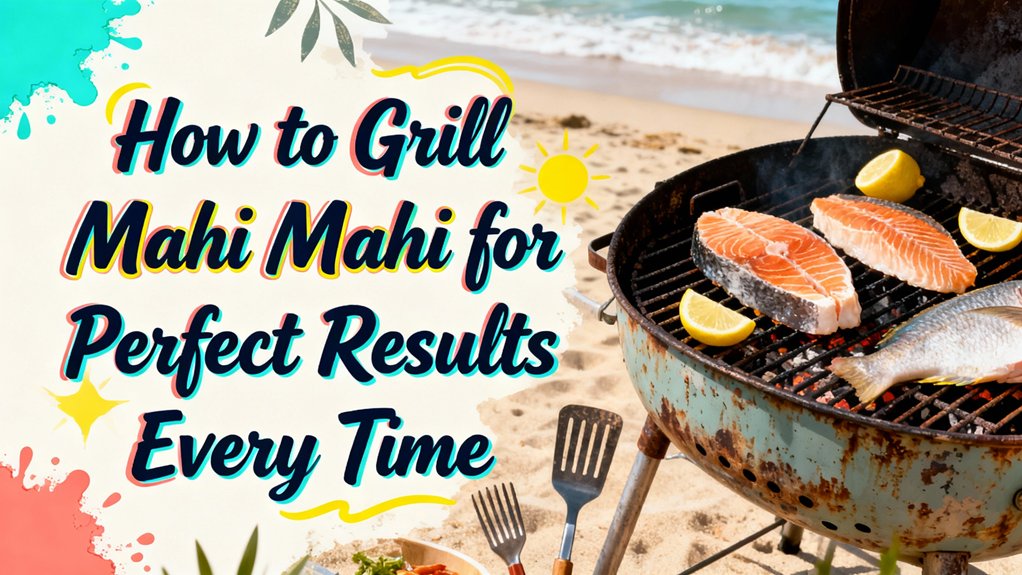
You’ll grill mahi mahi perfectly by patting fillets dry, bringing them to room temperature, and heating your grill to 400-450°F. Place flesh-side down for 3-5 minutes, making quarter-turn rotations every 1.5 minutes to prevent sticking. Flip gently and cook until the internal temperature reaches 137-145°F. Season with Old Bay, paprika, and garlic powder, then apply sauce near the end for ideal juiciness. Master these techniques and you’ll find advanced strategies that elevate your results beyond basic grilling.
Preparation and Setup
How you prepare your mahi mahi determines whether you’ll end up with perfectly seared fillets or dry, rubbery fish. Start by selecting skin-on fillets of similar thickness from a fishmonger rather than a grocery store to guarantee quality.
Next, you’ll pat the fillets dry with paper towels to remove excess moisture. This critical step prevents sticking and enables better seasoning adhesion while encouraging optimal grill marks and texture. Make sure your grill is heated to medium-high temperature before you begin cooking. Matching your cooking surface temperature to the thickness of your fillets ensures even heat distribution throughout the fish.
For oil selection, use olive oil as your primary coating. Brush approximately 1 tablespoon of olive oil per two six-ounce fillets on both sides. This protective layer prevents sticking while creating a moisture barrier that safeguards your lean fish from drying out during cooking. Before grilling, season your mahi mahi with a marinade, seasoning, or Omaha Steaks Signature Seafood Rub to infuse it with flavor and further prevent dryness.

Graza Frizzle Oil Spray Made from 100% Olives: A neutral-flavored, high heat cooking oil made from 100% peak harvest olives. With a smoke point of up to 450 degrees, Frizzle is your high-heat kitchen hero. 1 can/5 oz.

AIR PRESSURE ONLY: Pompeian cooking sprays contain no propellants or additives, providing you the best-tasting, highest-quality oil to help you Eat and Live Well.

From America's #1 Avocado Oil Brand — A oil sprayer for cooking with the same purity standard you already trust, now in a fast, clean, propellant-free cooking spray format. Pair with Chosen Foods Avocado Oil pourable bottles, Avocado Mayo, Salad Dressings, and Dipping Sauces for a complete clean-label kitchen built on real ingredients and real avocados. From a Certified B Corporation on a mission to do good in the world by being good for the world.
Grill Preheating and Maintenance
Once you’ve prepared your mahi mahi fillets, you’ll need to get your grill ready for ideal cooking. Start by cleaning your grill thoroughly, then preheat it to 400-450°F on medium-high heat. For gas grills, this takes minutes; for charcoal, light briquettes until flames extinguish, spread coals evenly, and wait for consistent heat. Consider using a grill mat to protect your deck and make cleanup easier during the cooking process. Premium grill mats can withstand temperatures exceeding 600°F while preventing flare-ups and maintaining consistent heat distribution. For composite decks, verify material compatibility with composite decking to avoid sticking or discoloration.
Ideal temperature monitoring verifies even cooking and prevents sticking. Use a thermometer to confirm your grill reaches above 400°F before cooking begins. Proper grate oiling is essential—apply oil after preheating to create the best non-stick surface. If your grill has rust buildup, consider re-seasoning the grill with a protective layer of oil to ensure a clean cooking surface. For gas grills, installing a heat tent can provide additional burner protection and help maintain even heat distribution across your cooking surface. Lightly coat grates with olive oil, then pat your fillets dry and brush them with oil too. This preparation guarantees clean fish release and attractive grill marks without tearing. Remember to allow fillets to warm to room temperature before placing them on the grill for optimal and even cooking results. Avoid overcrowding the grill to ensure that each fillet receives adequate heat circulation and cooks evenly throughout.

[Get Consistent Grilling Results] Grillaholics Heavy Duty Grill Mats prevent flare-ups and provide even heat for cooking so both amateur and pro grillers get more consistent results. No more need for years of trial and error to master cooking on the grill.

KEEP YOUR GRILL CLEAN: BBQ season approaching? Grab your Grilling Mat now to keep your grill clean and avoid food sticking to the grill. BBQ’ing finally made easy and mess-free. These non-stick bbq mats for outdoor grill cooking are a must-have for your barbecue accessories for grill, there’s a reason we’re taking the grilling accessories market by storm!
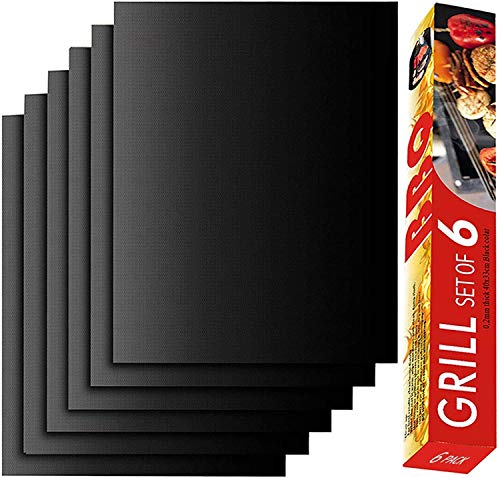
1.NO BETTER CHOICE - Thicker does not mean better. Our grill mat is thin enough to leave grill marks and flavor intact,and thick enough to provide ultimate heat resistance and durability.6 pack of grill mats can meet the needs of the dinner from time to time; when they are spare, you can cut them to any size or shape to fit any need. Also doubles as a bake mat
Cooking Technique and Timing
With your grill heated to 400-450°F and grates properly oiled, you’re ready to place your prepared fillets on the cooking surface. Position fillets flesh-side down for initial cooking, ensuring proper fillet orientation that prevents sticking and promotes even heating distribution across the surface.
Grill for 3-5 minutes per side, depending on thickness. Make quarter-turn rotations at 1.5-minute intervals to create crosshatch grill marks without flipping prematurely. Flip only once, using gentle handling to prevent meat separation and fragmentation. The firm, crab-like texture of mahi mahi allows it to stay intact during these rotations and flips. For optimal moisture retention, ensure your fillets are coated with melted butter or oil before placing them on the grill. Using a clean, oiled grill or grill basket will further facilitate flipping and prevent sticking throughout the cooking process. Consider seasoning your mahi mahi with a mixture of complementary spices such as Old Bay Seasoning, paprika, and garlic powder to enhance the natural flavors of the fish. Consider applying sauce near the end of cooking for added flavor and juiciness, similar to techniques used with hardwood smoke flavoring. After cooking, let the mahi mahi rest for a few minutes before serving to allow the juices to redistribute.
Monitor internal temperature carefully, aiming for 140-165°F. Avoid overcooking, as mahi mahi’s lean composition dries quickly when exposed to excessive heat. A meat thermometer ensures accurate temperature readings to prevent undercooking or drying out your fillets. Your fillets are done when the flesh flakes easily and reaches target temperature throughout.

✔ Product Information: The Grill Basket and Basting Brush are made of 430 food-grade stainless steel, which is reusable and strong, also rust resistant for long term use. Weight of brush is 2.11 ounce and the grill basket is 16.22 ounce

Made of high-quality 430 stainless steel, it offers great heat resistance and rust resistance for repeated grilling use. The sturdy grid stays in shape even at high temperatures for even heating.

[3 Custom Divided Sections]: Opt to divide the grill basket into 3 sections to keep different types of BBQ food separated in case of mixed taste. You can cooking sharps, steaks and vegetables at the same time without mix the flavor with this grilling accessories. Or you can remove the dividers for a more large cooking space
Doneness Indicators and Temperature
Knowing when your mahi mahi’s reached perfect doneness requires monitoring both temperature and visual cues, since you’ll want to pull your fillets from the grill at the exact moment they’re cooked through without drying out. Insert your thermometer into the thickest section, targeting 137°F for ideal flaking texture with balanced moisture retention. Fish texture development depends critically on this precise temperature—below 130°F yields mushy consistency, while exceeding 145°F produces rubbery flesh.
Beyond thermometer readings, watch for flesh changing from translucent to fully opaque throughout the fillet. You’ll notice surface browning and easy fork separation. Food safety considerations demand reaching the USDA minimum of 145°F for 15 seconds to eliminate harmful pathogens. Using a meat thermometer inserted in the thickest part of the fish is crucial to ensure proper doneness without overcooking. Proper cooking temperatures also destroy harmful bacteria that raw or undercooked fish may contain. For precision monitoring during longer grilling sessions, consider wireless grill thermometers with app connectivity to track temperature changes remotely. Instant-read thermometers like the ThermoWorks Thermapen ONE offer exceptional accuracy for quick temperature checks on delicate fish fillets. For best results, allow the fish to naturally release from the grill grates before flipping, which indicates proper searing and helps prevent sticking. Since mahi mahi is a lean fish with high protein content, it cooks quickly and requires careful attention to avoid overcooking. Check multiple locations across your fillet for consistent doneness confirmation.

Longer Range 650 ft: The built-in best-in-class Bluetooth chip empowers this Bluetooth thermometer a longer range of up to 650 ft, a stronger signal and more stable connection to the smart App; so you'll never lost contact with your food no matter where in your house or yard

Bluetooth Monitor Remotely: Govee Bluetooth meat thermometer lets you check the temperature of your grill, smoker, or oven from your phone. With this smart BBQ thermometer, you can multitask while grilling.

SMART BASE CONTROL: Set temperatures, monitor progress, and receive alerts directly from the base without needing your phone nearby.
Flavor Enhancement and Glazing Options
Now that you’ve mastered cooking mahi mahi to the ideal temperature, elevating your dish requires strategic glaze and marinade applications that complement—rather than mask—the fish’s delicate, naturally sweet flavor.
You’ll find that glaze consistency directly impacts adhesion and caramelization. The Mango Habanero glaze develops its thickened texture through 15-minute simmering, enabling even coating during grilling. Alternatively, the Honey Lime glaze achieves emulsified texture development via slow olive oil whisking, creating a light, complementary citrus layer. When selecting your fish, ensure you avoid ammonia-smelling varieties that may compromise the final dish’s quality. Mahi mahi’s firm texture with mild flavor makes it an excellent canvas for absorbing these complementary seasonings and glazes. Similar to grilling other delicate fish, using ventilation holes in foil packets helps retain moisture while allowing heat circulation during cooking. Let your mahi mahi reach room temperature before grilling to ensure even cooking throughout the fillet. Proper seasoning before serving enhances the fish’s natural qualities without overwhelming its delicate profile. For optimal results, consider using a grill press to maintain even contact between the fish and the cooking surface.
For nuanced complexity, apply Citrus-Herb marinades before cooking, then finish with contrasting mango relish. The Balsamic and Dijon combination offers deep umami notes through balanced vinegar, mustard, and honey proportions.
Each technique layers flavor dimensions systematically, ensuring your mahi mahi gains sophistication without overwhelming its inherent quality.

SWEET AND SPICY FLAVOR: Mango habanero seasoning powder infuses wings with a distinctive sweet and spicy flavor to help expand your menu and meet consumer demand; enjoy repeatable recipes full of flavor that balances sweetness and heat perfectly

Brush on meat at the end of cooks to add color and flavor

🔥 SWEET HEAT MANGO FLAVOR – Juicy mango sweetness meets zesty lime and a subtle kick of habanero pepper for the perfect balance of tropical fruit and spicy heat. A bold twist on the classic margarita that delivers layered, vibrant flavor in every sip.
Serving and Storage Recommendations
Your grilled mahi mahi achieves peak flavor and texture when served immediately after cooking, while the flesh remains flaky and moist. Allow fillets a brief rest on the plate before applying salsas or toppings to preserve structural integrity.
Strategic side dish pairings enhance the fish’s delicate flavor profile. Opt for bright, zippy accompaniments like Mexican street corn salad, Lebanese cabbage salad, or tomato and cucumber salad. Incorporate warm grains such as basmati rice, cilantro lime cauliflower rice, or turmati rice for substance. For optimal grilling results, ensure your grill grates are clean and well-maintained to prevent rust buildup that can affect food quality. Store any leftovers in an airtight container for up to 3 days to maintain freshness. The firm texture of mahi mahi prevents it from falling apart during storage and reheating. Ensure leftovers are kept at or below 40°F in refrigeration to maintain food safety standards. For extended storage, consider freezing leftover portions in tightly wrapped packages to preserve quality for several months. Never thaw frozen mahi mahi at room temperature, as this can promote bacterial growth.
Presentation suggestions elevate your dish considerably. Spoon fresh mango avocado salsa or pineapple-orange salsa over fillets, garnishing with cilantro sprigs. For quick weeknight meals, pair grilled mahi mahi with precooked brown rice and raw vegetable trays, completing dinner in under twenty minutes. When serving to pets, avoid adding cheese or other potentially toxic ingredients to their portions.