

You’ll smoke your turkey breast to perfect tenderness in 1.5–4 hours, depending on temperature and weight. At 225°F–250°F, you’re looking at 30 minutes per pound for bone-in cuts, while boneless breasts cook faster at 90–120 minutes for 3–5 pounds. Pull the meat at 155°F–165°F internal temperature, then let it rest 15–20 minutes to redistribute juices. The real magic happens when you understand how preparation methods, wood selection, and monitoring techniques transform your results.
Choosing the Right Smoker Temperature
Since turkey breast’s lean composition makes it prone to drying out, you’ll want to nail your smoker temperature from the start. You’ve got two solid options: low and slow at 225°F-250°F or medium at 275°F. The lower range takes 3-4 hours but delivers superior moisture retention and smoky flavor penetration. If you’re short on time, 275°F cuts cooking to 1-3 hours while maintaining tenderness through proper brining.
Regardless of temperature choice, use indirect heating options to prevent direct flame exposure. Position your turkey breast away from heat source, allowing ambient smoke circulation. Your wood chip selection matters too—milder woods like apple or cherry complement turkey without overpowering its delicate flavor. Oak and fruitwoods provide a balanced smoke that showcases the meat’s natural qualities. Monitor temperature consistently with a wireless thermometer to maintain stability throughout the smoking process. For best results, brine your turkey for 8-12 hours before smoking to ensure maximum juiciness and tenderness. Smoking at 275°F offers approximately 25 minutes per pound of cooking time, making it easier to plan your meal schedule. Remember that internal temperature is the most reliable indicator of doneness rather than relying solely on cooking time. Always check both the thickest and thinnest parts of the breast with an instant-read thermometer to confirm the entire cut has reached 165°F. Medium-smoking woods like pecan or hickory offer another excellent option for adding robust flavor to your turkey breast. Once your turkey breast is done, allow it to rest for 15-20 minutes to redistribute juices before carving.

SMART BASE CONTROL: Set temperatures, monitor progress, and receive alerts directly from the base without needing your phone nearby.

Smart Display Base with Control: The ThermoMaven G1 wireless meat thermometer features a versatile smart display base that offers real-time temperature readings and allows you to set temperatures directly on the device—no app required. With our user-friendly one-click setup, you can connect the probe, pair it with the base, and start cooking in seconds—no complicated setup needed!

PERFECT DONENESS, EVERY TIME: This smart cooking thermometer takes away guesswork with real-time internal temperature updates, flip reminders, rest timers, estimated cooking times, Guided Cooking recipes, and more!
Preparing Your Turkey Breast for Smoking
What’s the difference between a juicy, flavorful smoked turkey breast and a dry, disappointing one? Proper preparation. You’ll thaw your breast completely in the refrigerator over 48 hours, then rinse and pat it dry. Remove it from refrigeration 30-60 minutes before smoking to reach room temperature for even cooking.
Next, you’ll apply your chosen marinating duration—either brining for 3-6 hours or injecting marinade 24 hours ahead. Brining submerges the breast in a saltwater solution, while injecting distributes flavor internally across multiple sites. The injection marinade keeps the turkey moist and juicy throughout the smoking process. Consider dry brining as an optional technique to further enhance both flavor and moisture retention before smoking. Alternatively, a wet brining method can be used to infuse the turkey with additional moisture and seasoning before the smoking process begins.
For seasoning, coat the breast lightly with olive oil, then apply your dry rub generously across all surfaces. If using the trussing technique of loosening skin, insert compound butter underneath to guarantee moisture retention and penetrating taste throughout your cook. You can also use a butter or oil coating with a poultry spice blend to enhance the flavor and moisture of the turkey breast. Creating a herb-infused butter mixture that is carefully rubbed under the skin helps ensure maximum flavor penetration during the smoking process. A boneless turkey breast roast is easier to cook without drying out compared to bone-in varieties, making it an excellent choice for achieving tender results. For added moisture during the cook, consider basting with apple juice periodically to keep the surface from drying out.
Calculating Smoking Time by Weight
Once you’ve prepped your turkey breast with proper seasoning and brought it to room temperature, you’ll need to calculate how long it’ll actually spend in the smoker.
The foundation for determining ideal weight increments relies on your smoker’s temperature. At 225°F, plan for 30 minutes per pound. If you’re running 250°F, expect approximately 1 hour per pound for bone-in cuts. Understanding time adjustments by cut matters tremendously—boneless breasts cook faster, typically 90–120 minutes for 3–5 pounds, while bone-in varieties require longer exposure. Skin-on, bone-in turkey breasts provide superior insulation that protects the delicate meat from drying out during the extended smoking process.
Higher temperatures drastically reduce duration. At 350–400°F, a 10-pound bone-in breast finishes in roughly 1.5 hours. Spatchcocking further accelerates cooking by 30–40%. At 300°F, you can expect to smoke for about 15-25 minutes per pound, which offers a middle ground between low-and-slow methods and quicker cooking times. For a butterflied turkey, the increased surface area and more even heat exposure can further reduce your total cook time compared to a traditional whole bird presentation. Always verify your specific weight against your chosen temperature to nail that perfect internal temperature of 160°F, accounting for carryover cooking during rest. Many experienced pit masters recommend pulling turkey at 150°F in the coolest part of the breast to ensure optimal tenderness while accounting for residual heat. After smoking, let the turkey rest to allow juices to redistribute throughout the meat for maximum moisture and flavor. Brining for up to 48 hours before smoking can significantly enhance moisture retention and flavor development in your turkey breast. If you need to reheat your smoked turkey later, use a covered roasting pan with a little water or broth at around 300°F to maintain moisture and prevent drying out.

【700ft Long Range】Probe to Booster: 300ft for open cooking equipment, 6.6~33ft (2-10m) for enclosed cooking equipment (Note: Signal range is reduced in enclosed equipment due to metal shielding, resulting in shorter connection distances up to 33ft/10m); Booster to Smartphone: Up to 450ft via Bluetooth for reliable, extended monitoring.

500FT Long Range: Compared with those Bluetooth meat thermometer on the market, this meat thermometer digital wireless equips itself with radio frequency technology that will ensure you stronger signal and more stable connection from up to 500FT

Bluetooth Monitor Remotely: Govee Bluetooth meat thermometer lets you check the temperature of your grill, smoker, or oven from your phone. With this smart BBQ thermometer, you can multitask while grilling.
Monitoring Internal Temperature for Doneness
You’ll want to pull your turkey breast when it reaches an internal temperature between 155°F and 165°F, depending on your preferred balance between food safety and moisture retention. Use an instant-read thermometer like the Thermapen ONE for monitoring accuracy in the thickest part of the breast. Set a high-temperature alarm on your wireless probe at 157°F to catch doneness precisely. Verify the lowest point with your instant-read thermometer once the alarm sounds. After pulling, rest your turkey breast for 5 to 45 minutes—resting duration depends on breast size and your target pull temperature. Resting the turkey loosely covered for 15-20 minutes helps redistribute juices throughout the meat for optimal tenderness. Extended resting with foil wrapping and butter enhances moisture retention, allowing carryover cooking to guarantee thorough pasteurization throughout the meat. Keeping the internal temperature below 165°F prevents the drying-out problem that plagues turkey breast due to its low fat and connective tissue content. Smoked turkey breast develops a rich, smoky flavor and firmer texture compared to traditional roasted turkey, making proper temperature monitoring even more critical for achieving that perfectly moist interior. Rather than relying on time alone, using a reliable meat thermometer ensures you achieve proper doneness without guesswork. For monitoring ambient temperature during long smokes, wireless multi-probe systems like the Fireboard Pulse or RFX MEAT offer reliable app connectivity and can withstand high heat throughout the cooking process. Using a quality meat thermometer ensures accurate readings that help you avoid overcooking and maintain the tender, juicy texture you’re aiming for.

Fast & Accurate: Get precise readings in just 1 second with ±0.9°F accuracy. NSF Certified for trusted food safety, this digital food thermometer features a 4.3 inches food-grade stainless steel meat probe, perfect for grilling, frying, baking, making candy and more

【Fast & Accurate】Our meat thermometer digital delivers accurate readings within ±1°F in just 1–2 seconds, with a wide temperature range of -58°F to 572°F (-50°C to 300°C). No more waiting over the heat - know your food's exact temperature instantly.

【8X Faster + 4X More Precise】: Upgraded with an industrial-leading professional thermocouple sensor, Themomonster meat thermometer digital with NIST certified ±0.5℉ precision provides you the accurate temperature of your food in just 0.5 Seconds.
Understanding Food Safety Guidelines
Smoking turkey breast at lower temperatures requires balancing moisture retention with bacterial safety—a tradeoff that hinges on understanding how heat and time work together to eliminate pathogens like Salmonella. You’ll find that optimal brining practices—using one cup kosher salt per gallon of water for three to six hours—denature proteins and protect outer layers from drying. Proper curing techniques further extend shelf life when combined with smoking. While USDA standards recommend 165°F for immediate safety, you can achieve equivalent bacterial reduction at 157°F with precise timing or 155°F held for 1.2 minutes. Post-smoke resting for fifteen minutes allows carryover heat to push the internal temperature higher and further ensure food safety. Understanding these guidelines guarantees you’re smoking safely without sacrificing the tenderness you’re pursuing. When using medium smoking wood like pecan, hickory, or fruit wood at 275 degrees Fahrenheit, the smoke penetrates the meat while the extended cooking time ensures thorough heat penetration to food-safe temperatures. Wood smoking at lower temperatures can reduce carcinogen formation compared to high-heat grilling methods that create charred surfaces. For consistent results, pellet grills with digital temperature control maintain steady heat throughout the smoking process, eliminating temperature fluctuations that can compromise both safety and texture. Using an instant-read thermometer is key to ensure the turkey reaches the safe and ideal internal temperature without overcooking. For hands-off monitoring throughout extended smoking sessions, wireless meat thermometers with app connectivity allow you to track internal temperatures without opening the smoker and losing heat. Between smoking sessions, routine grill maintenance ensures your equipment performs optimally and prevents buildup that could affect flavor or pose hygiene concerns.
Applying Glazes and Finishing Touches
With your turkey breast holding steady at 130°F after ninety minutes of smoking, the safety foundation you’ve established through proper brining and temperature control now supports the flavor-building phase. You’ll brush your prepared glaze—whether honey-brown sugar or maple—across the entire breast surface for even coverage. Immediately sprinkle turbinado sugar to create a caramelized crust. Repeat this coating fifteen minutes later when internal temperature reaches 150°F.
Proper glaze application timing prevents burning while maximizing flavor development. Your wood choice matters greatly: cherry or apple complement sweet glazes without overpowering them. For enhanced depth, consider smoking over pecan wood which brings additional complexity to your glaze layers. Cherry’s sweet, fruity smoke makes it particularly well-suited for poultry applications like turkey breast, delivering mild fruit-forward notes that won’t compete with your glaze. Maple wood pairs exceptionally well with poultry and delivers mild, sweet notes that harmonize with honey or brown sugar glazes. Cherry also imparts an attractive mahogany color to the turkey skin, enhancing visual appeal alongside flavor development. For best results, soak cherry wood chips for 20-40 minutes before adding them to your smoker box or grill to optimize smoke production and prevent quick burnout. Avoid softwoods like pine which leave bitter residue that can ruin your carefully crafted glaze and meat flavors. Balancing smoke and glaze flavors requires restraint—let neither dominate. Continue basting with butter every fifteen minutes until you reach 150°F, then cease. When internal temperature hits 160°F, you’ve achieved prime tenderness. Allow the turkey to rest for 20 minutes after removing from the smoker to maintain juiciness and complete carryover cooking.

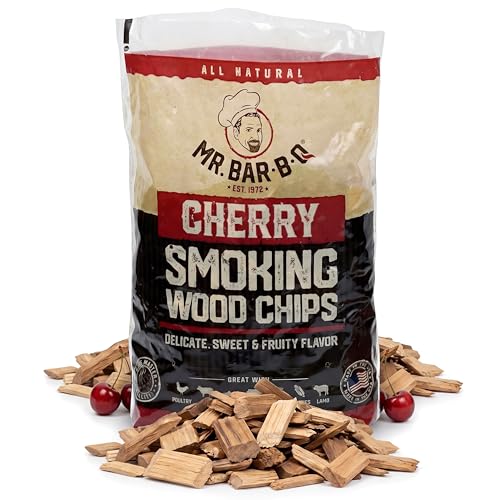
1.6 LB BAG PREMIUM CHERRY WOOD SMOKING CHIPS - Infuse your grilled and smoked dishes with a sweet, mild, and fruity smoky flavor using our high-quality cherry wood chips. Packed in a generous 1.6-pound bag, these premium chips provide ample supply for multiple smoking sessions, ensuring consistent, mouthwatering results. Perfect for use with smokers, charcoal grills, gas grills, and electric grills, they enhance the natural flavors of meats, poultry, fish, and vegetables. Whether you're hosting a backyard BBQ or experimenting with new recipes.

Made In the USA: Celebrate homegrown quality with these premium wood chips made in Arkansas and Missouri
Resting Your Turkey Breast Properly
The moment your turkey breast reaches 160°F, resist the urge to slice immediately—what happens next determines whether you’ll enjoy juicy, tender meat or dry, stringy disappointment.
Resting your turkey breast for a minimum of 20 minutes allows internal juices to redistribute throughout the meat fibers. During this period, your proper internal temperature stabilizes between 165°F and 180°F through carryover cooking, while moisture that’d otherwise escape during slicing remains locked inside. Placing the turkey breast in a low-temperature oven can prevent the skin from becoming soggy while maintaining heat throughout the resting period.
Wrap your breast in foil to preserve heat and prevent steam condensation from compromising skin texture. Optimizing resting time by holding it in an insulated cooler with towels extends this window up to an hour without sacrificing safety or quality.
If you frequently smoke large cuts outdoors, consider resting under a covered grill station to protect from wind and weather while maintaining optimal temperature control. A grill gazebo with proper ventilation prevents smoke buildup while shielding your resting meat from outdoor elements. Ensure your outdoor setup uses non-combustible materials like concrete or cinder blocks to meet safety clearance requirements and prevent fire hazards. A weather-resistant grill cover protects your equipment between smoking sessions, preserving the longevity of your investment against UV damage and moisture. Choose covers with reinforced seams and waterproof coatings to ensure durability in harsh weather conditions.
This simple resting phase transforms your smoked turkey breast from potentially disappointing to genuinely exceptional.
Carving and Serving Techniques
Proper carving requires three essential tools: a sharp carving knife with an 8-10 inch blade, a large cutting board with a well to catch juices, and a serving platter for presentation.
Sharp tool care directly impacts your results. You’ll want to maintain your knife’s edge throughout carving to prevent tearing the tender breast meat. Start slicing from the small end, using long, even strokes against the grain. This proper slicing technique guarantees consistent thin cuts and maximum tenderness.
Remove the breast first for stability, then work methodically across the meat’s contours. Use your thumb to guide the knife precisely, following the natural lines of the cooked turkey. For a creative presentation option, you can debone the thigh and leg to make a stuffing sausage. Let the turkey rest for 30 minutes after pulling it out of the oven to ensure the juices redistribute throughout the meat. Cover the turkey with foil during the resting period to maintain optimal temperature and lock in moisture. Insert a digital meat thermometer in the thickest part of the breast to verify it has reached the safe internal temperature of 165°F before carving. If you prefer meat with a well-browned crust, consider applying a rub before smoking and maintaining consistent heat throughout the cooking process. A probe thermometer ensures precise doneness by monitoring internal temperature throughout the cooking process. Just as you clean your grill grates after each session to prevent buildup, proper knife maintenance between uses ensures optimal carving performance. Arrange your slices on the platter immediately to maintain presentation and temperature, assuring your guests enjoy perfectly carved, juicy turkey breast.