

You can safely freeze leftover grilled salmon for up to three months at 0°F, extending shelf life well beyond the typical refrigerator window of 3-4 days. Proper storage requires wrapping each portion tightly in plastic wrap, then adding a layer of aluminum foil or vacuum-sealing to prevent freezer burn and oxidation. While quality degrades drastically after one month, you’ll maintain acceptable texture and flavor if you follow correct cooling, portioning, and thawing protocols. The specifics of each step immensely impact your results.
Is Freezing Grilled Salmon Really Feasible?
Yes, you can freeze leftover grilled salmon successfully. Industry standards confirm this preservation method works well for Atlantic salmon, extending shelf life greatly beyond refrigeration limits.
However, you’ll experience texture and flavor changes. Ice crystals form during freezing, causing the flesh to become firmer and drier upon thawing. The grilled flavors you’ve carefully developed will diminish slightly after freezing and storage.
Despite these modifications, cooked salmon maintains acceptable quality for up to three months in your freezer at 0°F (-18°C) or below. Cooked salmon specifically stores better than fresh when frozen, though proper packaging prevents additional texture degradation from freezer burn. To prevent freezer burn, wrap cooked salmon tightly in plastic wrap and aluminum foil or place it in an airtight container before freezing. For fresh salmon that you’re not using immediately, place unused fresh salmon in a vacuum sealed bag or freezer sealed bag to maintain optimal quality. Ensure your grilled salmon reaches a safe internal temperature of 145°F (63°C) before cooling and freezing to maintain food safety standards. When freezing is not an option, refrigerated cooked salmon should be consumed within three to five days and stored below 40°F to maintain freshness and safety.
Freezing immediately after grilling preserves prime quality, minimizing cellular damage from ice crystal formation. Grilling salmon in foil helps retain moisture and prevents the fish from breaking apart, making it an ideal method before freezing. For optimal refrigeration, store your salmon at temperatures around 0-3°C to slow bacterial growth and maintain quality. Vacuum-sealed packaging can further extend frozen salmon’s storage life beyond the standard three-month timeframe.
How to Cool Your Cooked Salmon Properly
Proper cooling lays the foundation for successful freezing, and you’ll want to follow a deliberate sequence to preserve your salmon’s quality. Begin by placing your cooked fillet on an oven rack, allowing heat to dissipate evenly. This ideal cooling duration typically ranges from 5-15 minutes depending on thickness.
During this resting period, implement moisture retention techniques by avoiding rapid temperature changes. Let your salmon reach room temperature naturally before refrigeration—this prevents ice crystal formation that damages cellular structure. The resting phase redistributes juices throughout the flesh, maintaining moisture content and preventing drying. Just as allowing grilled salmon to rest before serving enables juices to redistribute, this cooling period ensures optimal texture preservation. Ensure your salmon reached 145°F internal temperature during cooking to guarantee harmful bacteria were destroyed. According to food safety guidelines, cooled salmon should be refrigerated at a maximum of 40°F to maintain quality and safety.
Once cooled completely, transfer your salmon to an airtight container immediately. Just as rust corrodes metal over time and weakens structural integrity, improper storage can degrade your salmon’s quality and lead to freezer burn. Similar to achieving a crispy sear on pan-grilled fish, patting your salmon dry before storage helps prevent excess moisture that can compromise texture during freezing. This meticulous approach guarantees even freezing throughout the fillet while preserving texture and flavor integrity. Just as cleaning while warm makes removing food residue easier from grill grates, handling your salmon promptly while managing the cooling process ensures better preservation results. For optimal food safety, remember to reheat leftovers to at least 165°F before consumption.

Modular Design: Rubbermaid Storage Containers are compact and stackable, optimizing your kitchen storage space.

Keeps Food Fresh and Flavorful: our patented GAMMA SEAL TECHNOLOGY, featuring a threaded locking system and double gaskets, create a controlled moisture balance making it the ideal airtight dog food storage container (suitable for cat food, too)

SET INCLUDES: This food storage containers set Includes 16 small airtight containers [0.8L /3.38 Cups], which are perfect for storing a small box of cereal, 20 chalkboard labels and 1 marker pen, allowing you to organize your kitchen and pantry like never before
Breaking Down Your Salmon Into Portions
You’ll want to start with large center-cut fillets weighing 1½ to 2 pounds, as they’re ideal for creating four uniform servings with consistent thickness throughout. Cut perpendicular to the grain across the fillet width, targeting 6–8 ounce portions. Use sharp knives with a flat angle to prevent tears and damage.
Uniform thickness matters more than exact weight matching—it facilitates all pieces cooking at the same rate during moist cooking methods like poaching or steaming. Trim tapered tail sections separately since they cook faster and dry out quickly. Pat the salmon dry with paper towels before portioning to ensure moisture doesn’t interfere with precision cuts. Buying a larger center-cut fillet and portioning it yourself is more cost-effective than purchasing pre-portioned fillets from the grocery store.
Clean your knife and cutting board between cuts to maintain sanitation. If you plan to grill your salmon portions later, consider using a cordierite pizza stone on your grill to achieve even heat distribution and prevent delicate fish from sticking. The baking surface material you choose affects heat retention and how evenly your fish cooks. Pizza stones designed for grills can withstand temperatures up to 750°F or higher, making them suitable for high-heat cooking methods. For an alternative grilling method that adds subtle smoky flavor, place your portions skin-side down on soaked cedar planks set over indirect heat. Himalayan salt blocks offer another grilling option, infusing salmon with natural minerals while withstanding high temperatures up to 500-600°F when heated gradually. This methodical approach guarantees even cooking and prevents some pieces from overcooking while others remain undercooked.
Best Wrapping Techniques for Frozen Salmon
How does freezer burn develop? Oxidation and moisture loss occur when air contacts your salmon’s surface during storage. You’ll prevent this through proper pre-freezing preparation and portioning for freezing.
Start by wrapping each portion tightly in plastic wrap, pressing out air pockets methodically. Add a second layer using aluminum foil or additional plastic wrap for enhanced protection. Place wrapped portions into freezer-safe zip-top bags, then remove remaining air using the straw method—suck out air before sealing completely. For maximum protection against botulism and spoilage, remove the vacuum-sealed packaging before placing your wrapped salmon into the freezer.
This double-wrap technique rivals professional vacuum sealing effectiveness. The layered barrier considerably reduces oxidation and moisture loss, minimizing freezer burn risk substantially. Your salmon maintains quality and texture throughout frozen storage when you follow this methodical approach consistently. Wipe down the exterior with soapy water to remove any residue before wrapping. Ensure your salmon reaches an internal temperature of 145°F before freezing to guarantee food safety.
How Long Can You Safely Store Frozen Salmon?
When does your frozen salmon start losing quality? You’ll find that proper freezing temperatures of 0°F keep your cooked grilled salmon safe indefinitely, but quality degrades substantially after one month. For ideal freezing duration, consume your grilled salmon within 30 days for best taste and texture. The FDA recommends a broader window of 4-6 months for cooked fish, though this extends storage time rather than optimal quality.
Label your package with the freeze date to track storage time accurately. While your salmon remains microbiologically safe beyond one month when maintained at constant 0°F, freezer burn and flavor deterioration become noticeable. To maximize shelf life, tightly wrap your salmon in heavy-duty aluminum or plastic wrap before freezing. For optimal results, cooked salmon can be stored in the refrigerator for 3-4 days as an alternative to freezing if you plan to consume it sooner. Store your salmon in airtight containers or freezer bags to prevent freezer burn and maintain quality during frozen storage. Just as heavy-duty vinyl covers protect your grill from weather elements and fading, proper wrapping protects your salmon from freezer burn and quality loss. Consider using non-stick grill mats when preparing fresh salmon to prevent sticking and simplify cleanup, making it easier to preserve leftovers with minimal damage to the fish’s surface. Before grilling fresh salmon, apply high-temperature cooking oils like vegetable or canola oil to your grates to prevent sticking and ensure easier cleanup. Just as regular cleaning extends the lifespan of your outdoor grill, properly maintaining frozen salmon storage practices ensures your leftovers retain maximum quality and flavor. Refreezing‘s acceptable if you thaw your salmon in the refrigerator and it stays cold to touch, but minimize this practice to preserve quality.
The Right Way to Thaw Your Frozen Salmon
Proper thawing is critical to preserving the quality you’ve worked to maintain through correct freezing and storage. You’ll achieve the best results by thawing your salmon in the refrigerator overnight at a proper thawing temperature. This method requires an ideal thawing duration of 8-10 hours for full fillets to thaw completely while maintaining flavor and texture integrity.
Before thawing, cut open the vacuum seal to prevent trapped air from compromising your salmon. Place the package on a plate or shallow pan to catch drips and prevent cross-contamination. Just as you would transport a propane tank upright in a well-ventilated vehicle for safety, proper placement during thawing prevents contamination in your refrigerator. Slight thawing of your salmon may be safely re-frozen without loss of quality if you decide not to cook it immediately.
Avoid room temperature thawing, which promotes bacterial growth and causes significant texture degradation. Never immerse your salmon in water, as this method leads to rapid texture breakdown and flavor loss. The refrigerator method remains your safest, most effective approach. Just as selecting the right equipment matters when choosing stainless steel braided hoses for your grill’s durability, proper thawing technique ensures your salmon maintains its premium quality from freezer to plate. Similarly, understanding storage and safety practices for different fuel types helps maintain quality and prevent hazards when grilling. Always keep your thawing salmon in a well-ventilated outdoor space away from other foods to minimize cross-contamination risks. Regular maintenance checks, much like periodic leak checks for gas lines, help ensure your food storage practices remain safe and effective.
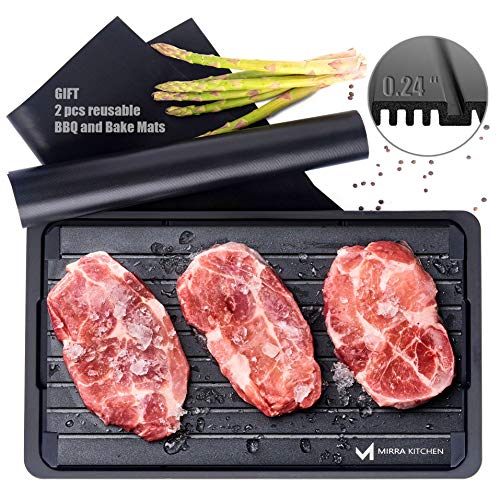
✅ WHILE OTHER DEFROSTING TRAYS ARE too thin, too small or less convenient, the Mirra Kitchen Defrosting Tray Set has a 0.24 inch EXTRA THICK THAWING PLATE with LARGE ENOUGH SURFACE of 14x8 inch for family use and comes with a DRIP TRAY. This means a FASTER THAW of your frozen food, LESS TIME wasted and MORE USEFUL than other brands on the market!

THAW FASTER - Place your food directly on the Tray to SPEED UP the defrosting process; it decreases thawing times by at least 50%. For smaller and thinner items, defrosting is even faster! This LARGE tray is the perfect size for you to thaw food for your whole family.

Modern thaw tray promotes quick defrosting the natural way with better flavor and faster, easier cooking
Signs Your Frozen Salmon Has Gone Bad
Even when you’ve followed proper freezing and storage protocols, your salmon can still spoil over time or due to temperature fluctuations. You’ll recognize spoilage through distinct warning signs across multiple indicators.
Unpleasant odor indicators include strong ammonia-like smells or sour, overly fishy scents that exceed fresh salmon’s mild aroma. Physical texture breakdown manifests as mushy flesh that doesn’t bounce back when pressed, slimy coatings, or flaking when handled.
Visually, inspect for dull or grayish coloration, dark spots, white filmy residue, or mold growth. Cooked salmon showing greenish tints or dry, chalky appearance signals deterioration. If you notice a white filmy residue, this could be albumin leakage, which sometimes occurs when salmon has been improperly stored or frozen after overcooking. Whole specimens with bulging, sunken, or film-covered eyes warrant immediate disposal. For optimal safety, discard any frozen salmon that has exceeded three months of storage, as quality deteriorates significantly beyond this timeframe. Exposure to bacteria like Salmonella through spoiled salmon consumption can cause serious foodborne illness, making proper identification of spoilage critical.
Trust your senses. Multiple simultaneous warning signs confirm spoilage requiring immediate discard, regardless of freezer duration. Just as you would avoid using harsh chemicals when cleaning kitchen equipment to prevent food contamination, ensure your storage containers and surfaces remain clean and safe for storing fish. While grilled salmon is delicious, be aware that high-heat cooking methods can form polycyclic aromatic hydrocarbons on the surface of the fish, so avoiding charring is important for health. When grilling, extreme temperatures can cause aluminum particles to leach into food if you’re using foil, which poses additional health concerns beyond typical cooking risks. If you have pets, remember that spoiled fish should never be fed to dogs, as the high sodium content and potential bacterial contamination can cause gastrointestinal upset and serious health problems.
Maximizing Quality During Freezer Storage
To maximize your frozen salmon’s quality, you’ll want to cool it completely before packaging—this critical step prevents raising your freezer’s temperature and triggering partial defrosting cycles that degrade texture and flavor. Rapid cooling minimizes moisture loss and preserves the fish’s original characteristics.
Next, employ effective wrapping techniques by double-wrapping with plastic wrap and freezer bags, expelling all air to shield against freezer burn. Vacuum sealing with oxygen-barrier films provides superior protection by avoiding oxidation, which accelerates rancidity in fatty fish like salmon. Tight plastic wrap fitting minimizes air pockets, creating an extra shield against freezer burn and dehydration. For additional preservation, consider the freezer marinade method by combining your marinade with the salmon before freezing, which can extend storage life significantly. When preparing your marinade, avoid using oils with low smoke points, as high-smoke-point oils like refined avocado or canola better withstand temperature fluctuations during freezing and thawing.
Maintain your freezer at a stable, consistent temperature between 0°C and -4°C to prevent temperature fluctuations. Just as heat distribution is crucial when grilling to prevent flare-ups and ensure even cooking, consistent freezer temperatures are essential for preserving salmon quality. Before freezing, ensure you’ve removed any excess grease or oil from the salmon’s surface, as baked‒on grease can accelerate oxidation and develop off-flavors during extended freezer storage. Label packages with freezing dates to track storage duration. Adhere to the three-month quality window for home freezers, as quality declines drastically beyond this timeframe due to oxidative processes. Just as proper preparation enhances the final result when cooking in a skillet, careful freezer preparation ensures your salmon maintains its quality when it’s time to reheat.

Made in USA: Proudly manufactured in the United States

Compatible with All Desktop Vacuum Sealers: These vacuum sealer bags are designed to work with all traditional desktop vacuum sealer machines. Simple to operate and convenient to use. (Note: These bags do not feature an air valve and are not compatible with handheld vacuum sealers.)

Easy Use Design: No scissors required for these bags. Just align to seal and tear to open.
Reheating Your Thawed Grilled Salmon
Successfully reheating your thawed grilled salmon requires careful attention to temperature control and moisture management, as the fish’s delicate protein structure can easily dry out if exposed to excessive heat. You’ll achieve ideal results by maintaining temperatures below 350°F and incorporating moisture through oil, water, or broth. The air fryer method delivers the fastest reheat time at 5-7 minutes, while the oven approach at 10-15 minutes preserves tenderness through gentle, low-heat reheating. For stovetop preparation, monitor your salmon every 3 minutes using indirect heat with foil wrapping. Whether you’re using broiling preparation techniques or traditional methods, always target an internal temperature of 145°F. Cover your salmon with foil to trap steam, preventing both dryness and unwanted odors throughout the reheating process. Drizzle your salmon with lemon juice or oil before reheating to further enhance moisture retention and flavor. The microwave is the least recommended method, but can be done with the right precautions if you’re short on time.