
You’ll achieve perfect smoked salmon by targeting an internal temperature of 120–130°F, which typically requires 2–6 hours depending on your method. Hot smoking at 225°F takes 3–4 hours, while cold smoking below 90°F demands extended curing and precise temperature control. Start at 140–150°F for the first hour, then gradually increase to 175°F to prevent albumin bleed and guarantee even cooking. Pull your fillets 5–10°F below target to account for carryover cooking. Understanding the nuances of temperature management and timing will transform your results.
Understanding Hot Smoking vs. Cold Smoking
Though both methods transform salmon through smoke and heat, hot smoking and cold smoking create entirely different products. You’ll need to understand these fundamental distinctions before selecting your approach.
Cold smoking operates below 90°F, preserving the salmon’s raw texture while infusing subtle smoky notes. You’ll appreciate the silky, buttery result that melts on your palate. Hot smoking, conversely, cooks salmon at 225-275°F, yielding flaky, firm flesh resembling baked fish.
The flavor profiles diverge greatly. Cold-smoked varieties deliver fresher, delicate tastes with natural salmon richness. Hot-smoked options provide robust, penetrating smokiness that dominates dishes. Regional preferences shape expectations, as West Coasters prefer the silky texture of cold-smoked salmon while East Coasters favor the flaky consistency of hot-smoked varieties. Cold smoking requires an extensive curing process using salt and sometimes sugar for 24-48 hours before the actual smoking begins.
Your smoking equipment quality directly impacts results. Cold smoking demands precise temperature control and superior equipment to maintain low temperatures consistently. Hot smoking’s higher temperatures offer more forgiveness, making it accessible for various salmon varieties and skill levels. For hot smoking success, precise low-temperature control ensures consistent results and prevents overcooking delicate fish. The freshness of smoked salmon depends on the smoking method used, as hot smoked salmon can last up to two weeks in the fridge while cold smoked salmon typically lasts about a week. When hot smoking, place your salmon skin-side down on the smoker rack to ensure even cooking and prevent the fish from sticking. Using a meat thermometer helps you monitor doneness and remove the salmon at the optimal internal temperature to preserve moisture and texture. For hot smoking, the salmon reaches a safe internal temperature of 145°F when fully cooked.

[Enjoy Delicious Smoking Food]: This smoke generator is perfec for cold smoking. All you need is a cold smoker and you and your family and friends can enjoy delicious cold-smoked salmon, sausage, duck and other healthy dishes.


Handheld Smoking Gun Kit - Create natural cold smoke for cocktails, meats, cheese, seafood and more with this handheld smoking gun. Two smoke settings let you adjust the smoke output for different foods and drinks, making it easy to achieve the flavor and presentation you want.
Optimal Smoker Temperature Ranges
Getting your smoker’s temperature right is the foundation of excellent smoked salmon, and you’ll find that different approaches yield distinctly different results. You can start low at 140°F–150°F for the first hour to prevent albumin bleed, then gradually increase to 175°F for ideal texture. Alternatively, you’ll achieve proper doneness in 3–4 hours using a consistent 225°F ambient temperature. The mid-range standard of 150°F–170°F delivers superior texture while maintaining food safety. Wood smoke contains antimicrobial compounds that further enhance preservation during the smoking process. To verify your salmon reaches the safe internal temperature, use a properly calibrated food thermometer inserted into the thickest part of the filet. For higher temperature smoking at 275°F–300°F, your salmon will typically reach a safe internal temperature of 145°F in about 1 hour, producing hot-smoked salmon with a light smoky flavor. Regardless of your chosen method, temperature consistency and precise heat regulation are non-negotiable. You’ll need calibrated meat thermometers with air probe capability and low alarms to monitor both smoker temperature and internal salmon temperature. For serious pitmasters seeking ±0.5°F accuracy, the ThermoWorks Thermapen ONE delivers 1-second read times that ensure precise temperature verification without losing heat from your smoker. When selecting your smoking wood, opt for milder fruit woods like apple or cherry that complement salmon’s delicate flavor without overwhelming it. Consistent monitoring guarantees reproducible results across multiple smoking sessions.

Bluetooth Monitor Remotely: Govee Bluetooth meat thermometer lets you check the temperature of your grill, smoker, or oven from your phone. With this smart BBQ thermometer, you can multitask while grilling.

BBQ High/Low Temperature Alarm: This smoker thermometer will flash and beep to notify you if your grill's temperature ever exceeds your desired range, and when to add more fuel. HI/LOW temp range alarm is specifically designed for usage with smokers, grills and BBQs

Longer Range 650 ft: The built-in best-in-class Bluetooth chip empowers this Bluetooth thermometer a longer range of up to 650 ft, a stronger signal and more stable connection to the smart App; so you'll never lost contact with your food no matter where in your house or yard
Target Internal Temperatures for Doneness
Once you’ve dialed in your smoker’s temperature, you’ll need to focus on what matters most: the salmon’s internal temperature at the point of removal.
Rare doneness expectations target 120°F or less, producing a tender, barely-set protein structure ideal for high-fat wild salmon. You’ll need to freeze your fish at 0°F for 3-6 weeks beforehand for food safety compliance.
Medium rare doneness considerations represent the sweet spot at 125-130°F, balancing moisture retention with safety. America’s Test Kitchen recommends 120°F for wild varieties and 125°F for farmed salmon—a standard most professionals follow. Using a digital meat thermometer is crucial for achieving accurate readings throughout the smoking process. When curing your salmon with cure #1, you’ll effectively combat botulism without affecting the final flavor.
Pull your fillets 5-10°F below your target temperature to account for carryover cooking. Use an accurate thermometer inserted into the thickest portion, monitoring continuously throughout the smoking process. A wireless grill thermometer allows you to track temperatures remotely without opening the smoker and losing heat. If you have leftovers, cool the cooked salmon completely before wrapping tightly in plastic wrap and aluminum foil to freeze for up to three months.
Smoking Duration by Temperature Method
The smoking duration you’ll need depends entirely on your chosen temperature range, which fundamentally alters both timing and final texture. At 150–170°F, you’re looking at an extended process until your fillet reaches 120°F internally, prioritizing moisture retention. If you bump up to 200–225°F, expect 2–6 hours depending on fillet thickness and smoker capacity limitations. The Traeger method standardizes this at 225°F for 3–4 hours targeting 145°F. Alternatively, the gradual ramp approach starts at 140–150°F for an hour, finishing at 175°F for 1–2 hours. Your marinade composition impacts surface moisture and cooking time slightly. Different wood selection choices can further influence the final flavor profile and smoking duration. For optimal results, brine your salmon before smoking to enhance both flavor and texture throughout the smoking process. Models with PID controllers offer superior temperature stability during extended smoking sessions, maintaining consistent heat for predictable cook times. Premium options like 100% natural hardwoods such as apple or cherry pellets deliver clean-burning smoke ideal for delicate salmon without harsh flavors. Modern pellet smokers with WiFi connectivity enable remote monitoring of internal temperature throughout the smoking process, ensuring precision timing without constantly opening the lid. The Camp Chef Woodwind Pro excels at delivering superior smoke flavor during extended salmon sessions, making it a worthwhile investment for serious enthusiasts. Once smoked, store your salmon in vacuum-sealed packages in the refrigerator at 0–3°C to maintain freshness for up to 1-2 weeks if unopened. Industrial-scale adaptation requires a 2-hour ramp to 165°F, then 3 hours total smoking with properly sized pieces.

SIGNATURE BLEND WOOD FIRED FLAVOR: The flavors of hickory, maple, and cherry hardwoods combine for in our Traeger Signature Blend Hardwood Pellets for flavor that can take on just about anything you cook; From classic BBQ meats, to fish and veggies, this versatile blend gives you full-bodied flavor you'll go back to time and time again

Made In the USA: Celebrate homegrown quality with these premium wood chips made in Arkansas and Missouri

✅ This accessory is designed to WORK IN ANY GRILL (gas, electric or charcoal) and with any smokers. It ADDS GREAT FLAVOR for your meat or fish and exposes them to a tasteful smoke of smoldering wood. Perfect for smoke cheese.
Preparing Your Salmon Before Smoking
Before you fire up your smoker, you’ll need to prepare your salmon properly—and this groundwork directly impacts how well your fillet responds to the temperature and timing you’ve chosen. Start by removing the belly section, pin bones, and excess scales using a knife scraper. Your brining techniques are critical: submerge the fillet in a solution of water, kosher salt, and brown sugar for 8-12 hours, which solidifies fats and prevents albumin loss during smoking. You can use smallish salmon pieces of 1/4 to 1/2 pound each for more consistent results. However, this recipe uses Dijon mustard to form the pellicle instead of traditional brining methods. After brining, rinse thoroughly and employ drying techniques by patting the salmon dry, then placing it on a wire rack exposed in the refrigerator for 2-4 hours. This develops the pellicle—that tacky surface layer—enabling smoke adhesion. If you prefer an alternative method, consider placing the salmon skin-side down on soaked cedar planks that have been submerged in water for 1-3 hours to prevent burning and enhance smoke infusion. For grilling enthusiasts looking to add versatility to their setup, cordierite pizza stones can withstand high temperatures and provide excellent heat distribution for other smoking projects. For a unique presentation method, you can also sear or chill the salmon on a Himalayan pink salt block that infuses natural minerals while serving double duty for cooking and plating. If you want to achieve sear marks on your salmon before smoking, preheat a cast iron grill pan to create those distinctive charred lines that mimic outdoor grilling. Finally, apply Dijon mustard, season with salt and pepper, then rest ten minutes before smoking. For added flavor, you can marinate your salmon in a mixture of olive oil and lemon juice along with garlic powder and paprika before the smoking process begins.


MAKE YOUR BEST TURKEY: In 5 simple steps, you'll have your best-tasting turkey ever. The brine ensures excellent flavor, and the bag keeps your turkey moist and tender. Our kit is gluten-free, non-GMO, and kosher.

Turkey Brining Bags Kit: Includes 2 extra large brining bags of 26 "× 22" and 2 of 19 "× 23", 1 roll cotton rope, and 4 Pcs fine mesh cloth bags. In addition, each brining bag comes with a small clip to help seal it, letting you zip and secure with a single glide.
Curing Times Based on Fillet Size
Since salmon fillets vary dramatically in size, you’ll need to adjust your curing duration to guarantee proper moisture extraction and flavor development without over-drying the meat. Fillet size requirements dictate your approach: smaller fillets (1-2 lbs) need 6-12 hours curing, while medium fillets (2-3 lbs) require 12-18 hours. Large fillets (4-5 kg) demand 12 hours dry salting, and extra-large fillets (8 kg) need 24 hours. Moisture content considerations become critical with bigger fillets—extended curing draws more moisture, firming texture substantially. You’ll experience 7-9% weight loss on large fillets and 16-18% on extra-large ones. Longer cures yield firmer salmon; shorter cures preserve moistness. Weigh your salt precisely for consistent results across varying fillet sizes. Fillets should be laid skin-side down on a bed of salt and covered during the curing process. For optimal flavor development alongside moisture removal, consider adding fennel, black pepper, or dill to your cure mixture to enhance the final product. Just as with other proteins, monitoring internal temperatures throughout the smoking process ensures you achieve the perfect doneness every time. Similar to smoking eggs at 225°F for 30 minutes, the goal is to impart smoky flavor without overcooking the protein. Using a meat thermometer helps you avoid overcooking and ensures your salmon reaches the ideal doneness without drying out. For hands-off precision during extended smoking sessions, wireless meat thermometers allow you to monitor temperature remotely without constantly opening your smoker. After smoking, let your salmon rest briefly before serving it with classic condiments and sides that complement its rich, smoky flavor.
Wood Selection and Smoking Techniques
Wood selection fundamentally determines your salmon’s final flavor profile, and you’ll want to understand how different woods interact with the fish’s delicate nature. Alder remains the gold standard, delivering light, buttery smoke that won’t overpower salmon. For deeper complexity, oak provides moderate smokiness with earthy notes, while maple sits between alder and oak in intensity.
Master wood chip soaking techniques by submerging chips for 30 minutes before smoking—this extends burn time and produces cooler, steadier smoke. Maintain ideal wood moisture content around 20-30% to prevent excessive heat and guarantee even combustion. Combine fruitwoods like apple or peach with primary woods for subtle layering. You can find quality smoking wood at local barbecue stores, online retailers, specialty wood suppliers, and hardware stores. Avoid hickory and mesquite unless you prefer bold, assertive flavors that can easily overpower salmon’s delicate texture. While oak works well as a base wood for salmon, ensure it’s properly seasoned to produce thin, blue smoke rather than thick, acrid plumes. Smoking wood comes in various forms: chips, chunks, and pellets, each suited to different smoking durations and temperature requirements. Cherry wood offers sweet fruity notes that complement salmon’s richness without masking its natural flavor, and when blended with oak it creates a balanced smoke profile that adds both complexity and an attractive mahogany color to the finished fish. For pellet smoker users, look for 100% hardwood pellets with low moisture and minimal dust content to ensure consistent burn rates and prevent auger jams during longer smoking sessions. Never use softwoods like pine or cedar, as their resins create unpleasant flavors and burn too quickly for controlled smoking.

Subtle Sweet flavor

Alder BBQ Smoking Wood Chunks. Ignites quickly and combusts completely to create a delicate smokey flavor. The essential fuel for your best BBQ yet - perfect for Memorial Day kick-offs, Father’s Day gifting, 4th of July feasts, and every backyard celebration through the height of grilling season.
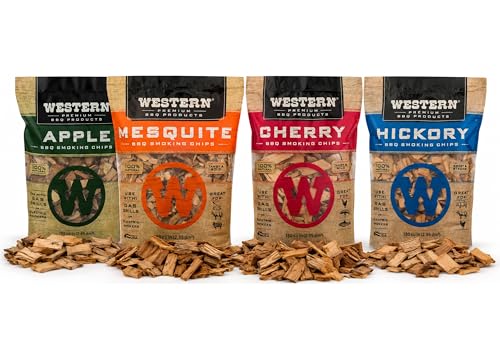
Western BBQ Smoking Wood Chips Variety Pack Bundle (4)- Apple, Mesquite, Hickory, and Cherry Flavors (Original Version)
Monitoring Doneness Without Overcooking
Mastering the moment when your salmon reaches perfect doneness separates amateur smoking from professional results, and you’ll need more than guesswork to nail it consistently. Insert your thermometer probe into the thickest part of the fillet for accurate readings. Target 125–135°F internal temperature, accounting for the temperature drop rate of 5–10°F during carryover cooking after removal. Pull your salmon 5–10°F below your target to compensate for residual heat distribution. A quality thermometer with low alarms prevents overcooking by continuous monitoring. Watch for the translucent-to-opaque shift and minimal white albumin formation on the surface. For extended smoking sessions, consider wireless models like the Fireboard Pulse or RFX MEAT that offer app connectivity and ambient temperature accuracy to monitor your grill remotely. Similar to smoking chicken, where the final doneness is verified at an internal temperature of 165°F, using a reliable thermometer ensures you hit your target temperature precisely every time. Just as patting the fish dry before cooking helps achieve better results, ensuring your salmon surface is properly prepared contributes to optimal smoke adhesion and texture development. The salmon is done when it flakes easily with a fork, indicating proper texture and moisture retention. Insert the probe into the thickest part of the salmon, just as you would with chicken breasts, to ensure an accurate temperature reading. Rest your fillet before serving to maintain even cooking and preserve moisture. This precision approach guarantees juicy, flaky salmon every time.
Common Mistakes That Affect Smoking Time
Several critical missteps can derail your smoking timeline and compromise the final product. Over-curing through prolonged brining—beyond 2-3 hours or extended refrigeration—extracts excess moisture, yielding jerky-like results that won’t absorb smoke properly. Your brine solution composition matters; precise salt-sugar ratios guarantee optimal moisture retention without excessive drying. After curing, allow 1-2 hours for pellicle formation through proper air drying to ensure the salmon develops that essential tacky surface for smoke adhesion.
Excessive smoking temperatures above 180-200°F accelerate cooking unpredictably, causing white albumin bleed and poor texture development. You’ll sacrifice the gradual smoke exposure that defines quality smoked salmon. Before smoking, lightly oil your grill grates with high-smoke-point oils like refined avocado or canola to prevent the delicate salmon skin from sticking during the extended cook time. After each smoking session, clean your grates with a wooden grill scraper to safely remove residue without the bristle risks associated with wire brushes.
Additionally, inadequate pellicle formation before smoking prevents proper smoke adhesion. You’ll need 1-2 hours of air drying with proper ambient airflow control to develop that pivotal tacky surface. Using mild woods like apple enhances the smoking process by imparting subtle flavors that complement the salmon without overwhelming it. Placing your grill on heat-resistant mats protects your deck from grease drips and potential heat damage during extended smoking sessions. Consider brushing the salmon with additional marinade during smoking to maintain moisture and enhance flavor penetration throughout the process.
Finally, inconsistent internal temperature monitoring creates unpredictable timelines. Without a thermometer, you’re guessing between 2-6 hours, risking either undercooked or overdone results. Using a meat thermometer ensures you track doneness accurately, preventing both food safety issues and texture problems from improper cooking times.
Achieving the Perfect Texture and Flavor
How do temperature control and internal doneness converge to create truly exceptional smoked salmon? You’ll achieve medium-rare perfection at 125-130°F internal temperature, yielding tender, juicy results that balance tenderness with opacity. Managing carryover cooking by removing salmon 5-10°F before your target prevents overcooking. A 180-200°F smoker temperature delivers flaky texture with intense smoke flavor while maintaining seasonal flavor profiles that complement your brining approach.
Post-smoking storage and preservation directly impact your final product’s longevity. Cool salmon completely on a rack before wrapping tightly for refrigeration, preventing condensation that creates sogginess. You’ll maintain quality for one week refrigerated or extend shelf life to one year frozen. Brushing with maple syrup during smoking’s final hour creates a protective glaze while enhancing flavor complexity. The pellicle develops on the salmon surface during the drying phase after brining, allowing it to absorb smoke more effectively and prevent moisture loss throughout the smoking process. Smoking thin belly and end pieces separately at 225-250°F ensures even cooking and optimal texture development across all salmon portions.