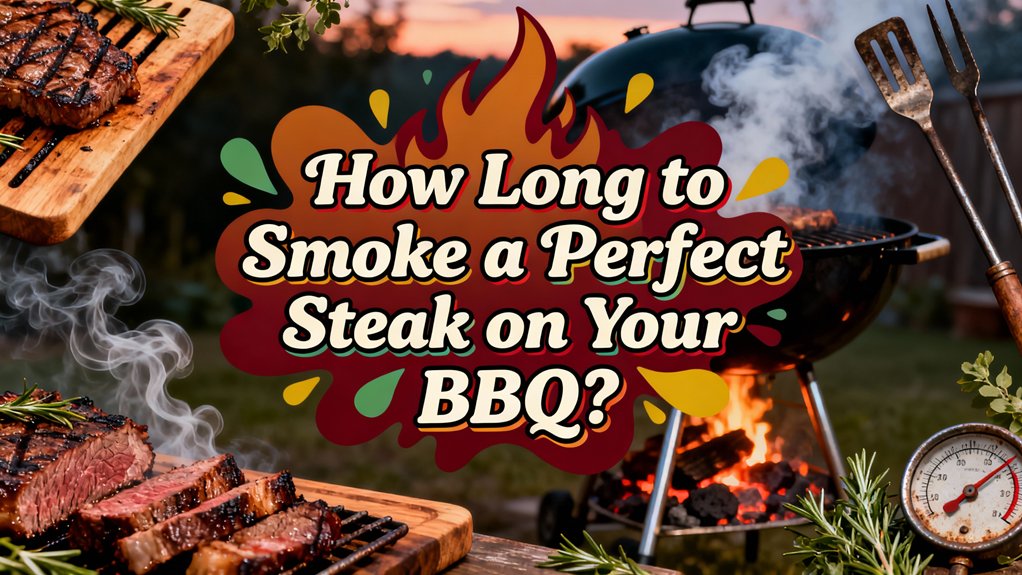
You’ll smoke your steak in roughly one hour at 225°F, though thickness and target doneness greatly impact timing. Start by preheating your smoker to 225°F and letting your steak reach room temperature for even cooking. Use an internal probe thermometer to track progress—pull at 125°F for medium-rare or 135°F for medium. The reverse searing technique delivers superior edge-to-edge consistency by starting low before finishing with a quick sear. For ideal results with different cuts and advanced finishing methods, you’ll want to understand the complete smoking process.
Setting the Right Temperature for Smoking
How do you nail the fundamentals of smoking a steak? You’ll want to uphold a pit temperature between 225°F and 250°F for consistent results. Preheat your smoker to 225°F as your standard baseline—this temperature range suits most cuts and conditions effectively.
Your smoker’s performance depends heavily on smoke chamber insulation and pit air flow management. Quality insulation stabilizes temperatures despite external wind conditions, while proper air flow guarantees even heat distribution around your steak. Thicker cuts demand more temperature stability, making these factors critical. Using a quality remote thermometer can help ensure you maintain accurate temperatures throughout the smoking process. A wireless dual-probe thermometer with 300-foot range allows you to monitor both pit and meat temperatures without opening the smoker lid. For the best results, let your steak rest at room temperature before placing it in the smoker to ensure even cooking.
Consider your wood choice—cherry or hickory work excellently at this temperature range. Monitor your smoker’s ability to maintain 225°F-250°F consistently. This low-and-slow approach prevents temperature swings that compromise doneness uniformity and creates superior smoke penetration throughout your meat. The low temperature allows the fat to render properly and connective tissues to break down for maximum tenderness. If you’re building a dedicated outdoor cooking setup, investing in 304 stainless steel components ensures long-term weather resistance and durability. Cook your steaks until they come within about 5–10 degrees of the target internal temperature for optimal results. Your smoker cooks through a combination of conduction, convection, and radiation, with the hot grate searing the meat while circulating air and radiant heat cook it evenly.

Longer Range 650 ft: The built-in best-in-class Bluetooth chip empowers this Bluetooth thermometer a longer range of up to 650 ft, a stronger signal and more stable connection to the smart App; so you'll never lost contact with your food no matter where in your house or yard

SMART BASE CONTROL: Set temperatures, monitor progress, and receive alerts directly from the base without needing your phone nearby.

BBQ HI/LOW temp range alarm: Set your desired food temp and HI/LOW temp range for your grill or smoker to know when to add more fuel smoker thermometer will flash and beep to remind you if the temperature ever goes out your set range; HI/LOW temp range alarm is specifically designed for usage with smokers, grills and BBQs
Understanding Smoking Duration and Cook Times
Once you’ve locked in your pit temperature between 225°F and 250°F, you’ll need to determine how long your steak actually stays on the smoker. Most steaks require approximately one hour at 225°F, though thickness notably impacts duration. Thicker cuts demand extended time, while thinner steaks finish faster.
Smoking consistency directly affects your total cook time. Temperature fluctuations will extend your session unpredictably. Use internal probe monitoring to track your steak’s progress toward target doneness—aim for 115-155°F depending on preference. For optimal results, maintain your smoker at 250°F throughout the entire cooking process. Resting your steak after smoking ensures proper juice redistribution and optimal texture. Monitor your smoker temperature carefully, especially when cooking in colder outdoor conditions. Using a meat thermometer for accuracy eliminates guesswork and ensures your steak reaches the precise internal temperature you desire.
Don’t rely solely on time estimates. Every smoker performs differently. Pull your steak when it reaches your desired internal temperature, then sear two minutes per side. Adjusting air dampers allows you to fine-tune temperature and maintain consistent heat throughout the smoking process. The 250°F range balances efficiency and tenderness, delivering quality results in less time than lower smoking temperatures. Advanced units with dual probes and app control let you monitor both chamber and meat temperatures remotely for greater precision. Finally, rest for ten minutes to allow juice redistribution before serving.
Achieving Your Desired Level of Doneness
Five distinct doneness levels await you when smoking steak, each requiring precise temperature management to nail your preference. You’ll master testing doneness levels by using an instant-read thermometer, inserting it horizontally into the thickest portion of your meat.
For rare steak, pull at 118°F for a cool red center. Medium-rare demands 125°F removal temperature, balancing tenderness with flavor. Medium steak reaches 135°F, offering a warm pink center with controlled juiciness. Medium-well requires 145°F, producing a slightly pink interior with firmer texture. Well-done reaches 155°F, eliminating pink entirely. Each doneness level produces distinct visual and textural characteristics that define the steak’s final quality. Regular temperature checks using your thermometer do not result in juice loss, so probe frequently throughout the cooking process. Internal temperature—not just time—is the most reliable indicator for doneness.
Monitoring internal temperature prevents overcooking. Options like the Thermapen ONE deliver one-second readings for rapid accuracy checks without keeping your grill lid open too long. For hands-free monitoring during longer smokes, wireless grill thermometers let you track temperatures from inside your house without constant trips to the grill. Wire-free options like the MEATER Plus feature dual sensors that simultaneously monitor both internal meat temperature and ambient cooking chamber temperature. Remember that carryover cooking continues raising temperatures during resting—typically 3-10 minutes depending on thickness. This resting period redistributes juices, ensuring ideal texture and flavor in your smoked steak. Allowing the steak to rest for 5-10 minutes enables juice redistribution, creating a more flavorful and tender final product.

【Fast & Accurate】Our meat thermometer digital delivers accurate readings within ±1°F in just 1–2 seconds, with a wide temperature range of -58°F to 572°F (-50°C to 300°C). No more waiting over the heat - know your food's exact temperature instantly.

【8X Faster + 4X More Precise】: Upgraded with an industrial-leading professional thermocouple sensor, Themomonster meat thermometer digital with NIST certified ±0.5℉ precision provides you the accurate temperature of your food in just 0.5 Seconds.

Completely Waterproof: IPX6 waterproof rating means you can wash this cooking thermometer under running water without fear. This food thermometer for cooking ensures cleanup is ultra-fast
Mastering the Reverse Searing Technique
The reverse sear method transforms how you’ll approach smoking steak, delivering edge-to-edge consistency that traditional direct-heat cooking struggles to achieve. You’ll start with low-heat cooking at 225-275°F for 45-60 minutes, adjusting duration based on meat thickness consideration. Target an internal temperature of 100-125°F before searing.
Your meat thickness consideration matters greatly—maintain minimum 1.5-inch thickness for ideal results. Pat the surface dry and season with salt and pepper 2-24 hours ahead, allowing penetration. This enzyme activation process during the low-temperature phase naturally tenderizes the meat through gentle, consistent heat exposure.
Next, you’ll sear aggressively on cast iron or grill grates at 450-500°F for 1-2 minutes per side. This high-heat finishing creates a profound brown crust while preserving your carefully controlled interior. Before searing, brush your steak with oil to enhance browning and prevent sticking to the cooking surface. Choose high-smoke-point oils like refined avocado, peanut, or canola that can withstand the intense searing temperatures without burning. Using an instant-read thermometer ensures precision when monitoring your steak’s internal temperature throughout the smoking and searing process. After searing, you can add a pat of butter along with garlic and fresh herbs to further enhance the flavor profile of your perfectly cooked steak. Rest 10-15 minutes under foil, targeting final time temperature targets of 125-135°F for medium-rare perfection. The combination of low & slow cooking with hot & fast searing ensures full-proof steak preparation that combines smoke infusion with a beautiful exterior crust.

Steakhouse Sear At Home: The Lodge Square Cast Iron Grill Pan delivers high-heat searing and bold grill marks while channeling excess grease away

Cast Iron Grill Pan: This 11-inch square grill pan, a part of Lodge's Chef Collection, is a durable cast iron pan ready to help you experiment in the kitchen like a pro
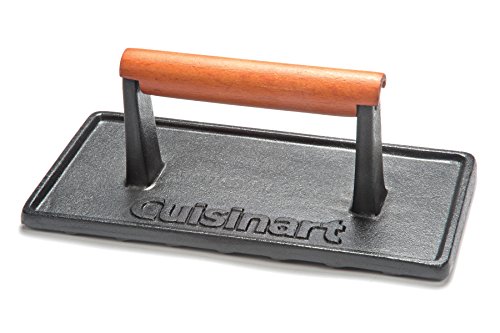
DURABLE: Heavy-duty 2.4-pound cast iron for even heat distribution and durability.
Smoking Guidelines for Different Cuts
Different cuts demand different smoking strategies to maximize tenderness and flavor development. Ribeye and strip steaks require 45-60 minutes at 225°-250°F for 1½–1¾ pound portions, while tri-tip steaks need approximately one hour for 2-2½ pound cuts at the same temperature range. Tenderloin cuts demand extended cooking—roughly two hours at 225°-240°F—due to their larger mass.
When smoking, you’ll maintain even smoke coverage by positioning steaks strategically on your grill grates. Handling moisture levels becomes critical; you’ll monitor condensation buildup to prevent soggy surfaces. Extended smoking durations can lead to moisture loss in your steaks, so balance your desired smoke flavor intensity with cooking time accordingly. Remember that safe temperatures do not guarantee tenderness, as higher cooking temps break down collagen and fat for better texture. Smaller cuts like ribeyes finish quickly after smoking, requiring just 4-6 minutes of high-heat searing. Larger tenderloin portions need careful temperature management throughout their longer smoking phase to guarantee consistent doneness and ideal smoke penetration. This low and slow method requires patience and precise monitoring, similar to techniques used for larger cuts that can take 12 to 18 hours to complete. After smoking, allow your steak to rest for at least 30 minutes to retain juices and maximize flavor distribution throughout the meat. Carryover heat will continue to raise the internal temperature during resting, so factor this into your timing when pulling steaks from the smoker. For best results, use probe-based temperature control to monitor internal doneness and remove steaks at the precise moment they reach your target temperature. Using a reliable thermometer ensures you achieve the exact internal temperature needed for your preferred level of doneness.


VARIETY SAMPLER - Includes a set of 10 uniquely flavored grilling spices and rubs in mini bottles

Preparing Your Steak Before Smoking
Before you place your steak on the smoker, you’ll need to prepare it properly to maximize smoke absorption and secure excellent crust development. Start with dry brining: generously salt your steak and refrigerate for at least 40 minutes, or up to 4 hours for ideal flavor penetration. This process enhances seasoning depth and smoke adhesion.
Next, focus on moisture management by patting your steak completely dry with paper towels on all sides. This critical step prevents steaming and guarantees proper crust formation during smoking. Allow your steak to reach room temperature before cooking—leave it out for approximately one hour while your smoker preheats. This resting duration promises even internal cooking throughout the meat, resulting in superior texture and flavor consistency. Using a meat thermometer will help you monitor the internal temperature throughout the cooking process. For optimal results, select steaks at least 1 1/2 inches thick to ensure adequate time for smoke flavor absorption during the smoking process. After drying, coat the steak with oil and apply your preferred rub to build flavor layers that complement the smoke.

TEXAS-MADE: Crafted by BBQ expert Jess Pryles, this activated charcoal rub delivers bold flavor for steak, brisket, and burgers. Proudly made in Texas with premium ingredients for authentic grilling.

ONE shaker bottle of seasoning

Contains 5.5 ounces of organic steak rub
Finishing Touches for Maximum Flavor
Your smoked steak’s flavor profile reaches its peak during those final moments after it leaves the heat. Begin with a critical resting period of 5–10 minutes tented with foil, allowing juices to redistribute throughout the meat for optimal tenderness and moisture conservation.
Once rested, elevate your steak with compound butters. Prepare a finishing butter by combining softened unsalted butter, garlic, red wine, and cracked pepper, then refrigerate rolled in plastic wrap. Place a pat atop your hot steak, letting it melt into the meat and enhance richness without overpowering the smoky flavor. Just as in steakhouse dining where sauces and butters are served in small bowls to complement premium cuts, these strategic finishing touches create depth while maintaining your steak’s integrity. For the finest results, choose high quality meat that deserves only simple, complementary flavors rather than heavy masking sauces.
Avoid cutting immediately after smoking—patience during resting secures maximum juice retention and professional results. You can also enhance the crust by applying oils with a high smoke point directly to the steak surface before smoking. If you want to achieve a restaurant-quality crust with even heat distribution, consider finishing your steak with a quick sear on a quality grill after smoking. Models like the Weber Spirit E-310 deliver excellent searing capabilities with cast iron grates that create perfect steak crusts. Cast iron cooking surfaces provide superior heat retention that ensures consistent temperatures throughout the searing process. For outdoor cooking enthusiasts seeking versatility, the Grilla Primate offers hybrid grill-griddle capabilities that excel at both smoking and high-heat searing.