You’ll season your lamb rack generously, then sear it at 600°F for 3-4 minutes per side to develop a caramelized crust. Next, you’ll move it bone-side down to indirect heat around 250°F, covering the grill for 13-15 minutes while monitoring internal temperature. Target 135°F for perfect medium-rare doneness. After a 5-10 minute rest, you’ll remove the foil from bones and slice into individual chops. The specific techniques that elevate this dish from good to exceptional are explored further within.
Preparation and Seasoning
Before you fire up the grill, you’ll want to select a quality rack of lamb with 8 to 9 ribs, preferably French-trimmed to expose the bones for a polished presentation. Remove the lamb from refrigeration and allow it to reach room temperature for 20 minutes—this temperature equilibration guarantees even cooking throughout.
Pat the rack dry, then apply basic seasoning generously on both sides using kosher salt, black pepper, and garlic powder. Next, prepare a garlic-herb marinade by pulsing fresh rosemary, thyme, garlic, and salt in a food processor, then drizzle in olive oil to form a paste. For optimal flavor development, refrigerate the coated lamb for at least 30 minutes to one hour before grilling. Coat the lamb evenly with this mixture and let it rest 30 minutes to one hour before grilling. Consider lightly scoring the surface before grilling to enhance caramelization and flavor. With proper seasoning and technique, your lamb will achieve high flavor and remain perfectly tender when cooked. Before grilling, ensure your grill grates are properly prepared by applying high smoke point oil and heating to create a non-stick protective layer. To ensure your grill reaches the proper temperature without the oil burning, use oils with high smoke points like refined avocado or peanut oil if you’re oiling your grates. For campfire cooking, selecting a grill grate material suited to high heat—such as cast iron or stainless steel—will enhance heat retention and searing performance. Between grilling sessions, protect your grill investment with a durable grill cover to prevent weather damage and maintain your equipment’s longevity.

Meets standards for animal welfare, feed, and more, so you can know about what you're buying (and eating)

PREMIUM QUALITY: Our New Zealand Rack of Lamb features succulent rib racks, sourced from grass-fed lamb raised in Australia or New Zealand. Each vacuum-sealed package contains 2 racks, providing enough meat to serve dinner for 2.
Tender and flavorful no-antibiotics-ever 100% grass-fed New Zealand lamb ready for your favorite preparation
Grill Setup and Temperature
Now that your lamb’s been properly seasoned and marinated, you’ll want to prepare your grill to deliver the high heat needed for a perfect sear followed by gentle cooking. Preheat all burners to 450°F, covering the grill for 10-15 minutes. Clean and grease your grates with an oil-soaked paper towel to prevent sticking.
Create two distinct zones for ideal heat distribution. Keep one side on high for direct searing, then shift to a cooler indirect zone for finishing. Timing considerations are critical: you’ll sear the lamb over direct heat for 3-5 minutes, then move it to the indirect side where you’ll maintain lower temperatures around 250°F. This dual-zone approach guarantees a caramelized crust while preventing overcooking the interior. Look for a grill with even heat distribution capabilities to ensure consistent results across your cooking surface. Models like the Monument Grills Mesa 415BZ excel at delivering even heating without hot or cold zones. For superior performance, consider gas grills with robust construction that maintain consistent temperatures across all cooking zones. The residual heat from the indirect side will work like an oven to gently cook the meat through to your desired doneness. When the grill lid is closed, convection circulates hot air throughout the chamber to ensure even cooking. For best results, enhance the natural flavor by ensuring your grill reaches the proper temperature before cooking begins. Look for grills with 10-year warranty coverage to protect your investment in quality equipment.
Searing the Meat
Place the seasoned rack directly over your hot zone at 600°F for high heat application. Sear 3-4 minutes per side to develop a caramelize crust while maintaining a medium-rare interior. Rotate the rack to guarantee even sear distribution across all surfaces without overcooking the meat. Wrap the bones with aluminum foil to protect them from excessive charring during the high-heat searing process. Brush the meat with oil before grilling to prevent sticking and ensure a proper sear on the exterior. Consider using reversible grill plates with diamond marks to create superior searing patterns while reducing hot spots across the cooking surface.
Monitor internal temperature carefully—you’re targeting 135°F for medium doneness. A high-quality meat thermometer will help you hit this target temperature precisely. If using the reverse method, pull the rack at 110-115°F before searing to prevent carryover cooking that toughens the lamb. Built-in grills with infrared searing elements deliver consistent high-heat performance ideal for achieving professional sear marks on premium cuts like lamb racks. Before grilling, ensure your grates are clean using a bristle-free grill brush to remove any residue that could affect searing quality. Marinating the rack beforehand with rosemary and garlic will enhance both flavor and tenderness during the searing process.
After searing, tent the rack loosely with foil and rest 5-10 minutes. This resting period allows juices to redistribute throughout the meat, safeguarding each bite remains tender and flavorful.
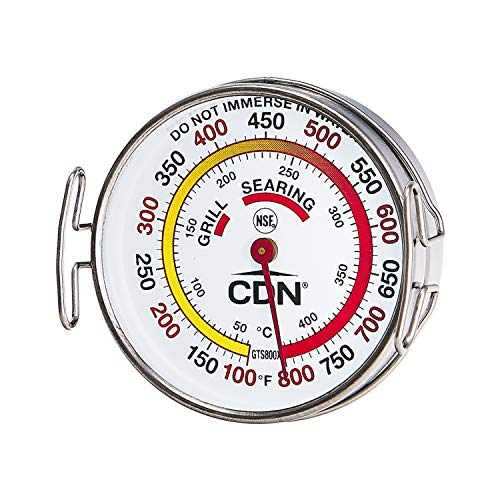
ACCURATE TEMPERATURE ZONES. The CDN GTS800X Grill Surface Thermometer features a color-coded scale that allows precise monitoring of temperature zones, providing optimal control over your grilling experience.
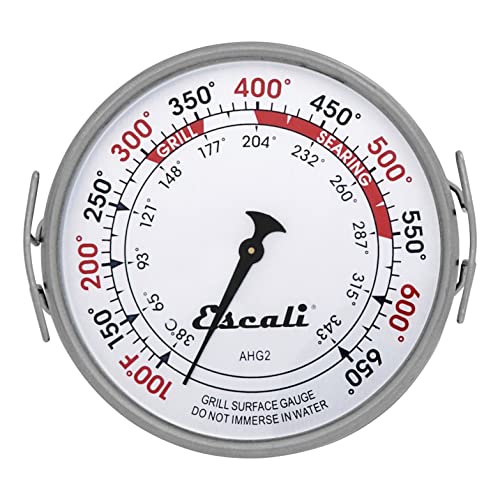
Temperature Range: 100° to 650°F / 38° to 343°C. Dial Diameter: 3.5 inches

Material:This Grill Temperature Gauge is made of stainless steel to maximum durability and reliability.That is not only safe but also environmentally friendly
Main Cooking Phase
Your lamb’s sear is complete—now you’ll move to the main cooking phase where gentle, indirect heat’ll bring your rack to perfect doneness. Shift the racks bone-side down to your indirect heat zone and cover the grill. Maintain steady heat management by keeping temperatures consistent during this phase. If your grill features adjustable grates, you can fine-tune your heat positioning for optimal indirect cooking control. To ensure even cooking temperature throughout the process, open your vents fully to allow proper airflow and heat circulation.
Use temperature monitoring with a meat probe thermometer inserted into the thickest part of the meat. You’re targeting 120-125°F internal temperature for medium-rare before resting. This indirect phase typically requires 13-15 minutes, though timing varies based on rack thickness and your specific grill. Maintain your grill temperature around 250°F to ensure the lamb cooks evenly without drying out. Monitor the lamb closely throughout this stage to ensure it does not cook beyond the medium rare stage for best results. Testing doneness with finger pressure techniques provides an additional verification method alongside your thermometer readings.
Wrap any exposed bones with foil strips to prevent charring. The indirect heat method allows the Maillard reaction completed during searing to develop flavor while the gentle cooking ensures even doneness throughout. Just as with steak, resting the lamb after cooking allows juices to redistribute for optimal tenderness. Don’t rush this stage—low, consistent indirect heat guarantees even cooking and ideal tenderness throughout your lamb rack.

BBQ / Grill pit thermometer, safe and environmentally friendly.

Large Display: Features a 2 3/8 inches large face for clear visibility; Stem length of 2 7/8 inches enhances accessibility; Enables easy classification of food temperatures in various cooking environments

✅[ Easy Temperature Reading ] - 3 3/16'' Large Dial BBQ Grill Smoker Thermometer with enlarged degree scales and numbers , easy to read even from far away. Perfectly fits for most smokers or grills with a 3/8 inch opening or hole
Finishing Techniques
The final minutes on the grill‘ll determine whether your lamb rack achieves restaurant-quality excellence or falls short of its potential. Your fat rendering secrets involve searing the fatty edge directly over high heat during the final moments, crisping the cap without charring the meat beneath. This technique develops umami depth and textural contrast that elevates your dish immensely.
For flavor infusion methods, apply your finishing seasoning immediately after removing the lamb from heat. Simple salt and pepper enhance the meat’s natural delicate profile, while rosemary and lemon pepper create classic complementary notes. Incorporate garlic powder for added depth, and consider optional MSG to amplify umami characteristics. Allowing the meat to rest for 5-10 minutes before slicing redistributes the juices and ensures optimal tenderness. Allow the lamb to rest for a few minutes before slicing to redistribute the juices and ensure optimal tenderness. Using a meat thermometer to verify internal temperature ensures your lamb reaches the exact doneness you desire.
Complete your presentation with a light olive oil finishing coat, adding richness and visual appeal before serving.

𝐒𝐀𝐕𝐎𝐑𝐘 𝐇𝐄𝐑𝐁 𝐅𝐋𝐀𝐕𝐎𝐑 𝐅𝐎𝐑 𝐋𝐀𝐌𝐁: Sisi Lola Lamb Chop Seasoning is crafted to complement lamb chops, rack of lamb, roast lamb, grilled lamb, and other lamb dishes with a rich, savory herb-forward taste.

VERSATILE & EASY TO USE: Not just for kebabs, make the most of roasted veggies, craft delicious sauces, and elevate starches like lentils, couscous, and pita.

PERFECT FOR ALL GRILLING MEATS:Enhance the flavor of beef, chicken, ribs, pork, and even vegetables with our versatile barbecue seasoning rub. Ideal for smoking, grilling, lamb skewers seasoning or roasting.
Serving and Presentation
Once your lamb rack rests for ten minutes, you’ll carve the chops by slicing between the bones, removing the silver skin beforehand to safeguard greatest tenderness. Position chops bone-upright for an elegant plate arrangement that showcases your grilled masterpiece.
For fine dining, plate chops individually with bones interlocking at the center. Stack them leaning against each other to create height and visual interest. Arrange color coordinated garnishes strategically: pair the pink lamb with fresh rosemary sprigs and thyme, then add pomegranate seeds or red sauce drizzles for contrast. Include yellow citrus zest and white mashed cauliflower to balance your composition. To further enhance the romantic ambiance, consider serving alongside smoked mashed potatoes for a sophisticated side that complements the lamb’s rich flavors. For authentic restaurant presentation, use a seafood grill seasoning blend to finish the plating with professional flair.
Maintain even spacing between elements and mirror garnishes on plate sides. Drizzle herby marinade remnants across the surface for shine and flavor enhancement. Consider finishing with a rosemary-garlic compound butter placed atop each chop to enhance both the visual appeal and herbaceous flavor profile. For an elevated presentation, use onion boats to hold the sauce, which adds both visual appeal and functional elegance to your plating. You can also complement your lamb with classic potato salad or other traditional vegetable sides to round out the meal.
Temperature Guidelines for Doneness
Achieving the perfect doneness level requires understanding how carryover cooking—the residual heat that continues cooking the meat after you’ve removed it from the grill—affects your final result.
Pull your lamb at temperatures 3–6°C below your target to account for this phenomenon. For medium-rare, remove it at 125°F (52°C) for a final 130°F (54°C). Medium doneness calls for pulling at 140°F (60°C). Well-done requires 160°F (71°C) or higher. Using a digital meat thermometer** to monitor your lamb throughout the cooking process helps you achieve these precise temperatures consistently. For the most accurate results, consider investing in a high-accuracy instant-read thermometer** that can deliver readings within one second.
Rest time is essential post-cook. Allow your lamb 3 minutes minimum to redistribute juices throughout the meat, enhancing tenderness and flavor at all doneness levels. When cooking the rack whole rather than individual chops, the bones act as insulation that prevents overcooking and moisture loss. For optimal results, grill your lamb over medium-high heat similar to the temperature recommendations used for other proteins. The doneness of the lamb is ultimately determined by the maximum internal temperature reached during cooking. Use a meat thermometer to verify internal temperatures accurately. This precision guarantees you’ll consistently achieve the exact doneness your guests prefer.

【Fast & Accurate】Our meat thermometer digital delivers accurate readings within ±1°F in just 1–2 seconds, with a wide temperature range of -58°F to 572°F (-50°C to 300°C). No more waiting over the heat - know your food's exact temperature instantly.

Instant Read Meat Thermometer | Our instant read thermometer features a temperature probe and advanced, highly accurate technology with a 1-2 second response time. Our instant read food thermometer comes pre-calibrated with instructions and a meat temperature chart, plus a recalibration feature if needed.

【8X Faster + 4X More Precise】: Upgraded with an industrial-leading professional thermocouple sensor, Themomonster meat thermometer digital with NIST certified ±0.5℉ precision provides you the accurate temperature of your food in just 0.5 Seconds.
Carving and Plating Tips
Your perfectly grilled rack deserves equally thoughtful finishing. After removing your lamb from heat, rest it for 15 minutes under foil, allowing meat juices redistribution and temperature stabilization. Position the rack bone-side up for stability during this critical phase.
When carving, stand the rack upright and cut between ribs using smooth, single strokes—avoid sawing motions that create jagged edges. Use a sharp knife placed in the seam for clean separation. For the best results, employ a 4 Piece Carving Set or professional knife to ensure clean cuts through the meat and bones. Before carving, ensure your grill grates are clean and free of debris by using a bristle-free grill brush to avoid any metal fragments contaminating your finished dish. Bristle-free options eliminate the risk of bristle ingestion hazards that can occur with traditional wire brushes. Nylon-bristle brushes are a safer alternative to metal for routine grill maintenance between cooking sessions. Wooden grill scrapers like the Great Scrape Woody Shovel provide an excellent option for maintaining clean grates while protecting food from contamination. Experts have found that mess-free grill cleaners can help restore grates to pristine condition before preparation begins.
For elegant presentation, french your bones by scraping them clean and peeling away sinew and fat layers. Polish bones until white, exposing approximately 1.5 inches from the cut end. Use the butt-end of the boning knife to scrape off any remaining connective tissue for a pristine appearance. Arrange your chops upright on the platter with bone polishing evident, spacing them evenly. Garnish with fresh parsley and serve alongside lemon wedges for acidity.