
You’ll achieve medium heat on your grill at 325 to 350 degrees Fahrenheit, the ideal temperature for searing proteins while ensuring thorough interior cooking. You can verify this range using the hand test—hold your palm three inches above the grate for five to six seconds. Different grill types require varied approaches: gas grills need direct burner control, charcoal demands strategic vent adjustments, and pellet grills offer automated precision. Mastering this temperature grants consistent, restaurant-quality results across numerous grilling applications.
Defining Medium Heat Temperature Range
Medium heat on a grill falls between 325 and 350 degrees Fahrenheit, though you’ll find some sources extending this range up to 400 degrees. This temperature bracket serves as your standard medium heat application for most grilling tasks. The middle benchmark of 350 degrees Fahrenheit provides a reliable target when you’re cooking proteins and vegetables that require moderate, even heat without excessive charring.
Your grill configuration considerations should account for fuel type and airflow management. Charcoal grills demand strategic vent adjustments to maintain consistent temperatures, while gas grills allow direct burner control. You can verify your actual temperature using a lid thermometer positioned 6 to 10 inches above the grate, or employ the hand test—holding your palm 3 inches above the grate for 5 to 6 seconds indicates medium heat. When selecting a gas grill, checking the burner count and BTU specifications helps ensure your model can maintain stable medium temperatures throughout the cooking surface. Premium gas grills like the Grilla Primate achieve even heat distribution across their cooking surface, making them excellent choices for consistent medium heat application. Models like the Weber Spirit II E-310 and Napoleon Prestige 500 exemplify gas grills with consistent performance for maintaining medium heat across their cooking areas. For those seeking reliable performance, the Weber Genesis SX-335s offers even heat distribution ideal for precise medium heat cooking. Many top-performing models such as the Monument Mesa provide high BTU output and rotisserie capabilities that enhance your medium heat cooking versatility.
Medium heat proves particularly versatile for roasts, pork loin, poultry, whole fish, and large dense vegetables. Propane grills have a maximum heat of 600°F, with medium heat around 350°F. Infrared thermometers provide the most precise grate-level readings for accurate medium heat application.
How Medium Heat Varies by Grill Type
While the 325 to 350-degree Fahrenheit range defines medium heat universally, you’ll find that achieving and maintaining this temperature varies considerably depending on your grill’s fuel source and design. Gas grills reach medium heat efficiently through burner adjustments, typically stabilizing around 350°F with the lid closed. Charcoal grills require you to employ a two-zone setup, positioning coals to one side while cooking on the opposite surface for controlled medium heat applications. Pellet grills deliver precise temperature regulation via automated pellet feed systems, consistently preserving 350°F without manual adjustment. Electric models provide thermostat-controlled medium heat around 350-375°F. Multi fuel medium heat comparisons reveal that specialty grills like infrared and wood-fired units demand strategic zoning to achieve medium temperatures. For those seeking luxury outdoor kitchen solutions, built-in gas grills like the True Flame TF40 offer professional-grade reliability with precise heat management across 70,000 total BTUs. For those seeking luxury outdoor kitchen solutions with exceptional charcoal grill performance, options like the Krakatoa from Fesfoc provide 100% customizable designs with precise heat management capabilities. Premium brands like Coyote deliver exceptional durability and ease of installation across multiple fuel types for discerning outdoor kitchen enthusiasts. Wood pellet grills with Intelligent Temperature Control offer superior consistency compared to traditional gas alternatives. Budget-friendly pellet grills like the Pit Boss 440 SERIES provide excellent value for beginners learning to master medium heat temperatures. For pellet grills specifically, starting on low or smoke mode ensures optimal ignition before gradually adjusting to your target medium temperature. Understanding your specific grill type guarantees you’ll master medium heat applications effectively. For optimal results, use a meat thermometer to verify that your grill has stabilized at the desired medium heat temperature before placing food on the grates.

BBQ charcoal pit temperature gauge with large degree scales and numbers , easy to read even from far away.

Temperature measurement range:-50℃-500℃ (-58℉-932℉)Display resolution: 0.1 ℃ or 0.1 ℉

Large Display: Features a 2 3/8 inches large face for clear visibility; Stem length of 2 7/8 inches enhances accessibility; Enables easy classification of food temperatures in various cooking environments
Understanding Adjacent Heat Levels
To master medium heat grilling, you’ll need to understand how it compares to the surrounding temperature zones on your grill. Medium heat (350°F–375°F) sits strategically between low heat (250°F–350°F) and medium-high heat (375°F–450°F). This positioning affects both your grilling time versus heat requirements and your heating element versus air circulation adjustments.
Low heat excels at slow-cooking thick cuts, while medium-high heat accelerates browning on hamburgers and chicken. Medium heat offers the ideal balance between searing capability and thorough interior cooking. High heat (450°F–650°F) demands quick-cooking techniques for steaks and kabobs. External thermometers with a probe can give you an accurate reading to ensure you’re maintaining the correct medium heat zone. For the best results, consider using an instant-read thermometer for quick temperature verification at multiple points on your grill surface. For charcoal grills, adjusting air intake through vent control helps you achieve and maintain your target medium heat temperature. Consider investing in a wireless probe thermometer for consistent temperature monitoring across different heat zones on your grill surface.
Understanding these distinctions helps you select the appropriate temperature zone for your specific recipe, ensuring consistent results whether you’re managing charcoal vents or adjusting gas burners. Using heat shields or deflectors underneath your heating elements improves heat distribution and reduces flare-ups for more reliable medium heat maintenance. Wireless thermometer models with app connectivity provide convenient remote monitoring during longer cooking sessions, allowing you to track temperature fluctuations without constantly checking your grill. For those interested in maximizing charcoal efficiency, charcoal trays designed for specific grill sizes can help optimize heat distribution and fuel usage.
Best Foods to Cook at Medium Heat
You’ll find that several categories of proteins and vegetables thrive when grilled at 350°F–375°F, where the heat’s intensity allows for proper browning without overcooking delicate cuts or drying out moisture-sensitive ingredients. Chicken breasts marinated in yogurt-based mixtures retain moisture effectively at this temperature, while drumsticks and wings develop crispy skin. Fatty fish species like salmon and swordfish perform ideally, especially when brined beforehand.
Ground chuck burgers with 20% fat content achieve perfect texture, requiring a center depression for even cooking. Beyond traditional proteins, tofu preparation thrives at medium heat when properly marinated, offering excellent plant-based protein options. Vegetables including Brussels sprouts, bell peppers, mushrooms, and zucchini develop proper caramelization. Specialty dishes like kabobs with alternating meat and vegetables guarantee balanced, thorough cooking throughout. For optimal results, wings should reach an internal temperature of 165°F to 175°F to ensure the meat pulls away from the bone easily while maintaining juiciness. Sausage varieties including Italian, andouille, and chorizo are among the best meats to grill at medium heat temperatures. Using a meat thermometer inserted in the thickest part ensures proper doneness without overcooking. Bone-in chicken thighs require 20 to 25 minutes of grilling, combining direct and indirect heat to achieve crispy skin while keeping the meat juicy. Korean BBQ chicken skewers and other marinated grilled chicken varieties are particularly well-suited to medium heat, allowing the marinade to caramelize while keeping the chicken juicy and flavorful. Grilled chicken’s high protein content supports muscle growth and metabolism while remaining low in saturated fat compared to other protein options.
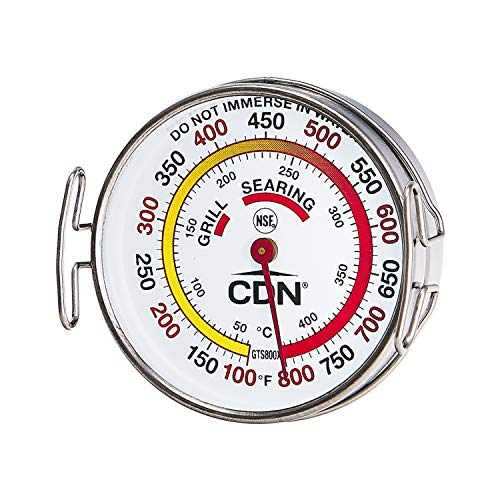
ACCURATE TEMPERATURE ZONES. The CDN GTS800X Grill Surface Thermometer features a color-coded scale that allows precise monitoring of temperature zones, providing optimal control over your grilling experience.
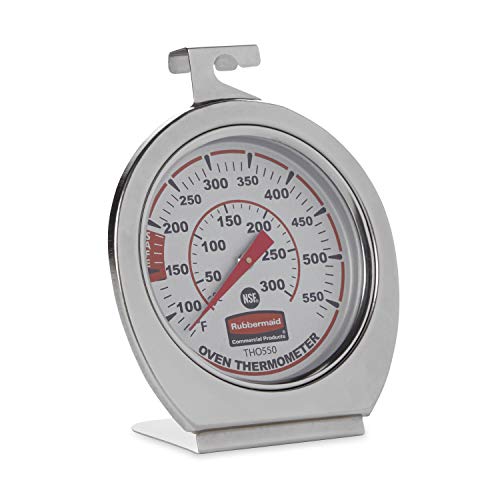
FOOD SAFETY: Thermometer displays true oven temperature instantly to ensure safe food preparation

Material:This Grill Temperature Gauge is made of stainless steel to maximum durability and reliability.That is not only safe but also environmentally friendly
Accurate Methods for Measuring Grill Temperature
Several reliable techniques can determine whether your grill’s actually reached medium heat, each with distinct advantages depending on your equipment and cooking style. Built-in lid thermometers offer convenience for monitoring indirect cooking, though they’re less accurate due to heat zone variations. Infrared thermometers provide quick surface readings without contact, ideal for verifying grate temperature. For precision, probe thermometers with external displays deliver near-perfect readings when properly calibrated. Wired digital models eliminate Bluetooth connectivity issues and enable monitoring without opening the grill. Wireless thermometers using radio frequency technology offer reliable remote monitoring across longer distances without the connectivity limitations of Bluetooth-only devices. During probe placement considerations, preheat your grill to high, then position the thermometer at your grate’s center for a baseline reading. Systematically check top right, center, left, bottom, and middle zones to identify your hottest and coolest areas. Creating two-zone fire setups allows you to establish distinct temperature areas on your grill for better heat management flexibility. The hand test technique allows you to estimate temperature by holding your palm three inches above the grill surface for varying durations. For the most dependable ignition when preheating, consider upgrading to electronic or spark igniters rather than basic piezo models, which can affect your ability to reach consistent medium heat reliably. Quality tube burners with uniform flame ports ensure minimal hot spots and more consistent medium heat distribution across your cooking surface. Before measuring, clean your grill grates thoroughly using a specialized metal scraper to ensure accurate temperature readings without interference from residual buildup. Requirements to ensure accuracy across all measurement methods, directly impacting your cooking results, include verifying that instant-read digital thermometers are battery powered for quick internal temperature verification during your cooking process.

SMART BASE CONTROL: Set temperatures, monitor progress, and receive alerts directly from the base without needing your phone nearby.

Bluetooth Monitor Remotely: Govee Bluetooth meat thermometer lets you check the temperature of your grill, smoker, or oven from your phone. With this smart BBQ thermometer, you can multitask while grilling.

WIRELESS CONVENIENCE: Monitor meat temperatures remotely without hovering over the grill or oven, giving you freedom to multitask.
Direct and Indirect Grilling Techniques
Once you’ve confirmed your grill’s reached medium heat, you’ll need to choose between direct and indirect cooking methods—each fundamentally different in how heat transfers to your food. Direct grilling places food directly over heat, ideal for steaks, burgers, and vegetables that cook quickly. This method creates distinctive grill marks and caramelization through intense radiant heat emitted by the burning charcoal embers. Indirect grilling positions food away from the heat source, creating an oven-like environment perfect for larger cuts like roasts and whole poultry requiring longer cooking times. Medium heat efficiency shines when you identify grill hot spots and strategically position food accordingly. Direct cooking demands active monitoring to prevent burning, while indirect cooking allows more passive heat circulation, making each technique valuable for different culinary goals. Before grilling, ensure your grill grates are cleaned and oiled to prevent sticking and promote even heat distribution across both cooking zones. The flavorful char created by direct grilling’s high heat exposure is particularly prized by grilling enthusiasts seeking restaurant-quality results. For those looking to enhance their grilling experience further, consider using wood pellets in a smoker box to add depth and complexity to the smoky flavor of your food. When using indirect grilling, remember to keep coals or flame off to the side of your food to maintain the gentle, slower cooking environment that larger cuts require.

for weber spirit grill parts【Compatible with Weber Spirit & Genesis Models】 Precisely engineered to fit Weber Spirit 300 Series including Spirit E310, S310, E315, S315, E320, E330, S320, S330, as well as Spirit 700, for Weber 900, and multiple Genesis models like Genesis Silver B/C, Gold B/C (2002+), Genesis 1000–3500 and Genesis Platinum (2000–2010). - Not compatible with Genesis Silver A.

Perfect Replacement: Designed to replace parts for Nexgrill 4 Burner Models 720-0830H, 720-0888S, 720-0888N, 720-0888, 720-0888A, and 720-0888B. Ensure a precise fit and easy installation for your Nexgrill.

Adjustable grill heat plates extend from 11.75” up to 21” long, 3.75” wide, fits most outdoor gas grills such as charbroil, nexgrill and etc. If installed reversely, the length will be extended from 11.75” to 18.37” only. Please measure the width of the mounting slot on your grill to confirm compatibility before ordering
Tips for Maintaining Consistent Medium Heat
Achieving consistent medium heat requires understanding how your specific grill operates and employing both technological and tactile monitoring methods. You’ll want to position a dedicated thermometer directly above your cooking zone for accurate readings, since built-in gauges typically measure temperatures 6 to 10 inches above the grate rather than at actual cooking level. Regular grill maintenance guarantees even heat distribution across your cooking surface. To maintain optimal airflow and heat consistency, empty the ash catcher regularly to prevent buildup that can interfere with temperature control. Additionally, scraping away debris from your grill’s interior helps maintain proper heat flow and cooking performance. Verify your medium heat target—approximately 350°F for gas grills, but 350°F to 450°F for charcoal and pellet models due to their higher maximum temperatures. Use the hand-test method alongside thermometer data: you should comfortably hold your hand 3 inches above the grate for 5 to 6 seconds. Cross-referencing these methods helps you maintain the steady temperatures necessary for proper food development and consistent results. Keeping the lid closed helps maintain a steady temperature throughout the cook. For gas grills specifically, models with cast iron grates provide superior heat retention and distribution. Premium stainless steel grills like the Weber Genesis S-435 offer excellent heat distribution to support medium-heat cooking. Investing in higher-grade 304 stainless steel construction ensures your grill maintains consistent heat performance over years of use. Medium heat is ideal for indirect grilling and works well with roasts, pork loin, poultry, and whole fish.

𝐕𝐞𝐫𝐬𝐚𝐭𝐢𝐥𝐞 𝐓𝐨𝐨𝐥𝐬: Infrared technology allows you to measure various objects at home and outdoors; Use it for 𝒎𝒆𝒂𝒕, 𝑫𝑰𝒀 𝒄𝒂𝒏𝒅𝒚, 𝒐𝒗𝒆𝒏𝒔, 𝒈𝒓𝒊𝒍𝒍𝒊𝒏𝒈, 𝒇𝒐𝒐𝒅, 𝒄𝒐𝒐𝒌𝒊𝒏𝒈, 𝒂𝒖𝒕𝒐𝒎𝒐𝒕𝒊𝒗𝒆 𝒖𝒔𝒆, 𝑨/𝑪, 𝒓𝒆𝒇𝒓𝒊𝒈𝒆𝒓𝒂𝒕𝒐𝒓𝒔, etc.

Fast & Accurate: Get precise readings in just 1 second with ±0.9°F accuracy. NSF Certified for trusted food safety, this digital food thermometer features a 4.3 inches food-grade stainless steel meat probe, perfect for grilling, frying, baking, making candy and more

Wide Temperature Range: Measures temperatures from -58℉ to 1112℉ (-50℃ to 600℃), making it perfect for a variety of applications, including cooking, pool maintenance, oven temperature checks, and candy making


