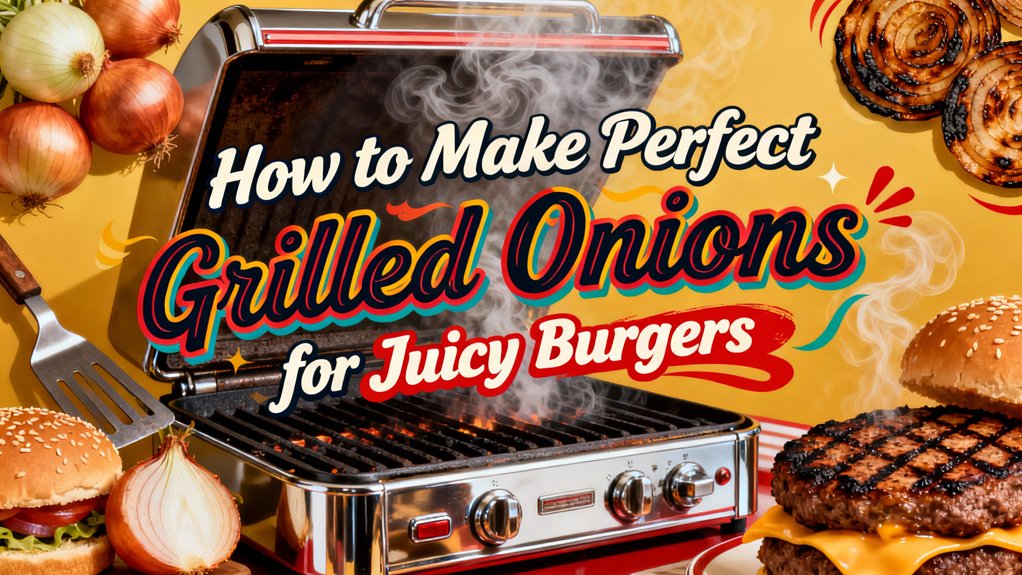
You’ll create perfect grilled onions by selecting medium red or large yellow varieties and slicing them into 3/8-inch thick pieces. Brush both sides with canola oil, then sauté over medium-high heat for 10-15 minutes, stirring frequently until light brown. Season with salt, pepper, and garlic while controlling moisture by adding water as needed. Skewer slices to prevent them from falling through grates. For caramelized results with minimal effort, grill them in a foil pouch—though mastering advanced techniques yields even more impressive burger toppings.
Preparing Your Onions
Since you’ll want uniform cooking and ideal caramelization, start by selecting the right onion variety for your grilling method. Medium red onions work best for grilling rings, while large yellow onions suit slicing and sautéing. Cambray onions with green tops excel for whole grilling.
Next, apply proper peeling techniques by removing the outer layer completely. For trimming methods, cut away the tops and bottoms, then remove roots from Cambray onion tops. Leave three inches of green stem on Cambray onions for safe handling. Slice the thin top end to create wedges that hold together without falling apart. For whole onions, coat them with BBQ sauce and fresh parsley to enhance flavor during the grilling process. Adding a small amount of water during cooking helps maintain juiciness and prevent the onions from drying out on the grill. Similar to other grilled vegetables, cutting onions into uniform thickness ensures even caramelization and consistent cooking throughout the grilling process. Skewering the onion slices can help keep them intact while grilling and prevent them from falling through the grates. For a hands-off approach, you can also grill onions in a foil pouch to yield caramelized results with minimal effort.
Select even-sized onions throughout to guarantee uniform cooking and consistent results across your grill. To protect your deck from grease splatters and heat damage while grilling, consider using a grill mat for decks beneath your cooking setup. Investing in a durable grill cover will also protect your entire grilling equipment from weather elements when not in use.

【Large Under Grill Mat】 79*39 inches large double-sided fireproof under grill mat for Blackstone all grills & most family-sized grills, prevents sparks, oil, food residues, and keeps decks, patios and lawns clean and tidy.

【Protect Deck and Lawn】 48*30 inch double-sided fireproof grill mat for use under grill, prevents high temperatures, resists sparks, oil, food residue, and keeps decks, patios and lawns clean and tidy.

Perfect Choice for Outdoor Grilling - This fireproof under grill mat provides all-around protection for your grilling area. While barbecuing, it not only catches splattered grease and sauces but also effectively prevents high-temperature embers from damaging your deck and patio, keeping your outdoor environment clean and safe from messes and grease stains, significantly reducing cleanup time after your barbecue.
Setting Up Your Grilling Station
To achieve consistently perfect grilled onions, you’ll need a properly prepared grilling station that maximizes efficiency and safety. Begin by anchoring the grill on a stable, level base—concrete slab or pavers work best—using pressure-treated 2×6 lumber framing. Position your grill in its final location after verifying local code compliance and adequate clearance from combustible materials.
Organize your station strategically: designate a prep area adjacent to the grill for onion slicing and plating. Install drawers and cabinets nearby for tool storage. Weatherproofing the station involves applying outdoor-rated materials like concrete or stone veneer to all surfaces, then sealing joints with caulking to prevent moisture damage. A built-in grill station provides the most workspace, including countertop space for comprehensive prep and serving operations. For durability and longevity, ensure your outdoor kitchen uses 304 stainless steel components that resist corrosion from exposure to the elements. Consider adding additional features like a bottle opener, cutting board, and magnetic strip to enhance functionality and organization. Modular outdoor kitchen cabinets with soft-close drawers offer professional-grade storage solutions that keep your tools and supplies organized and protected from the elements. Top outdoor kitchen island brands like Mont Alpi and Viking offer premium pre-designed options with integrated grills and stainless steel construction for those seeking complete, ready-to-install solutions. A roof or gazebo structure over your grilling station provides essential weather protection and extends your outdoor cooking season year-round.
For seamless integration into your outdoor kitchen, selecting commercial-grade stainless steel components ensures durability and professional-grade performance in your grilling setup. Position essential tools—long tongs, spatula, grill brush, heat-resistant gloves—within arm’s reach to minimize movement during cooking. This configuration guarantees smooth workflow and consistent results.
Choosing the Right Fats and Oils
Your oil selection directly determines whether your grilled onions‘ll achieve a golden caramelization or burn into charred disappointment. Smoke point optimization is crucial when selecting between canola and extra-virgin olive oil for high-heat applications.
Canola oil excels at 400°F on plancha surfaces, delivering consistent browning without scorching. Extra-virgin olive oil works effectively for lighter sautéing, offering sophisticated flavor profiles at medium temperatures. Both oils outperform butter, which burns easily during grilling and compromises your sensory expectations. Black pepper and salt can be sprinkled on your onions before grilling to enhance their natural flavors.
Apply oils strategically: brush onion surfaces lightly before grilling, coat grill grates to prevent sticking, and preheat griddles before adding oil. For optimal results, use stainless steel griddles which provide superior heat conduction and even heating for perfectly caramelized onions. This sequencing guarantees even heat distribution and maximum caramelization. For flavor variations, consider honey mustard or balsamic vinegar as alternative coatings that complement grilled onions without traditional oils. Sautéed diced onions can also be mixed directly into your burger patties for enhanced flavor and moisture retention.

Graza Frizzle Oil Made from 100% Olives: A neutral-flavored, high heat cooking oil made from 100% peak harvest olives. With a smoke point of up to 450 degrees, Frizzle is your high-heat kitchen hero. 1 bottle/750ml.
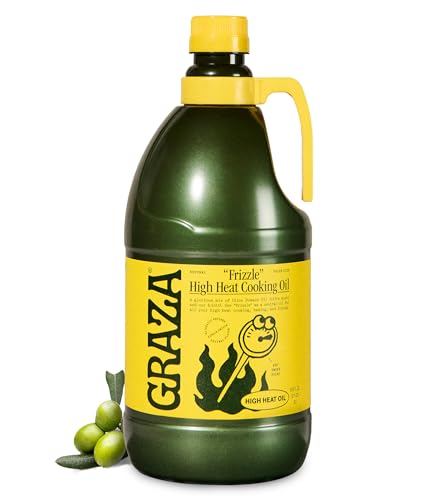
Graza Frizzle Oil Made from 100% Olives: A neutral-flavored, high heat cooking oil made from 100% peak harvest olives. With a smoke point of up to 450 degrees, Frizzle is your high-heat kitchen hero. 2L jug/67.6 fl oz.

The information below is per-pack only
Mastering the Cooking Technique
Once you’ve selected your oil and prepped your ingredients, proper slicing becomes your foundation for even cooking and excellent caramelization. Cut onions into 3/8-inch thick slices for skillet cooking to maintain structural integrity throughout the process.
Sauté your onions for 10-15 minutes over medium-high heat, stirring every few minutes until they achieve a light brown color. Controlling moisture levels is crucial—add water if onions appear dry, allowing it to evaporate during cooking. This technique prevents uneven caramelization while preserving juiciness. For optimal flavor enhancement, consider seasoning the onions with salt, black pepper, and garlic during this sautéing stage. You can also brush both sides of onion slices with vegetable or olive oil before grilling for enhanced browning and tenderness. Marinating vegetables in a flavorful mixture before cooking enhances taste and tenderness even further.
For griddle work, cook onions 5 minutes until slightly caramelized before adding patties. Balancing textures comes from knowing when to smash with a spatula for 2-3 minutes per side, creating the perfect crust while keeping interiors tender. This integration of smashing and timing produces the supreme caramelized foundation for your burger.

Aged Balsamic Vinegar infused with caramelized onion for a savory, sweet, and complex flavor, ideal for finishing dishes or marinating proteins.

VEGETABLE BASED GOURMET JAM: Made from real vegetables that are slowly cooked to achieve a smooth texture and balanced sweet and savory flavor.

Our 100% Texas-grown Olive Oil is proudly non-GMO & all-natural, tested & certified as Extra Virgin
Seasoning for Maximum Flavor
How you season your burger can elevate caramelized onions from merely delicious to absolutely transformative. You’ll want to employ expert ingredient combinations that complement rather than overshadow your grilled onions’ natural sweetness.
Apply kosher salt strategically to your onions during caramelization to enhance flavor concentration and development. Layer your seasonings thoughtfully—add black pepper and garlic powder to your cooking onions, then finish with a light sprinkle of smoked paprika for depth. Many professional grillers incorporate the standard seasoning quad of salt, pepper, onion powder, and garlic powder as a reliable foundation for building complex onion flavor profiles. A caramelized onion and sea salt blend creates rich and flavorful seasoning that works particularly well for this application.
Consider incorporating Worcestershire sauce into your onion mixture to build umami complexity. Your seasoning layering strategies should prioritize restraint; you’re enhancing the onions’ caramelized character, not masking it. To achieve optimal results, allow your seasonings to rest for 5-10 minutes after application to let the flavors fully develop. To achieve even caramelization, preheat the grill with opened vents to ensure consistent temperature throughout the cooking process. Using ceramic briquettes under your grill grates promotes even heat distribution, which is essential for achieving consistent caramelization across all your onion pieces. Dense, large-piece lump charcoal brands like Jealous Devil and Rockwood offer superior heat control and quick ignition for more responsive temperature management during grilling. The right charcoal choice, such as lump charcoal for high heat, can help you achieve perfect caramelization more efficiently than lower-performing fuel options. Reserve heavier seasoning blends for your burger patties themselves, allowing your grilled onions to shine as a sophisticated, complementary component.

Premium Smoked Paprika: Enjoy the rich, smoky flavor of Badia Smoked Paprika, perfect for enhancing your favorite dishes

Rich, Smoky Flavor – Fasori Smoked Paprika delivers a bold, authentic wood-smoked taste that enhances meats, stews, soups, chili, roasted vegetables, eggs, and BBQ rubs.

Unlike other spices and seasonings, NEVER TOO SALTY with our LOWER SALT CONTENT.
Achieving the Perfect Caramelization
Caramelization transforms your carefully seasoned onions into a deeply flavorful component that’ll make your burgers unforgettable. Achieving this requires steady heat control—maintain medium temperatures to prevent sautéing rather than caramelizing. Cook your thin-sliced onions for 10-15 minutes until they’re soft and golden brown, then continue for deeper mahogany tones if desired.
Minimize moisture loss by scraping the pan’s bottom consistently, releasing fond that concentrates flavors. Add water strategically when the pan dries, preventing burning while allowing proper caramelization. For grilling, apply direct heat at 400-425°F for 5-7 minutes per side until deep golden brown develops. Consider using a nonstick or cast iron pan to ensure even heat distribution and prevent sticking throughout the cooking process. Cast iron’s heat retention makes it particularly effective for achieving consistent caramelization and superior searing results. Pre-seasoned cast iron options excel at producing excellent results while resisting metal utensils and building natural non-stick seasoning over time. Top-rated models with cast iron grates are designed specifically for this type of high-heat cooking application. Selecting a pan with proper handle design ensures safe and comfortable cooking during extended caramelization sessions. Choose oils with high smoke points, such as refined avocado or peanut oil, when grilling at these elevated temperatures to prevent the oil from burning.
The slow method produces superior results: grill at 250°F for six hours, stirring occasionally. This extended process breaks down natural sugars completely, creating jammy, intensely sweet onions. The prolonged exposure to heat and smoke results in a deep transformation of the onion sugars. Finish with balsamic glaze for added complexity, enhancing your burger’s overall flavor profile substantially.

Exceptional Heat Retention: Enjoy perfectly cooked meals with cast iron skillets that provide even heat distribution, ideal for searing, frying, and baking in a 12 inch frying pan.

SUPERIOR SMOOTH COOKING SURFACE: Enjoy a flawlessly machined smooth cooking surface that minimizes food sticking, ensuring effortless cooking and easy cleanup. Our non-stick pan is perfect for sizzling cornbread, frying eggs, baking in the oven, and crafting delicious breakfasts with crispy bacon on any stovetop.

Smooth and Flat Non-Stick Cooking Surface: This cast iron skillet is crafted with fine polishing and precision CNC machining, making it smoother and flatter than traditional cast iron. Even heat distribution allows the seasoning to adhere more evenly, forming a more durable natural non-stick coating that’s easier to clean and maintain. Use it for crispy Southern cornbread, juicy steak, seared burgers, skillet-fried chicken, crispy delights, skillet pizza, and fluffy pancakes—enjoy cooking to the fullest.
Assembling Your Burger
Now that you’ve perfected your caramelized onions, it’s time to build a burger that’ll showcase them properly. Start with bun placement by positioning your lightly toasted bottom bun flat to support the patty’s weight evenly. Apply a thin mayo layer to prevent sogginess.
Center your 160°F patty on the bun, then follow vegetable rotation strategically: layer lettuce first as a moisture barrier, add tomato slices for structural support, and incorporate pickles for acidity balance. Position your caramelized onions atop the vegetables where they’ll integrate flavors without overwhelming other components. For optimal cheese melt, consider using cheddar, Swiss, or American cheese placed on the warm patty just before assembly. Using a meat thermometer ensures your patty reaches the safe internal temperature for perfectly cooked burgers. Letting the patty rest briefly after cooking allows residual heat to finish the cooking process for maximum juiciness. For the most reliable doneness assessment, internal temperature should be your primary indicator rather than relying solely on cooking time. Preheating your grill to approximately 375°F before cooking helps develop a rich, smoky color while maintaining moisture throughout the cooking process. For the best sear and crust, aim to preheat your grill to a high temperature around 500–600°F.
Distribute condiments sparingly—limit to 1-2 tablespoons per burger. Add bacon strips across the patty top for even distribution. Consider incorporating plant-based burger patties as a sustainable alternative for health-conscious diners seeking nutritional diversity. Crown with the top bun, pressing gently to compress layers. Insert a skewer vertically through the center for stability, then serve immediately.
Serving and Enjoying Your Creation
Your burger’s success doesn’t end at assembly—presentation and service elevate the entire experience from casual meal to memorable dining moment. You’ll maximize visual appeal through thoughtful plating arrangements that highlight your grilled onions alongside complementary components. Position the onions prominently on dark-colored dishware to enhance their caramelized depth and golden hue.
Organize your toppings organization strategically, placing grilled onions beneath the patty to create moisture barriers that preserve bun integrity. Implement height variation through stacked presentations or vertical arrangements that showcase the onions’ texture. Complement your creation with beverage pairings and garnish options—lemon wedges, herb sprigs, and specialty condiments in small bowls encourage guest exploration. To achieve restaurant-quality sear marks on your onions, consider using porcelain-enameled cast iron grill plates that excel in heat retention and create bold caramelization. Cast iron’s superior heat retention ensures even distribution across your onion surface for optimal caramelization and consistent results. When selecting equipment for your outdoor setup, compare top griddle models based on their heat performance and cooking surface quality to ensure optimal caramelization, with options like the Solo Stove Steelfire offering 486 square inches of cooking surface for perfect burger preparation. Look for grill pans with ridged, sloped surfaces that effectively drain fat while creating those coveted char marks on your onions. For an elevated outdoor setting, arrange your grilled onions in small ceramic bowls alongside other toppings to create a cohesive, Instagram-worthy burger board experience. Consider serving boats or paddle boards for elevated presentation that emphasizes your burger’s artisanal craftsmanship and distinctive flavor profile. Bamboo and birch wood serving boats provide a durable and stylish foundation that complements your caramelized onions while adding an eco-conscious touch to your dining setup.