
You’re controlling a precisely engineered system when you operate a wood pellet grill. The digital controller monitors your internal temperature ten times per second, automatically adjusting the auger’s pellet delivery to your fire pot. An electric heating element ignites staged pellets, while an induction fan forces oxygen across them, creating consistent thin blue smoke. The fan circulates heat evenly throughout your cooking chamber. This interconnected cycle of pellet feed, combustion, and temperature sensing delivers predictable, repeatable results across multiple cooking methods—and there’s considerably more sophistication happening behind the scenes.
The Hopper Function
Everything in a wood pellet grill starts with the hopper, which stores compressed hardwood pellets and feeds them to the fire pot on demand. You’ll load pellets manually into this container, selecting your preferred wood flavor—hickory, mesquite, apple, or cherry—based on your cooking goals.
Your pellet storage capacity determines cook duration without refilling. Low-and-slow smoking requires 2 lbs per hour, while hot-and-fast grilling demands 4 lbs per hour. Check your hopper’s supply before starting to guarantee sufficient fuel for your session. Maintaining adequate fuel supply prevents heat loss or unexpected grill shutdown during your cook. These all-natural compressed hardwood pellets are moved from the hopper to the fire pot by an auger mechanism that dispenses them on demand based on your temperature settings. The electricity-powered auger automatically feeds pellets at rates determined by your desired cooking temperature.
Maintain your system through regular hopper cleaning procedures. Vacuum the fire pot and grill area before refilling, then purge residual pellets by running the grill at high temperature. Monitor low pellet error messages indicating empty hoppers, preventing unexpected cook interruptions. A 20 lb. pellet hopper conveniently matches standard pellet bag sizes, eliminating waste and simplifying the refilling process. For extended cooking sessions, consider hopper extensions that increase pellet capacity and reduce refilling frequency. Premium brands like Lumberjack and Bear Mountain BBQ offer 100% natural hardwoods without fillers or additives for optimal grilling performance. Experimenting with different pellet blends allows you to customize smoke flavor and discover your preferred taste profile.
How the Auger Mechanism Works
Once you’ve loaded pellets into the hopper, an auger mechanism takes over the feeding process, converting electrical signals into precise pellet delivery. This rotating screw pushes pellets through a tube toward your burn pot, where they’ll ignite and generate heat.
The auger motor receives commands from your digital controller, which monitors temperature data ten times per second. When interior temperatures drop below your set point, the controller increases auger speed to deliver more fuel. Conversely, it reduces speed when temperatures climb, maintaining consistent cooking conditions. The combustion fan simultaneously adjusts its speed to circulate air and optimize the burn rate for your desired temperature. An RTD probe continuously measures the internal grill temperature to ensure accurate feedback to the controller. On some models, you can adjust the P settings to modify auger speed based on ambient temperature conditions.
Shear pins protect your auger motor from damage during system lockups. Auger jams commonly occur when moisture causes pellets to swell, increasing auger motor load beyond safe parameters. Regular hopper coverage prevents wet pellets, ensuring reliable operation and extended equipment lifespan. To maintain optimal auger performance, periodically vacuum out the hopper to remove accumulated sawdust that can interfere with pellet flow. This precise temperature control system allows pellet grills to maintain stable heat for various cooking methods, from low-and-slow smoking to high-heat searing. Modern pellet grills with WiFi connectivity enable remote monitoring and control via smartphone apps, letting you adjust auger speed and temperature from anywhere. Before your first cook, ensure all grill components are properly in place to avoid startup issues that could affect auger function.
The Ignition Process
How does a wood pellet grill transform raw fuel into a controlled cooking fire? Your grill’s ignition process relies on precise pellet staging and strategic igniter accessibility.
Once you’ve primed the auger, the electric heating element—typically rated 200-400 watts—activates for a fixed 4-minute cycle. This ignition rod glows intensely, raising the firepot temperature to ignition point. The staged pellets positioned by the auger combust as they contact the heated surface.
Simultaneously, the internal fan forces air across the burning pellets, supplying oxygen for sustained combustion. This forced airflow creates the characteristic thin blue smoke profile. A temperature probe detects turbulence from the established fire, signaling successful ignition to your controller. Modern grills equipped with WiFi connectivity allow you to monitor this ignition process remotely from your smartphone. The compressed wood pellets used as fuel are engineered to ignite reliably at consistent temperatures across different grill models. These pellets are created from wood waste without binders, making them an environmentally friendly fuel choice. Many grills feature auto-start ignition systems that eliminate the need for manual lighting procedures.
The igniter then shuts off automatically, and internal fans maintain combustion while your temperature display rises, indicating thermal establishment. Advanced models with digital PID controllers provide more precise temperature regulation during the startup phase and throughout your cook. Premium pellet grills feature large hoppers that enable extended cooking sessions, including overnight cooks without requiring fuel refills. Regular maintenance of the firepot and drip tray prevents grease buildup that could interfere with ignition performance.

Package include: package comes with 2 pieces replacement ignitor kit for Traeger wood pellet grills, equipped with 2 pieces fuses

Replacement Hot Rod Igniter for Camp Chef Wood Pellet Grills & Z Grills Pellet Smoker.

【COMPATIBILITY】: This fire burn pot compatible with Traeger Grills (EXCEPT PTG) and most Pit-boss pellet grills (not all).NOTE: Not Fit For Traeger D2 Direct Drive Pellet Grills Smoker Pro 575 & 780, Ironwood 650 & 885, Silverton 620 & 810, Timberline 850 &1300 (Gen 2 only), Century 885. Pit Boss Pro 1150/1160 Pellet Grill.
Combustion and Fan System
Two critical systems work in concert to transform ignited pellets into sustained, controllable heat: the combustion process in your firepot and the forced-air fan mechanism that sustains it. Your induction fan pushes oxygen directly into the firepot, enabling complete pellet combustion while maintaining the thin blue smoke profile you want. Through airflow optimization, the fan regulates air input based on your controller’s temperature settings, minimizing waste and maximizing efficiency.
Most models operate fans continuously post-ignition, though newer grills feature pulsating cycles that hold temperatures more precisely. This fan-forced convection circulates heat and smoke throughout your cooking chamber, ensuring even temperature distribution regardless of lid position. The induction fan turns on and off to maintain stable temperatures while creating the desired smoke levels. Fan speed adjustment works alongside auger intervals to produce consistent smoke and maintain your desired heat range of 170–600°F. A heating baffle distributes heat evenly across the cooking surface, functioning similarly to a convection oven for versatile cooking methods. Premium pellet grills like the Weber Searwood 600 offer adjustable smoke levels to fine-tune the intensity of wood-fired flavor in your food. The iQue digital display and app give you remote control of cooking temperature to optimize your grilling performance effortlessly. Advanced grills now include WiFIRE connectivity that allows you to monitor and adjust temperature settings from your smartphone. When evaluating pellet grills, hopper capacity determines how long you can cook uninterrupted before needing to refill pellets.
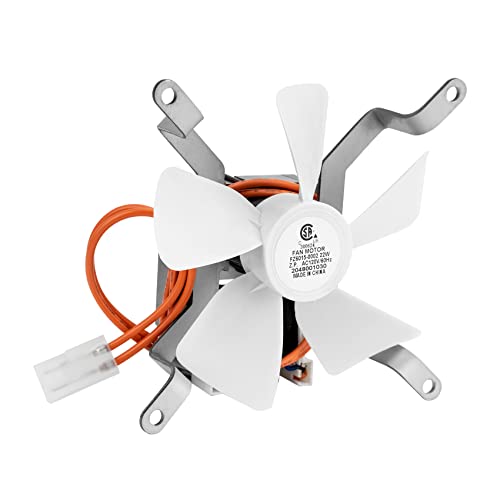
Heavy Duty Replacement combustion fan motor

【GRILLS INDUCTION FAN IDEAL REPLACEMENT】: Compatible with Traeger, Pit Boss, and Camp Chef Wood Pellet Grill Smokers (EXCEPT PTG), also fit for Smoke Hollow Sam's Club Pellet Grills. NOTE: NOT fit for Traeger D2 Pellet Grills.

WIDE PELLET GRILL COMPATIBILITY: Replacement convection fan motor for many pellet grill brands like Traeger (strictly not for D2), Pit Boss, Camp Chef, Z Grills, Asmoke, Smoke Hollow, Recteq, select Sam's Club. Replaces 70133, FAN209-AMP, KIT0469, PG24-26, ZG-FAN. Compare your original fan, connector and mounting position before ordering.
Temperature Control and Regulation
While the combustion and fan systems generate heat through coordinated ignition and airflow, guaranteeing that heat at your desired temperature requires sophisticated monitoring and adjustment mechanisms. You’ll rely on RTD probes that continuously monitor internal grill temperature and communicate readings to your control board. PID controllers use mathematical algorithms to adjust pellet feed timing with precision, anticipating ambient conditions like wind and external heat. Your auger automatically delivers more pellets when temperatures drop below your set range and reduces delivery when heat exceeds targets. Sensor upkeep proves critical—clean temperature probes guarantee accurate readings, while dirty probes cause dangerous temperature fluctuations. You can set temperatures from 180 to 700 degrees Fahrenheit, with your system checking internal temperature every 60 seconds to maintain consistent cooking conditions. Modern pellet grills often feature WiFi-enabled controllers that allow you to monitor and adjust temperatures remotely for precise smoke control throughout the cooking process. The Proportional, Integral, and Derivative variables in PID technology work together to stabilize internal temperature and mitigate temperature swings during the cooking process. This precision allows you to maintain low-and-slow cooking methods, such as smoking a brisket at 225°F for extended periods, where consistent temperature is critical for rendering fat and connective tissues properly. Advanced models incorporate dual sensors for even more precise temperature monitoring and regulation throughout the cooking chamber. The uniform size of wood pellets ensures they burn evenly, contributing to stable heat output and consistent smoky flavor throughout your cook. Top-rated models like the Camp Chef Woodwind 24 offer temperature ranges from 160 to 500°F with direct flame access for versatile cooking options. This Intelligent Temperature Control system functions like your kitchen oven, automatically maintaining your desired temperature without manual intervention.
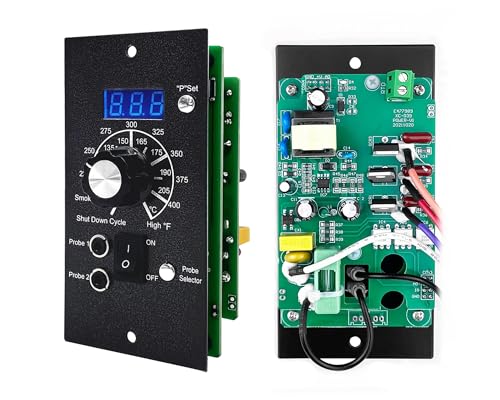
COMPATIBILITY: The grill digital thermostat is replacement for Traeger OEM part BAC365, BAC288, BAC236, fits 20, 22, & 34 Models, including Pro 20/22 34, Texas Elite 34, Lil Tex 22, JUNIOR ELITE 20, Ridgeland, Heartland, Mesa 22, Century 22/34, Silverton (2019), Select Pro, Eastwood 22/24(Not for PTG, Scout, Tailgater, or Bronson)

COMPATIBLE MODELS: This grill control panel is compatible with a wide variety of grill models, including Traeger (BAC236, BAC365, BAC288 Traeger Select Pro), Pit Boss, Z Grills, and Asmoke. Please refer to the image for specific model compatibility.

WIDE COMPATIBILITY: The control panel can fit a wide range grill models of Traeger , Pit Boss, Z grills and Asmoke. See picture for specific model.
Cooking Features and Capabilities
Your wood pellet grill’s versatility distinguishes it as an 8-in-1 cooking appliance, capable of smoking, grilling, baking, roasting, searing, braising, char-grilling, and traditional BBQ. The multifunctionality of cooking methods stems from its Flame Broiler™ Lever, enabling both indirect and direct heating configurations.
You’ll achieve consistent smoke production through fan-forced convection technology, which circulates hot air evenly around your food while generating a thin blue smoke profile. The center smoke stack guarantees uniform temperature distribution across the entire cooking surface, eliminating hot spots and undercooking.
This systematic approach to heat management allows you to execute low-and-slow smoking or high-heat searing with precision. Whether you’re preparing multiple items or single proteins, the convection circulation delivers predictable, repeatable results across all cooking methods, optimizing flavor infusion and texture development simultaneously. Many models feature meat probes that monitor internal temperatures, ensuring your food reaches the desired doneness without guesswork. Advanced models incorporate PID temperature control that maintains consistency within 5 degrees, proving especially crucial for low-and-slow brisket cooks that demand precision. The temperature range from 225°F to 700°F enables you to cook everything from vegetables and desserts to premium cuts of meat with complete control. For those prioritizing convenience and indoor compatibility, electric grills with smoker capabilities offer an alternative approach with less maintenance, though they typically produce less intense wood-smoke flavor than pellet models. High-end pellet smokers like the Yoder Smokers YS640S and Rec Tec RT-700 offer superior performance and build quality for enthusiasts seeking professional-grade results. Pairing your pellet grill with an instant-read thermometer provides an additional layer of precision, delivering temperature feedback in as little as 1 second for verification during high-heat grilling and searing. For extended monitoring during overnight cooks, wireless meat thermometers enable hands-off precision by tracking internal temperatures remotely through smartphone apps while you maintain distance from the grill.
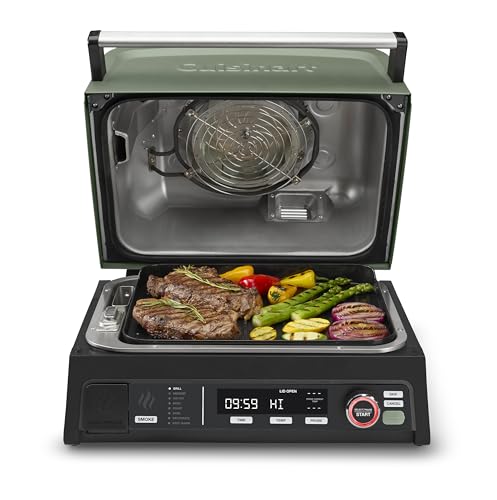
REAL SMOKE FROM AN ELECTRIC BARBECUE GRILL: Built‑in wood‑pellet smoke drawer delivers smoky flavor on an electric BBQ grill and smoker. Use the smoke button during any cook for quick results, or enter smoker mode for extended smoking. Moisture cup adds steam for juicy results every time

Pellet Grill Technology--There isn't an easier way to get wood-smoked flavors than with a pellet grill. Try it, and you'll taste the difference from a GAS or CARBON grill.

PID TECHNOLOGY: Features PID intelligent temperature control technology for auto-tuning fuel feed and airflow rate in real-time to ensure a stable temperature throughout the grilling process
Wood Pellet Selection and Flavors
Achieving the precise flavor profiles your wood pellet grill’s convection system delivers requires understanding pellet composition and wood type selection. You’ll find hardwood pellets—oak, hickory, apple—burn slower and produce superior taste compared to softwood alternatives, which contain higher lignins creating undesirable flavors.
Pellet density and burn rate directly impact temperature consistency and smoke production. Premium 100% natural hardwood pellets generate less than 1% ash, ensuring efficient combustion and minimal cleanup from a 40lb bag. Different woods pair well with different foods, allowing you to customize your cooking experience based on your protein selection. Pellet grills offer temperature control in 5-degree increments for precise heat management during your cook.
Select your pellets strategically: hickory for robust smoky notes on meats, apple for mild sweetness on poultry, mesquite for bold beef profiles. Blended options like hickory-pecan-mesquite combinations offer versatility across multiple proteins. Match your pellet choice to your cook time, with oak and hickory suited for long beef cooks like brisket, while apple and cherry work best for shorter cooks with pork, poultry, and fish. While wood pellets excel at flavor, charcoal pellets provide superior heat output and are better suited for achieving temperature boosts when high heat is your priority. Top-rated options like B&B Post Oak Pellets deliver pure wood with no additives for exceptional smoke flavor on beef and pork. Red oak pellets provide a balanced smoke flavor that enhances beef and pork without overpowering the meat’s natural taste.
Proper pellet storage considerations—keeping pellets dry in sealed containers—preserve moisture content and maintain ideal burn characteristics for reliable, flavorful results.

SIGNATURE BLEND WOOD FIRED FLAVOR: The flavors of hickory, maple, and cherry hardwoods combine for in our Traeger Signature Blend Hardwood Pellets for flavor that can take on just about anything you cook; From classic BBQ meats, to fish and veggies, this versatile blend gives you full-bodied flavor you'll go back to time and time again

KINGSFORD CRAFTSMOKE PREMIUM WOOD PELLETS: Introducing Craftsmoke, the premium line of natural hardwood pellets, crafted in small batches for the chef in all of us; pack may vary

100% all-natural premium hardwood food grade pellets
Benefits of Wood Pellet Grilling
Once you’ve selected your ideal pellet composition, you’ll discover that wood pellet grills deliver substantial advantages across multiple dimensions. Their versatility enables you to grill, smoke, roast, and bake using a single unit, accommodating direct high-heat and indirect cooking methods simultaneously. You’ll appreciate the fuel efficiency that pellets provide—their higher energy density reduces consumption compared to charcoal, while automated systems minimize waste by stopping when your cooking’s complete. The convection heat circulation guarantees uniform cooking without hot spots, eliminating constant monitoring. Additionally, you’ll benefit from environmental advantages: pellets burn cleaner with lower emissions, originate from renewable biomass, and produce less ash. The Smart Drop™ pellet system enables precise temperature regulation through expert management of pellet burn rate for optimal energy efficiency. Pellet grills can maintain precise temperatures for extended cooking sessions, removing the guesswork that comes with charcoal or gas alternatives. Advanced models feature strong PID controllers that continuously adjust pellet feed rates to maintain temperature stability throughout your cook. This combination of operational efficiency, cooking flexibility, and environmental responsibility makes wood pellet grilling a systematic, cost-effective investment for serious outdoor cooking.