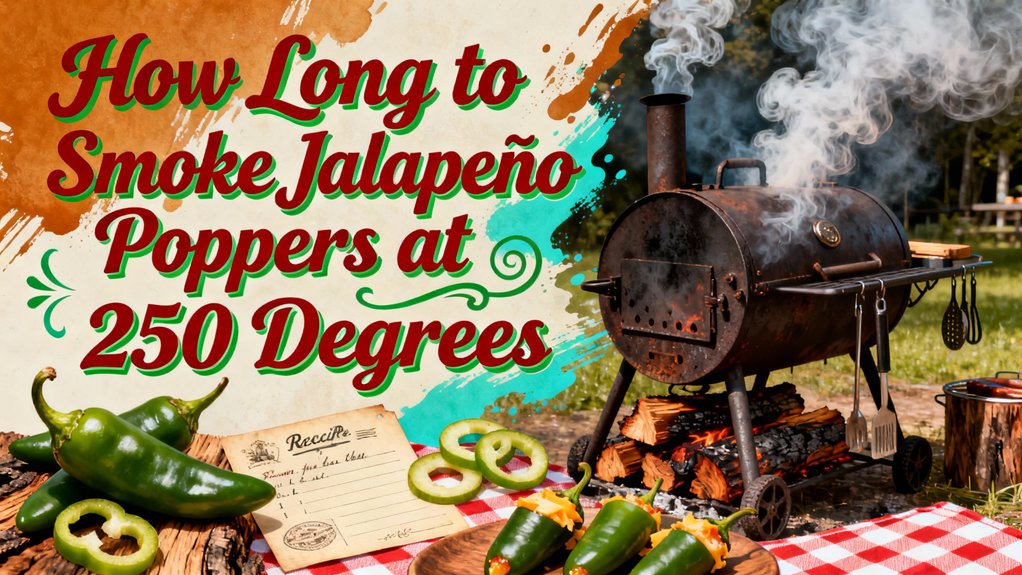
You’ll smoke jalapeño poppers at 250 degrees for 45–50 minutes to guarantee satisfactory results. The bacon’s crispness and the pepper skin’s darkening from bright green to burgundy-maroon tones signal doneness. Your cheese filling should be melted and slightly browned while maintaining its creamy texture. The peppers’ll stay tender with a slight crunch. Preserving consistent popper size and pepper moisture content ensures even cooking throughout. For deeper insights into temperature variations, sizing considerations, and preparation techniques, the inclusive guide below covers everything you’ll need.
Temperature Variations and Smoking Times
Getting the temperature right is crucial to smoking jalapeño poppers successfully, as it directly controls both your cook time and the final texture you’ll achieve. At 250 degrees, you’ll need 45-50 minutes for optimal results, allowing cheese to melt thoroughly while your peppers develop a slight roasting appearance. If you increase heat to 275-300 degrees, you’ll reduce cooking time to roughly 30 minutes—a 40-45 percent reduction that still maintains popper texture. Conversely, lowering temperatures to 225 degrees extends your cook time to 1.5-2 hours, producing rich coloring and deeper smoke penetration. Maintaining popper size consistency and monitoring pepper moisture content guarantees even cooking across your batch, regardless of your chosen temperature setting. For best results, use a combination of hickory and apple or cherry wood to provide robust smoke flavor that complements the creamy, cheesy filling, as these 100% natural hardwoods deliver the clean-burning performance needed for consistent results. Premium charcoal brands like B&B Charcoal maintain temperature consistency and produce minimal ash, which is essential for the extended cook times required when smoking poppers at lower temperatures. Wood forms like chunks for multi-hour burns work particularly well for smoking poppers, allowing you to maintain steady smoke throughout the entire cook without constant replenishment. Avoid using softwoods like pine, which produce bitter residue that can negatively impact the delicate flavors of your poppers. To prevent the bacon from unraveling during the smoking process, place the seam side down on your wire racks before adding them to the smoker.

Subtle Sweet flavor
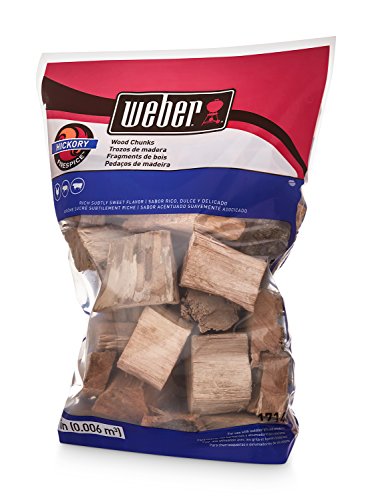
Hickory wood chunks

3-PACK VARIETY OF PREMIUM SMOKING WOOD CHIPS – Elevate every barbecue with this ultimate smoking wood chip bundle, featuring three 1.8 lb bags of premium, all-natural wood chips. Includes Hickory for bold, classic BBQ flavor, Applewood for a subtly sweet and fruity aroma, and Mesquite for deep, earthy smokiness—perfect for ribs, brisket, poultry, pork, seafood, lamb, and game meats. Ideal for use in charcoal grills, gas grills, electric grills, and smokers, this variety pack delivers rich, versatile flavor options for backyard BBQs, camping trips, and tailgates.
Jalapeño Size Impact on Cooking Duration
Most jalapeños you’ll encounter fall into two distinct categories—large peppers ideal for stuffing and smaller varieties that require different handling strategies. Large jalapeños maintain their shape better during smoking and support heavier fillings like cheese and bacon wraps. They’ll need approximately 30 minutes at 225°F before grilling, holding their structural integrity throughout cooking.
Smaller jalapeños present varied drying rates, shrinking into dark, leathery textures within 4 hours at 220°F. Their reduced mass means they’re prone to over-smoking and blackening if positioned near heat sources. Adding a smoke tube can enhance the smokiness of your smaller peppers if you prefer deeper flavor profiles. For optimal smoke distribution, ensure adequate grill ventilation so your smoking process performs consistently without pellet extinguishment. Consider using a smokeless fire pit grill designed for even heat distribution and reduced flare-ups during your pepper smoking sessions. Using stainless steel heat tents can further protect your peppers from direct flame exposure and help maintain consistent temperature control. Place peppers directly on the grill grate to ensure even smoke exposure and consistent results. The heating baffle in your Traeger distributes heat evenly throughout the cooking chamber, which is essential for preventing hot spots that could char your smaller peppers unevenly. Many backyard cooking enthusiasts find that portable gas options offer convenient temperature control for smoking sessions without the complexity of managing wood or charcoal fires.
For stuffing considerations, select uniform large peppers to guarantee consistent 45-minute crisping times. When mixing sizes, position smaller specimens away from hotspots. Medium peppers halved lengthwise yield predictable 1-hour tenderness at 225-250°F, offering ideal results for batch consistency.
Preparation Steps for Perfect Poppers
Why does proper preparation make the difference between soggy poppers and perfectly smoked delicacies? You’ll start by pre-smoking whole jalapeños for 20 minutes at 250°F, which softens the peppers and prevents tearing during handling. Next, slice them lengthwise, retaining the stem for structural integrity, then meticulously remove all seeds and membranes using a spoon or paring knife.
For filling customization options, you’ll combine 8 ounces softened cream cheese with 1 cup shredded cheddar or Mexican cheese blend. Mix in garlic powder, salt, pepper, and onion powder until completely lump-free. Consider flavor enhancement techniques like paprika and lemon juice to elevate your filling profile. For authentic smoke flavor that complements the cheese filling, incorporate kiln-dried hickory into your smoking setup to achieve a bold, bacon-like taste that pairs excellently with populated appetizers. When sourcing your wood chips, choose high-quality, fresh chips from trusted retailers to avoid mold or pests that can compromise your smoking results. Premium hardwoods like hickory are prized for their slow-burning properties and ability to impart distinct flavors to a variety of foods. Chunks are preferred for this longer smoking session because they burn longer than chips, allowing for consistent smoke throughout the cook time. Avoid softwoods like pine or cedar, as softwood resins create unpleasant flavors and burn too quickly for proper smoke infusion. Apply the mixture using a spatula or piping bag for ideal distribution across each pepper half before wrapping with half-slice bacon and securing with toothpicks. For optimal results, you should use smoked paprika as your primary seasoning choice for authentic flavor depth. Wearing latex gloves when handling the peppers at scale will protect your fingers from capsaicin burns during the preparation process.

Hickory wood chips

PREMIUM WOOD CHIPS: Made from all-natural wood that burns cleanly and evenly, these wood chips can be used on top of charcoal and in smoker boxes to deliver professional-level, mouth-watering results.

1.6 LB HICKORY SMOKING CHIPS FOR RICH, BOLD FLAVOR - Mr. Bar-B-Q Hickory Smoking Chips, expertly crafted to deliver deep, smoky flavor to your favorite foods. This 1.6-pound bag provides an ample supply of high-quality hickory wood chips, perfect for enhancing the taste of meats, poultry, seafood, and vegetables with an authentic, mouthwatering aroma. Designed for use in charcoal grills, gas grills, electric grills, and smokers.
Doneness Indicators and Quality Checks
You’ll know your jalapeño poppers are perfectly smoked when multiple indicators converge simultaneously—bacon crisping serves as your primary doneness signal, while visual and textural changes throughout the peppers and filling confirm you’ve achieved ideal results.
Monitor surface texture changes closely. Pepper skin darkens from bright green to burgundy or maroon tones, softening noticeably with slight charring at edges. At 250°F after approximately 50 minutes, insert a toothpick to assess doneness—it should meet minimal resistance piercing the flesh. Different charcoal types like lump charcoal can influence how your peppers develop color and smoke flavor throughout the cooking process. For consistent results, pure charcoal pellets offer superior heat output and clean-burning properties that enhance the smoking process. Consider using hexagon smoke tubes for reliable and consistent smoke output that complements your poppers’ development.
Evaluate filling consistency evaluation by observing the cream cheese transformation from solid to golden-yellow congealed state. The exterior firms structurally while maintaining a gooey center. Bacon should reach your preferred crispness level, indicating optimal execution and proper cooking completion. A secondary helper handle on your smoking setup can improve safety when managing temperature and adjusting grates during the cooking process. For maximum flavor development, cherry, hickory or pecan wood imparts the best smoke profile and enhances the poppers’ rich coloring. Fruit woods provide a subtle, sweeter smoke that complements the creamy filling and smoky bacon perfectly. Removing the white rib inside the pepper before stuffing allows you to adjust the overall spice level of your finished poppers.
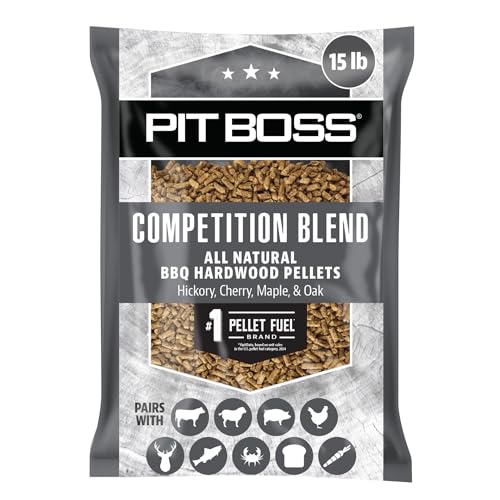
THE #1 PELLET FUEL BRAND: Trusted by backyard grillers and pitmasters alike, Pit Boss Hardwood BBQ Pellets deliver premium quality, reliable performance, and authentic wood-fired flavor for every cook

Premium Smoking Wood Pellets – Competition Blend Pellets, 1 Pint - Elevate your grilling and smoking experience with our high-quality wood pellets. Our kiln-dried barbecue smoking pellets ignite quickly and combust completely to create a delicate smoky flavor.
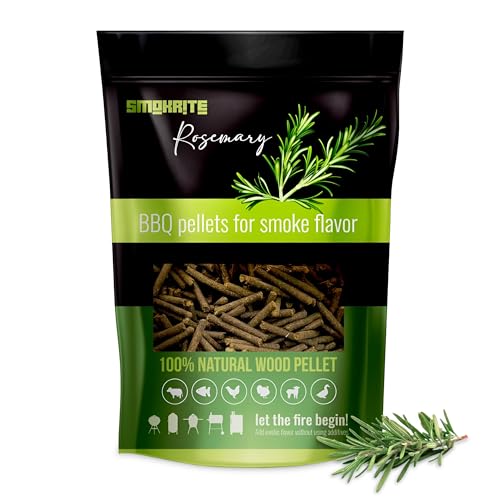
Unlock Savory Smoke - Infuse your dishes with the aromatic essence of rosemary using our premium wood grill pellets, crafted to deliver a savory, herbaceous smoke flavor that elevates every meal.
Storage and Reheating Guidelines
Proper storage extends your smoked jalapeño poppers’ shelf life enormously, allowing you to enjoy them throughout the week or preserve them for future meals. Store cooled poppers in sealed food containers within the refrigerator for three to five days maximum. For extended preservation, freeze poppers on a baking sheet for two hours, wrap individually in plastic wrap, then transfer to freezer bags for up to two months. Maintaining proper refrigeration at temperatures just above freezing helps prevent the growth of harmful bacteria that can compromise food safety. Freezing substantially extends shelf life, often preserving smoked foods for two to three months or longer when properly sealed. To ensure safety, always maintain refrigeration at or below 40°F to align with USDA food safety guidelines.
Pre-assembly techniques streamline your workflow substantially. Prepare filling components ahead and refrigerate separately, or assemble poppers without bacon, cover with plastic wrap, and refrigerate for two to three days before smoking. You can also prepare the cream cheese and cheddar mixture in advance and store it separately for convenience. Removing seeds and membrane from jalapeños before stuffing reduces the capsaicin concentration, making poppers less spicy for sensitive palates. Additionally, ensure your grill grates are clean and well-maintained to prevent rust buildup that could affect the quality of your smoked poppers.
Reheat refrigerated poppers in a 350-degree oven for ten minutes until warmed through. For frozen poppers, thaw overnight in your refrigerator first, as thawing in the refrigerator prevents bacterial growth that can occur at room temperature. Air fryer reheating at 250°F requires only two to three minutes. Alternatively, enjoy leftovers cold directly from storage.