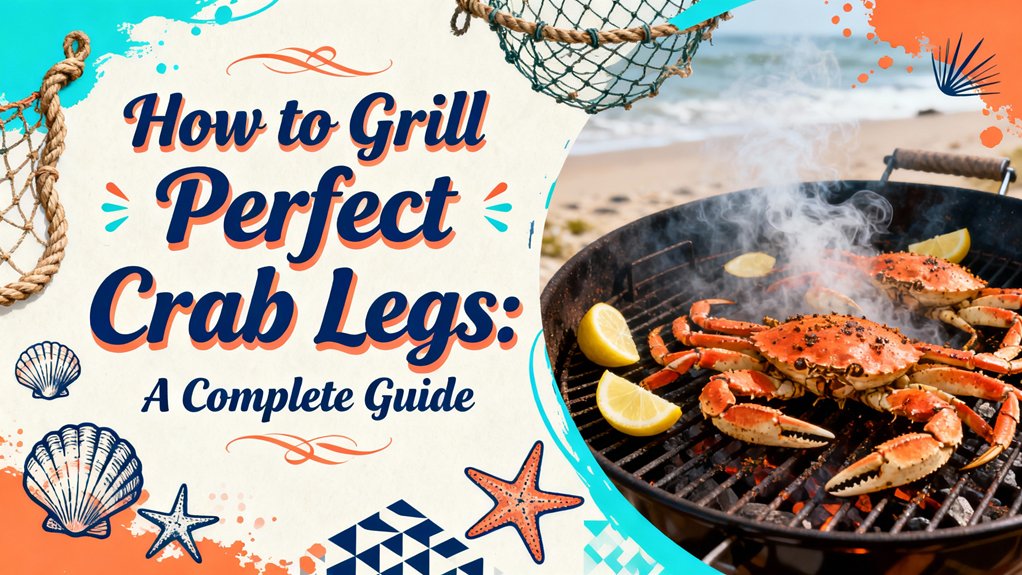
You’ll thaw your crab legs overnight in the refrigerator, then split them lengthwise and pat dry. Prepare your grill to 350-400°F and apply a seasoned butter mixture to the exposed meat. Position legs shell-side down for 5-7 minutes, flip, and cook 4-5 minutes more until reaching 145°F internally. Brush with seasoning throughout cooking for maximum flavor absorption. The techniques for indirect heat grilling and best serving displays are there for you to explore.
Preparation
Before you fire up the grill, you’ll need to properly prepare your crab legs to guarantee even heating and excellent flavor extraction. Start by selecting your thawing technique: refrigerator overnight thawing prevents leakage, while cold water submersion works in 20-30 minutes for quicker results. After thawing, rinse legs under cold running water to remove ice glaze, then pat them dry thoroughly with paper towels.
Conduct a post thaw inspection to identify and remove any shell fragments. Using sharp kitchen shears, split legs lengthwise along the shell side, exposing meat without complete shell removal. Position split legs meat-side up on your baking sheet. For each pound of crab, prepare a blend using 1 tablespoon olive oil and 1 teaspoon of seafood spice to enhance flavor during grilling. This preparation approach creates boats that retain butter during grilling while enabling easy meat extraction afterward. Remember that all commercially sold crab in the US comes pre-cooked, so you’re simply reheating the meat when grilling. Portable gas grills offer convenient propane-powered heating that delivers consistent temperatures ideal for reheating seafood evenly. Consider whether you’ll be using a portable grill with disposable cylinders or a larger setup, as this will influence your prep timing and heat management strategy. Most tabletop propane models with 12,000–20,000 BTU] output provide reliable, even heating perfect for seafood preparation. For pontoon boat grilling adventures, ensure your grill has secure mounting to maintain stability while preparing your crab legs. When selecting your grill, prioritize ignition reliability to ensure consistent flame when you’re ready to cook your prepared crab legs.

Designed for Outdoorsmen: Make your outdoor cooking sessions more enjoyable and cook like a pro with the Gas One outdoor burner propane! Our single propane grilling side burner is durable, reliable and safe, making cooking more enjoyable during your outdoor adventures!

Heavy Duty Construction: The GPT-17B barbecue grill in Tan Brown is made of premium grade, highly durable non-rust materials, a combination of heavy duty stainless steel burner head and porcelain coated non-stick grilling grate, easy to clean and designed to withstand the test of time.

QUICK & EASY SETUP: The Cuisinart Chef's Style Tabletop Portable Propane Grill gets you grilling in less than 10 minutes. This outdoor grill is designed for a fast, hassle-free setup—no tools required.
Grill Setup
With your crab legs prepped and ready, you’ll now configure your grill to deliver the precise heat needed for ideal cooking. Begin by cleaning your grill grates to remove any charred debris that could impart unwanted flavors. Select a grill grate material and height adjustment system suited to your grill type and cooking style. To protect your deck or patio from grease splatters and heat damage, consider placing a grill mat for decks underneath your setup before you begin cooking. Heavy-duty fire-resistant mats made from recycled materials provide excellent protection while lasting for years with easy maintenance. Look for mats with nonslip backing and raised lips to catch spills and keep your grill stable during cooking. Before connecting your propane tank, ensure the propane valve is turned off to safely attach the tank to your grill’s gas line.
For Traeger grills, close the lid and preheat at 250°F for 15 minutes using the Super Smoke setting. Gas or charcoal users should establish indirect heat zones at 225°F. If grilling frozen clusters, heat directly to 350-400°F instead.
Your temperature settings depend on your cooking method. Medium-low direct heat at 300°F works well for thawed legs, while indirect heating prevents overcooking. Position your lid position according to your heat type—closed for indirect cooking, partially open for direct searing when needed. Coat each leg evenly in olive oil to prevent sticking. The entire grilling process takes only about 25-30 minutes, making this an efficient option for weeknight dinners or entertaining guests.

【Large Under Grill Mat】 79*39 inches large double-sided fireproof under grill mat for Blackstone all grills & most family-sized grills, prevents sparks, oil, food residues, and keeps decks, patios and lawns clean and tidy.

【Protect Deck and Lawn】 48*30 inch double-sided fireproof grill mat for use under grill, prevents high temperatures, resists sparks, oil, food residue, and keeps decks, patios and lawns clean and tidy.

Perfect Choice for Outdoor Grilling - This fireproof under grill mat provides all-around protection for your grilling area. While barbecuing, it not only catches splattered grease and sauces but also effectively prevents high-temperature embers from damaging your deck and patio, keeping your outdoor environment clean and safe from messes and grease stains, significantly reducing cleanup time after your barbecue.
Seasoning
Once your grill reaches the target temperature, you’ll want to apply seasoning that’ll enhance—rather than overpower—the crab’s natural sweetness. You’ve got diverse flavor profiles to explore through ingredient variations.
Start with a garlic butter base by melting salted butter with minced garlic—eight cloves for robust seasoning or two for subtle notes. Whisk in dry seasonings like Old Bay (one tablespoon per three pounds), Tony Chachere’s Creole seasoning, or BBQ rubs. Add brightness with fresh lemon juice from two lemons or chopped basil at four tablespoons per cup of butter. For a distinctive twist, consider experimenting with Asian flavors like soy sauce, sesame oil, and cilantro to create an entirely different taste experience.
Apply your seasoned mixture by spooning it over exposed crab meat after splitting legs lengthwise, or brush it on before grilling. For boat grilling, consider using marine-grade stainless steel utensils to ensure durability in salt spray environments. When selecting your grilling equipment, look for models with even heat distribution to prevent hot spots that could burn your delicate seasoning. Top outdoor griddle options like the Solo Stove Steelfire offer consistent cooking surfaces that maintain uniform temperature throughout your cooking process. Choose a grill pan with nonstick coating quality to prevent seasoning and butter from sticking during application. Baste occasionally during cooking to maximize flavor absorption. Reserve extra seasoned butter for dipping alongside your grilled legs. The cracks in legs allow more smoke and seasoning to soak in, intensifying the overall flavor profile of your crab.
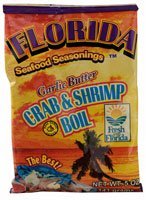
Florida Seafood Seasonings Crab & Shrimp Boil Garlic Butter 5 oz (2 Pack)

Grilling Direct Heat
Your seasoned crab legs are ready for the heat. Position them shell side down directly over your heat source, spacing them evenly to guarantee consistent flame contact. Maintain temperature control at 350-400°F for ideal results.
Your cooking time depends on heat intensity. At medium-high direct heat, grill 5-7 minutes on the first side, then flip and cook 4-5 minutes more. If you’re using 400°F direct heat, expect 5-10 minutes total. Turn legs once midway through cooking for uniform heating. Thoroughly thaw your crab legs before grilling to avoid flare-ups from drippings.
Monitor internal temperature closely—you’re targeting 145°F for food safety. Since your crab legs are precooked, you’re fundamentally reheating them. Watch carefully to prevent drying. Brush with melted butter during grilling to retain moisture and enhance flavor, similar to how cooking in foil packets preserves seafood juices. For additional flavor enhancement, consider using seasoning blends like those recommended for grilled seafood to complement the natural sweetness of crab. Grills with good heat regulation allow you to maintain consistent temperatures throughout the cooking process. Using a non-stick griddle designed for grilling can help prevent sticking and ensure even heat distribution across multiple crab legs. Avoid using aluminum foil on grates as it restricts airflow and can result in uneven cooking and hotspots. Remove immediately once heated throughout and shells crack easily. For premium results, consider using Golden King Crab varieties which develop exceptional smoky flavors when exposed to direct flame.

Craving for that deep, rich, smoky flavor of BBQ? We got you! Introducing Mountain Grillers Stainless Steel BBQ Grilling Basket - a cooking tool specifically made for barbecue lovers like you!

PRESS TO OPEN, PRESS TO CLOSE — NO MORE FIGHTING THE END CAP — Every rolling grill basket user knows the frustration: food is done, grill is hot, and you're still wrestling with the end cap. This basket's quick-release mechanism opens with one light press — load food in seconds, snap it shut, and it locks firmly during rolling. When you're done, pop it open flat for a full rinse

Keep The Skin Intact - RTT's Fish Grilling Basket promises to help you make perfectly grilled fish all the time! Please make sure to oil the basket before using.
Grilling Indirect Heat
Indirect heat grilling offers a gentler alternative to direct flame exposure, making it ideal for preventing moisture loss and ensuring even reheating throughout your crab legs. You’ll position your crab on grill grates away from the heat source, with the shell-side down for optimal/perfect/preferred heat distribution.
Maintain your grill temperature at 225 degrees F, creating a two-zone configuration that separates direct and indirect heat areas. This temperature monitoring prevents overcooking while allowing thorough reheating. Close the grill lid to trap heat and maintain consistency. For best results, use a gas or charcoal grill and place a pan with water on the direct heat side to create steam. This controlled cooking environment reduces the risk of flare-ups and ensures your crab legs remain moist and tender throughout the process.
Your heat management strategy involves rearranging crab legs every 5-7 minutes to promote uniform heating. This technique eliminates flare-ups naturally while developing subtle smoky flavors without charring. For optimal grill performance, consider investing in a quality gas grill with even heat distribution capabilities, a feature that top-performing models prioritize to minimize temperature variations across the cooking surface. Models like the Weber Genesis SX-335s demonstrate how sear zones and side burners enhance cooking versatility for different foods and techniques. The Weber Spirit E-210 is also recognized for its exceptional temperature control and even cooking results. Proper grease management systems also prevent buildup that can cause uneven heating or flare-ups during extended cooking sessions. Continue grilling for 25-30 minutes until your crab reaches complete doneness.
Serving
Presentation transforms your perfectly grilled crab legs into a memorable dining experience that engages all the senses. Your plating techniques greatly impact the overall impression you create.
Arrange crab legs in circular patterns on plates with contrasting colors that make their vibrant red hues pop. Position them asymmetrically off-center to add dynamic visual appeal. Crushed ice serves as an elegant base while maintaining ideal temperature.
Complement your presentation with strategic sauce pairings. Apply garlic butter sauce with a squeeze bottle for controlled, artistic effects rather than heavy coating. Melted butter paired with fresh lemon wedges provides the traditional accompaniment grilled crab deserves. For an extra touch of elegance, serve sauces in small bowls alongside your plating to give guests control over their flavor preferences. Neatly arranging your claws in a circular pattern creates visual appeal that transforms the dish into an artful culinary delight. Incorporate fresh herbs like dill and parsley, plus lemon wedges as both garnish and flavor enhancers. Consider using a side-shelf design to display your garnishes and complementary ingredients at the table for added convenience. An outdoor grill table with ample prep surface provides the perfect staging area for plating and presenting your crab legs with professional flair. Quality grill tables with storage features keep your serving tools and garnishes organized and within reach during the presentation process. A grill gazebo with ventilation protects your outdoor entertaining space from the elements while you plate each course with precision. For outdoor entertaining, a dedicated outdoor cooking station with integrated surfaces ensures your grilled crab legs stay at optimal serving temperature while you plate each course. These elements elevate your grilled crab legs from simple fare to sophisticated cuisine.